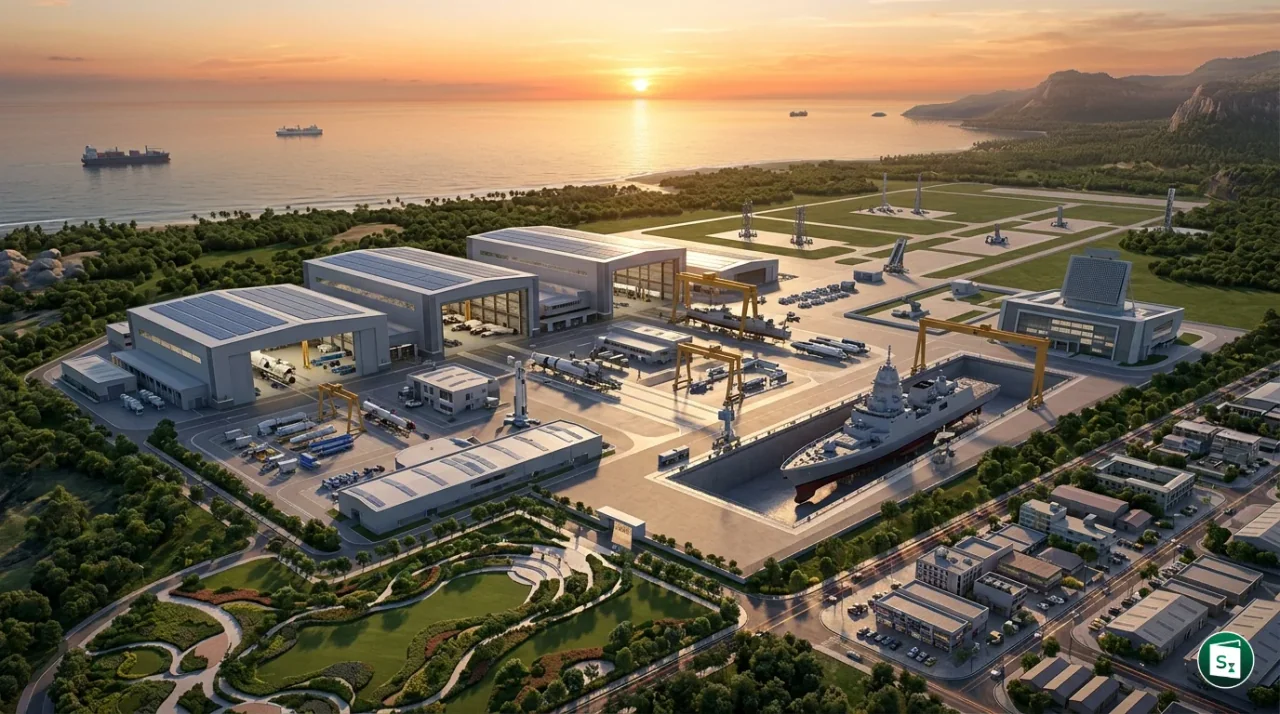
India’s annual defence production reached a historic milestone of ₹1.78 lakh crore in the financial year 2025-26, registering a robust 15.6% growth over the previous year. This record achievement underscores the country’s rapid progress toward achieving self-reliance in military manufacturing under the Aatmanirbhar Bharat initiative. The surge is driven by a significant increase in private sector participation and a focused push for indigenisation by the Ministry of Defence.
Record Breaking Growth in Defence Production
The latest figures released by the Ministry of Defence indicate a steady and impressive upward trajectory in India’s domestic manufacturing capabilities. The total value of production in FY26 has crossed the ₹1.78 lakh crore mark, a substantial jump from the ₹1.54 lakh crore recorded in FY25. This growth is part of a larger trend where production values have nearly quadrupled over the last decade, rising from just ₹43,746 crore in FY14.
The consistent increase over the last three fiscal years highlights the deepening of the domestic defence industrial base. In FY23, production had crossed the symbolic ₹1 lakh crore milestone for the first time, reaching ₹1.08 lakh crore. This was followed by ₹1.27 lakh crore in FY24, showing that the momentum has not only been sustained but has accelerated in recent years. This growth is a clear indicator that India is transitioning from being one of the world’s largest importers of arms to a global manufacturing hub.
| Fiscal Year | Total Production Value (₹ Crore) | Growth Percentage |
|---|---|---|
| 2022-23 | 1,08,684 | ~12% |
| 2023-24 | 1,27,434 | ~16.7% |
| 2024-25 | 1,54,000 | ~18% |
| 2025-26 | 1,78,000 | 15.6% |
The government has attributed this success to the collective efforts of the Defence Public Sector Undertakings (DPSUs) and the burgeoning private industry. The shift toward indigenous design and development of complex systems, such as the Tejas Light Combat Aircraft and BrahMos supersonic cruise missiles, has been central to this transformation.
Rising Role of the Private Sector
A defining feature of India’s defence production landscape in FY26 is the unprecedented contribution of the private sector. Traditionally, the industry was dominated by the public sector, but recent policy reforms have successfully integrated private enterprises into the core manufacturing ecosystem. The private sector’s share in total defence production has reached an all-time high of 24% in FY26, up from 22% in the previous year.
In absolute terms, the value of production from the private sector reached nearly ₹42,000 crore during the latest fiscal year. This milestone reflects the growing confidence and capacity of Indian private firms to manufacture high-end military equipment. The government’s focus on ease of doing business, combined with the simplification of industrial licensing and the promotion of MSMEs, has created a level playing field. Today, private players are not just sub-system suppliers but are increasingly leading the production of entire platforms, including drones, electronic warfare systems, and armoured vehicles.
| Category | FY25 Share (%) | FY26 Share (%) | FY26 Value (Approx. ₹ Crore) |
|---|---|---|---|
| Public Sector (DPSUs) | 78% | 76% | 1,36,000 |
| Private Sector | 22% | 24% | 42,000 |
This shift is significant as it brings in greater competition, innovation, and efficiency. The entry of startups under initiatives like Innovations for Defence Excellence (iDEX) has further injected cutting-edge technology into the sector. By fostering a collaborative environment where DPSUs and private firms work together, India is building a more resilient and versatile defence supply chain.
Strategic Policy Drivers: Aatmanirbharta in Defence
Several strategic policy interventions by the government have acted as catalysts for this record production. Central to this is the Positive Indigenisation Lists (PILs) notified by the Ministry of Defence. These lists impose a phased ban on the import of specific military items, mandating that they be sourced only from domestic manufacturers. As of mid-2026, over 5,000 items have been included across multiple lists, ranging from simple components to complex weapon systems like artillery guns and sensors.
Another major driver is the reservation of a significant portion of the defence capital procurement budget for the domestic industry. In FY26, the government earmarked 75% of the modernization budget, amounting to approximately ₹1.11 lakh crore, exclusively for domestic procurement. This guaranteed market has encouraged private companies and MSMEs to invest in research, development, and capacity expansion without the fear of being undercut by foreign competitors.
The SRIJAN portal, an online platform that provides the industry with a clear roadmap of items that the armed forces intend to indigenise, has also played a crucial role. It allows vendors to express interest in developing specific components that were previously imported. Furthermore, the Defence Acquisition Procedure (DAP) 2020 has simplified procurement processes, prioritizing “Buy (Indian-IDDM)” (Indigenously Designed, Developed, and Manufactured) as the most preferred category for capital acquisitions. These measures have collectively reduced India’s dependence on foreign suppliers and enhanced strategic autonomy.
Global Footprint: Surge in Defence Exports
The rise in domestic production has had a powerful multiplier effect on India’s defence exports. In FY26, India’s defence exports reached an all-time high of ₹38,424 crore, representing a massive 62.66% jump from the ₹23,622 crore recorded in the previous year. This rapid growth in exports is a testament to the increasing global competitiveness and reliability of Indian-made military platforms.
India now exports defence equipment and services to more than 80 countries across the globe. The product basket has expanded from simple ammunition and protection gear to sophisticated platforms. High-value exports include the BrahMos supersonic cruise missiles, Akash air defence systems, Advanced Light Helicopters, and various naval vessels. The successful export of the BrahMos missile system to the Philippines and the Akash system to Armenia are notable examples of India’s emerging role as a key supplier of advanced technology.
| Metric | FY25 | FY26 | Growth (%) |
|---|---|---|---|
| Defence Exports (₹ Crore) | 23,622 | 38,424 | 62.66% |
The surge in exports not only boosts the economy and creates jobs but also enhances India’s geopolitical influence. By providing affordable and high-quality military hardware to friendly nations, India is positioning itself as a credible alternative to traditional Western and Russian suppliers. This export-led growth is also helping domestic manufacturers achieve economies of scale, which further reduces the cost of equipment for the Indian armed forces.
Looking Ahead: The Roadmap to 2030
The achievement of ₹1.78 lakh crore in defence production is a major milestone, but the government has set even more ambitious targets for the future. By the year 2029-30, India aims to reach an annual defence production value of ₹3 lakh crore. This vision involves not just increasing the volume of production but also focusing on high-end technologies such as artificial intelligence, hypersonic systems, and advanced space-based assets.
In addition to production, the export target for 2029-30 has been set at ₹50,000 crore. To achieve this, the government plans to continue expanding the Positive Indigenisation Lists and increasing the share of domestic procurement in the budget. There is also a concerted effort to promote the export of large platforms like the Tejas fighter jet to more countries. The establishment of Defence Industrial Corridors in Uttar Pradesh and Tamil Nadu is expected to further streamline the supply chain and attract more global aerospace and defence majors to set up manufacturing bases in India.
The roadmap ahead focuses on transforming India from a major importer to a net exporter of defence equipment. By fostering a vibrant ecosystem of DPSUs, private giants, and innovative startups, India is on track to becoming one of the top five global defence producers by the end of the decade. This transition will not only save billions in foreign exchange but also ensure that the Indian armed forces are equipped with the most advanced, indigenously developed technology.
Key Takeaways
- India’s annual defence production reached a record high of ₹1.78 lakh crore in FY26, marking a 15.6% annual growth.
- The private sector’s contribution reached an all-time high of 24% in FY26, valued at approximately ₹42,000 crore.
- Defence exports touched a historic ₹38,424 crore in FY26, representing a massive 62.66% increase from the previous fiscal year.
- The government reserved 75% of the defence modernization budget in FY26, nearly ₹1.11 lakh crore, for procurement from domestic industries.
- The Ministry of Defence has notified over 5,000 items under various Positive Indigenisation Lists to boost local manufacturing and reduce imports.
- India has set an ambitious target of reaching ₹3 lakh crore in annual defence production and ₹50,000 crore in exports by 2029-30.