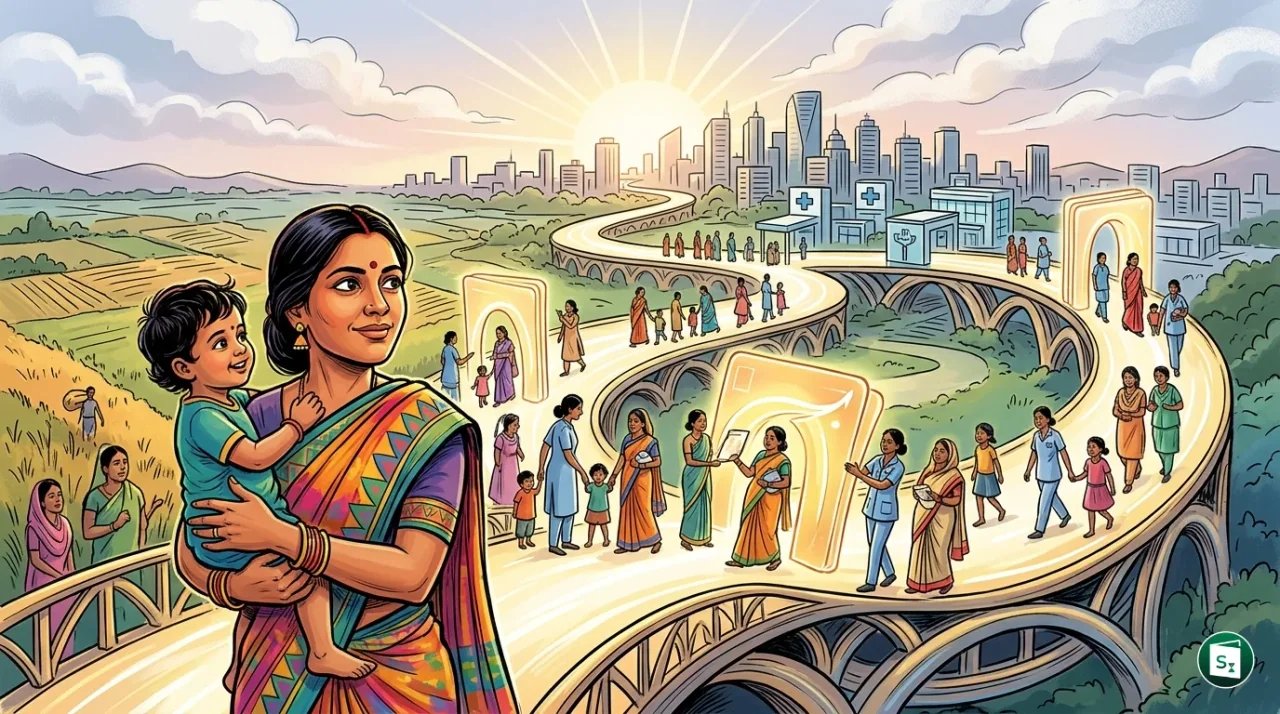
The Ministry of Health and Family Welfare officially launched the Journey of Antenatal, Natal, and Neonatal Integrated Care (JANANI) platform during the National Summit on Best Practices in Chandigarh. This digital initiative serves as a sophisticated upgrade to the existing Reproductive and Child Health (RCH) portal, aiming to streamline the delivery of healthcare services for mothers and infants across India. By integrating advanced technology into the public health system, the platform seeks to ensure a seamless continuum of care from pregnancy to the postnatal stage.
What is the JANANI Platform?
The JANANI platform is a comprehensive digital ecosystem designed to monitor and manage the health journeys of pregnant women and newborns throughout the country. It operates under the aegis of the National Health Mission (NHM), which was launched in 2013 to provide accessible and affordable healthcare to both rural and urban populations. The platform acts as a centralized repository for health data, enabling healthcare providers to track medical interventions and ensure that no beneficiary misses critical services like immunizations or check-ups.
Managed by the Ministry of Health and Family Welfare (MoHFW), headquartered at Nirman Bhawan in New Delhi, the platform is part of India’s broader push toward digital transformation in the social sector. It focuses on the three critical phases of motherhood: antenatal (before birth), natal (during birth), and neonatal (newborn period). By digitizing these records, the government aims to improve the efficiency of last-mile service delivery and reduce maternal and infant mortality rates.
Key Features and Technological Innovations
The JANANI platform introduces several modern features that distinguish it from previous health reporting systems. These innovations are designed to make healthcare records portable, secure, and easily accessible to both beneficiaries and health workers.
Digital Mother and Child Health (MCH) Cards
One of the most significant features of the platform is the generation of QR-enabled digital Mother and Child Health (MCH) cards. These cards replace traditional paper-based records, allowing healthcare workers to instantly access a beneficiary’s history by scanning a code. This portability is particularly beneficial for migratory populations who may need to access healthcare services in different states or districts. To date, more than 30 lakh MCH cards have already been generated through the system.
Biometric Verification and Longitudinal Records
To ensure data integrity and prevent duplicate registrations, the platform utilizes biometric verification. Beneficiaries can authenticate themselves using Aadhaar-based biometrics, OTP-linked Aadhaar, or their Ayushman Bharat Health Account (ABHA). The system has already completed over 1 lakh biometric verifications, ensuring that health records are tied to a unique identity. This creates a longitudinal health record, which tracks a woman’s health history across multiple pregnancies and years, providing doctors with a complete clinical picture.
Evolution from the RCH Portal
The JANANI platform is not a brand-new entity but a structural evolution of the Reproductive and Child Health (RCH) portal. While the original RCH portal was primarily a name-based tracking system used by health functionaries like ANMs (Auxiliary Nurse Midwives) and ASHAs (Accredited Social Health Activists), JANANI offers a more service-oriented and interactive experience.
| Feature | RCH Portal | JANANI Platform |
|---|---|---|
| Primary Technology | Web-based reporting | Service-oriented digital platform |
| Data Access | Location-specific | Pan-India searchability |
| User Interaction | Health worker entry only | Beneficiary self-registration available |
| Interoperability | Limited | High (Integrated with U-WIN and POSHAN) |
| Record Type | Static registration | Dynamic longitudinal records |
The platform also features automated alerts for high-risk pregnancies and immunization due dates, helping healthcare providers prioritize interventions for those in urgent need.
Significance for India’s Healthcare Goals
The launch of JANANI is a strategic step toward achieving India’s commitment to the Sustainable Development Goals (SDGs), specifically Goal 3, which targets a reduction in global maternal and neonatal mortality. By providing real-time dashboards to health officials, the platform enhances accountability and allows for data-driven policy decisions at the district and state levels.
The platform’s interoperability with other national systems like U-WIN (the digital platform for universal immunization) and POSHAN (the Prime Minister’s Overarching Scheme for Holistic Nourishment) ensures that nutritional and immunization needs are tracked alongside maternal health. This holistic approach ensures that the “Journey” of healthcare remains uninterrupted, providing a safety net for millions of Indian families.
Key Takeaways
- The JANANI platform stands for Journey of Antenatal, Natal, and Neonatal Integrated Care.
- It was launched by the Ministry of Health and Family Welfare as an upgraded version of the RCH Portal.
- The platform features QR-enabled digital MCH cards to ensure the portability of health records across India.
- It utilizes biometric verification and ABHA ID to maintain unique, longitudinal health records for beneficiaries.
- The platform is integrated with other national digital initiatives like U-WIN and POSHAN for a unified healthcare approach.
- As of May 2026, the system has recorded over 1.34 crore registrations, including 30 lakh pregnant women.