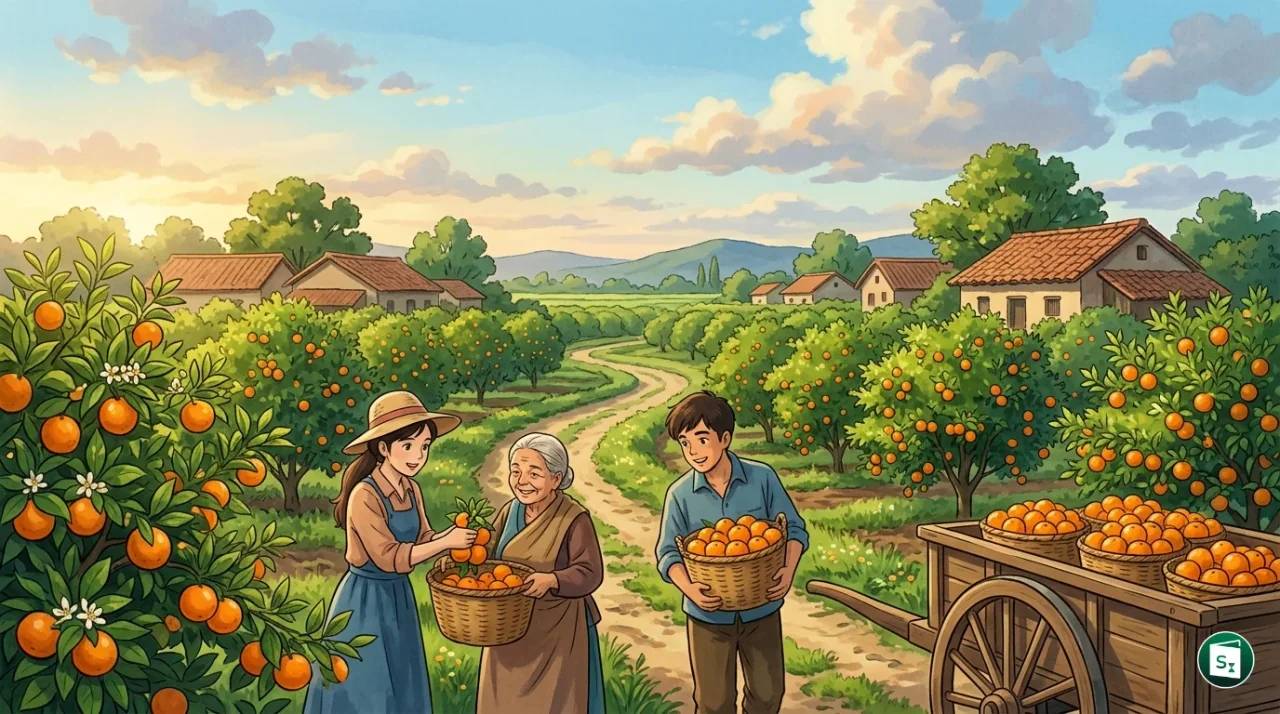
The Geographical Indication Registry in Chennai has granted the Geographical Indication (GI) tag to Sirsa Kinnow, making it the first fruit from Haryana to receive this recognition. The certification was awarded to the Kharisureran Farmer Producer Company Ltd, based in Ellenabad in the Sirsa district, after an application filed in June 2023. The tag protects the fruit’s unique identity linked to its geographical origin and is expected to boost returns for growers while opening new export opportunities.
What is a Geographical Indication Tag?
A Geographical Indication (GI) is a form of intellectual property rights that identifies a product as originating from a specific geographical territory, where its quality, reputation, or other characteristics are essentially attributable to that place of origin. In India, GI protection is governed by the Geographical Indications of Goods (Registration and Protection) Act, 1999, which came into force on September 15, 2003. The Act is administered by the Geographical Indications Registry located in Chennai, under the Controller General of Patents, Designs and Trade Marks (CGPDTM), which falls under the Ministry of Commerce and Industry.
India enacted this law to meet its obligations under the Trade-Related Aspects of Intellectual Property Rights (TRIPS) Agreement of the World Trade Organization (WTO), which requires all member nations to protect GIs. The GI tag is valid for 10 years and can be renewed indefinitely. Unlike a trademark, a GI is a community right that belongs collectively to all producers in the defined geographical area. It cannot be assigned, transferred, or licensed to anyone outside that region. Darjeeling Tea, registered in 2004-05, was the first product to receive a GI tag in India.
Kinnow: From California Fields to Haryana Orchards
Kinnow is a hybrid citrus fruit created by crossing the King mandarin (Citrus nobilis) and the Willow Leaf mandarin (Citrus deliciosa). The hybrid was first developed in 1915 by horticulturist Howard B. Frost at the University of California Citrus Experimentation Station. It was introduced to India by Dr J. C. Bakhshi of the Punjab Agricultural University (PAU), who brought it to the Regional Fruit Research Station in Abohar. Over the decades, kinnow emerged as a major commercial fruit crop across the northwestern states of India, particularly in Punjab, Haryana, Rajasthan, and parts of Uttar Pradesh.
The fruit is known for its bright orange colour, high juice content, rich source of Vitamin C, and its ability to withstand both high summer temperatures of up to 40 degrees Celsius and winter lows close to zero degrees. Kinnow is popularly called the “king of fruits” in Punjab. Sirsa has become Haryana’s largest kinnow-producing district, with orchards spread across 13,106 hectares and an annual production of around 1.82 lakh metric tonnes. The state as a whole produces approximately 4.40 lakh metric tonnes of kinnow each year, with Sirsa alone accounting for more than half of that output.
What Makes Sirsa Kinnow Distinct
According to the fruit specification submitted with the GI application, Sirsa Kinnow is a mid-season variety with an oblate shape, a flattened apex and base, and a smooth peel that turns deep orange on ripening. The fruit develops around nine to ten segments with few seeds and reaches full maturity between December and January, which is the peak harvesting season in Haryana.
The GI application described Sirsa Kinnow as juicier, sweeter, and larger in size compared to kinnow grown in other regions, with a darker colour and thicker skin. It also cited higher calcium content compared with other citrus fruits. The unique characteristics are attributed to Sirsa’s semi-arid climate, sandy-loam soils, and the combination of canal and groundwater irrigation that together create a distinct terroir.
The GI tag, registered as GI No. 1101 and Certificate No. 767 under Class 31 (covering horticultural products), defines the protected geographical area as the entire Sirsa district. A logo featuring an orange kinnow with a green leaf inside a circular “Sirsa Kinnow” emblem has been registered, which authorised users can now use on their produce and packaging.
How the Indo-Israel Centre of Excellence Led the Way
A key factor behind the quality that earned the GI tag is the Indo-Israel Centre of Excellence for tropical fruits at Mangiana village near Dabwali in Sirsa district. Established with collaboration between the Haryana government and Israel, the centre has been training farmers in modern citrus cultivation techniques since 2013.
Dr Ramesh Kumar, Deputy Director of Horticulture and in-charge of the centre, said Israeli experts introduced growers to advanced methods such as drip irrigation, fertigation (applying fertilisers through irrigation water), high-density plantation, and scientific nutrient management. The centre also runs regular training programmes covering plantation, irrigation, fertiliser application, pruning, and orchard management.
These techniques significantly improved both productivity and fruit quality. The shift from traditional flood irrigation to drip irrigation, for instance, ensured more efficient water use in the semi-arid region, while high-density plantation allowed farmers to maximise yield per hectare. The scientific approach to pruning and nutrient management improved fruit size, juice content, and sweetness, all of which became defining characteristics of Sirsa Kinnow.
Haryana’s First Standalone GI Tag
While Haryana already featured on India’s GI map through two products, neither was exclusive to the state. Basmati rice received its GI tag in 2016 but it is shared across seven states, including Punjab, Himachal Pradesh, Delhi, Uttarakhand, Uttar Pradesh, and Jammu and Kashmir. Phulkari embroidery, registered in 2010, is shared with Punjab and covers only parts of Haryana such as Ambala and Hisar. Sirsa Kinnow is therefore Haryana’s first standalone GI tag, an exclusive recognition for the state.
The GI certificate was granted on June 17, 2026, and was formally sealed by the Registrar of Geographical Indications in Chennai on March 28, 2026. The application had been filed on June 16, 2023, by the Kharisureran Farmer Producer Company Limited, based at Khari Sureran village in the Ellenabad subdivision of Sirsa. The District Horticulture Officer, Sirsa, served as the facilitating agency for the application. The registered GI covers the entire Sirsa district as the defined geographical area.
What the GI Tag Means for Farmers and Trade
The GI tag brings multiple economic benefits for Sirsa’s kinnow growers. Registered products typically command a price premium in the market because the tag certifies authenticity and origin to buyers. It also provides legal protection against imitation, preventing traders outside Sirsa from marketing ordinary citrus fruit as “Sirsa Kinnow” to capitalise on its reputation.
The tag opens the door to structured export support through agencies such as the Agricultural and Processed Food Products Export Development Authority (APEDA). With the GI recognition, Sirsa Kinnow can build a distinct brand identity in international markets, where buyers increasingly seek products with verified geographical origins.
The Haryana government has also been investing in processing infrastructure to support the fruit economy. A kinnow juice processing plant is coming up on the premises of the Vita Milk Plant in Sirsa under a public-private partnership at a cost of over ₹26 crore, with a capacity to process 9,000 metric tonnes of kinnow annually. This facility will help utilise lower-grade fruit that previously fetched poor prices in the open market. Waxing and grading facilities have also been set up at Abubshahar and other locations in the district to improve shelf life and reduce post-harvest wastage.
For a fruit economy that has long struggled with seasonal gluts and distress sales, the GI tag is expected to strengthen the bargaining power of growers and build a stable market identity for Sirsa Kinnow beyond the region. Horticulture experts believe the recognition will further boost the brand in both domestic and international markets while ensuring better returns for the farming community.
Key Takeaways
- Sirsa Kinnow is the first fruit from Haryana to receive a Geographical Indication (GI) tag, granted on June 17, 2026.
- The GI tag was awarded by the Geographical Indications Registry, Chennai, under the GI Act, 1999, to the Kharisureran Farmer Producer Company Ltd.
- Kinnow is a hybrid citrus fruit developed in 1915 by Howard B. Frost at the University of California, introduced to India by Punjab Agricultural University.
- The Indo-Israel Centre of Excellence at Mangiana village in Sirsa played a key role in improving fruit quality through drip irrigation, fertigation, and high-density plantation techniques.
- Sirsa district has 13,106 hectares under kinnow cultivation, producing around 1.82 lakh metric tonnes annually, more than half of Haryana’s total kinnow output of 4.40 lakh metric tonnes.
- A GI tag is valid for 10 years, is renewable, and cannot be transferred or licensed outside the defined geographical region.