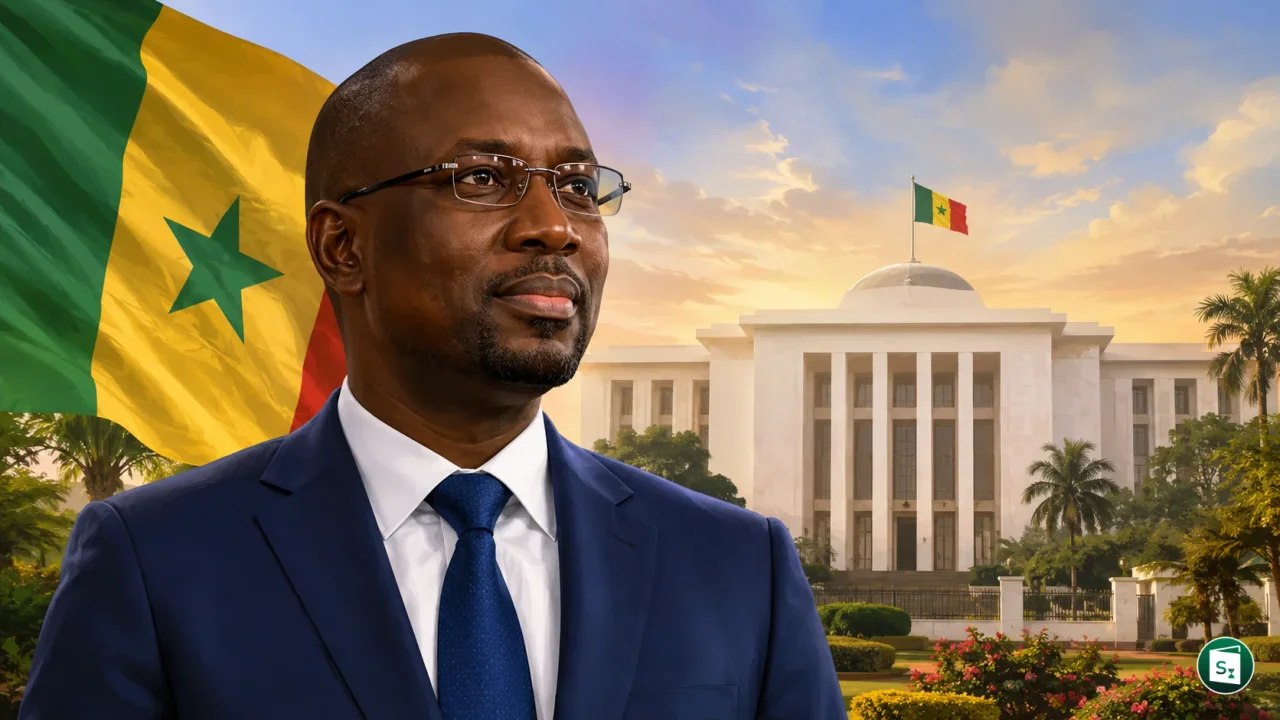
Senegal’s President Bassirou Diomaye Faye has appointed Ahmadou Al Aminou Lo as the new Prime Minister of the country, succeeding Ousmane Sonko. The appointment, announced as part of a major government reshuffle, brings a seasoned economist and central banking expert to the helm of the Senegalese government. This leadership transition comes at a critical time as the West African nation seeks to navigate a complex debt crisis and implement long term economic reforms.
Appointment of Ahmadou Al Aminou Lo
The appointment of Ahmadou Al Aminou Lo marks a significant shift in Senegal’s executive leadership. He replaces Ousmane Sonko, who had served as Prime Minister since April 2024 following the electoral victory of the Patriotes du Sénégal (PASTEF) party. Following his departure from the premiership, Sonko was elected as the Speaker of the National Assembly, moving from the executive branch to lead the country’s legislature.
The new cabinet, led by Prime Minister Lo, consists of 30 ministers and is tasked with executing the ‘Sénégal 2050’ National Transformation Agenda. This long term development plan aims to modernize the country’s infrastructure, boost the digital economy, and ensure sustainable industrial growth over the next quarter century.
Who is Ahmadou Al Aminou Lo?
Ahmadou Al Aminou Lo is a distinguished technocrat with nearly four decades of experience in macroeconomics and banking regulation. Before being elevated to the premiership, he served as the Secretary-General of the Central Bank of West African States (BCEAO), a regional institution headquartered in Dakar, Senegal. His tenure at the central bank also included a role as the National Director for Senegal from 2016 to 2021.
Lo’s educational background is equally impressive. He was the valedictorian of his class at the Prytanée Militaire de Saint-Louis and holds a Master’s degree in Economics from Cheikh Anta Diop University (UCAD). Furthermore, he is an expert in Islamic Finance, having earned an executive master’s degree from INCEIF University in Malaysia. His deep understanding of regional monetary policy and fiscal discipline is expected to reassure international investors and financial institutions like the International Monetary Fund (IMF).
The Political and Economic Shift in Senegal
The leadership change occurs amidst a challenging economic environment for Senegal. The country’s public debt has reached approximately 132% of its GDP, primarily due to fiscal discrepancies inherited from previous administrations. This financial instability led to the suspension of a $1.8 billion lending program by the IMF in late 2024.
Prime Minister Lo’s appointment signals a more pragmatic approach to economic management. While his predecessor, Ousmane Sonko, often favored a populist and nationalist economic stance, the current administration under President Faye and PM Lo appears committed to implementing necessary fiscal reforms. These include subsidy rationalization and tax adjustments aimed at stabilizing the economy and unlocking further international financial support.
India-Senegal Relations: A Strategic Partnership
India and Senegal share a robust bilateral relationship characterized by strong economic and cultural ties. India is a key trading partner for Senegal, with bilateral trade reaching significant milestones in early 2026. India’s exports to Senegal primarily include non-basmati rice, of which it provides nearly 90% of the country’s requirement. On the other hand, Senegal is a critical supplier of inorganic chemicals, particularly phosphates, which are essential for India’s fertilizer industry.
Cooperation between the two nations has also expanded into the digital and infrastructure sectors. In February 2026, Senegal participated in a high level digital summit in New Delhi to discuss advancements in Artificial Intelligence (AI) and fintech. Additionally, Indian companies maintain substantial investments in Senegal’s mining and transport sectors, further cementing the strategic importance of this West African partner in India’s broader engagement with the Global South.
Key Commodities in India-Senegal Trade
| Category | Primary Commodities |
|---|---|
| Exports from India | Non-basmati rice (broken rice), cotton fabrics, pharmaceuticals, and automobiles (Tata buses) |
| Imports from Senegal | Inorganic chemicals (phosphates), crude fertilizers, and copper products |
Key Takeaways
- Ahmadou Al Aminou Lo has been appointed as the new Prime Minister of Senegal, succeeding Ousmane Sonko.
- Before his elevation to the premiership, Lo served as the Secretary-General of the Central Bank of West African States (BCEAO).
- The outgoing Prime Minister, Ousmane Sonko, has been elected as the Speaker of the National Assembly of Senegal.
- Senegal’s current President is Bassirou Diomaye Faye, who was inaugurated in April 2024.
- The country is grappling with a severe economic crisis, with public debt estimated at 132% of its GDP.
- Dakar is the capital of Senegal, and the official currency is the West African CFA franc (XOF).
- Geographically, Senegal is located in West Africa and almost completely surrounds the country of The Gambia.