India hosted the BRICS Women Ministerial Meeting in Kochi, Kerala, and the 3rd BRICS Transport Ministers’ Meeting in Nagpur, Maharashtra, under its BRICS Chairship 2026. The two meetings delivered landmark outcomes: the first-ever joint statement on women-led development and a unanimous ministerial declaration on sustainable transport cooperation. These results demonstrate India’s ability to drive concrete, consensus-based outcomes within the expanded 11-member BRICS grouping ahead of the 18th BRICS Summit in New Delhi.
BRICS and India’s 2026 Chairship
BRICS began as an informal grouping of major emerging economies. The term BRIC was coined in 2001 by economist Jim O’Neill, and the first BRIC summit was held in Yekaterinburg, Russia, in 2009 with Brazil, Russia, India and China. South Africa joined in 2010, transforming BRIC into BRICS. The grouping expanded further in 2024 with Egypt, Ethiopia, Iran, Saudi Arabia and the UAE becoming members, and Indonesia joined in 2025. BRICS now has 11 full members and 10 partner countries, representing about 45% of the world’s population and 40% of global GDP.
India assumed the BRICS Chairship for the fourth time on 1 January 2026, having previously held it in 2012, 2016 and 2021. The chairship operates under the theme “Building for Resilience, Innovation, Cooperation and Sustainability”, a framework Prime Minister Narendra Modi first outlined at the 17th BRICS Summit in Rio de Janeiro in July 2025. The four pillars resilience, innovation, cooperation and sustainability guide India’s agenda across all BRICS ministerial tracks and working groups throughout the year.
BRICS Women Ministerial Meeting in Kochi
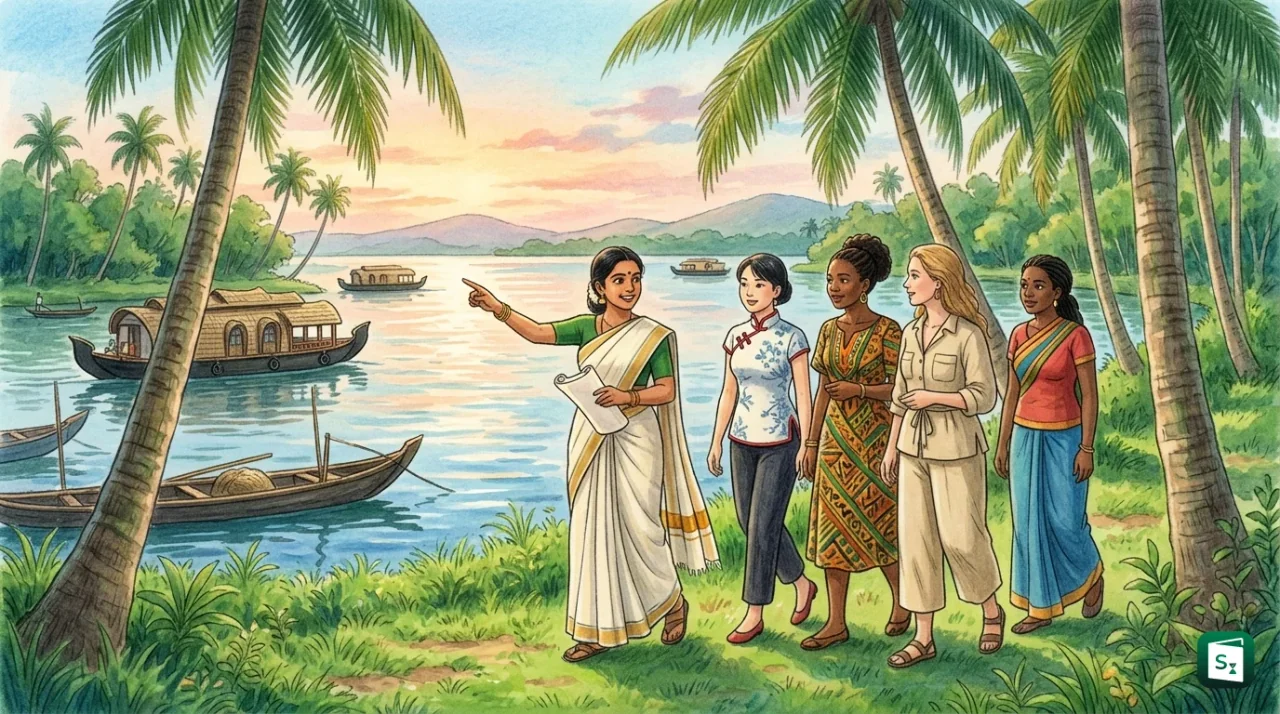
The Ministry of Women and Child Development hosted the BRICS Women Ministerial Meeting in Kochi, Kerala, from 6 to 9 July 2026, under India’s BRICS Chairship. Union Minister Annapurna Devi chaired the meeting, which was attended by ministers and senior officials from all 11 BRICS member countries. The four-day engagement comprised the BRICS Women Working Group Meeting (6-7 July), where senior officials set the agenda, followed by the BRICS Women Ministerial Meeting (8-9 July), which provided strategic direction.
First Joint Statement on Women-Led Development
The most significant outcome was the adoption of the first-ever Joint Statement under the BRICS Women Track. The statement was adopted unanimously by all member nations and reflects their collective commitment to advancing women-led development across social, economic and political spheres. Annapurna Devi described the joint statement as a historic milestone that would give a new direction to discussions on women within BRICS.
The meeting also included thematic panel discussions on digital inclusion, women’s entrepreneurship, financial empowerment, climate resilience, food security and nutrition. An exhibition alongside the meeting showcased India’s women-led development initiatives, including the SARAS rural livelihood programme, the Lakhpati Didi initiative, schemes promoting women in STEM and flagship programmes such as SHE-Box, One Stop Centres and the Women’s Helpline. Delegates also participated in three bilateral meetings on the sidelines.
Two Digital Initiatives Proposed by India
Member countries reached consensus on two initiatives proposed by India for long-term collaboration under the BRICS Women Track. The BRICS Digital Repository of Best Practices is a shared platform for documenting and exchanging successful policies, programmes and innovations on women’s empowerment across BRICS countries. The BRICS Digital Capacity Building Guidelines aim to encourage institutional cooperation, facilitate knowledge sharing and strengthen capacity building efforts to accelerate women’s empowerment through sustained collaboration.
These proposals reflect a shift from policy declarations toward practical, evidence-based governance. By creating mechanisms for member countries to learn from each other’s successful models, the initiatives provide a structured framework for implementing women-led development across diverse national contexts.
3rd BRICS Transport Ministers’ Meeting in Nagpur
The Ministry of Road Transport and Highways hosted the 3rd BRICS Transport Ministers’ Meeting in Nagpur, Maharashtra, under India’s BRICS Chairship. Union Minister Nitin Gadkari chaired the ministerial meeting on 11 July 2026, which was preceded by the 3rd BRICS Transport Working Group Senior Officials’ Meeting on 9-10 July, where senior officials finalised the agenda and draft declaration.
Six Pillars of the Nagpur Declaration
The ministerial meeting concluded with the unanimous adoption of a Ministerial Declaration that sets a common framework for transport cooperation across six areas:
| Pillar | Focus Area |
|---|---|
| Circularity in Infrastructure | Reusing and recycling construction materials in roads, bridges and rail to reduce raw material consumption and carbon footprint |
| Sustainable Aviation Fuel (SAF) | Developing jet fuel from feedstocks such as used cooking oil and agricultural residue to cut aviation emissions |
| Transport Decarbonisation | Reducing emissions through electrification, modal shift and cleaner fuels across road, rail, aviation and waterways |
| Urban Mobility Hub | Sharing city transport solutions among BRICS nations including metro networks, bus electrification and integrated public transit |
| Logistics Supply Chain Cooperation | Simplifying customs procedures, documentation and multimodal linkages among BRICS economies |
| BRICS Railway Research Network | Establishing research linkages among member country rail institutions on technology, safety and freight efficiency |
Gadkari told the media that the resolution covers the road sector, railways, aviation and water transport, and reflects a shared commitment to futuristic development of the transport sector. He noted that BRICS countries, which represent 40% of the world’s population, are uniquely placed to lead the development of sustainable transport systems.
India’s Push for Sustainable Mobility
Addressing the meeting, Gadkari highlighted India’s domestic infrastructure achievements including the world’s second-largest road network, the PM Gati Shakti National Master Plan for integrated multimodal development, the expansion of greenfield expressways and the success of the UDAN scheme for regional air connectivity. He cited India’s use of recycled waste materials in road construction, the deployment of electric buses and the Hybrid Annuity Model for attracting private investment into infrastructure as examples of environmentally responsible development.
Gadkari called for deeper BRICS cooperation in green hydrogen, electric mobility, alternative fuels, digital transport systems and sustainable multimodal infrastructure. India reaffirmed its commitment to ensuring a smooth transition of the initiatives launched during its chairship to the next BRICS presidency, signalling continuity beyond 2026.
Key Takeaways
- India hosted the BRICS Women Ministerial Meeting in Kochi and the 3rd BRICS Transport Ministers’ Meeting in Nagpur under its 2026 BRICS Chairship, securing consensus-based outcomes in both tracks.
- The Women Ministerial Meeting adopted the first-ever Joint Statement under the BRICS Women Track, with all 11 member countries reaffirming their commitment to women-led development.
- India proposed two initiatives that received consensus: the BRICS Digital Repository of Best Practices and the BRICS Digital Capacity Building Guidelines, creating institutional mechanisms for knowledge sharing.
- The 3rd BRICS Transport Ministers’ Meeting unanimously adopted a Ministerial Declaration covering six pillars: circularity in infrastructure, Sustainable Aviation Fuel, transport decarbonisation, urban mobility hubs, logistics supply chain cooperation and a BRICS Railway Research Network.
- India’s BRICS Chairship 2026 is guided by the theme “Building for Resilience, Innovation, Cooperation and Sustainability”, marking India’s fourth time chairing the grouping.
- BRICS comprises 11 full members (Brazil, Russia, India, China, South Africa, Egypt, Ethiopia, Iran, Saudi Arabia, UAE and Indonesia) and 10 partner countries, representing about 45% of the world’s population and 40% of global GDP.