Cheruvayal K. Raman, the Wayanad tribal farmer widely called Nellachan or Father of Paddy, passed away on 14 October 2026 at the Kozhikode Medical College Hospital at the age of 74. He had spent more than two decades collecting and growing over 55 traditional rice varieties on a small farm at Kammana. His death has closed a rare living chapter of seed conservation built without formal training in science.
Who Was Cheruvayal Raman?
Cheruvayal K. Raman was a Kurichiya tribal farmer from Kammana village in Wayanad, Kerala, known as Nellachan and Father of Paddy. Born on 2 February 1952, he conserved more than 55 traditional rice varieties on three acres and received the Padma Shri in 2023 for agriculture.
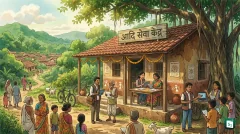
Cheruvayal Raman died on 14 October 2026 while undergoing treatment for a heart related ailment at the Kozhikode Medical College Hospital. He was 74. Cheruvayal Raman belonged to the Kurichiya community, a traditional paddy cultivating tribal group mainly found in Wayanad and Kannur districts of northern Kerala.
Cheruvayal Raman was cremated with state honours on 15 October 2026 at the Cheruvayal Kurichiya community crematorium near Mananthavady. Leaders including former Wayanad member of Parliament Rahul Gandhi and Wayanad member of Parliament Priyanka Gandhi Vadra condoled his death and recalled his work to protect Adivasi knowledge of seeds. Cheruvayal Raman is survived by his wife Geetha and four children.
A Life Rooted in Wayanad Soil
Cheruvayal Raman started working in paddy fields at the age of 10 and studied only up to Class 5. Cheruvayal Raman learned farming from his maternal uncle on the family farm at Kammana in Mananthavady taluk. After his uncle died in 1989, Cheruvayal Raman took charge of the farm and continued traditional cultivation.
In the 1970s, many farmers in Wayanad shifted to high yielding hybrid rice that needed chemical fertilisers and pesticides. Cheruvayal Raman noticed that chemicals harmed soil life such as earthworms, fish and frogs. From 1978-79, Cheruvayal Raman returned fully to organic methods and stopped using chemicals. That decision shaped the rest of his life.
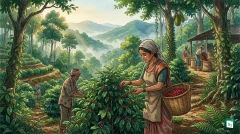
Wayanad was once called Vayal Nadu, or land of paddy fields, and grew more than 100 traditional rice varieties. By the 2000s, large areas had moved to cash crops and hybrid paddy. Cheruvayal Raman began with only four or five local varieties. From 2000 onwards, Cheruvayal Raman travelled across Wayanad after each harvest in search of seeds that farmers had stopped growing.
Traditional Rice Conservation Work
Cheruvayal Raman built a living seed bank by growing every variety each season on about three acres. Traditional rice seeds lose viability in about eight months, so they must be sown every year to stay alive. Cheruvayal Raman divided his field into tiny plots of one to three cents and sowed long duration types first so that all types could be harvested around the same time.
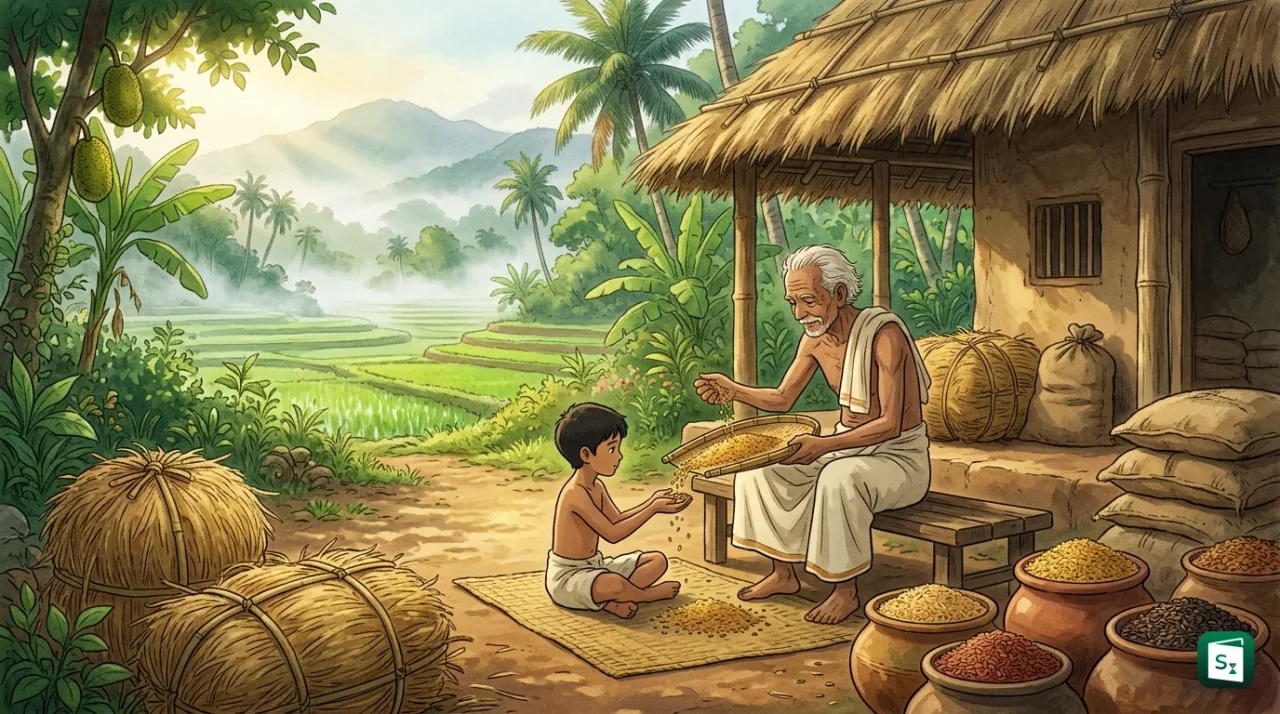
Cheruvayal Raman never sold seeds. Cheruvayal Raman gave about 500 grams to two or three kilograms of seed free to any farmer who promised to practise organic farming and return the same quantity after harvest. This simple return system kept the cycle running and spread traditional varieties to hundreds of farmers across Kerala and other states.
Cheruvayal Raman stored selected seeds in bamboo baskets and jute bags inside his mud house. Cheruvayal Raman dried the best grains in the sun for seven to ten days before storage, which helped them resist weather stress. Cheruvayal Raman used cow dung and cow urine from native cattle, ploughed at fixed intervals, and followed lunar cycles for sowing and harvesting. Cheruvayal Raman did the field work himself without hired labour and grew enough rice and vegetables to feed his family.
Cheruvayal Raman often said seeds were love and care, not a commodity. That belief earned him the local titles Vithachan (father of seeds) and Nellachan (father of paddy). Students, scientists and farmers visited his house at Kammana to learn his methods.
Wayanad and Kerala Traditional Paddy Varieties He Saved
Cheruvayal Raman conserved more than 55 traditional rice varieties at his peak, though the number came down to around 54 to 55 in his later years due to age and health. Wayanad district once grew about 160 paddy varieties, and more than half have disappeared. Cheruvayal Raman saved many of the remaining types, including tall, hardy and aromatic strains that suit the climate of the Western Ghats.
Traditional rice varieties are local landraces developed over centuries without modern breeding. They usually give lower yields than hybrid rice but resist pests, floods and drought and need almost no chemicals. Cheruvayal Raman grouped his collection by maturity period to manage sowing.
| Maturity Group | Examples Conserved by Raman | Traits |
|---|---|---|
| About 200 days (six months) | Veliyan, Chettuveliyan, Mannuveliyan, Chenthadi | Tall stalks useful for thatch, steady yield |
| About 150 days (five months) | Thondi, Marathondi, Channalthondi, Palveliyan, Kanali, Adukkan | Bold red grains, staple food types |
| Aromatic, about 150 days | Gandhakashala, Jeerakashala, Kayama, Urunikayama | Short fragrant grains used for biryani and festive dishes |
| About 120 days (four months) | Onattan, Kalladiyaran, Onachanna | Withstand dry spells, suit varied soils |
| About 90 days (three months) | Thonnooram Thondi, Thonnooram Punja, Njavara | Short duration, Njavara is valued for medicinal use |
Cheruvayal Raman could identify each variety by sight from grain colour, size and texture. Cheruvayal Raman also kept native tubers such as colocasia and yam, spices, herbs and trees on the same farm. Cheruvayal Raman supplied seeds of about 30 traditional varieties to the Dr. K. Ramiah Gene Bank at Tamil Nadu Agricultural University in Coimbatore, which helped formal conservation systems keep backup stocks.
Padma Shri 2023 and Other Honours
The President of India conferred the Padma Shri in 2023 on Cheruvayal K. Raman under agriculture. The Padma Shri is the fourth highest civilian award in India, given for distinguished service in any field. The Padma Awards are announced on Republic Day each year and presented at Rashtrapati Bhavan. In 2023, 91 Padma Shri awards were approved, including Raman.
Cheruvayal Raman had earlier received the Plant Genome Saviour Farmer Reward. The award is given by the Protection of Plant Varieties and Farmers Rights Authority (PPV and FRA), a body set up by the central government under the Protection of Plant Varieties and Farmers Rights Act, 2001. The Authority honours farmers who conserve landraces and wild relatives of crops. Cheruvayal Raman was first widely noticed after 2013 and later invited to present his work at an international symposium in Brazil in 2018.
Cheruvayal Raman remained simple after national recognition. Cheruvayal Raman continued to live in his traditional house, work barefoot in the field, and distribute seeds without charge. Cheruvayal Raman used the attention to urge young people and officials to protect native seeds and support organic farming.
Why His Work Mattered for Food and Farming
Kerala has lost more than 70 percent of its paddy fields in the past three decades to housing, plantations and other uses. Paddy fields also act as natural drains during floods and shelter for flora and fauna. When local varieties vanish, farmers lose traits for flood tolerance, drought tolerance and pest resistance that modern hybrids often lack.
Cheruvayal Raman showed that on farm conservation can succeed where cold storage alone fails. Gene banks store seeds safely, but seeds must be grown to adapt and remain viable. By growing each variety every year and sharing it freely, Cheruvayal Raman kept the seeds alive and in use. His method also protected soil health because it avoided chemicals and relied on farmyard manure and crop diversity.
Cheruvayal Raman linked conservation to livelihood. Traditional types such as Gandhakashala fetch a premium as aromatic rice, while hardy types such as Thondi give stable food for families. Yet Cheruvayal Raman himself lost ₹20,000 to ₹30,000 each year because native seeds yield only about 7 to 18 quintals per acre compared to 25 to 30 quintals from hybrids. Cheruvayal Raman argued that governments should give remuneration linked to farmland, along with medical and education support, so that young farmers stay in agriculture.
Key Takeaways
- Cheruvayal K. Raman, known as Nellachan and Father of Paddy, died on 14 October 2026 at the age of 74 in Kozhikode.
- Cheruvayal Raman belonged to the Kurichiya tribal community of Wayanad, Kerala and farmed at Kammana in Mananthavady.
- Cheruvayal Raman conserved more than 55 traditional rice varieties, including Gandhakashala, Jeerakashala, Thondi and Njavara, on about three acres.
- Cheruvayal Raman received the Padma Shri in 2023 for agriculture and the Plant Genome Saviour Farmer Reward from the PPV and FRA.
- Cheruvayal Raman distributed native seeds free on condition that farmers return the same quantity after harvest to keep the seed cycle alive.