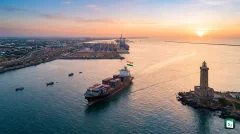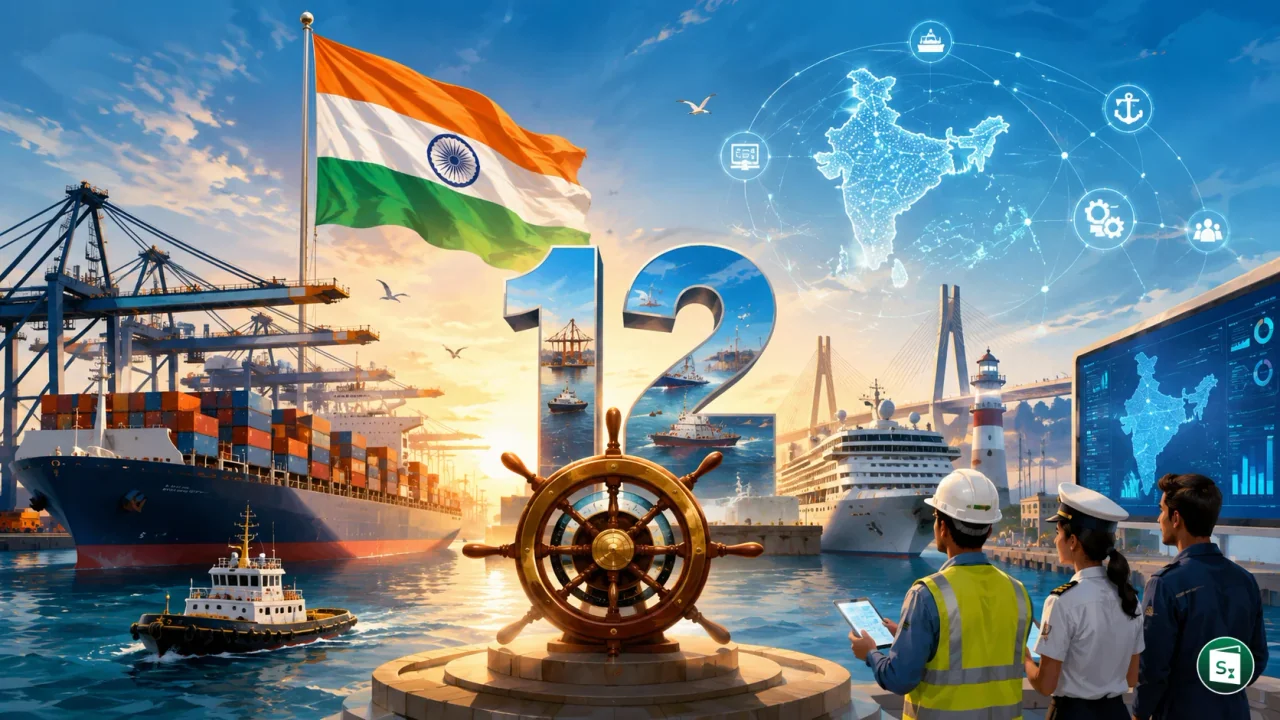
Union Minister Sarbananda Sonowal launched the nationwide Maritime Reform Utsav on June 3, 2026, to celebrate 12 years of transformative growth in India’s maritime sector. The initiative aims to analyze existing reform gaps and strengthen inter-ministerial coordination to propel India toward its Amrit Kaal Vision 2047 goals. By focusing on digital governance and technological skill development, the Utsav seeks to consolidate India’s position as a global maritime powerhouse.
Launch of Maritime Reform Utsav
The Maritime Reform Utsav is designed as a platform to showcase the structural changes implemented in India’s ports and shipping sectors since 2014. During the launch in New Delhi, the Minister emphasized that the initiative is not merely a celebration but a strategic exercise in reform gap analysis. The Ministry of Ports, Shipping and Waterways (MoPSW) has established a dedicated monitoring and coordination committee to ensure the timely resolution of grievances and legal matters, which often act as bottlenecks in infrastructure projects.
A core component of the Utsav is the focus on stakeholder participation. This includes active engagement with port authorities, private concessionaires, and the seafaring community to refine policies and improve the ease of doing business. The initiative also prioritizes skill development, specifically targeting the adoption of emerging maritime technologies and automated digital governance systems to prepare the workforce for future challenges.
Twelve Years of Strategic Maritime Growth
The period between 2014 and 2026 has seen India emerge as a significant player in the global maritime landscape. The sector has transitioned from struggling with infrastructure bottlenecks to achieving record-breaking efficiency metrics. A key achievement of this 12-year reform journey is the doubling of India’s total port capacity, which increased from approximately 1,400 MMTPA in 2014 to over 2,760 MMTPA by 2025.
The table below summarizes the comparative growth in key maritime indicators over the last 12 years:
| Indicator | 2014-15 | 2025-26 |
|---|---|---|
| Major Port Cargo Handling | 581 MT | 915.17 MT |
| Total Port Capacity | 1,531 MTPA | 2,760+ MTPA |
| Vessel Turnaround Time | 96 Hours | 49.5 Hours |
| Inland Waterway Cargo | 18.1 MTPA | 145.5 MTPA |
| Global LPI Ranking (Shipment) | 44th | 22nd |
One of the most remarkable success stories has been the revitalization of Inland Waterways. Cargo movement through national waterways surged by 700 percent during this period, providing a cost-effective and eco-friendly alternative to road and rail transport. Furthermore, nine Indian ports are now ranked among the world’s top 100 container ports, reflecting a significant improvement in global competitiveness.
Policy and Legislative Milestones
The legislative framework governing India’s maritime sector has undergone a complete overhaul to attract private investment and enhance operational autonomy. A landmark development was the Major Port Authorities Act, 2021, which replaced the outdated Major Port Trusts Act, 1963. This legislation facilitated the transition of major ports to the landlord port model, where the port authority acts as a regulator and landlord, while terminal operations are handled by private players through Public-Private Partnerships (PPP).
Analogy · The Landlord Port Model Expand analogy
Imagine a shopping mall where the mall owner provides the building, electricity, and security, but individual brands lease the shops to sell their products. In a landlord port model, the government (the mall owner) owns the land and provides the basic infrastructure, while private companies (the brands) run the terminals and handle the cargo. This allows the government to focus on regulation while private experts bring efficiency to day-to-day operations.
In 2025, the government further modernized the sector by passing five critical bills that replaced colonial-era laws:
- Indian Ports Bill, 2025: Established the Maritime State Development Council to coordinate port planning across states.
- Merchant Shipping Bill, 2025: Focuses on the safety of ships and the welfare of the seafaring workforce.
- Coastal Shipping Bill, 2025: Removed licensing requirements for Indian-flagged vessels to encourage domestic waterborne trade.
- Bills of Lading Act, 2025: Modernized documentation processes to support digital trade.
- Carriage of Goods by Sea Act, 2025: Aligned Indian regulations with international maritime standards.
Infrastructure and Digital Transformation
The SagarMala Programme, launched in 2015, remains the primary engine for port-led development in India. As of mid-2026, the project has identified 845 initiatives worth over ₹6 lakh crore. These projects focus on port modernization, enhanced connectivity, and port-led industrialization. Major infrastructure projects currently underway include the Vadhavan Port in Maharashtra, which is poised to become one of the top 10 container ports globally.
Digitalization has played a crucial role in reducing the logistics costs of Indian trade. The implementation of the National Logistics Portal (Marine) and the Sagarmanthan dashboard allows for real-time monitoring of every key performance indicator across the ministry’s projects. These digital tools have been instrumental in slashing vessel turnaround times by nearly half in just one decade.
Sustainability is another pillar of the current reform era. Under the Harit Sagar Guidelines, the government is developing Green Hydrogen Hubs at major ports like Paradip and Deendayal. These initiatives aim to make Indian ports carbon-neutral while positioning the country as a leader in green ship recycling and eco-friendly maritime operations.
The Vision for 2047
The Maritime Reform Utsav serves as a bridge to the Maritime Amrit Kaal Vision 2047. This long-term roadmap aims to invest ₹80 lakh crore to transform India into a global maritime powerhouse by the centenary of its independence. The vision sets ambitious targets, including increasing India’s total port handling capacity to 10,000 MMTPA and positioning the country among the top five maritime nations in the world.
By 2030, the government aims to increase India’s share of the global seafaring workforce to 20 percent, up from the current 12 percent. These efforts are part of the broader Viksit Bharat 2047 goal, ensuring that the maritime sector acts as the backbone of India’s multi-trillion dollar economy.
Key Takeaways
- The Maritime Reform Utsav was launched on June 3, 2026, to commemorate 12 years of reforms in India’s maritime sector.
- India’s total port capacity has more than doubled since 2014, reaching over 2,760 MMTPA by 2025.
- The Major Port Authorities Act, 2021 empowered major ports to function under the landlord port model with greater financial and operational autonomy.
- Cargo movement through Inland Waterways witnessed a massive growth of 700 percent between 2014 and 2026.
- The Maritime Amrit Kaal Vision 2047 outlines a projected investment of ₹80 lakh crore to reach a capacity of 10,000 MMTPA.
- Nine Indian ports are currently ranked among the World’s Top 100 container ports, with Visakhapatnam Port breaking into the top 20.