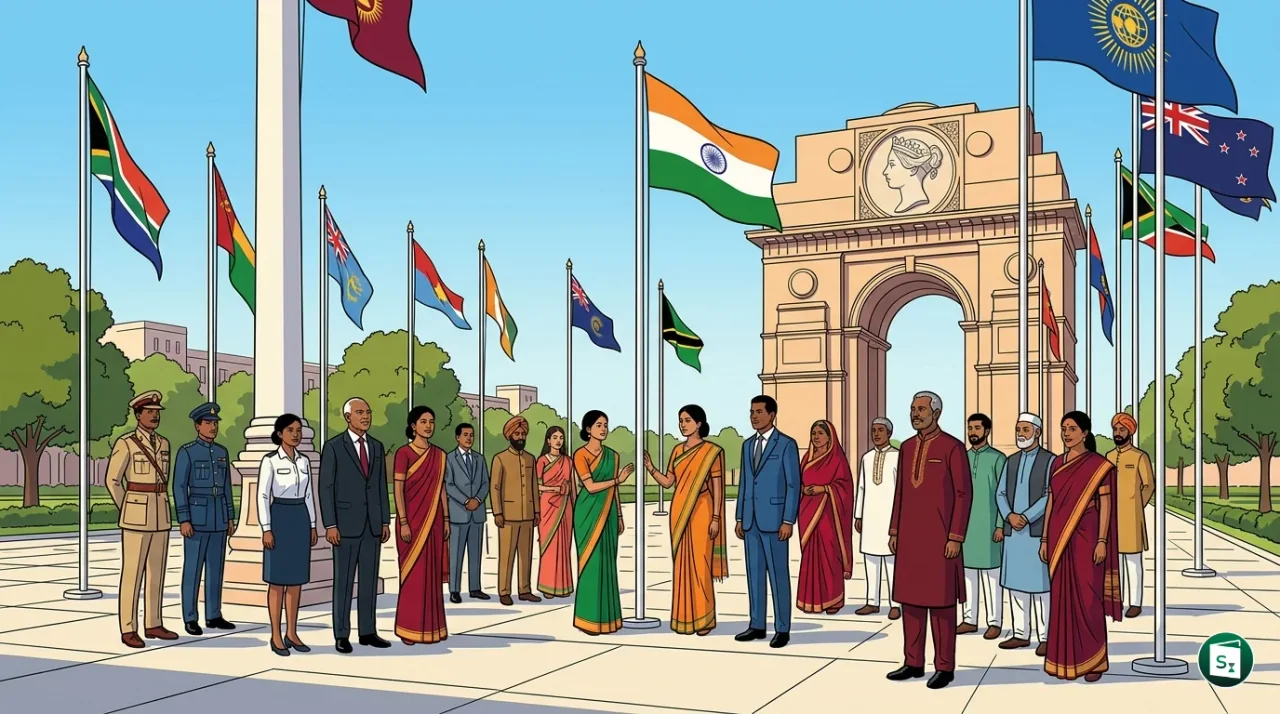
India commemorated Commonwealth Day on May 24, 2026, marking the birth anniversary of Queen Victoria in 1819. While most member nations celebrate the occasion in March, India maintains this traditional date to honor its long standing historical and diplomatic ties. The 2026 event focuses on the theme of unlocking new opportunities for prosperity across the 56-nation association.
Historical Origins: From Empire Day to Commonwealth Day
The choice of May 24 as Commonwealth Day in India is deeply rooted in the history of the British Empire. This date marks the birth anniversary of Queen Victoria, who was born on May 24, 1819. During her reign, the British Empire expanded significantly, and she was proclaimed the Empress of India in 1876.
Following her death in 1901, the first Empire Day was observed on May 24, 1902. It was intended to promote unity and a sense of shared identity across the various territories governed by Britain. In 1958, as nations began gaining independence and the empire transitioned into a voluntary association, the then British Prime Minister Harold Macmillan renamed the event as Commonwealth Day.
While the Commonwealth Secretariat officially moved the global observance to the second Monday of March in 1977 to move away from colonial associations, India is among the few countries that have chosen to retain the traditional May 24 date. This maintenance of tradition reflects India’s unique path in balancing its historical legacy with its identity as a sovereign republic.
The 1949 London Declaration: Defining the Modern Commonwealth
India’s membership in the Commonwealth is a testament to the diplomatic foresight of its first Prime Minister, Jawaharlal Nehru. In April 1949, the London Declaration was signed, which fundamentally transformed the association from a group of territories owing allegiance to the British Crown into a voluntary association of independent nations.
Before this declaration, all members were Dominions that recognized the British Monarch as their sovereign. However, India wished to become a Republic with its own President as the Head of State. Under the guidance of Nehru and diplomat V.K. Krishna Menon, India negotiated a unique formula. The London Declaration allowed India to remain a member by recognizing the Monarch only as the Head of the Commonwealth and a symbolic leader of the free association, rather than a political sovereign.
This pivotal shift created the Modern Commonwealth, paving the way for dozens of other newly independent nations in Africa and Asia to join as republics. Today, the Commonwealth of Nations consists of 56 member states, representing nearly 2.5 billion people globally.
Theme 2026: Unlocking Opportunities for a Prosperous Future
The theme for Commonwealth Day 2026 is ‘Unlocking opportunities together for a prosperous Commonwealth.’ This theme emphasizes the need for collaborative growth, inclusive entrepreneurship, and economic resilience among member nations. A significant focus of the 2026 celebrations is on youth empowerment, as nearly 60 percent of the Commonwealth’s population is under the age of 30.
In his 2026 address, King Charles III highlighted the importance of collective action in tackling global challenges like climate change and economic inequality. He described the Commonwealth’s young population as the ‘heart of our shared future’ and called for increased investment in digital skills and innovation.
Adding to the momentum of ‘Commonwealth Renewal,’ the association welcomed its new Secretary-General, Hon. Shirley Ayorkor Botchwey, on April 1, 2025. Hailing from Ghana, she is the first African woman to lead the Commonwealth Secretariat. Her vision for 2026 focuses on fostering trade partnerships and enhancing the voice of Small Island Developing States (SIDS) in global forums.
Static GK: Quick Facts on the Commonwealth
The Commonwealth of Nations is one of the world’s oldest political associations of states. It is a voluntary association of independent and equal sovereign states.
| Feature | Details |
|---|---|
| Headquarters | Marlborough House, London, United Kingdom |
| Current Secretary-General | Shirley Ayorkor Botchwey (Ghana) |
| Symbolic Head | King Charles III |
| Established (Modern) | April 28, 1949 (London Declaration) |
| Total Member States | 56 nations |
| Most Recent Members | Gabon and Togo (Joined in 2022) |
| India’s Status | Largest member by population (approx. 60% of total) |
| India’s Hostings | CHOGM 1983 and 2010 Commonwealth Games |
India’s participation in the Commonwealth remains strategic, providing a unique ‘North-South’ platform for cooperation with developing nations, particularly in Africa and the Pacific regions. In early 2026, India further solidified its leadership by hosting the 28th Commonwealth Speakers and Presiding Officers Conference in New Delhi.
Key Takeaways
- Commonwealth Day was observed in India on May 24, 2026, coinciding with the birth anniversary of Queen Victoria.
- The theme for 2026 is ‘Unlocking opportunities together for a prosperous Commonwealth,’ focusing on inclusive growth and youth empowerment.
- The Modern Commonwealth was established on April 28, 1949, following the signing of the London Declaration.
- India recognizes the British Monarch only as the Head of the Commonwealth, acting as a symbolic leader of the voluntary association.
- Shirley Ayorkor Botchwey of Ghana assumed office as the first African woman Secretary-General of the Commonwealth on April 1, 2025.
- The Commonwealth Secretariat is headquartered at Marlborough House in London, and the association currently comprises 56 member nations.