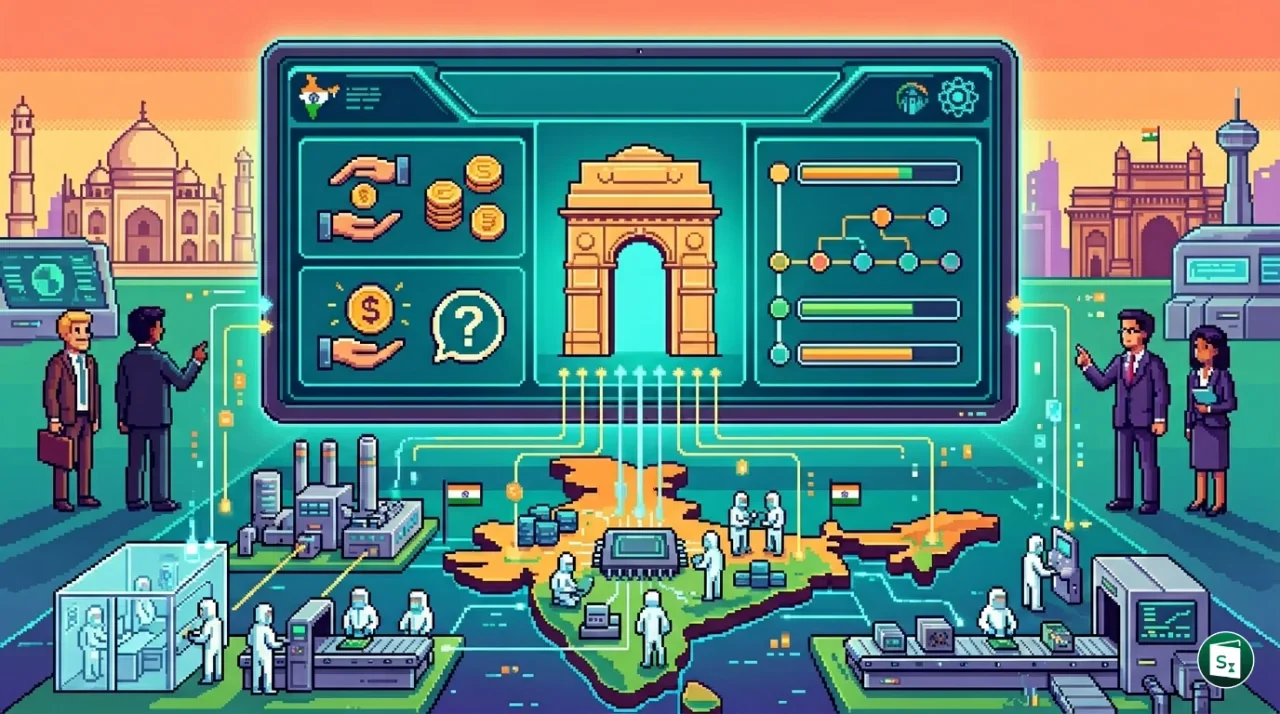
India inaugurated the official Investors Support portal on May 26, 2026, marking a major milestone in the country’s journey toward semiconductor self-reliance. This single-window digital platform, launched by the India Semiconductor Mission (ISM), is designed to simplify the entry process for global and domestic companies looking to invest in India’s chip ecosystem. By centralizing project tracking and regulatory communication, the government aims to enhance investor confidence and accelerate the implementation of the Semicon India Programme.
What Is the “Investors Support” Portal?
The Investors Support portal is a dedicated digital interface that functions as a single window for the entire semiconductor value chain. It provides a structured platform where investors can interact with the Ministry of Electronics and Information Technology (MeitY) and various state governments without navigating multiple bureaucratic layers. The portal features role-based access, allowing companies to track the real-time status of their applications for incentives and project approvals.
One of the most critical features of the platform is the Grievance Redressal mechanism. Investors can register specific concerns or technical bottlenecks, which are then addressed by ISM officials in coordination with nodal officers from relevant ministries. This proactive handholding is expected to reduce the “time to market” for new manufacturing units and ensure that global players like Micron and Tata Electronics have a smooth operational experience in India.
Evolution of the India Semiconductor Mission
The India Semiconductor Mission (ISM) was established in December 2021 as a specialized and independent business division within the Digital India Corporation. It serves as the nodal agency for implementing India’s comprehensive program for developing a sustainable semiconductor and display ecosystem. Initially launched with a financial outlay of ₹76,000 crore (approximately $10 billion), the mission has recently transitioned into its second major phase, known as ISM 2.0.
In the Union Budget 2026-27, the government announced a significant expansion of the mission’s scope. While the first phase focused primarily on attracting large scale fabrication units and packaging facilities, ISM 2.0 shifts the focus toward ecosystem deepening. This includes dedicated support for semiconductor manufacturing equipment, specialized chemicals, and the development of indigenous Intellectual Property (IP). The total projected outlay for this second phase is expected to reach nearly ₹1.5 trillion, reflecting India’s long term commitment to this capital intensive sector.
Progress of the Semicon India Programme
As of May 2026, the Semicon India Programme has achieved several landmark milestones. Over 13 major projects involving fabrication and advanced packaging have been approved, with a cumulative investment exceeding ₹1.64 lakh crore. The most significant among these is the Micron Technology facility in Sanand, Gujarat, which commenced India’s first commercial semiconductor packaging operations in early 2026. This was closely followed by Kaynes Technology, which has already begun delivering the first “Made in India” chips to the domestic market.
The program is structured into several specialized schemes to cover different aspects of the semiconductor ecosystem:
| Scheme Name | Focus Area | Key Incentives |
|---|---|---|
| Semiconductor Fabs | Large scale silicon wafer manufacturing | Up to 50% fiscal support on project cost |
| Display Fabs | Manufacturing of TFT LCD or AMOLED displays | Financial support for high end display units |
| Compound Semiconductors | Silicon Carbide (SiC) and Gallium Nitride (GaN) | Support for power electronics and EV chips |
| Design Linked Incentive (DLI) | Indigenous chip design and startups | Financial and infrastructure support for design |
Beyond manufacturing, the Design Linked Incentive (DLI) scheme has supported more than 24 domestic startups, fostering a “fabless” ecosystem in India. Furthermore, the government has committed ₹4,500 crore to modernize the Semiconductor Laboratory (SCL) in Mohali, ensuring it remains a premier hub for research and development.
Strategic Importance and Future Outlook
The launch of the Investors Support portal is not just a digital upgrade but a strategic move in the broader context of global techno-nationalism. Semiconductors have become the “new oil” of the 21st century, powering everything from smartphones and electric vehicles to advanced defense systems and Artificial Intelligence. By establishing a robust domestic manufacturing base, India aims to achieve technological sovereignty and reduce its vulnerability to global supply chain disruptions, especially in the wake of lessons learned from the “China Plus One” strategy.
India’s semiconductor market is projected to reach $110 billion by 2030, a massive jump from $38 billion in 2023. To capture this growth, the Semicon India Programme aims to move India from being a consumer of technology to a global custodian of the electronics supply chain. The government has set an ambitious goal for India to be among the top three semiconductor nations by 2047, the centenary of its independence. The focus on single window facilitation through the new portal is a key component of this vision, ensuring that the “Digital India” of the future is built on a foundation of indigenous hardware.
Key Takeaways
- The India Semiconductor Mission (ISM) launched the Investors Support portal on May 26, 2026, as a single-window digital gateway for global and domestic investors.
- The ISM was established in December 2021 and operates as an independent business division within the Digital India Corporation under MeitY.
- The Semicon India Programme has approved 13 major projects as of May 2026, with a total investment commitment of ₹1.64 lakh crore.
- India’s first commercial semiconductor packaging unit by Micron Technology became operational in Sanand, Gujarat, in early 2026.
- The ISM 2.0 phase, announced in Budget 2026-27, shifts focus toward advanced manufacturing and indigenous Intellectual Property (IP) development.
- The government has allocated ₹4,500 crore for the modernization of the Semiconductor Laboratory (SCL) in Mohali, Punjab.