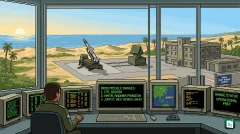
India test-fired the nuclear-capable Agni-4 medium-range ballistic missile (MRBM) on 6 August 2026 from the Integrated Test Range (ITR) at Chandipur, Odisha. The launch, conducted under the aegis of the Strategic Forces Command (SFC), validated all the operational and technical parameters of the missile system. Defence Minister Rajnath Singh congratulated the SFC and the DRDO (Defence Research and Development Organisation) for the flawless mission, which he described as a reassertion of India’s commitment to defend the nation with state-of-the-art technology.
Know the Agni-4 Missile
Agni-4, whose name comes from the Sanskrit word for fire, is the fourth missile in the indigenously developed Agni family of surface-to-surface ballistic missiles. It was earlier known during its development phase as Agni-II Prime, since it is essentially an extended-range derivative of the Agni-II MRBM. The missile has been developed by the DRDO and is produced by Bharat Dynamics Limited (BDL).
Agni-4 is a two-stage, solid-propellant missile that can carry a payload of up to 1,000 kg over a range of up to 4,000 km. It is designed to deliver both conventional and strategic nuclear warheads. The missile is accurate to less than 100 metres circular error probable (CEP), which means its warhead can land within a 100-metre radius of the target.
What makes Agni-4 a technological leap over its predecessors is its lightweight composite construction. The first stage uses a maraging steel casing, while the second stage uses a carbon-fibre casing. This weight reduction allows the missile to be deployed from road-mobile launchers, making it highly survivable since it can be moved around the country and is difficult for an adversary to locate and destroy in a first strike.
Key Specifications at a Glance
| Parameter | Agni-4 Specification |
|---|---|
| Type | Medium Range Ballistic Missile (MRBM) |
| Range | Up to 4,000 km |
| Propulsion | Two-stage, solid propellant |
| Length | About 20 metres |
| Launch weight | About 17,000 kg |
| Payload | Up to 1,000 kg (nuclear or conventional) |
| Guidance | Ring laser gyroscope-based inertial navigation with micro navigation system |
| Accuracy | Less than 100 metres CEP |
| Launch platform | Road-mobile transporter erector launcher |
| Developer | DRDO |
| Operator | Strategic Forces Command (SFC) |
The missile’s navigation is handled by an indigenous ring laser gyroscope-based inertial navigation system, supported by a redundant micro navigation system, ensuring precise targeting even in adverse conditions. Its avionics feature distributed architecture and a powerful onboard computer, which gives the missile the ability to correct itself for in-flight disturbances. The re-entry heat shield can withstand searing temperatures of more than 3,000 degrees Celsius, while keeping the internal electronics functional at under 50 degrees Celsius.
Where Agni-4 Fits in India’s Deterrence Strategy
India’s nuclear weapons are governed by the doctrine of credible minimum deterrence combined with a No First Use (NFU) policy. This means India will not use nuclear weapons first, but reserves the right to retaliate massively against any nuclear attack on Indian territory or on Indian forces anywhere. The credibility of this promise rests on two things: a survivable arsenal and reliable delivery systems.
With its 4,000 km reach, Agni-4 can strike targets deep inside mainland China when launched from eastern or northeastern India. Its strike footprint also covers parts of Southeast Asia, West Asia and Central Asia. Because the missile is road-mobile and can be fired rapidly, it denies an adversary the option of wiping out India’s nuclear forces in a surprise first strike. This survivability is what converts a mere stockpile of weapons into a genuine deterrent.
The launch was a user trial conducted by the SFC, the arm of the armed forces that will actually operate the missile in wartime. Such trials, carried out in the missile’s real operational configuration, are part of routine validation exercises that certify the weapon system’s readiness. The missile has been repeatedly flight-tested since its first test in 2010 and has been in service since around 2014, and this latest launch reinforces its place as a major pillar of India’s strategic deterrence posture and its nuclear triad, the three-pronged capability to deliver nuclear weapons from land, air and sea.
Who Conducts the Test: SFC and the Nuclear Command Authority
The Strategic Forces Command (SFC) is a tri-service command that functions as the operational arm of India’s Nuclear Command Authority (NCA). Commanded by a lieutenant general-rank officer or its air force and navy equivalents, the SFC is responsible for managing and administering the country’s nuclear weapons stockpile, including both tactical and strategic weapons. It holds the sole responsibility for initiating nuclear delivery after explicit approval is granted from the highest political level.
The NCA is a two-layered structure set up following the operationalisation of India’s nuclear doctrine in January 2003. It consists of a Political Council, chaired by the Prime Minister, and an Executive Council, chaired by the National Security Adviser. The Political Council is the only body authorised to approve the use of nuclear weapons, while the Executive Council provides inputs and executes the directives of the Political Council.
India’s Nuclear Doctrine
India’s official nuclear doctrine, announced in January 2003, rests on several clear commitments:
- A posture of No First Use, with nuclear weapons used only in retaliation against a nuclear attack on Indian territory or on Indian forces
- Retaliation, when it comes, will be massive and designed to inflict unacceptable damage
- Nuclear retaliatory attacks can be authorised only by the civilian political leadership through the NCA
- Non-use of nuclear weapons against non-nuclear weapon states
- India retains the option to retaliate with nuclear weapons in the event of a major chemical or biological attack
The DRDO, which developed and builds the Agni-4, was established in 1958 and functions under the Ministry of Defence with its headquarters in New Delhi. It is India’s premier agency for military research and development, responsible for missiles, aircraft, armaments and other defence technologies.
The Integrated Test Range at Chandipur
The Integrated Test Range (ITR) is a missile testing and evaluation centre of the DRDO located in Balasore district, Odisha. Established in 1982 as a project under the Integrated Guided Missile Development Programme (IGMDP), it provides safe launch facilities for the performance evaluation of rockets, missiles and airborne weapon systems. The range was renamed from the Interim Test Range to the Integrated Test Range in 2003.
The ITR is strategically located along the coast of the Bay of Bengal, roughly 200 km from Kolkata in the north and Bhubaneswar in the south. This location provides a safe, unpopulated flight corridor over the sea for missiles of all ranges. The range uses advanced instrumentation, including radars, Electro-Optical Tracking Systems (EOTS) and telemetry systems, to track a missile from take-off to its point of impact and record its performance parameters in real time.
The ITR consists of two launch complexes. Launch Complex-III (LC-III) at Chandipur, near the Proof and Experimental Establishment, hosted the first test of the Agni technology demonstrator on 22 May 1989. Launch Complex-IV (LC-IV), located on Abdul Kalam Island, is used for longer-range tests.
Abdul Kalam Island and the Launch Complexes
Abdul Kalam Island, formerly known as Wheeler Island, lies about 70 km south of Chandipur and hosts Launch Complex-IV of the ITR. The island was renamed on 4 September 2015 in honour of former President and missile scientist Dr A.P.J. Abdul Kalam, who was appointed the first director of the Integrated Test Range in 1982 and played a pivotal role in the missile programme.
The Odisha government leased the island to the DRDO for 99 years, and it has since become the test venue for most of India’s major missiles, including the Agni, Prithvi, BrahMos, Akash and Nirbhay. The launch on 6 August 2026 took place from Chandipur’s Launch Complex-III, continuing a tradition of validation trials that keeps India’s strategic forces at a high state of readiness.
Agni-4 Within the Larger Agni Missile Family
The Agni family, named after the Sanskrit word for fire, is India’s family of medium to intercontinental range ballistic missiles, developed under the Integrated Guided Missile Development Programme (IGMDP). The IGMDP, conceived in the early 1980s, was led by Dr A.P.J. Abdul Kalam and also produced the Prithvi, Akash, Nag and Trishul missiles. The first Agni test was the technology demonstrator launched from Chandipur in 1989.
Each missile in the family serves a distinct range bracket, allowing India to meet varied strategic requirements:
| Missile | Type | Range |
|---|---|---|
| Agni-I | Medium Range Ballistic Missile | 700-1,200 km |
| Agni-II | Medium Range Ballistic Missile | 2,000-3,500 km |
| Agni-III | Intermediate Range Ballistic Missile | 3,000-5,000 km |
| Agni-4 | Medium Range Ballistic Missile | 3,500-4,000 km |
| Agni-5 | Intercontinental Ballistic Missile | 7,000-8,000 km |
| Agni-P | Medium Range Ballistic Missile | 1,000-2,000 km |
| Agni-VI | Intercontinental Ballistic Missile | 11,000-12,000 km (under development) |
Agni-4 bridges the gap between the Agni-II and the longer-range Agni-5. Along the coast of Odisha over several test campaigns, it has repeatedly demonstrated high accuracy and reliability. The technological advances proven during Agni-4’s development, such as composite rocket motors, ring laser gyroscopes and compact avionics, have since been incorporated into the newer Agni variants, including the canister-launched Agni-P that is set to replace the older Agni-I and Agni-II missiles. This latest test is another reminder that India’s missile development programme continues to mature, strengthening the credibility of its minimum deterrence posture even as it pursues longer-range and more survivable systems.
Key Takeaways
- The Agni-4 medium-range ballistic missile was successfully test-fired on 6 August 2026 from the Integrated Test Range (ITR) at Chandipur, Odisha, under the aegis of the Strategic Forces Command (SFC).
- Agni-4 is a two-stage, solid-propellant missile with a range of up to 4,000 km and a payload capacity of 1,000 kg, capable of carrying both nuclear and conventional warheads.
- The missile, developed by the DRDO and produced by Bharat Dynamics Limited, is accurate to less than 100 metres CEP and is deployed on road-mobile launchers for survivability.
- The Strategic Forces Command is the operational arm of the Nuclear Command Authority, whose Political Council chaired by the Prime Minister is the sole authority for authorising nuclear retaliation.
- India’s nuclear doctrine, operationalised in January 2003, rests on No First Use, credible minimum deterrence, and civilian political control over nuclear weapons.
- The Integrated Test Range, established in 1982 under the Integrated Guided Missile Development Programme, consists of Launch Complex-III at Chandipur and Launch Complex-IV on Abdul Kalam Island, formerly Wheeler Island.