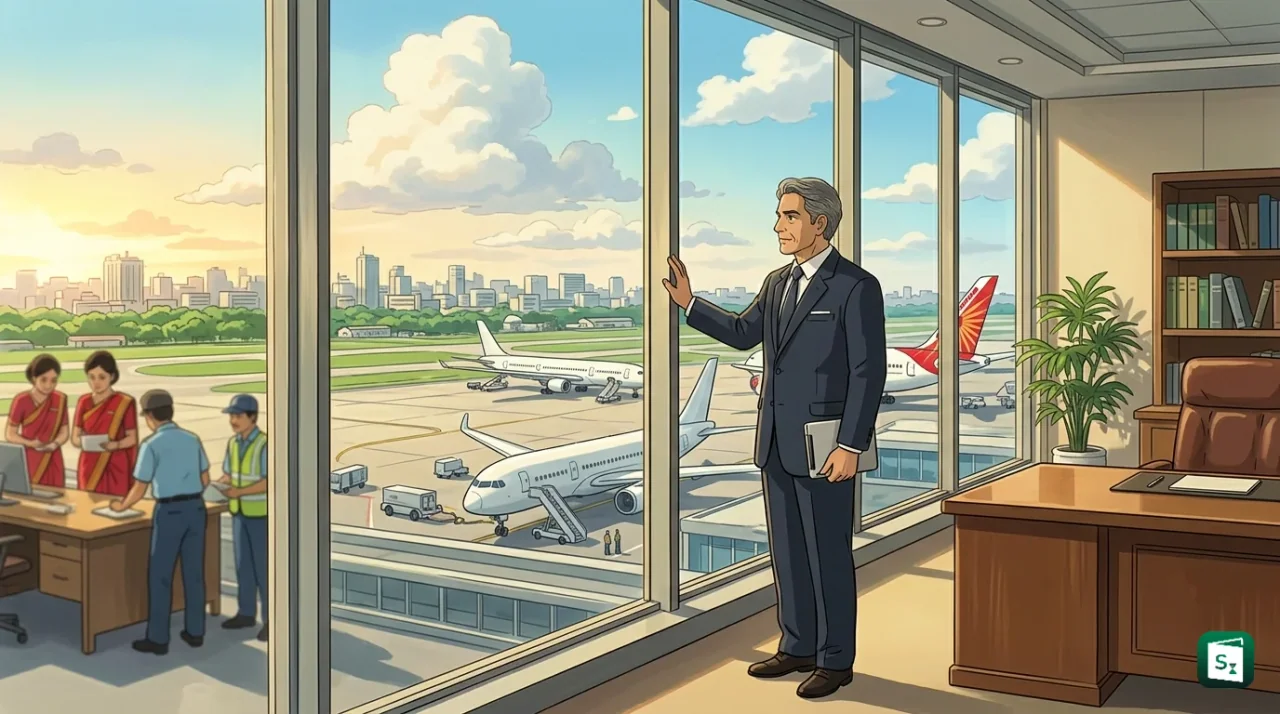
Air India appointed Tewolde Gebremariam as its new Chief Executive Officer and Managing Director on 5 August 2026, making him the second leader of the airline under the Tata Group. He succeeds Campbell Wilson, who steered the carrier’s early turnaround after Tata retook ownership in 2022. Gebremariam is widely regarded as one of the most successful airline leaders in the world after transforming Ethiopian Airlines into Africa’s largest carrier.
Who Is Tewolde Gebremariam?
Tewolde Gebremariam is an Ethiopian aviation executive who served as the group chief executive officer of Ethiopian Airlines from 2011 to 2022. Before that appointment, he spent nearly four decades inside the airline after joining it as a traffic officer in 1985. He worked his way through cargo handling and sales roles in Mumbai, Saudi Arabia, and North America before being named chief operating officer in 2006 and rising to the top job five years later.
He holds a bachelor’s degree in economics from Addis Ababa University and a master’s degree in business administration from the Open University. Gebremariam built a wide network in global aviation, serving on the board of governors of the International Air Transport Association (IATA) and on the executive committee of the African Airlines Association. Since stepping down from Ethiopian Airlines, he has worked as a senior strategic advisor to Delta Air Lines for some time.
The Ethiopian Airlines Turnaround
Gebremariam’s reputation rests on his tenure at the helm of Ethiopian Airlines, which he transformed from a regional player into Africa’s largest and most profitable airline group. Under his leadership, the airline’s annual revenue grew by more than fourfold, and its fleet expanded roughly threefold. Passenger numbers also climbed from about 3 million to 12 million a year before the pandemic disrupted travel.
The carrier’s growth rested on several pillars. Gebremariam invested heavily in aviation infrastructure, including a new cargo terminal, maintenance and repair overhaul hangars, and a training academy. He turned Addis Ababa into a competitive African hub and built a culture of on-time performance and operational reliability. This record is why Air India’s board saw him as the right person to expand its long-haul network and build a world-class hub operation.
About Ethiopian Airlines
Ethiopian Airlines is the flag carrier of Ethiopia, founded on 21 December 1945, with operations beginning in April the following year. It is wholly owned by the Ethiopian government and is headquartered at Bole International Airport in Addis Ababa. The airline joined the Star Alliance, the world’s largest airline network, in December 2011. Under Gebremariam, it pursued a multi-hub model across Africa through partnerships with smaller national carriers.
Why Air India Chose Gebremariam
Air India’s board ran a comprehensive search for the successor, with a dedicated committee evaluating internal and external candidates from around the world. The decision was made by the board under the chairmanship of N. Chandrasekaran, who also heads Tata Sons. The airline said it was looking for a leader with a proven record in managing large-scale turnarounds, delivering operational excellence, and driving profitable expansion.
Gebremariam fits that brief on several counts. His experience in expanding international long-haul networks and building hub operations matches Air India’s stated ambition to become a major global carrier connecting India to the world. His attention to safety, engineering quality, and workforce training also aligned with the airline’s priorities as it modernises its fleet. Analysts have described the appointment as a shift from the builder phase under Wilson to an operator phase focused on sustainable profitability.
About Campbell Wilson
Campbell Wilson, a New Zealand national, joined Air India in 2022 from Singapore Airlines, where he had helped set up and lead the budget carrier Scoot. His tenure covered the early years of the Tata transformation, including the massive fleet orders, a brand overhaul, and the merger with Vistara. He had informed the board of his intention to step down, and his appointment originally ran until 2027.
Air India’s Journey Back to Tata
Air India’s history is closely tied to the Tata Group. The airline was founded in 1932 by J.R.D. Tata as Tata Airlines, which made it the first airline in India. The government nationalised it in 1953 through the Air Corporations Act, and it operated as a state-owned carrier for about seven decades, developing a reputation for reliable long-haul service even as it accumulated heavy losses.
The Tata Group won back Air India in an open auction and officially regained control on 27 January 2022 through its wholly owned subsidiary Talace Private Limited. The deal transferred the airline, along with Air India Express and a stake in the ground-handling firm AISATS, for about ₹18,000 crore while Tata also took over a large portion of the airline’s debt. The return put the national carrier back under private ownership for the first time in decades.
The Vihaan.AI Transformation
After taking over, Tata unveiled a five-year transformation plan called Vihaan.AI in September 2022. Under the plan, Air India placed orders for 600 new aircraft, made up of a mix of narrow-body and wide-body jets from Boeing and Airbus. It also began refurbishing its existing fleet, upgrading cabins, and expanding its network, including the merger of the full-service carrier Vistara into Air India to create a larger unified entity. Singapore Airlines holds about a 25 percent stake in the enlarged carrier, with Tata owning the majority.
The Challenges Ahead
Gebremariam takes charge at a testing moment for the airline. Air India and its budget arm Air India Express reported a combined net loss of around ₹22,238 crore for the financial year 2025-26, more than double the previous year’s loss. The airline has also faced aircraft delivery delays that have slowed its expansion plans, and it is operating under cost-cutting instructions from the group.
The new chief also steps in while regulators investigate a crash of an Air India flight from Ahmedabad in June 2025 that killed more than 200 people. The accident brought heightened scrutiny of safety practices and led to the temporary grounding of several aircraft. An official report into the incident is expected later this year, and the leadership change comes before its findings are made public.
The Roadmap for Growth
Despite the losses, the airline’s underlying growth story remains intact. India is one of the world’s fastest-growing aviation markets, and Air India plans to keep expanding its international routes, especially to North America and Europe. Gebremariam has said the airline will focus on operational reliability, warm hospitality, and sustained long-term growth. The board has said it is confident he can convert the scale already built under Wilson into consistent profitability.
Key Takeaways
- Tewolde Gebremariam was appointed Chief Executive Officer and Managing Director of Air India on 5 August 2026, succeeding Campbell Wilson.
- Gebremariam previously served as group CEO of Ethiopian Airlines from 2011 to 2022, growing its revenue by more than fourfold.
- Ethiopian Airlines, founded on 21 December 1945, is the flag carrier of Ethiopia, headquartered in Addis Ababa, and joined the Star Alliance in December 2011.
- Air India was founded by the Tata Group in 1932, nationalised in 1953, and returned to Tata on 27 January 2022 for about ₹18,000 crore.
- Air India’s five-year transformation plan is called Vihaan.AI, unveiled in September 2022, and includes orders for 600 new aircraft.
- The appointment was made by the Air India board chaired by N. Chandrasekaran, who also heads Tata Sons.