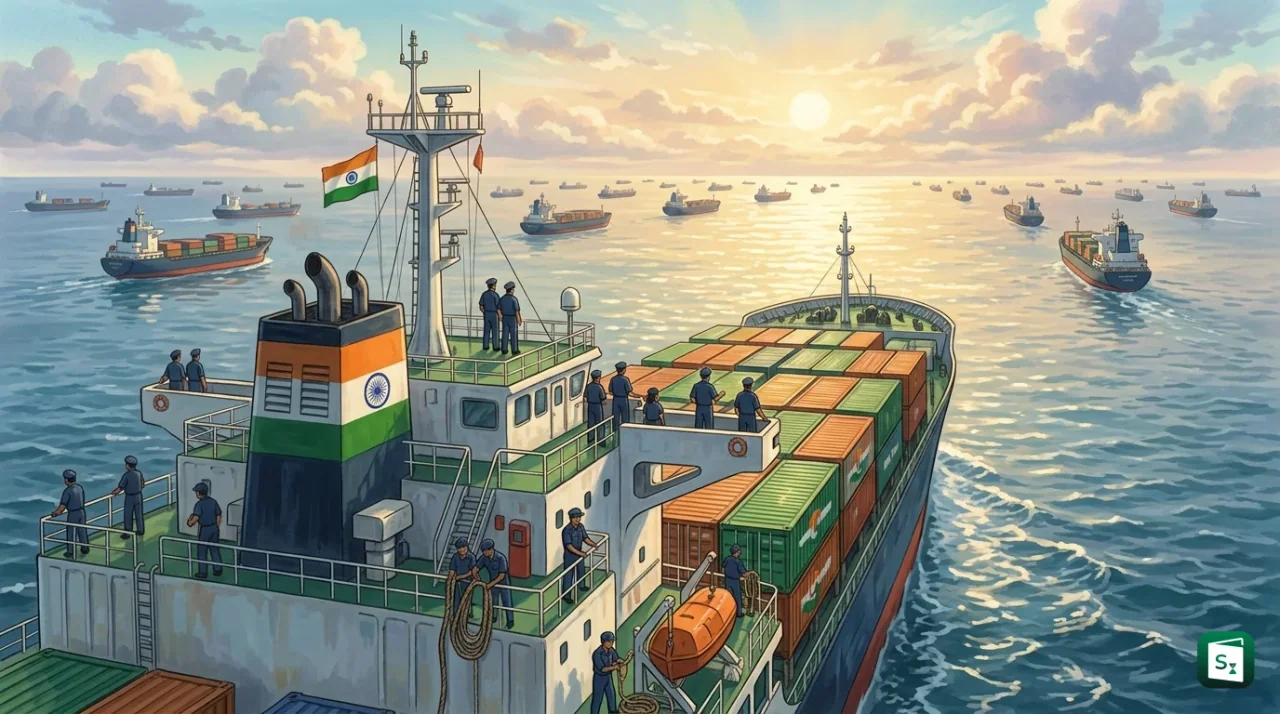
India has emerged as the world’s second-largest supplier of seafarers, contributing 3,11,936 maritime professionals to the global shipping industry. The ranking comes from the BIMCO-ICS Seafarer Workforce Report 2026, released jointly by the Baltic and International Maritime Council (BIMCO) and the International Chamber of Shipping (ICS). With this, India accounts for 12.16% of the global seafaring workforce, trailing only the Philippines and moving ahead of China, Russia and Indonesia.
What the Seafarer Workforce Report 2026 Says
The Seafarer Workforce Report is a joint publication of BIMCO and ICS that is brought out every five years. The previous edition was released in 2021. It maps the balance between the global supply of qualified seafarers available for ships trading internationally and the industry’s demand for crews to operate the world merchant fleet.
The 2026 edition estimates that roughly 2.57 million seafarers currently serve aboard about 85,148 merchant ships around the world. Of this total, close to 1.05 million are officers and about 1.52 million are ratings, the term used for crew members below officer rank who work on deck or in the engine room.
Two headline findings stand out. First, demand for seafarers has climbed 35% since the 2021 report, driven by the expansion of the global merchant fleet and the post-pandemic recovery in shipping. Second, the industry faces a shortage of 39,100 qualified officers in 2026, even though there is a surplus of about 56,890 ratings. The report warns that an additional 1,13,735 officers will be needed by 2030 to keep the fleet running, which translates into a requirement for roughly 22,747 new officers every year.
India’s Climb: From Fifth to Second Place
India’s rise to the second spot is one of the most striking transformations in the global seafarer market. In 2015, India supplied only 5.2% of the world’s seafarers and ranked fifth, behind China, the Philippines, Indonesia and Russia. By 2021, the share had inched up to 6%, but India remained in fifth position.
The 2026 report records a decisive breakthrough. India’s share of the global workforce has more than doubled over the past decade to 12.16%, pushing the country to second place worldwide. This jump reflects a broader trend in which Indian crews are being preferred for their competence, English proficiency and technical training.
The strength is especially visible in the officer cadre, the senior ranks on a ship that require the highest level of technical skill. India now supplies 1,40,718 officers, accounting for 13.41% of the world’s officer workforce, while 1,71,218 ratings make up 11.29% of all ratings serving aboard merchant vessels. A strong officer pipeline matters because officers, such as deck officers and engineering officers, are the hardest roles to replace and are considered the backbone of ship operations.
Who Are the Top Five Supplier Countries?
The report ranks the five largest seafarer-supplying countries based on estimates of each nation’s contribution to the global supply. Together, these five nations account for 56.25% of the worldwide seafarer workforce.
| Rank | Country | Seafarers Supplied |
|---|---|---|
| 1 | Philippines | About 4.60 lakh (2,03,179 officers and 2,56,968 ratings) |
| 2 | India | 3,11,936 (1,40,718 officers and 1,71,218 ratings) |
| 3 | China | About 3.10 lakh (roughly 1.11 lakh officers and 1.99 lakh ratings) |
| 4 | Russia | About 2.39 lakh |
| 5 | Indonesia | About 1.83 lakh |
The Philippines retains the top position it has held for decades, with its seafarers widely employed across the global fleet. Data collected from shipping companies further shows that Filipinos are the leading nationality among certified seafarers serving aboard international vessels, followed by Ukrainian, Indian, Romanian and Polish seafarers. India overtaking China is notable, as China had long been one of the largest suppliers of maritime manpower.
Why the Global Market Needs India’s Seafarers
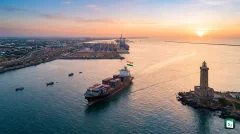
Seafaring is the engine that keeps world trade moving. The international shipping industry carries roughly 90% of global trade, transporting food, fuel, raw materials and finished goods across oceans. Seafarers are therefore indispensable to the global economy, and any gap in the workforce directly threatens trade flows.
The officer shortage is the industry’s most pressing concern. The report notes that demand for seafarers has grown faster than supply, and the shortage of qualified officers is expected to persist through the decade. This is where India gains strategic importance. With a large pool of trained officers and internationally recognised certification, India is positioned as a critical partner in meeting the shipping industry’s future manpower needs.
The officer shortfall is being worsened by demographic pressures in traditional maritime nations of Europe and the retirement of experienced crews. Shipping companies have found it hardest to recruit engineering officers and deck officers, the roles that are most affected by growing automation and the industry’s shift to new fuels and digital systems. India’s deep training ecosystem gives it an edge in supplying exactly these categories of skilled personnel.
There is also an economic angle for India itself. Indian seafarers working on foreign ships bring in foreign exchange through wages and remittances, which support consumption and investment in coastal and inland communities. Maritime employment is one of the few routes through which young Indians can earn globally competitive wages without permanently settling abroad.
Reforms Behind India’s Maritime Rise
India’s ascent to the second position is not an accident of the market. It rests on more than a decade of policy attention to maritime education, certification and legal reform, led by the Ministry of Ports, Shipping and Waterways.
A New Maritime Legal Framework
A series of modern laws has reshaped India’s maritime governance. Beginning with the Inland Vessels Act, 2021, the government has enacted the Merchant Shipping Act, 2025, the Indian Ports Act, 2025, the Coastal Shipping Act, 2025, the Bills of Lading Act, 2025 and the Carriage of Goods by Sea Act, 2025. Together, these legislations have modernised maritime regulation, strengthened seafarer welfare, aligned Indian shipping laws with international conventions and simplified compliance for both Indian and foreign operators.
Training Capacity and Digitisation
The government has expanded maritime education and skilling, increased the capacity of maritime training institutes and strengthened compliance with the STCW Convention, the international benchmark for seafarer training set by the International Maritime Organization (IMO). India now has more than 160 STCW-compliant training institutes that produce certified officers and ratings.
Certification and regulatory services have been digitised through the Directorate General of Shipping (DGS), the agency under the Ministry of Ports, Shipping and Waterways that regulates seafarer certification. Digital processing of certificates and identity verification has cut paperwork delays, allowing Indian cadets to move into global shipping jobs faster.
Another encouraging trend is the rise in women entering seafaring. The number of female seafarers from India grew from about 1,600 in 2021 to more than 7,000 in 2025. While still a small fraction of the total workforce, the increase signals that maritime careers are opening up in a profession historically dominated by men.
What Is Mission 20%?
Building on the new ranking, the government has set a more ambitious national goal called Mission 20%. The initiative aims to increase India’s share of the global seafaring workforce from the current 12.16% to 20%. If achieved, one in every five seafarers serving aboard merchant ships anywhere in the world would be Indian.
The mission rests on several pillars: expanding maritime training capacity, strengthening shipboard training opportunities, deepening industry-academia partnerships, leveraging digital technologies and creating greater opportunities for young Indians, especially women, to pursue careers at sea. The focus is not just on adding training seats but also on placement channels, retention and international recognition of Indian certification.
Mission 20% fits into India’s larger maritime ambitions. It complements the Maritime India Vision 2030, the government’s decade-long blueprint for the sector, and the Maritime Amrit Kaal Vision 2047, which seeks to make India a leading maritime nation by 2047. A stronger seafarer base adds a human-capital layer to India’s push for port-led development, shipbuilding and maritime services.
The Road Ahead
India’s new standing is a milestone, but sustaining it will demand steady investment in quality training, faster certification and better working conditions for crews. The report itself stresses that recruitment and retention must be closely monitored, since the officer gap risks widening if training capacity does not keep pace with demand.
Competition from other labour-supplying nations will not ease. The Philippines continues to dominate the ratings segment, while China and Eastern Europe remain strong in officers. India will also need to address challenges such as the working conditions and safety of its seafarers in conflict-affected shipping lanes, which remain a concern for the industry.
Yet the underlying fundamentals favour India. A young population, strong English skills, internationally compliant training standards and a growing female talent pool give the country a durable advantage. If the current trajectory holds, India’s maritime workforce could become one of its most significant, yet underappreciated, global assets.
Key Takeaways
- The BIMCO-ICS Seafarer Workforce Report 2026, released jointly by the Baltic and International Maritime Council (BIMCO) and the International Chamber of Shipping (ICS), ranks India as the world’s second-largest supplier of seafarers.
- India contributes 3,11,936 seafarers, a 12.16% share of the global workforce, behind only the Philippines and ahead of China, Russia and Indonesia.
- India supplies 1,40,718 officers (13.41% of the global officer workforce) and 1,71,218 ratings (11.29% of global ratings).
- The report is published every five years; it estimates global seafarer supply at 2.57 million and a shortage of 39,100 qualified officers in 2026.
- The top five seafarer-supplying countries are the Philippines, India, China, Russia and Indonesia, which together account for 56.25% of the global workforce.
- Mission 20% aims to raise India’s share of the global seafaring workforce from 12.16% to 20%, so that one in every five global seafarers is Indian.