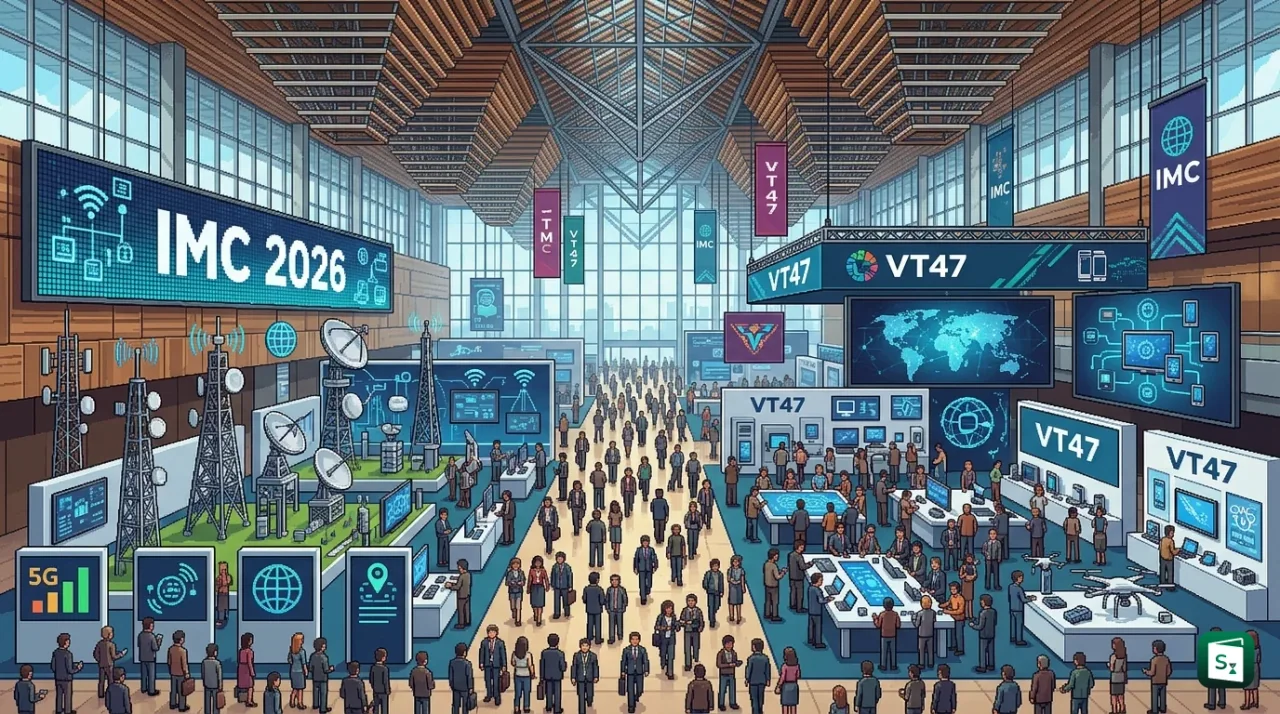
Prime Minister Narendra Modi inaugurated the 10th India Mobile Congress (IMC) 2026 on 8 October 2026 at Yashobhoomi in Dwarka, New Delhi. The four day forum, held from 7 to 10 October 2026 under the theme Scale Without Boundaries, is recognised as the largest digital technology forum in Asia. It brought together policymakers, global technology firms, startups and investors to take Indian telecom and hardware brands from domestic scale to global leadership.
What Is India Mobile Congress?
The India Mobile Congress (IMC) is India’s flagship annual forum for telecom, media and digital technology, combining an international conference with a large technology exhibition. The Department of Telecommunications and industry body COAI organise the forum to connect government, industry, startups, academia and global investors.
The forum began in September 2017 at Pragati Maidan in New Delhi with the theme Connecting the Next Billion. The first edition drew about 32,000 visitors, 152 speakers and 100 exhibitors, at a time when fourth generation (4G) networks were still expanding across India. The Department of Telecommunications (DoT), which works under the Ministry of Communications, joined hands with the Cellular Operators Association of India (COAI) to create the platform. COAI is an industry association formed in 1995 and its core members include private telecom operators such as Reliance Jio, Bharti Airtel and Vodafone Idea.
IMC has been held every year since then. The 2020 and 2021 editions were held online. The 9th edition in 2025 used the theme Innovate to Transform and focused on next generation connectivity, semiconductors, quantum communication and fraud prevention. IMC is often compared with the Mobile World Congress organised in Barcelona by the GSMA, which stands for Global System for Mobile Communications Association. While the Barcelona event is global, IMC is the dedicated Indian edition for South Asia and serves as Asia’s largest digital technology forum.
When Is India Mobile Congress 2026?
The India Mobile Congress 2026 was held from 7 to 10 October 2026 at Yashobhoomi, the India International Convention and Expo Centre in Dwarka, New Delhi. Prime Minister Narendra Modi inaugurated the 10th edition on 8 October 2026 in the presence of global industry leaders.
Union Communications Minister Jyotiraditya Scindia had unveiled the theme Scale Without Boundaries on 29 July 2026. The theme reflects India’s aim to take home grown technology beyond pilot projects and spread it across sectors, regions and world markets. It signals a shift from only using technology to designing, developing and scaling technology for the world, in line with the Viksit Bharat 2047 vision.
The scale of IMC 2026 was far larger than the first edition. The organisers expected more than 1.5 lakh attendees from over 100 countries. The four day programme listed more than 2,000 technology use cases and over 120 sessions.
| IMC 2026 at a Glance | Detail |
|---|---|
| Edition | 10th edition |
| Dates | 7 to 10 October 2026, inauguration on 8 October 2026 |
| Venue | Yashobhoomi, India International Convention and Expo Centre, Dwarka, New Delhi |
| Theme | Scale Without Boundaries |
| Organisers | Department of Telecommunications and Cellular Operators Association of India |
| Expected participation | 1.5 lakh visitors, 500 partners and exhibitors, 600 startups, 900 thought leaders |
Yashobhoomi is among the world’s largest meeting and exhibition destinations. Phase 1 of the centre was dedicated to the nation in September 2023. Built at a cost of about ₹5,400 crore over 8.9 lakh square metres, the convention centre can host more than 11,000 delegates and has one of the largest exhibition halls in the world. The centre connects directly to the Delhi Airport Metro Express line through the Yashobhoomi Dwarka Sector 25 station.
Who Organises IMC and What Are the Four Pillars?
The Department of Telecommunications (DoT) and the Cellular Operators Association of India (COAI) jointly organise the India Mobile Congress. DoT frames telecom policy, manages spectrum and drives programmes such as Digital India and the Bharat 6G Alliance. COAI brings private operators, equipment makers, device firms and digital platforms to a common table. In 2026, the GSMA also played an expanded role, which helped draw more than 20 international operators to the leadership dialogues.
IMC 2026 was structured around four pillars with Sanskrit names. Each pillar grouped a set of goals for India’s digital future.
| Pillar | Meaning | Focus Area |
|---|---|---|
| Srishti | Building the Future | Innovation, research, next generation infrastructure and deep tech demonstrations |
| Samvardhan | Fueling Growth | Economic growth, investment, entrepreneurship, jobs and global technology leadership |
| Sashakt | Expanding Opportunities | Inclusive access, citizen empowerment, startups, and digital opportunities for all regions |
| Suraksha | Strengthening Trust | Secure networks, fraud prevention, cyber safety and resilient digital systems |
Together, the four pillars carry the message of Scale Without Boundaries. The idea is simple. New technology must move out of laboratories, reach villages and cities alike, win public trust and create growth at national scale.
Nine Anchor Sectors and Four New Domains
The 2026 edition covered nine established technology sectors. These sectors form the building blocks of next decade connectivity and manufacturing.
| Anchor Sector | What It Covers |
|---|---|
| 5G and 6G | Expansion of fifth generation networks and research on sixth generation standards |
| AI networks | Telecom networks that use artificial intelligence (AI) to manage traffic and improve service |
| Semiconductors | Chips that power phones, devices, vehicles and industrial machines |
| Non-terrestrial networks | Satellite based connectivity that reaches remote and hilly areas beyond mobile towers |
| Cyber security | Tools to protect networks, phones and digital payments from hacking and fraud |
| Quantum communication | Ultra secure communication based on the science of quantum physics |
| Enterprise transformation | Digital tools that help factories, banks and offices work faster and smarter |
| Circular economy and ESG | Reuse of electronic waste and environment friendly business practices |
| Electronics manufacturing | Local production of phones, components and hardware under Make in India |
IMC 2026 also added four new domains to reflect changing demand. These were smart mobility, stadium experiences, industrial robotics and transport technology. Smart mobility covers connected vehicles and traffic systems. Stadium experiences cover high density networks that serve thousands of fans in one venue. Industrial robotics covers automated machines for factories and warehouses.
The conference programme included a Global Telecom Leadership dialogue, an International 6G Symposium, a Satcom Summit, a Cybersecurity Summit, a Quantum Summit and a Smart Mobility Summit. The Department of Telecommunications also showcased citizen safety tools such as Sanchar Saathi for reporting lost phones and fraudulent calls, and the Financial Fraud Risk Indicator for blocking risky digital transactions.
From ₹268 to ₹8: What the Fall in Data Prices Shows
During the conference, Prime Minister Narendra Modi stated that the price of one gigabyte (GB) of mobile data has fallen from ₹268 in 2014 to ₹8 in 2026. Union Communications Minister Jyotiraditya Scindia repeated the same figure and linked it to wider digital growth. Average monthly data use per person rose from 0.26 GB ten years ago to more than 36 GB today, while data costs fell by about 97 percent.
India now has more than 1.35 billion telecom subscribers and over 1.09 billion broadband connections. The Prime Minister launched fifth generation (5G) services at IMC in October 2022. Since then, 5G has reached 550 million users across 99.9 percent of districts through more than 5.5 lakh base stations. Internet speeds have risen nearly tenfold. The stated national aim is to connect 1 billion 5G users by 2030 and to secure a strong share of global sixth generation (6G) patents through the Bharat 6G Alliance, which was formed in 2023.
The address also underlined recent telecom reforms. The Telecommunications Act, 2023 replaced a colonial era law from 1885 and created a modern framework for spectrum, right of way and user safety. The GatiShakti Sanchar Portal has made right of way approvals for mobile towers faster through a single digital window. Work is also under way to ease older financial burdens linked to Adjusted Gross Revenue and bank guarantees.
On safety, the Prime Minister called for a global mechanism to stop digital fraud before it reaches citizens. He asked governments, technology firms, telecom operators and financial bodies to act together, and invited the GSMA to help build the system. The appeal matters because fraud calls and deepfakes now cross borders in seconds. India has offered to share its experience with layered defences such as blocking spoofed international calls, AI based detection of fake connections and citizen reporting through Sanchar Saathi.
What Is Viksit Tech 47?
Viksit Tech 47 (VT47) is the flagship spotlight programme of IMC 2026 for Indian hardware and technology brands. The platform identifies, recognises and supports Indian companies that can grow from domestic success into global brands. Techarc, a technology analytics and research firm, served as the knowledge partner. The initiative covers consumer devices, wearables and audio products, video and surveillance, connected mobility, smart homes and Internet of Things (IoT), components and manufacturing, artificial intelligence and deep tech, and software platforms.
The first edition of VT47 released its flagship report titled Building India’s Global Brands in Gadgets, Devices, Appliances and Connected Cars. The report was released by Pankaj Mohindroo, Chairperson of the India Cellular and Electronics Association (ICEA), along with leaders from Lava International, MediaTek India, Mivi and Qubo. ICEA is the industry body for mobile and electronics manufacturing in India.
The report presents a 129 brand index of Indian owned consumer technology firms. Together, these brands earn more than ₹60,000 crore per year, or an average of only ₹465 crore per brand. Only 14 brands earn more than ₹500 crore and only two brands cross ₹2,000 crore. This is small when compared with India’s total electronics production of ₹13.11 lakh crore in 2025-26, where much of the value still rests with global brands and contract makers. The report argues that true value comes when a brand owns its design, software and intellectual property. It sets a bold 2047 ambition of 50 Indian brands each earning more than ₹1 lakh crore.
VT47 also announced its first set of awards to correct the software first image of Indian technology and honour hardware builders.
| Award | Winner |
|---|---|
| Viksit Tech Leader of the Year | Sunil Raina, Managing Director, Lava International |
| Viksit Tech Next Generation Leader | Himanshu Tandon, Chief Business Officer, Mivi |
| Viksit Tech Brand of the Year | Lava International |
| Viksit Tech Enabler of the Year | MediaTek India |
| Dr M J Zarabi Indigenisation Award | Entra Innovations, Dharwad, for VAAYU, India’s first indigenous automotive Tyre Pressure Monitoring System chip, developed with IIT Dharwad |
The Zarabi award, supported by Dixon Technologies, carries a cash prize of ₹10 lakh. It honours work in design, engineering, components and manufacturing that replaces imports with home grown hardware.
The Way Forward
The message from IMC 2026 was that the first decade brought the world to India, while the next decade must take India to the world. That means moving from large subscriber numbers to ownership of design, standards and intellectual property. Priorities include spreading 5G to 1 billion users by 2030, building a strong share of global 6G patents, scaling local chip and device production, and turning VT47 into a yearly launchpad for global brands.
Trust will decide how far scale can go. Fraud is now a network problem that needs a network answer across countries. India has built layered defences at home and now supports joint trials on global caller identity standards through the International Telecommunication Union (ITU), a United Nations agency for digital technology headquartered in Geneva and founded in 1865. If industry, regulators and global bodies act together, connectivity can grow without fear and Indian innovation can reach new markets without boundaries.
Key Takeaways
- The 10th India Mobile Congress was held from 7 to 10 October 2026 at Yashobhoomi in Dwarka, New Delhi and was inaugurated on 8 October 2026.
- IMC 2026 used the theme Scale Without Boundaries and was jointly organised by the Department of Telecommunications and the Cellular Operators Association of India.
- The four pillars of IMC 2026 were Srishti, Samvardhan, Sashakt and Suraksha, covering innovation, growth, inclusive access and trust.
- The price of 1 GB of mobile data fell from ₹268 in 2014 to ₹8 in 2026, while monthly data use rose from 0.26 GB to over 36 GB.
- The first Viksit Tech 47 report mapped 129 Indian brands earning over ₹60,000 crore and set a target of 50 Indian brands with over ₹1 lakh crore revenue by 2047.
- The Dr M J Zarabi Indigenisation Award went to Entra Innovations for VAAYU, India’s first indigenous automotive Tyre Pressure Monitoring System chip.