Union Minister for Tourism and Culture Gajendra Singh Shekhawat launched the National Digital Tourism Stack at Bharat Mandapam in New Delhi on 27 September 2026 to mark World Tourism Day. The Ministry of Tourism has built the stack with the Open Network for Digital Commerce (ONDC), with support from the International Centre for DPI Innovation and Advancement (ICDIA). It aims to make 23,000 tourism experiences and homestays discoverable, trustable and bookable across apps by the end of 2028.
What Is ONDC and How Does It Work?
ONDC stands for the Open Network for Digital Commerce. It is an open network that lets buyers and sellers find each other and complete transactions even if they use different apps. It works like the Unified Payments Interface (UPI) does for payments, but for shopping, mobility, food, travel and other commerce.
The ONDC initiative was started by the Department for Promotion of Industry and Internal Trade (DPIIT) under the Ministry of Commerce and Industry. The department assigned the task to the Quality Council of India (QCI). ONDC was registered as a non profit Section 8 company in December 2021, with QCI and Protean eGov Technologies as founding members. It is therefore a government initiated company with public and private shareholders, not a government department and not a shopping app itself.
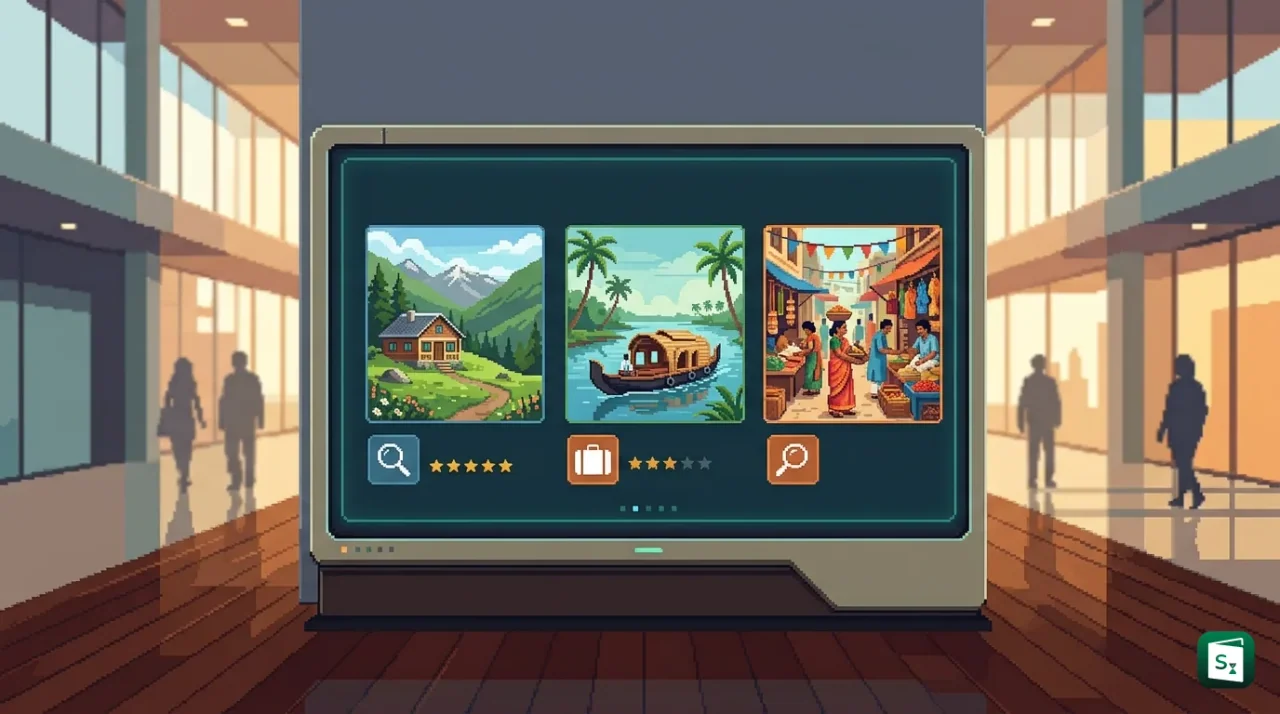
On the ONDC network, different players perform different roles through shared open protocols. Buyer apps display products to customers. Seller apps bring merchants online and manage catalogues. Logistics providers handle delivery and fulfilment. A common gateway manages search and discovery across all of them. A traveller can search on one buyer app and book a stay or experience listed by a seller on another app, with payment, rating and grievance systems built into the flow.
By June 2026, the ONDC network had spread to about 1,000 cities, with nearly 5 lakh sellers and close to 90 lakh transactions per month. More than 1,000 tourism experiences were already live on the network, including around 170 monuments of the Archaeological Survey of India (ASI) and more than a dozen national museums. This travel base is the starting point for the new tourism stack.
What Is the National Digital Tourism Stack?
The National Digital Tourism Stack is shared digital public infrastructure for tourism built by the Ministry of Tourism with ONDC and ICDIA. It lets providers list once and appear across many buyer apps, with verified identity, licences, search, payments, ratings and grievance redressal in one flow.
The stack is not a single booking website. It is a set of common building blocks that sits below apps and connects them. A homestay owner, guide, museum, boat operator or temple trust can create a verified listing once. That listing then becomes visible on all participating buyer apps, from travel platforms to chat and metro apps. The Ministry acts as the catalyst and lead, while states, Union Territories and industry curate and validate the supply. A steering committee will guide implementation.
Three words define its goal. Discoverable means a small provider in a small town can be found without paying high commission to a closed platform. Trustable means the identity of the tourist and the provider is verified, and credentials, licences and certifications appear at the point of booking. Bookable means search, payment, confirmation, ratings and complaint handling happen in the same open flow.
Tourism Secretary Bhuvnesh Kumar said artificial intelligence (AI) will sit at the front end of the project. The vision is described as One ticket, One pass, to bring flights, hotels, cabs, boat rides and even a temple aarti onto a unified journey. The idea is that planning and travel should be easy, safe and available in the traveller’s preferred language, with less paperwork and easier booking and payment.
Implementation Roadmap: From October 2026 to December 2028
The Ministry of Tourism will implement the programme in phases with states, Union Territories and industry. The project has been approved and onboarding of services will now start. The Ministry will work with states and Union Territories to curate and validate experiences, with special focus on experiences that are not online today or are online only in a limited way.
The overall target is 23,000 experiences and homestays by the end of 2028. A flyer shared at the launch broke this into 14,000 tourism experiences and 9,000 homestays. The coverage is planned across 28 States and eight Union Territories, alongside development of a credentialled tourism ecosystem.
| Phase | Period | What Will Happen |
|---|---|---|
| Preparation and development | October to December 2026 | Build the stack, set standards for trust, verification and onboarding, form steering committee |
| Pilot | January to June 2027 | First batch of experiences and homestays go live on the network |
| Scale up | July 2027 to December 2028 | Nationwide supply onboarding drive to reach 23,000 listings |
The roadmap builds on supply that is already live. ONDC data places current live travel inventory at more than 850 experiences in some updates and more than 1,000 experiences in later updates, including 170 ASI monuments and national museums. Varanasi has been showcased as an early example where city tourism inventory was digitised. Buyer side apps carrying travel inventory include names such as StayBook, DMRC Sarthi, WhatsApp PeLocal, OneTicket and Highway Delite, with more apps expected to join.
Why Tourism Needs Shared Digital Infrastructure
Tourism products today sit in separate silos. Flights, hotels, cabs, guides, monuments, museums and local activities are booked on different websites. Many small providers have no digital presence at all. A traveller planning a trip to a big city or a small town faces a painful process of jumping between platforms, repeating details and struggling to judge which operator is genuine.
The stack tries to solve this with the Digital Public Infrastructure (DPI) approach. DPI means minimal shared technology and open rules created or guided by the state, on which private apps can compete and innovate. India has used this model for identity through Aadhaar, for payments through UPI, for documents through DigiLocker, and for commerce through ONDC. These systems together are often called India Stack, a set of open interfaces for identity, payments, data and open networks.
| DPI Building Block | What It Does | Tourism Use |
|---|---|---|
| Aadhaar based identity and e-KYC | Verifies a person remotely and reduces paperwork | Verifies tourists and providers |
| UPI | Allows instant interoperable payments between apps | Pays for stays, tickets and experiences |
| DigiLocker | Provides verifiable digital documents | Shows licences and certificates at booking |
| ONDC open protocols | Standardises catalogue, order and fulfilment | Makes listings visible across many apps |
The International Centre for DPI Innovation and Advancement (ICDIA) supports the project on the DPI side. ICDIA is a wholly owned subsidiary of the National Institute for Smart Government (NISG) under the Ministry of Electronics and Information Technology (MeitY). It was created as the implementing arm for DPI innovation and global sharing, and it is also building the Bharat DPI Experience Centre to showcase India Stack models. In the tourism stack, its role is to bring trust, verification, onboarding and transaction layers that prove identity and surface credentials rather than relying on self declaration.
World Tourism Day 2026 and the Bharat Mandapam Launch Event
World Tourism Day is observed every year on 27 September by UN Tourism, the United Nations agency for tourism headquartered in Madrid, Spain. The agency was earlier known as the World Tourism Organization (UNWTO). For 2026, the global theme focuses on the digital agenda and artificial intelligence to redesign tourism. India marked the day with a central ceremony at Bharat Mandapam in New Delhi.
Bharat Mandapam is India’s large convention and exhibition complex at Pragati Maidan in New Delhi. It is managed by the India Trade Promotion Organisation (ITPO) and hosted the G20 Leaders Summit in 2023. The 2026 tourism ceremony there brought together senior officials and industry representatives, including Tourism Secretary Bhuvnesh Kumar and Additional Secretary and Director General Suman Billa.
At the event, the Minister said travellers today seek authentic experiences such as local cuisine, local art, local traditions and meaningful connections that create memories. He said the next phase of growth must reach beyond popular destinations and create opportunities for local communities, entrepreneurs, women and youth, making tourism more balanced, inclusive and sustainable. The Ministry also released India Tourism Statistics 2026 at the same function.
Two other launches took place alongside the stack. The Ministry launched the National Mission for Alternative Destinations under the Dekho Apna Desh Campaign 2.0. The original Dekho Apna Desh initiative was started in January 2020 to promote domestic tourism. The 2.0 version aims to redistribute demand toward lesser known but tourism ready places in four groups, which are hill and mountain areas, coastal and waterfront areas, heritage and cultural areas, and regional pilgrimage areas. The plan includes bookable products that combine stay, transport, food and local activities, promotion with a social media first approach, and a national tourism dashboard to track footfall, carrying capacity and visitor feedback.
The Ministry also exchanged five non commercial and non binding Memoranda of Understanding to support promotion, skilling and responsible tourism.
| Partner | Focus Area |
|---|---|
| Airbnb India | Homestay development and host skilling |
| FlixBus India | Destination promotion and responsible travel through intercity mobility |
| Glance Digital Experience of InMobi Group | Digital tourism content and responsible visitor messaging |
| Eicher Group Foundation | Community led heritage based sustainable tourism in the Himalayan region |
| MakeMyTrip India | Promotion of unexplored villages, authentic local shopping and identified travel initiatives |
Key Takeaways
- The National Digital Tourism Stack was launched on 27 September 2026 at Bharat Mandapam, New Delhi to mark World Tourism Day.
- The stack targets 23,000 listings by end of 2028, comprising 14,000 tourism experiences and 9,000 homestays.
- ONDC stands for Open Network for Digital Commerce, started by DPIIT and registered as a Section 8 company in December 2021.
- ICDIA is a wholly owned subsidiary of NISG under MeitY and supports trust and verification for the stack.
- World Tourism Day is observed on 27 September every year by UN Tourism, headquartered in Madrid, with the 2026 theme on digital agenda and AI.
- The original Dekho Apna Desh initiative was launched in January 2020, and its 2.0 version promotes alternative hill, coastal, heritage and pilgrimage destinations.