The National Institute of Open Schooling (NIOS) has launched a nationwide strategic initiative to re-enroll approximately 2 crore out-of-school children (OOSC), primarily in the 14 to 18 age group. This massive drive aligns with the goals of the National Education Policy (NEP) 2020, which aims to achieve a 100% Gross Enrolment Ratio (GER) from pre-school to secondary level by 2030. By providing flexible learning pathways, the initiative seeks to address India’s persistent dropout crisis and ensure universal access to quality education.
Re-enrolling 2 Crore Students: A Strategic Push
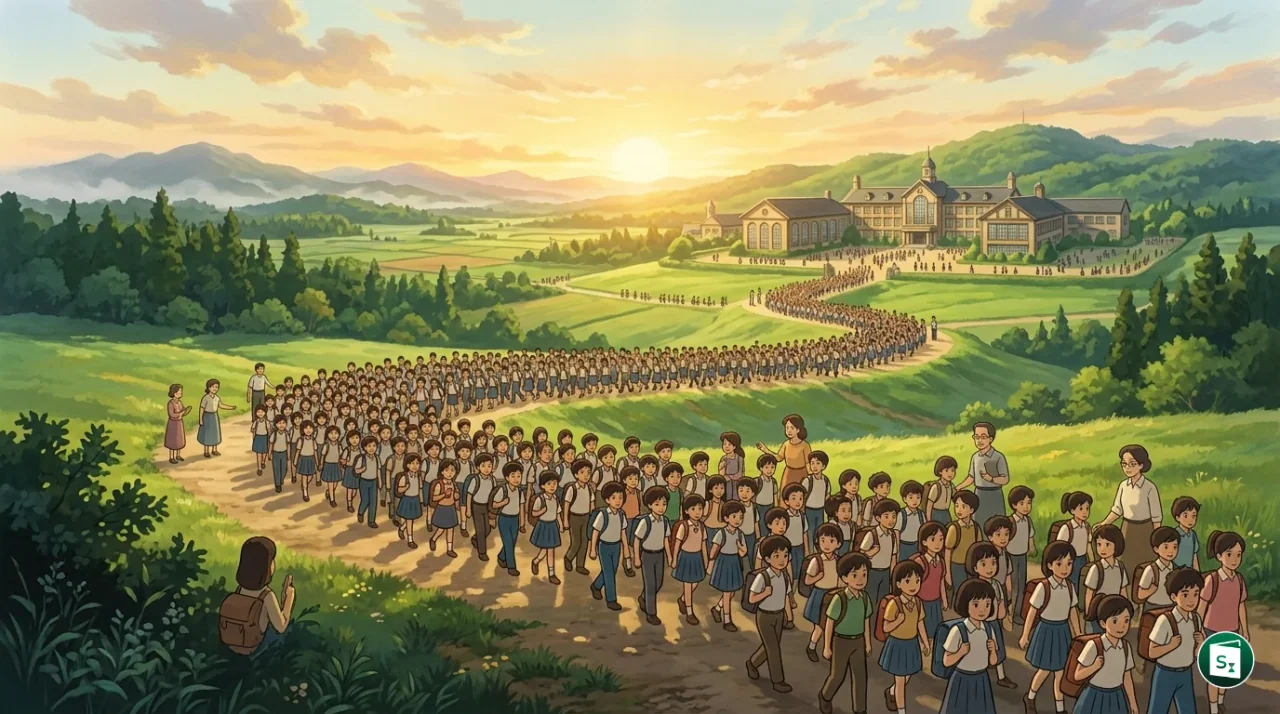
The recent initiative by the Ministry of Education and the National Institute of Open Schooling (NIOS) addresses a staggering reality in the Indian education landscape. Data from the Periodic Labour Force Survey (PLFS) 2023-24 revealed that over 2 crore children in the 14 to 18 age group are currently outside the formal schooling system. These adolescents often find themselves excluded from the classroom due to a combination of socioeconomic factors, including acute financial hardship, the burden of domestic responsibilities, and early entry into the workforce to support their families.
The government recognizes that bringing such a large population back into the fold requires more than just conventional methods. The strategic drive focuses on identifying these Out-of-School Children (OOSC) at the grassroots level and offering them a dignified and flexible way to complete their education. This is not merely an enrollment drive but a comprehensive effort to bridge the transition gap from elementary to secondary education, where the maximum number of dropouts is typically recorded.
Key Components of the NIOS Initiative
To achieve the ambitious target of universal secondary education, NIOS has introduced several innovative features designed to remove barriers to learning. These components focus on outreach, infrastructure expansion, and academic flexibility.
Outreach through NIOS Mitra
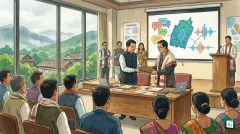
A cornerstone of this drive is the NIOS Mitra program. This outreach initiative utilizes trained facilitators, known as Mitras, who work at the community level to identify out-of-school children. These facilitators use technology-driven tools to map dropouts, counsel their parents, and simplify the enrollment process. By acting as a bridge between the institution and the household, the NIOS Mitra program ensures that the most marginalized sections of society are not left behind.
Flexible Academic and Vocational Pathways
The initiative leverages the Open and Distance Learning (ODL) model to provide students with unprecedented flexibility. Key features include:
- On-Demand Testing: Students are not bound by a rigid annual examination calendar. They can choose to appear for exams when they feel prepared.
- Multiple Attempts: The system allows for several attempts to clear a subject, reducing the fear of failure that often leads to dropouts.
- Credit Accumulation: Learners can accumulate credits for passed subjects over a period, making it easier to balance work and studies.
- Vocational Integration: To improve immediate employability, the curriculum integrates vocational training tailored to local economic needs. This ensures that adolescents gain practical skills alongside their secondary school certification.
Furthermore, the government plans to establish at least one NIOS study and examination centre in every block. This will be achieved by utilizing the existing infrastructure of PM SHRI schools, Kendriya Vidyalayas, and Jawahar Navodaya Vidyalayas.
The Dropout Challenge in Indian Schooling
Despite achieving near-universal access at the elementary level, India continues to face significant challenges in retaining students through secondary and higher secondary stages. Current data from the Unified District Information System for Education Plus (UDISE+) and the Economic Survey 2025-26 highlights a sharp decline in enrollment as students move up the academic ladder.
Statistically, for every 100 children who enter Class 1, only 62 reach Class 12. The retention rate at the secondary level stands at approximately 47.2%, indicating that more than half of the students who start their schooling journey do not complete their higher secondary education.
| Educational Level | Gross Enrolment Ratio (GER) | NEP 2030 Target |
|---|---|---|
| Primary (1-5) | 90.9% | 100% |
| Upper Primary (6-8) | 90.3% | 100% |
| Secondary (9-10) | 78.7% | 100% |
| Higher Secondary (11-12) | 58.4% | 100% |
The Higher Secondary GER of 58.4% is particularly concerning, as it suggests that nearly 42% of the age-appropriate population is not currently enrolled in Class 11 or 12. The NIOS initiative aims to plug this leakage by offering a parallel, high-quality educational pathway that is recognized as equivalent to formal state and national boards.
Institutional Role of NIOS and NEP 2020 Goals
The National Institute of Open Schooling (NIOS) was established in 1989 following the recommendations of the National Policy on Education 1986. Operating as an autonomous organization under the Ministry of Education, NIOS is headquartered in Noida, Uttar Pradesh. It is currently the largest open schooling system in the world, providing a vital safety net for learners who cannot access traditional formal education. Under the current leadership of Professor Akhilesh Mishra, who assumed charge in July 2025, NIOS has accelerated its efforts to reach the most remote parts of the country.
This strategic initiative is a direct response to the mandates of the National Education Policy (NEP) 2020. The policy envisions open schooling as a high-quality, parallel pathway to formal education, rather than a secondary option. NEP 2020 set an ambitious target to bring 2 crore out-of-school children back into the mainstream and achieve a 100% Gross Enrolment Ratio (GER) from pre-school to secondary level by 2030. By strengthening the role of state and national open schools, the government aims to create a more inclusive and flexible educational ecosystem that accommodates the diverse needs of Indian learners.
The initiative also aligns with the broader vision of Viksit Bharat 2047, which recognizes that universal literacy and secondary education are fundamental to India’s journey toward becoming a developed nation. Through the integration of vocational training and academic flexibility, NIOS is not only providing certification but also enhancing the employability of India’s youth.
Key Takeaways
- The National Institute of Open Schooling (NIOS) launched a nationwide drive to re-enroll 2 crore out-of-school children in the 14 to 18 age group.
- This initiative aligns with the National Education Policy (NEP) 2020 target of achieving 100% Gross Enrolment Ratio (GER) by 2030.
- The NIOS Mitra program employs grassroots facilitators to identify dropouts and assist families with the enrollment process.
- Latest UDISE+ data indicates that only 62 out of every 100 students who enter school in India reach Class 12.
- The Gross Enrolment Ratio at the Higher Secondary level in India currently stands at 58.4%.
- Established in 1989, NIOS is the world’s largest open schooling system and is headquartered in Noida, Uttar Pradesh.