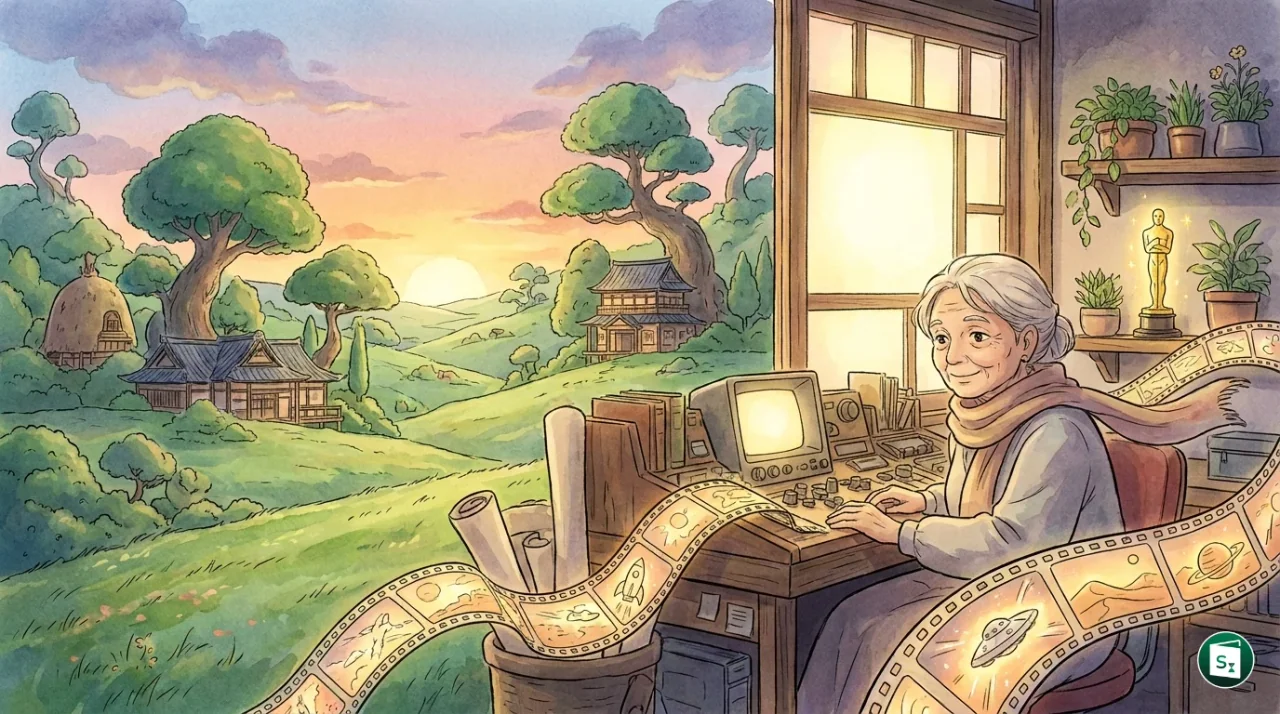
Academy Award-winning film editor Marcia Lucas, recognized for shaping the narrative flow and emotional core of the original Star Wars trilogy, passed away at the age of 80. Born Marcia Lou Griffin, she won the Oscar for Best Film Editing in 1978 for her work on Star Wars: Episode IV - A New Hope. Her creative contributions during the New Hollywood era established her as a pioneering figure in American cinema.
Who Was Marcia Lucas?
Marcia Lou Griffin was born on October 4, 1945, in Modesto, California. Raised under challenging economic circumstances by her single mother in North Hollywood, she began her professional journey in the film industry after high school. She started as an apprentice film librarian at the Sandler Film Library before stepping into film editing.
While working as an assistant editor on a documentary project, she met filmmaker George Lucas. The couple married in 1969 and became close creative collaborators. Their partnership lasted through the peak of the New Hollywood era, concluding with their divorce in 1983. Following their separation, she largely withdrew from the film industry to focus on her family. She passed away from metastatic cancer at her home in Rancho Mirage, California, on May 27, 2026.
Creative Impact on the Star Wars Trilogy
Marcia Lucas served as a primary editor on the original trilogy, helping craft the pacing, structure, and emotional resonance that made the films a global phenomenon. She is widely credited with saving the first film in the editing room alongside co-editors Paul Hirsch and Richard Chew.
Transforming the Climax of Star Wars: A New Hope
The final sequence of the first film, the Battle of Yavin, originally lacked tension. The early script did not include a clear countdown or a direct threat of destruction to the Rebel base. Marcia Lucas reorganized the footage to insert a 30-minute countdown for the Death Star to reach firing range.
She achieved this through voiceovers and reaction shots, which elevated the suspense. She also restructured the sequence by removing a redundant first trench run. This streamlined the narrative, focusing all of the emotional weight on Luke Skywalker’s final run, where he abandons his targeting computer and relies on the Force.
The Suggestion That Altered the Saga
Her influence extended directly to key narrative decisions. She proposed that the character Obi-Wan Kenobi should die during his duel with Darth Vader. While this decision was initially resisted, it ultimately provided the emotional stakes necessary to drive the final act of the film.
She also advocated for preserving humanizing moments that others wanted to cut. These included the protective kiss Princess Leia gives Luke for luck before they swing across a chasm, and a humorous moment where Chewbacca frightens a small mouse droid. These character details helped ground the fantasy setting in relatable human behavior.
Collaborations and Other Masterpieces
Beyond Star Wars, Marcia Lucas worked with directors like Martin Scorsese, editing several of his landmark films from the 1970s. She edited Alice Doesn’t Live Here Anymore in 1974, Taxi Driver in 1976, and New York, New York in 1977. Her work on Taxi Driver earned her a BAFTA nomination for Best Editing.
She also edited American Graffiti in 1973 alongside co-editor Verna Fields. The film earned her first Academy Award nomination. The table below outlines the major films edited by Marcia Lucas, highlighting her role and the recognition she received.
| Film Title | Release Year | Director | Editorial Role / Recognition |
|---|---|---|---|
| American Graffiti | 1973 | George Lucas | Lead Editor (Academy Award Nomination) |
| Alice Doesn’t Live Here Anymore | 1974 | Martin Scorsese | Editor |
| Taxi Driver | 1976 | Martin Scorsese | Editor (BAFTA Nomination) |
| Star Wars | 1977 | George Lucas | Editor (Academy Award Winner) |
| Return of the Jedi | 1983 | Richard Marquand | Editor |
Legacy and Influence on Female Film Editors
Marcia Lucas remains a key figure among a cohort of pioneering female editors who defined the New Hollywood era. Historically, film editing was one of the few technical departments in American cinema where women managed to build prominent careers. Along with contemporaries like Verna Fields, who won an Oscar for Jaws in 1976, and Dede Allen, who revolutionized pacing in Bonnie and Clyde, Marcia Lucas helped secure recognition for the creative authority of film editors.
The legacy of female editors in Hollywood is marked by other historic achievements. Anne Bauchens was the first woman to win the Academy Award for Best Film Editing in 1940 for Northwest Mounted Police. In subsequent decades, Thelma Schoonmaker became the most successful female editor in Oscar history, winning three Academy Awards for Raging Bull in 1980, The Aviator in 2004, and The Departed in 2006. Marcia Lucas’s Oscar win in 1978 for Star Wars stands as a testament to the essential role female editors played in shaping the blockbusters of modern cinema.
Key Takeaways
- Oscar-winning film editor Marcia Lucas passed away on May 27, 2026, at the age of 80 in Rancho Mirage, California.
- She won the Academy Award for Best Film Editing in 1978 for her work on Star Wars: Episode IV - A New Hope, which she shared with Paul Hirsch and Richard Chew.
- She received an Oscar nomination for editing the film American Graffiti in 1973, which she co-edited with Verna Fields.
- Her notable collaborations with director Martin Scorsese included editing Alice Doesn’t Live Here Anymore (1974), New York, New York (1977), and Taxi Driver (1976), with the latter earning her a BAFTA nomination for Best Editing.
- She married filmmaker George Lucas in 1969 and worked closely with him on early films before their divorce in 1983.