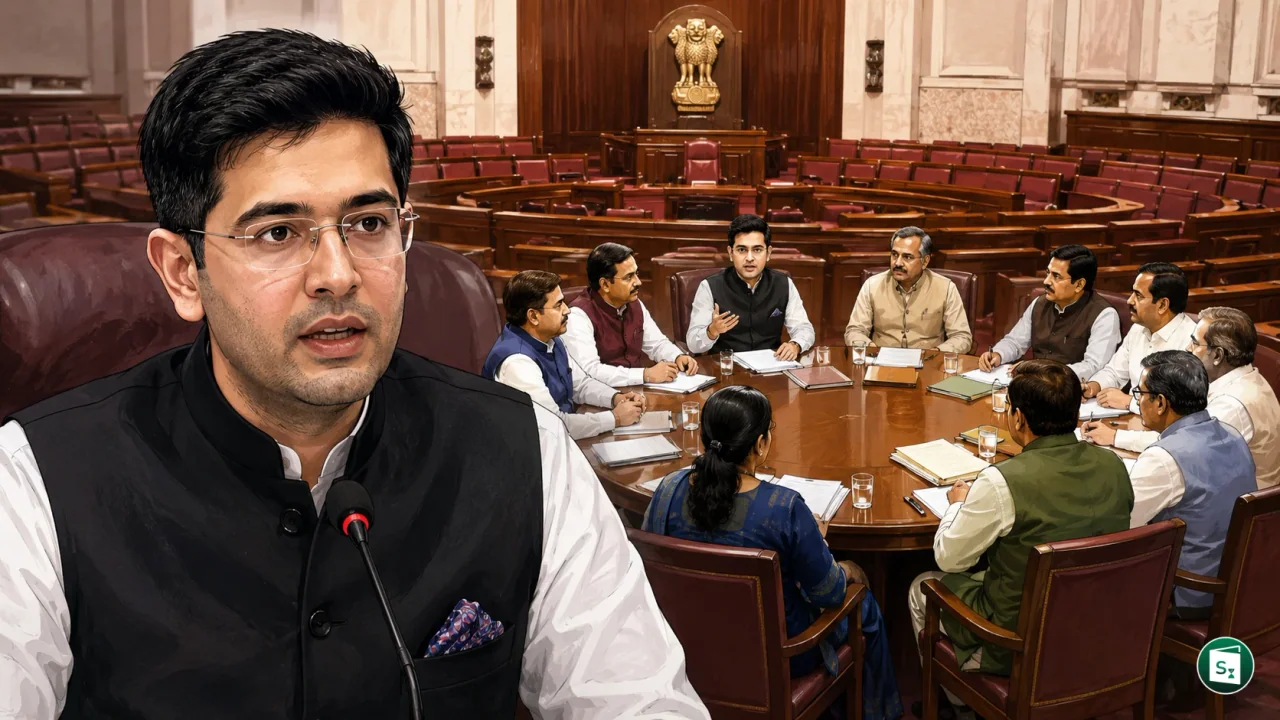
Raghav Chadha, a prominent Member of Parliament in the Rajya Sabha, has been appointed as the Chairman of the newly reconstituted Committee on Petitions. The appointment was made by the Chairman of the Rajya Sabha, C.P. Radhakrishnan, with the panel consisting of 10 nominated members. This committee serves as a vital link between the public and the legislature by examining grievances related to government policies and bills.
Understanding the Rajya Sabha Committee on Petitions
The Committee on Petitions is one of the oldest standing committees of the Indian Parliament, with its roots dating back to 1921. In the Rajya Sabha, it is constituted under Rule 147 of the Rules of Procedure and Conduct of Business in the Council of States. The primary function of this panel is to examine petitions submitted by the public on matters of general public interest or on Bills that have been introduced in the House.
Unlike many other parliamentary panels, this committee provides a direct platform for citizens to voice their concerns. It has the power to call for witnesses, summon records from government departments, and even undertake study tours to investigate grievances first hand. After a thorough examination, the committee submits its report and recommendations to the Rajya Sabha, suggesting remedial measures for the issues raised in the petitions.
Composition of the Reconstituted Panel
The Committee on Petitions in the Rajya Sabha always consists of 10 members who are nominated by the Chairman of the Rajya Sabha. The members typically hold office until a new committee is nominated. For the 2026 reconstitution, the panel includes representatives from various political parties to ensure a broad range of perspectives during the grievance redressal process.
| Sl. No. | Name of the Member |
|---|---|
| 1 | Raghav Chadha (Chairman) |
| 2 | Harsh Mahajan |
| 3 | Gulam Ali |
| 4 | Shambhu Sharan Patel |
| 5 | Mayankkumar Nayak |
| 6 | Masthan Rao Yadav Beedha |
| 7 | Jebi Mather Hisham |
| 8 | Subhasish Khuntia |
| 9 | Rwngwra Narzary |
| 10 | Sandosh Kumar P. |
Raghav Chadha, who is a Chartered Accountant by profession, is currently one of the youngest members of the Rajya Sabha. Before taking on this new role, he has served on several other important parliamentary panels, including the Standing Committee on Finance. His appointment as Chairman highlights the ongoing trend of involving younger parliamentarians in significant legislative oversight functions.
Significance of Parliamentary Committees in India
Parliamentary committees are instrumental in the functioning of the Indian democracy. They allow for a more detailed and specialized examination of bills and government activities than is possible on the floor of the House. Broadly, these committees are divided into two categories: Standing Committees, which are permanent and reconstituted annually, and Ad hoc Committees, which are appointed for a specific purpose and cease to exist once their task is complete.
The Committee on Petitions is a Standing Committee. It is important to note the difference in size between the two Houses. While the Rajya Sabha committee has 10 members, the corresponding committee in the Lok Sabha consists of 15 members. These panels ensure that the executive remains accountable to the legislature and that the grievances of common citizens find a formal path to the highest levels of governance.
Key Takeaways
- Raghav Chadha has been appointed as the Chairman of the reconstituted Committee on Petitions of the Rajya Sabha.
- The committee consists of 10 members who are nominated by the Chairman of the Rajya Sabha, currently C.P. Radhakrishnan.
- This panel is a Standing Committee constituted under Rule 147 of the Rajya Sabha rules to examine public grievances and petitions on bills.
- The Committee on Petitions is one of the oldest in the Indian Parliament, with its origins dating back to 1921.
- While the Rajya Sabha committee has 10 members, the corresponding committee in the Lok Sabha consists of 15 members.