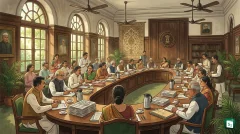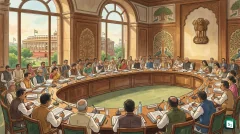
The International Day of Parliamentarism, observed annually on June 30, marks the founding of the Inter-Parliamentary Union (IPU) in 1889 in Paris, France. Established by the United Nations General Assembly in 2018 through resolution A/RES/72/278, this day highlights the central role of parliaments in democratic governance, representation, and accountability. The 2026 theme, “The Future of Human Rights is Written in Parliaments”, underscores how legislative action shapes the protection and promotion of fundamental freedoms worldwide.
What Is the International Day of Parliamentarism?
The International Day of Parliamentarism, also known as World Parliament Day, is a United Nations observance that celebrates the institution of parliament and its role in democratic societies. The day was formally instituted on 22 May 2018 when the UN General Assembly adopted resolution A/RES/72/278, which recognized the critical role of parliaments in national plans and strategies and in ensuring greater transparency and accountability at both national and global levels.
The date June 30 was chosen for its historical significance: it marks the anniversary of the founding of the Inter-Parliamentary Union in 1889, the world’s first permanent forum for political multilateral negotiations.
The observance serves multiple purposes. It encourages parliaments to review their own progress in becoming more representative, transparent, and accountable. It also provides an opportunity for parliaments to assess their performance on key goals such as increasing women’s representation, including more young MPs, and adapting to new technologies. The day is particularly relevant at a time when trust in political institutions is declining globally and democracy faces challenges from populist and nationalist movements.
| Aspect | Details |
|---|---|
| Date | June 30 (annually) |
| Established | 2018 (UNGA Resolution A/RES/72/278) |
| Observed by | United Nations and IPU Member Parliaments |
| 2026 Theme | ”The Future of Human Rights is Written in Parliaments” |
| Also known as | World Parliament Day |
| First observed | 2018 |
The Inter-Parliamentary Union: A Historical Overview
The Inter-Parliamentary Union (IPU) is the global organization of national parliaments. Founded on 30 June 1889 in Paris, it holds the distinction of being the first permanent multilateral political organization in the world.
The IPU was the brainchild of two visionary parliamentarians: William Randal Cremer of the United Kingdom and Frederic Passy of France. Cremer, a working-class former carpenter turned trade union leader and MP, and Passy, a respected French economist from an aristocratic family, were united by a single belief: that international disputes could and should be resolved through peaceful arbitration rather than war. Both men went on to win the Nobel Peace Prize for their efforts. Cremer received it in 1903 and Passy shared it in 1901.
The first Inter-Parliamentary Conference brought together parliamentarians from nine countries in Paris on 30 June 1889. On the second day, the delegates decided the meeting should become an annual event, and the Inter-Parliamentary Union was formally born. Passy was elected its first President and Cremer its Vice President.
The organization played a pivotal role in establishing the Permanent Court of Arbitration in The Hague in 1899. Its persistent calls for an international institution linking governments helped lay the foundations for the League of Nations (1919) and later the United Nations (1945). Today, the IPU holds permanent observer status at the United Nations General Assembly.
IPU Headquarters
| Timeline | Location |
|---|---|
| 1892-1911 | Bern, Switzerland |
| 1911-1914 | Brussels, Belgium |
| 1914-1920 | Oslo, Norway |
| 1921-present | Geneva, Switzerland |
The current headquarters are located at 5, chemin du Pommier, Le Grand-Saconnex, Geneva. The IPU also maintains offices in New York (USA) and Vienna (Austria) to facilitate its engagement with the United Nations.
IPU Structure and Membership
As of 2026, the IPU comprises 183 Member Parliaments out of the 193 countries in the world, along with 15 Associate Members (regional parliamentary organizations such as the European Parliament, the Pan-African Parliament, and the Arab Parliament). This makes the IPU one of the most comprehensive international organizations in terms of global representation.
Governance Structure
The IPU is governed by several bodies:
- The Governing Council: The plenary decision-making body composed of three representatives from each Member Parliament. It decides on the admission and suspension of members, adopts the budget, and approves resolutions.
- The Executive Committee: Oversees the administration and implements decisions of the Governing Council.
- The President: An elected figure who serves a three-year term. The current IPU President is Tulia Ackson.
- The Secretary General: The chief administrative officer. Martin Chungong served as Secretary General from 2014 to 2026, becoming the first African and first non-European to hold the position.
Geopolitical Groups
Member Parliaments are organized into six geopolitical groups for balanced representation:
| Group | Members |
|---|---|
| Africa Group | 52 |
| Arab Group | 20 |
| Asia-Pacific Group | 36 (includes India) |
| Eurasia Group | 10 |
| GRULAC (Latin America and Caribbean) | 27 |
| Twelve Plus Group | 47 |
India and the IPU
India, with its bicameral Parliament (the Lok Sabha or House of the People and the Rajya Sabha or Council of States), is a member of the IPU and belongs to the Asia-Pacific Group. According to the IPU Parline database, the Indian Parliament has 545 MPs, with about 13.84% women representatives and 18.08% MPs under 45 years of age.
The 2026 Theme: Bringing Human Rights into Focus
The 2026 theme, “The Future of Human Rights is Written in Parliaments”, aligns with the IPU’s broader 2026 human rights campaign: “Bring Human Rights into Focus.” This campaign invites parliaments worldwide to showcase their initiatives that advance and safeguard human rights.
Why Parliaments and Human Rights?
Parliaments are the institutions through which international human rights commitments are translated into national law. They enact legislation, ratify international treaties, oversee government action through committees, and allocate budgets for rights-based programs. When parliaments work effectively, rights are protected. When they are weak or silenced, rights are the first casualty.
The IPU’s focus on human rights is not new. In 1976, the organization established its Committee on the Human Rights of Parliamentarians, a unique international mechanism that investigates and acts on complaints of human rights violations against MPs worldwide. The Committee consists of 12 parliamentarians elected by their peers, balanced in terms of geographical and gender representation, and guided by the motto “Never give up.” Over the decades, it has examined cases in over 100 countries, helping to secure the release of detained parliamentarians, reinstatement to seats, and compensation for abuses.
Previous Themes at a Glance
| Year | Theme |
|---|---|
| 2026 | ”The Future of Human Rights is Written in Parliaments” |
| 2025 | ”Achieving Gender Equality, Action by Action” |
| 2024 | ”Parliamentary Diplomacy: Building Bridges for Peace and Understanding” |
| 2023 | ”Parliaments for the Planet” |
| 2022 | ”Citizen Engagement and Public Participation” |
| 2021 | ”I Say Yes to Youth in Parliament!“ |
| 2020 | ”Parliaments in a Time of Pandemic” |
| 2019 | ”IPU’s 130th Anniversary” |
The Global State of Parliaments Today
Parliaments around the world face both opportunities and challenges. The IPU has documented a worrying rise in intimidation and harassment of MPs from the public, alongside persistent threats to democratic institutions from populist and authoritarian movements. According to IPU data, there are 193 national parliaments globally, of which 109 are unicameral (single chamber) and 84 are bicameral (two chambers). About 92.7% of lower and unicameral chambers are directly elected by citizens.
Globally, there are approximately 44,723 parliamentarians across all national parliaments. Women hold 21.0% of Speaker positions, while only 2.8% of MPs worldwide are aged 30 or under. These figures highlight the ongoing work needed to make parliaments more representative of the populations they serve.
The IPU’s Contribution to Global Governance
Beyond its human rights work, the IPU contributes to democracy and peace through multiple channels:
- IPU Assemblies: Held twice a year, bringing together over 1,500 parliamentary delegates and partners
- The Universal Declaration on Democracy: Adopted by the IPU Governing Council in 1997, setting standards for democratic governance
- The IPU Parline database: A global reference source tracking around 600 fields on the structure, composition, and functioning of parliaments worldwide
- SDG 16.7: The IPU actively promotes SDG 16.7, which calls for “responsive, inclusive, participatory and representative decision-making at all levels”
Eight individuals associated with the IPU have been awarded the Nobel Peace Prize, underscoring the organization’s historic contribution to global peace and dialogue.
Key Takeaways
- The International Day of Parliamentarism is observed on June 30 every year, commemorating the founding of the Inter-Parliamentary Union in 1889.
- The day was established by the United Nations General Assembly in 2018 through resolution A/RES/72/278.
- The IPU was founded in Paris on 30 June 1889 by Frederic Passy (France) and William Randal Cremer (UK), both Nobel Peace Prize laureates.
- The IPU is the first permanent multilateral political organization in the world and now has 183 Member Parliaments from 193 countries.
- The 2026 theme is “The Future of Human Rights is Written in Parliaments”, linked to the IPU’s human rights campaign “Bring Human Rights into Focus”.
- The IPU Committee on the Human Rights of Parliamentarians, established in 1976, is the only international mechanism dedicated to protecting MPs facing abuse or persecution.
- Eight individuals associated with the IPU have won the Nobel Peace Prize.