Union Minister of State (Independent Charge) for Science and Technology, Dr. Jitendra Singh, virtually inaugurated the Research Society for the Study of Diabetes in India (RSSDI) Diabetes Rural Outreach Digital Portal and launched the Video Information and Health Education for Awareness and Self-Management (VISHWAS) Diabetes Awareness Video Library on 16 August 2026. The event, organised by RSSDI on Independence Day, brought together leading diabetes experts and healthcare stakeholders to address the growing burden of diabetes in rural India. Dr. Jitendra Singh, himself a renowned diabetologist and Life Patron of RSSDI, called for making diabetes prevention a national priority.
Diabetes in India: A Growing Rural Crisis
India is facing a massive diabetes epidemic that has increasingly moved beyond urban centres into the rural hinterland. According to the Indian Council of Medical Research-India Diabetes (ICMR-INDIAB) study, the country has over 101 million people living with diabetes, with an additional 136 million in the prediabetes stage. The overall national prevalence stands at 11.4%, with urban areas recording 14.2% and rural areas 8.3%. What makes this particularly alarming is that rural prevalence is rapidly catching up to urban levels as lifestyles and food habits change across the country.
The International Diabetes Federation (IDF) Diabetes Atlas 2025 ranks India as having the second highest number of adults with diabetes globally, with an estimated 89.8 million adults aged 20 to 79 affected in 2024. China leads with 148 million, while the United States follows with 39 million. The IDF projects that by 2050, India could see this number rise to approximately 156.7 million, underscoring the urgency of preventive action. Over the past three decades, India has witnessed a 150% increase in the number of people with diabetes, a trend that Dr. Jitendra Singh has described as having “pan-Indian proportions.”
A particularly worrying aspect is the progressive lowering of the age at which Type 2 diabetes is being diagnosed. The disease is now commonly appearing in the 25 to 34 age group in both urban and rural areas. With more than 70% of India’s population below the age of 40, protecting the health and productive potential of this young demographic is critical to the vision of India@2047. The changing rural-urban divide in lifestyles, dietary patterns, and physical activity levels has contributed to the wider spread of the disease into villages, where access to specialised diabetes care remains severely limited.
What Is the RSSDI Rural Outreach Programme?
The Research Society for the Study of Diabetes in India (RSSDI), founded in 1972 by Prof. M.M.S. Ahuja, is the largest association of diabetes healthcare professionals in Asia. With over 6,000 members including physicians, diabetologists, endocrinologists, and paramedical personnel, RSSDI has been at the forefront of diabetes research, education, and awareness in India. The RSSDI Rural Outreach Programme (RROP) is a community-based initiative focused on improving diabetes awareness, early diagnosis, treatment, follow-up, and prevention in rural India through village adoption by RSSDI members.
Under this programme, RSSDI members formally adopt villages to create a structured model covering diabetes awareness, screening, treatment, and long-term follow-up. The initiative has already reached approximately 30 villages across several states, with further expansion planned in the coming years. In its initial phase, residents in 100 villages will be screened, and those found to be diabetic will be enrolled in a three-year monitoring system for sustained care and follow-up. The programme represents a three-year commitment to delivering systematic diabetes care to the communities that need it most.
The RROP is designed to complement national health efforts by bringing specialist expertise closer to underserved communities. Dr. Anuj Maheshwari, President of National RSSDI, highlighted that diabetes is no longer an urban issue, as its incidence is rapidly rising in rural India where access to specialised care remains limited. Through RROP, the organisation aims to deliver systematic care to the communities that need it most.
The Digital Portal: Features and Functions
The newly inaugurated RSSDI Diabetes Rural Outreach Digital Portal, developed in collaboration with IIT Bombay, provides a standardised platform for beneficiary registration, treatment documentation, longitudinal follow-up, programme monitoring, and generation of anonymised real-world data for public health planning and research. The portal enables rural health workers to conduct screenings and record patient clinical data on mobile phones or tablets, with offline support available for areas with limited internet connectivity.
RSSDI clinicians will review cases through a secure web portal, while programme managers will be able to track the programme’s progress and outcomes across states via a live dashboard. Dr. Jitendra Singh described the digital data portal as an important milestone in strengthening community healthcare through systematic documentation. He said that combining community service with scientific documentation would generate real-world data from rural India, helping in better understanding of disease patterns and development of evidence-based solutions relevant to the Indian population.
VISHWAS Video Library: Health Literacy at the Grassroots
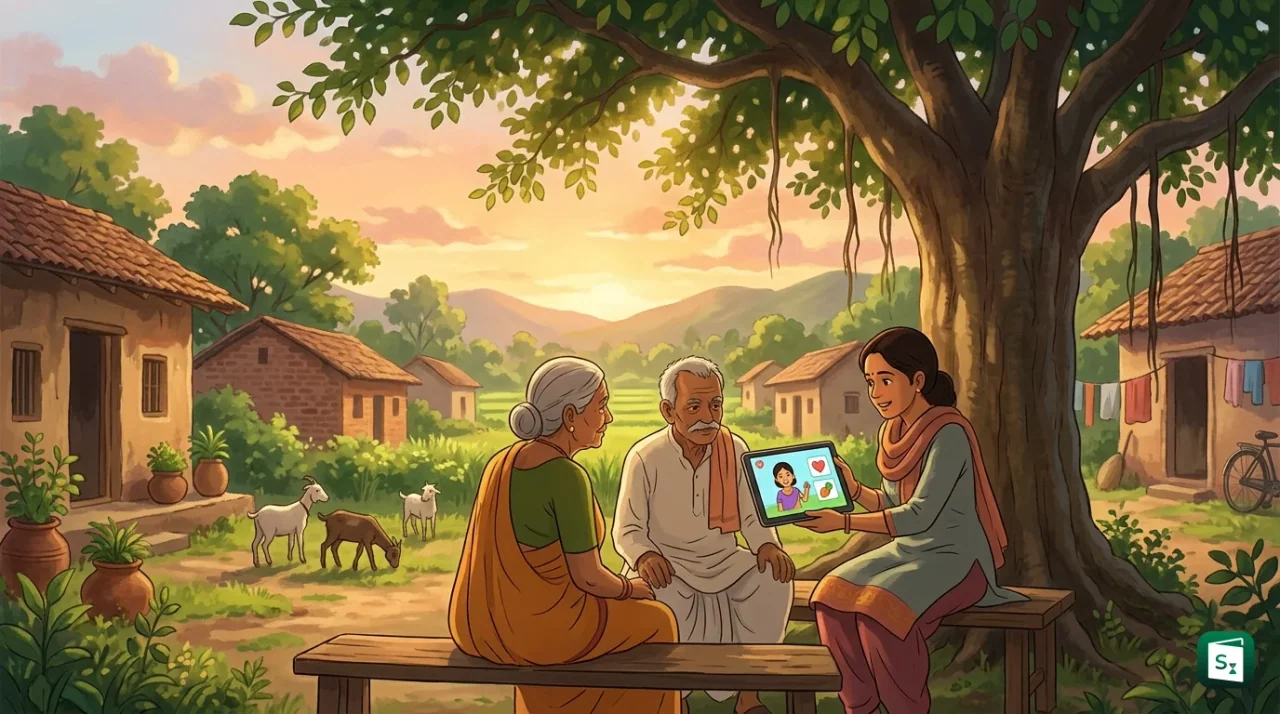
The VISHWAS (Video Information and Health Education for Awareness and Self-Management) Diabetes Awareness Video Library is a dedicated digital repository designed to enhance health literacy and self-management directly among diabetes patients and local caregivers. Under VISHWAS, multilingual videos have been created providing simple information on daily self-care, diet, nutrition, and complication prevention. Rural health workers will use these videos to educate patients in their own languages.
Dr. Jitendra Singh stressed the importance of making digital health solutions responsive to India’s linguistic diversity. He said that while technology platforms may begin with formal languages, meaningful digital healthcare delivery at the grassroots level must also recognise the colloquial languages spoken by people in different parts of the country. Such an approach can make digital health solutions more accessible and relevant to communities on the ground.
India’s Demographic Dividend and the Diabetes Challenge
Dr. Jitendra Singh emphasised that with more than 70% of India’s population below the age of 40, protecting the health and productive potential of the country’s young population is essential to the vision of India@2047. India’s demographic dividend places a special responsibility on the country to protect its young population from avoidable diseases and complications. With a large proportion of the population below the age of 40, maintaining their health is critical to ensuring that their energy and potential can contribute fully to the making of a developed and healthier India by 2047.
The Minister described diabetes as one of the most significant public health challenges of the time and said that prevention of diabetes and its complications cannot remain the responsibility of doctors alone. It must become a shared national priority involving individuals, communities, healthcare professionals, and institutions. He called for greater integration among government agencies, academic institutions, technology partners, private organisations, and local healthcare workers to create more effective and sustainable models for prevention and management of diabetes and other non-communicable diseases.
The RSSDI has a strong track record of large-scale diabetes initiatives. In 2021, RSSDI launched the Defeat Diabetes Campaign with the objective of reaching 100 million people in 100 days with the message “Test, Track and Treat.” The campaign was a resounding success, and RSSDI was awarded the Asia Book of Records Certificate for having screened over 106 million people across more than 10,000 locations throughout India. The current Rural Outreach Programme builds on this legacy, extending RSSDI’s expertise from mass screening campaigns to sustained, community-level care.
Dr. Jitendra Singh also noted that the country is moving towards an era of interdisciplinary and cross-sector collaboration. He said engineering, technology, and medical sciences are increasingly converging, opening new possibilities for healthcare delivery, digital health, and community-based interventions. The RSSDI Rural Outreach Programme, combining medical expertise with IIT Bombay’s technological capabilities, exemplifies this collaborative model.
The Way Forward
Dr. Jitendra Singh expressed hope that RSSDI would continue to work with government agencies, academic institutions, technology partners, and local healthcare workers so that the Rural Outreach Programme evolves into a sustainable and scalable national model for prevention and management of diabetes and other non-communicable diseases. He called for a renewed commitment to building a healthier India where scientific knowledge, digital innovation, and compassionate healthcare reach every village and every citizen.
The programme’s expansion from 30 villages to 100 villages in the initial phase, with plans for further scaling, signals a methodical approach to addressing rural diabetes. The digital portal’s ability to generate real-world evidence from rural settings could inform broader public health strategies and policy decisions. As India grapples with one of the world’s largest diabetes epidemics, initiatives like the RSSDI Rural Outreach Programme and VISHWAS represent a practical, technology-driven step towards bridging the urban-rural healthcare divide.
Key Takeaways
- Union Minister Dr. Jitendra Singh virtually inaugurated the RSSDI Diabetes Rural Outreach Digital Portal and launched the VISHWAS Diabetes Awareness Video Library on 16 August 2026.
- The RSSDI, founded in 1972 by Prof. M.M.S. Ahuja, is the largest association of diabetes healthcare professionals in Asia with over 6,000 members.
- The ICMR-INDIAB study estimates that over 101 million Indians live with diabetes, with an additional 136 million in the prediabetes stage.
- According to the IDF Diabetes Atlas 2025, India has the second highest number of adults with diabetes globally at 89.8 million, projected to rise to 156.7 million by 2050.
- The RSSDI Rural Outreach Programme has already reached approximately 30 villages across several states, with the initial phase targeting 100 villages over a three-year monitoring period.
- The digital portal, developed in collaboration with IIT Bombay, enables beneficiary registration, treatment documentation, longitudinal follow-up, and generation of anonymised real-world data for public health planning.
- Dr. Jitendra Singh called for making diabetes prevention a national priority, stressing that over 70% of India’s population is below the age of 40, making youth health central to the India@2047 vision.