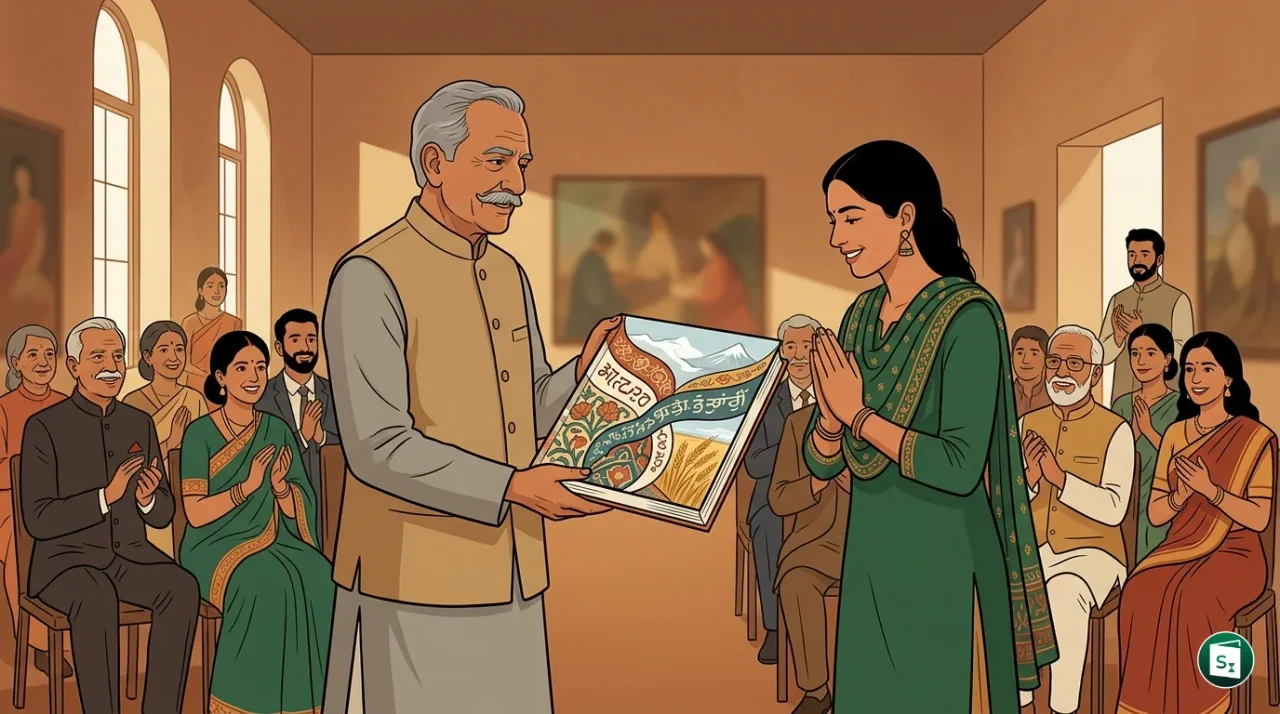
The Governor of Himachal Pradesh, Kavinder Gupta, officially released the Dogri-Punjabi Dictionary in Jammu on May 25, 2026. This significant literary work, authored by the late Chandan Negi, aims to foster cultural integration and linguistic understanding between two of northern India’s most prominent language communities. The release marks a major step in documenting the shared literary heritage of the Jammu region and Punjab.
A Milestone in Regional Linguistic Heritage
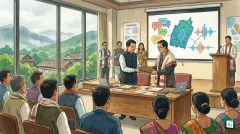
The dictionary release took place at the KL Saigal Hall in Jammu during a ceremony that brought together several distinguished literary figures. Speaking on the occasion, Governor Gupta highlighted that literature serves as a mirror to society and plays a vital role in social transformation. He emphasized that despite the rapid shift toward digital media, physical books and dictionaries remain essential for developing sensitivity and critical thinking among the youth.
The Dogri-Punjabi Dictionary is envisioned as more than just a reference book. It is a tool for cultural synthesis in a region where the two languages have historically coexisted and influenced each other. By providing a comprehensive mapping of terms between Dogri and Punjabi, the dictionary facilitates smoother communication and deeper appreciation of regional literature.
Bridging Dogri and Punjabi: The Collaborative Effort
The publication of the dictionary was made possible through a joint initiative by the Punjabi Lekhak Sabha and the Jammu & Kashmir Academy of Art, Culture and Languages (JKAACL). These institutions have been at the forefront of preserving the diverse linguistic fabric of Jammu and Kashmir. The event saw participation from eminent scholars and writers, including Prof. Lalit Magotra, President of Dogri Sanstha Jammu, and Sahitya Akademi awardee Khalid Hussain.
During the discussions, the speakers noted that Dogri and Punjabi share deep etymological roots and cultural nuances. The dictionary acts as a bridge, allowing speakers of one language to access the literary riches of the other. Such collaborative projects are vital for maintaining the secular and inclusive traditions of the region, ensuring that local dialects do not fade away in the face of globalization.
About the Author: The Legacy of Chandan Negi
The late Chandan Negi was a renowned literary figure who dedicated over three decades to the compilation of this dictionary. Known for her profound understanding of both Dogri and Punjabi, Negi’s work is a testament to her lifelong commitment to regional languages. Her daughter, Manvi Chatwa, and other family members were present at the event to witness the realization of her long-term project.
Negi’s contribution is particularly significant because it addresses a specific void in regional lexicography. While there are numerous dictionaries for major world languages, bilateral dictionaries for regional tongues like Dogri and Punjabi are rare. Her labor of love provides a scientific and structured approach to linguistic study, making it an invaluable resource for students, researchers, and translators.
Institutional Support for Regional Languages
The Jammu & Kashmir Academy of Art, Culture and Languages (JKAACL) is a state-level institution dedicated to the promotion of cultural activities and linguistic research. Established to preserve the rich heritage of Jammu and Kashmir, JKAACL provides a platform for writers, artists, and scholars to showcase their work. The Punjabi Lekhak Sabha is a prominent literary organization that focuses on the development of Punjabi literature and language in the Jammu region.
Governor Gupta, who assumed office as the Governor of Himachal Pradesh in March 2026, previously served as the Lieutenant Governor of Ladakh and the Deputy Chief Minister of Jammu and Kashmir. His presence at the event underscored the administrative commitment to supporting regional arts and letters. He urged institutions like JKAACL to continue their efforts in documenting the oral and written traditions of the Himalayas and the plains.
Static GK: Dogri and Punjabi in the Indian Constitution
Both Dogri and Punjabi are officially recognized in the Eighth Schedule of the Indian Constitution, which currently lists 22 languages. Punjabi was one of the 14 original languages included when the Constitution was adopted in 1950. It is primarily written in the Gurmukhi script in India.
Dogri was added to the Eighth Schedule in 2003 via the 92nd Constitutional Amendment Act. This amendment also included three other languages: Bodo, Maithili, and Santhali. While Dogri was historically written in the Takri script, it is now predominantly written in Devanagari. The recognition of these languages under the Eighth Schedule ensures that the government takes measures for their development and enrichment, as mandated under Article 351 of the Constitution.
Key Takeaways
- The Dogri-Punjabi Dictionary, authored by the late Chandan Negi, was officially released on May 25, 2026, in Jammu.
- Kavinder Gupta, the Governor of Himachal Pradesh, released the work at a ceremony in KL Saigal Hall.
- The dictionary is a joint publication initiative by the Punjabi Lekhak Sabha and the Jammu & Kashmir Academy of Art, Culture and Languages (JKAACL).
- Dogri was recognized under the Eighth Schedule of the Indian Constitution in 2003 via the 92nd Constitutional Amendment.
- Punjabi is one of the 14 original languages included in the Eighth Schedule since the Constitution’s adoption in 1950.
- The late author, Chandan Negi, dedicated over 30 years to compiling this comprehensive linguistic resource.