The Cabinet Committee on Economic Affairs (CCEA) approved the ₹20,667 crore Ahmedabad (Sarkhej) to Dholera semi high-speed railway project on May 25, 2026. This 134 km double-line corridor is the first in India to be built using indigenous technology designed for speeds up to 220 km/h. The project will drastically reduce travel time between Ahmedabad and the Dholera Special Investment Region (DSIR), a key node of the Delhi-Mumbai Industrial Corridor.
Connecting India’s First Greenfield Smart City: Dholera and Ahmedabad
The Ahmedabad-Dholera rail corridor is designed to transform connectivity in Gujarat by linking the state’s largest economic hub, Ahmedabad, with the emerging Dholera Special Investment Region (DSIR). Spanning 134 km, the route starts from Sarkhej in Ahmedabad and passes through key locations including Bavla and Dholka before reaching Dholera.
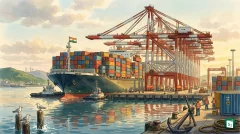
This rail link is expected to reduce the travel time between the two cities from nearly two hours by road to just 34 to 38 minutes. Such high-speed connectivity is essential for the DSIR, which is being developed as India’s first greenfield smart city. The corridor will also provide crucial links to the upcoming Dholera International Airport and the Lothal National Maritime Heritage Complex, creating a multi-modal transport network in the region.
Technical Marvel: Indigenous Semi High-Speed Innovation
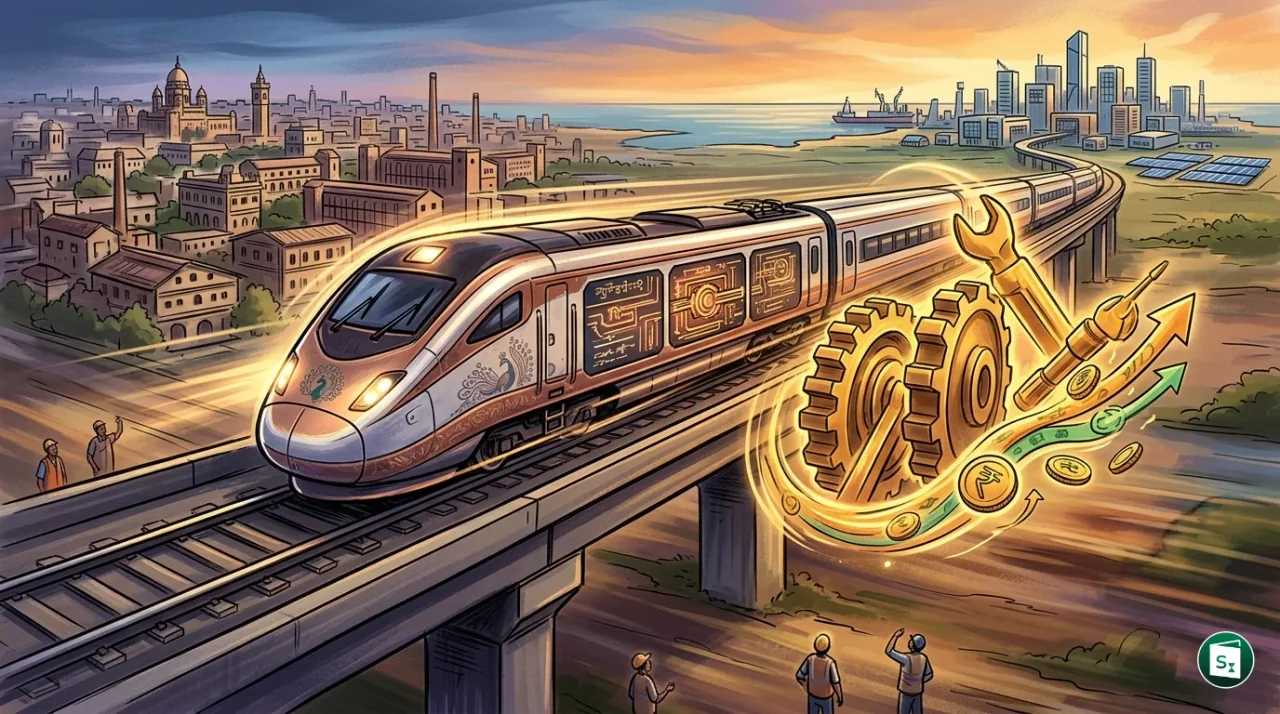
The project stands out as a significant milestone for the Atmanirbhar Bharat initiative. It is the first railway project in India to utilize indigenous semi high-speed technology developed entirely within the country. While current Vande Bharat trainsets have a design speed of 180 km/h, the new technology for this corridor is engineered for a design speed of 220 km/h and a planned operational speed of 200 km/h.
The infrastructure includes advanced engineering features such as a 74 km elevated viaduct, which ensures safety by preventing cattle or human interference. This elevated design is critical for maintaining high speeds consistently across the corridor. The project also features three mega bridges and two rail-over-rail bridges. The Integral Coach Factory (ICF) in Chennai and BEML (formerly Bharat Earth Movers Limited) are key players in manufacturing the trainsets for this next-generation rail system.
Strategic Integration with the Delhi-Mumbai Industrial Corridor
The Ahmedabad-Dholera rail line is a strategic component of the Delhi-Mumbai Industrial Corridor (DMIC). The Dholera SIR is one of the most important nodes of the DMIC, and the new rail link will provide it with a high-capacity logistics and passenger backbone. This integration is vital for the success of massive industrial projects in Dholera, such as the semiconductor fabrication facility being built by Tata Electronics.
By connecting Dholera directly with Ahmedabad’s commercial infrastructure, the project enhances the regional economic ecosystem. It also aligns with the PM Gati Shakti National Master Plan, which focuses on multi-modal connectivity to lower logistics costs and improve industrial efficiency. The rail link will enable the swift movement of raw materials and finished goods, making Dholera a globally competitive manufacturing hub.
The Role of CCEA
The Cabinet Committee on Economic Affairs (CCEA), chaired by the Prime Minister, is the nodal body responsible for approving such mega-scale infrastructure projects. As an extra-constitutional body, the CCEA reviews investment proposals that exceed specific financial thresholds. Its approval of the ₹20,667 crore project underscores the government’s priority on rapid infrastructure development and self-reliance in the transport sector.
Environmental and Socio-Economic Significance
Beyond technical and economic benefits, the project promises significant environmental advantages. By shifting a portion of passenger and freight traffic from road to rail, the corridor is expected to reduce carbon dioxide emissions by nearly 2 crore kilograms annually. This is roughly equivalent to the impact of planting 10 lakh trees. The project will also help reduce India’s fuel bill by saving an estimated 0.48 crore litres of oil imports every year.
On the socio-economic front, the rail line will directly benefit approximately 5 lakh people living in 284 villages along the route. Improved accessibility will open up new employment opportunities in the industrial zones of Dholera and provide farmers in the region with better access to urban markets in Ahmedabad. The project is slated for completion by the 2030-31 financial year, serving as a reference model for future semi high-speed rail networks in India.
Key Takeaways
- The Cabinet Committee on Economic Affairs (CCEA) approved the ₹20,667 crore Ahmedabad-Dholera semi high-speed railway project.
- Spanning 134 km, the double-line corridor connects Sarkhej in Ahmedabad to the Dholera Special Investment Region (DSIR).
- It marks the first use of indigenous semi high-speed technology in India, with a design speed of 220 km/h and operational speed of 200 km/h.
- The project is a critical part of the Delhi-Mumbai Industrial Corridor (DMIC) and aligns with the PM Gati Shakti National Master Plan.
- The corridor will reduce travel time between Ahmedabad and Dholera to just 34 to 38 minutes.
- Environmental impacts include a reduction of 2 crore kilograms of CO2 emissions and saving 0.48 crore litres of oil imports annually.