
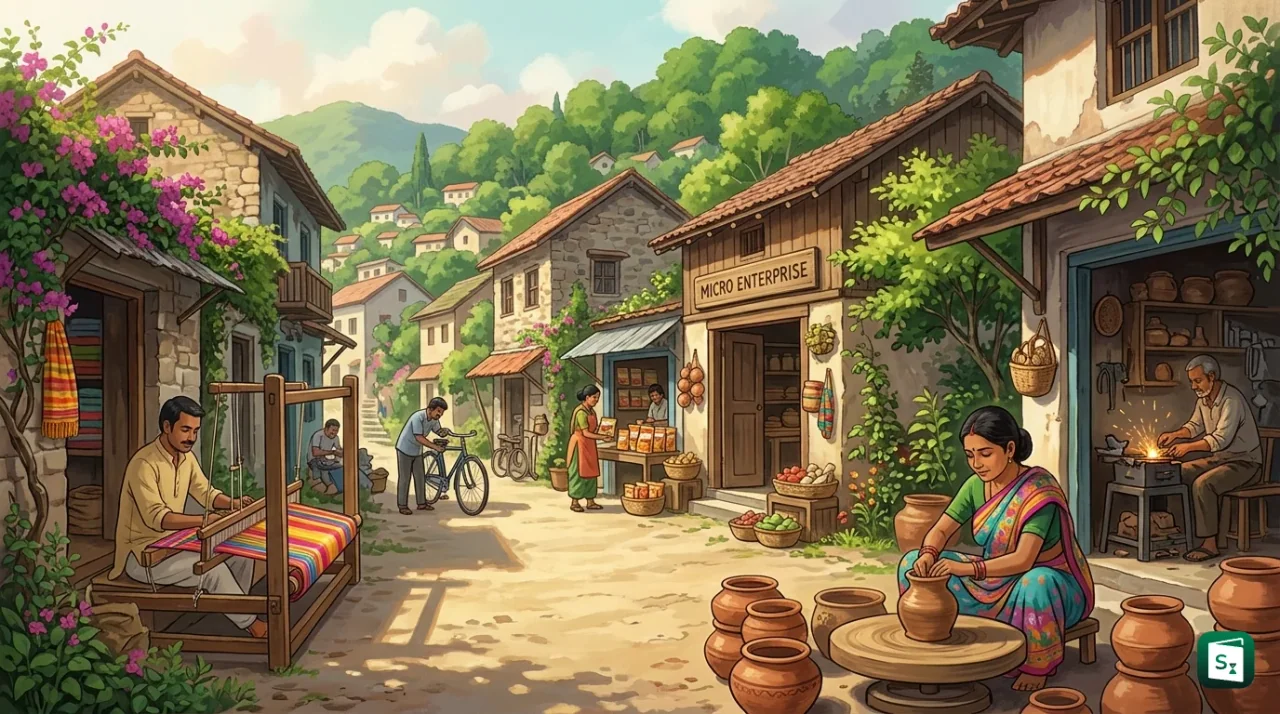
Union Minister for Micro, Small and Medium Enterprises Jitan Ram Manjhi released ₹1000 crore as Margin Money subsidy under the Prime Minister Employment Generation Programme (PMEGP) for 11333 new micro enterprises. The release will unlock bank loans of about ₹3260 crore and is expected to create more than 1.02 lakh jobs, mainly in rural areas. The subsidy was released at Kartavya Bhawan-3 in New Delhi on 28 October 2026.
What Is the PMEGP Scheme?
The Prime Minister Employment Generation Programme (PMEGP) is a central sector credit linked subsidy programme that helps individuals set up new micro enterprises in the non farm sector with help from bank loans and government subsidy. The Ministry of Micro, Small and Medium Enterprises (MSME) administers the scheme to create self employment and wage employment across rural and urban India.
The scheme was announced on 15 August 2008 and rolled out in 2008-09. It was formed by merging two earlier employment schemes that closed on 31 March 2008. These were the Prime Minister Rozgar Yojana (PMRY), implemented through District Industries Centres, and the Rural Employment Generation Programme (REGP), implemented through the Khadi and Village Industries Commission.
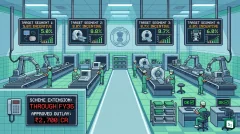
PMEGP supports only new units. Existing units or units that have already taken subsidy under any other government scheme cannot apply for a first loan, except under a separate second loan window for expansion. The government approved continuation of the scheme for five years from 2021-22 to 2025-26 with an outlay of ₹13554.42 crore. The maximum project cost allowed for subsidy is ₹50 lakh in manufacturing and ₹20 lakh in business or service.
What Did the Latest ₹1000 Crore Release Cover?
The Ministry of MSME released the ₹1000 crore Margin Money subsidy at a function at Kartavya Bhawan-3 in New Delhi. Union Minister Jitan Ram Manjhi handed over the release in the presence of Minister of State Shobha Karandlaje, MSME Secretary Bharat Khera, the Chief Executive Officer of the Khadi and Village Industries Commission, the Chairman and Managing Director of the National Small Industries Corporation and the Development Commissioner for MSME.
The release will support 11333 beneficiaries whose banks have already sanctioned project loans of about ₹3260 crore. These new units are expected to generate more than 1.02 lakh jobs. The support is focused on women led enterprises, Scheduled Caste and Scheduled Tribe entrepreneurs, units in the North Eastern Region and units in Aspirational Districts.
The release adds to strong performance in the current financial year. Before this tranche, PMEGP had supported 25895 micro enterprises in 2026-27 with Margin Money of ₹794.52 crore up to October 2026.
Long term results underline the scale of the programme. Since 2014-15, PMEGP has supported more than 8.38 lakh micro enterprises with bank loans of over ₹70000 crore and Margin Money subsidy of over ₹25193 crore. This has created about 75 lakh jobs. Nearly 80 percent of assisted units are in rural areas. Nearly 50 percent of beneficiaries belong to Scheduled Caste, Scheduled Tribe and Other Backward Class groups, while about 40 percent of units are owned by women.
What Is Margin Money Subsidy and How Does the PMEGP Loan Work?
Margin Money subsidy is the share of the project cost paid by the government under PMEGP. The bank sanctions the full project loan, the government places its subsidy share with the bank, and the entrepreneur repays only the loan part after the subsidy is adjusted on completion of a three year lock in period.
A PMEGP project has three parts. The entrepreneur brings an own contribution of 10 percent for general category and 5 percent for special category. The government adds Margin Money subsidy as per the approved rate. The bank provides the balance as a loan, which can include term loan for machinery and buildings plus cash credit for working capital.
Banks assess each proposal on viability and charge the normal rate of interest. The repayment period is generally 3 to 7 years after an initial moratorium fixed by the bank. For manufacturing units, working capital is normally capped at 40 percent of project cost, while for service units it can be up to 60 percent.
Two safeguards support survival of units. Entrepreneurs must complete Entrepreneurship Development Programme (EDP) training before the loan is released, unless they already hold valid training. Every new unit must also register on the Udyam portal before physical verification and final adjustment of Margin Money in the loan account.
Who Is Eligible and How Much Subsidy Is Available?
Any individual above 18 years of age can apply under PMEGP. There is no income ceiling. For projects costing above ₹10 lakh in manufacturing and above ₹5 lakh in business or service, the applicant must have passed at least Class VIII. Only one person from one family can receive assistance, where family means self, spouse and unmarried children.
Assistance is available only for new projects sanctioned under PMEGP. Projects without capital expenditure, cost of land, and activities in the negative list are not eligible. The negative list includes units dealing in slaughtered meat, intoxicants, tobacco products, restricted plastic items and certain plantation activities. Self help groups, production cooperative societies and charitable trusts can also apply under the institutional route.
The subsidy rate depends on location and social category. Special category includes Scheduled Caste, Scheduled Tribe, Other Backward Class, minorities, women, ex servicemen, transgenders, differently abled persons, and units in the North Eastern Region, hill and border areas and Aspirational Districts.
| Beneficiary category | Own contribution | Subsidy in urban areas | Subsidy in rural areas |
|---|---|---|---|
| General | 10 percent | 15 percent | 25 percent |
| Special | 5 percent | 25 percent | 35 percent |
Rural area for PMEGP means an area under Panchayati Raj institutions and includes villages and towns with population up to 20000 as per revenue records. Areas under municipalities are treated as urban.
Second Loan for Expansion of Existing Units
PMEGP also provides a second loan for upgradation of successful existing PMEGP, Rural Employment Generation Programme and MUDRA units. The unit must have adjusted its first Margin Money claim, repaid the first loan on time, earned profit in the last three years and registered on Udyam. The second loan must create additional employment.
| Purpose | Maximum project cost | Subsidy rate |
|---|---|---|
| Manufacturing expansion | ₹1 crore | 15 percent, 20 percent in North Eastern Region and hill states |
| Service or trading expansion | ₹25 lakh | 15 percent, 20 percent in North Eastern Region and hill states |
The beneficiary contribution for the second loan is 10 percent for all categories, and the balance is provided by the bank as term loan.
Which Institutions Implement PMEGP?
The Ministry of MSME controls and monitors PMEGP. It fixes targets, releases funds to the nodal agency and reviews performance every quarter with states and banks.
The Khadi and Village Industries Commission (KVIC) is the single nodal agency at national level. KVIC is a statutory body set up under the Khadi and Village Industries Commission Act, 1956. It started work in April 1957 after taking over the All India Khadi and Village Industries Board. KVIC works under the Ministry of MSME and has its head office in Mumbai, with zonal offices in Delhi, Bhopal, Bengaluru, Kolkata, Mumbai and Guwahati.
At state and district level, implementation is shared by state directorates of KVIC, State Khadi and Village Industries Boards (KVIBs), District Industries Centres (DICs) and banks. The Coir Board implements coir based units. Field offices provide awareness, identification of viable projects, Entrepreneurship Development Programme training, market linkage, monitoring and post establishment support.
The full cycle from application to sanction and release of funds runs online through the PMEGP e portal. The government subsidy is routed by KVIC through the financing bank into the entrepreneur loan account.
How Does PMEGP Differ From a MUDRA Loan?
Readers often compare PMEGP with the Pradhan Mantri MUDRA Yojana (PMMY), since both support small borrowers through banks. The two schemes differ in purpose and design.
| Feature | PMEGP | MUDRA loan |
|---|---|---|
| Full form | Prime Minister Employment Generation Programme | Micro Units Development and Refinance Agency loan |
| Main aim | Set up new micro enterprises in non farm sector | Provide working capital and term loans to micro and small units |
| Government support | Margin Money subsidy of 15 to 35 percent | No direct subsidy, loan facilitation with refinance support |
| Maximum project size | ₹50 lakh for manufacturing, ₹20 lakh for service | Loans grouped as Shishu up to ₹50000, Kishore above ₹50000 to ₹5 lakh, Tarun above ₹5 lakh to ₹10 lakh |
| Nodal support | KVIC under Ministry of MSME with KVIBs, DICs and banks | MUDRA Ltd with banks, non banking finance companies and micro finance institutions |
| Eligibility focus | New units, with a second loan window for successful PMEGP, REGP and MUDRA units | New and existing micro units including traders, vendors and service providers |
In short, PMEGP reduces project cost through subsidy for manufacturing and service startups, while MUDRA widens access to collateral light credit for a broader set of tiny businesses.
Key Takeaways
- Union Minister Jitan Ram Manjhi released ₹1000 crore Margin Money subsidy under PMEGP for 11333 new micro enterprises on 28 October 2026.
- The release will unlock about ₹3260 crore in bank credit and create more than 1.02 lakh jobs, mainly in rural areas.
- PMEGP was launched in August 2008 as a central sector credit linked subsidy scheme by merging PMRY and REGP.
- The maximum project cost is ₹50 lakh for manufacturing and ₹20 lakh for service, with subsidy of 15 to 35 percent based on category and location.
- KVIC, set up under the KVIC Act, 1956 and working since April 1957 from Mumbai, is the national nodal agency under the Ministry of MSME.