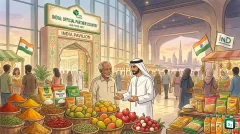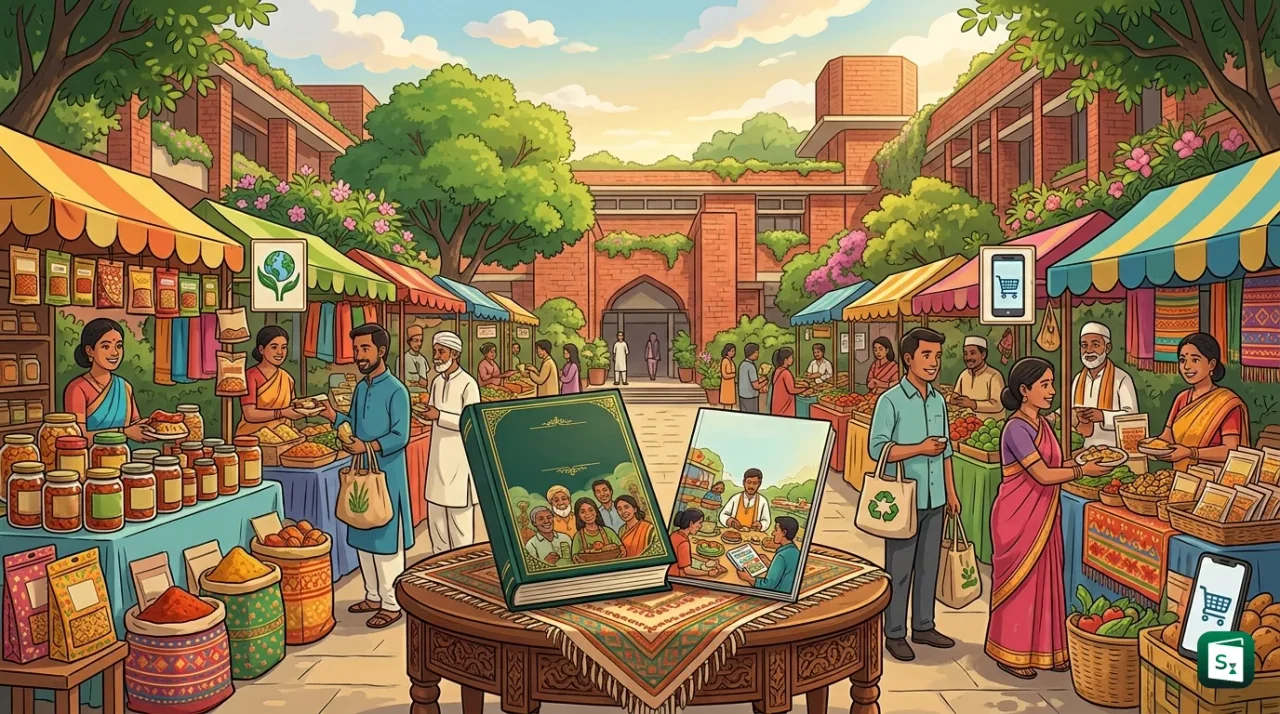
Union Minister Chirag Paswan inaugurated the PMFME Conclave 2026 on 24 and 25 August 2026 at the India Habitat Centre in New Delhi, organised by the Ministry of Food Processing Industries (MoFPI). The two day national meet brought together more than 500 stakeholders and featured the launch of the PMFME Bazaar with enterprises from 25 States and Union Territories, a Coffee Table Book on 30 success stories and the quarterly magazine FoodNova. Three new partnerships with APEDA, ONDC and NABKISAN Finance Ltd were signed at the conclave to expand credit, digital commerce and export linkages for micro food processing enterprises.
What Is the PMFME Scheme?
PMFME stands for Pradhan Mantri Formalisation of Micro Food Processing Enterprises. The full name is also written as PM Formalisation of Micro Food Processing Enterprises Scheme, and it is a Centrally Sponsored Scheme implemented by the Ministry of Food Processing Industries (MoFPI). MoFPI, headquartered in New Delhi, was established in 1988 to develop the food processing sector, create rural employment and help farmers adopt modern technology. The scheme was launched on 29 June 2020 by the then Food Processing Industries Minister Harsimrat Kaur Badal as part of the Atmanirbhar Bharat Abhiyan, with the vision of Vocal for Local in the food processing sector.
The scheme was originally approved for five years from 2020-21 to 2024-25 with an outlay of ₹10,000 crore. It was later extended through 2025-26 and is currently valid until 30 September 2026, with an extension in the same or a revised form expected soon. The expenditure is shared between Centre and States in the ratio of 60:40, 90:10 for North Eastern and Himalayan States, 60:40 for Union Territories with legislature and 100 percent by the Centre for other Union Territories. The central goal is to formalise 2 lakh micro food processing enterprises in the unorganised sector and make them competitive through financial, technical and business support.
Support is provided through four broad components. For individual micro units, the scheme offers a credit linked capital subsidy of 35 percent of the eligible project cost with a maximum ceiling of ₹10 lakh per unit, with the beneficiary contributing at least 10 percent and the balance through a bank loan. For members of Self Help Groups (SHGs) engaged in food processing, seed capital of ₹40,000 per member is given as working capital and for purchase of small tools, disbursed at the federation level as a repayable loan. For Farmer Producer Organisations (FPOs), SHGs and producer cooperatives, a credit linked grant of 35 percent for capital investment along the value chain is available, along with training and capacity building.
The scheme also funds common infrastructure such as assaying, sorting, grading, warehousing and cold storage at the farm gate, common processing facilities for One District One Product (ODOP) produce and incubation centres that micro units can hire for processing and training. In addition, branding and marketing support with a 50 percent grant is given to groups of FPOs, SHGs, cooperatives or Special Purpose Vehicles to develop a common brand, packaging, quality control and tie ups with retail chains. Training and research are led by the National Institute of Food Technology Entrepreneurship and Management (NIFTEM) at Kundli, Haryana, declared a deemed university in 2012, and NIFTEM Thanjavur, Tamil Nadu (earlier the Indian Institute of Food Processing Technology, IIFPT, upgraded in 2008), along with support from ICAR, CSIR, Defence Food Research Laboratory (DFRL) and Central Food Technological Research Institute (CFTRI).
A central pillar is the One District One Product (ODOP) approach, also referred to as One District One Product (ODOP) scheme. Under this, 707 districts across 35 States and Union Territories have selected 137 unique products ranging from mango, litchi, potato, tomato, millet based products, bakery items, spices, pickles, papad, honey, milk products and fisheries. States prepare a GIS based ODOP digital map to help stakeholders identify resources and build value chains. Preference is given to ODOP products for capital investment and for new units, and common infrastructure and branding support is limited to ODOP products, though other products are also eligible for individual support.
When and Where Was PMFME Conclave 2026 Held?
The PMFME Conclave 2026 was organised by the Ministry of Food Processing Industries (MoFPI) on 24 and 25 August 2026 at the India Habitat Centre, New Delhi. The two day meet inaugurated by Chirag Paswan brought together more than 500 stakeholders to review implementation, share experiences and recognise excellence. Attendees included representatives from States and Union Territories, State Nodal Agencies, District Nodal Officers (DNOs), District Resource Persons (DRPs), banks and financial institutions, central ministries, technical institutions, industry bodies, incubation centres and PMFME beneficiaries themselves.
Minister Chirag Paswan, who holds the portfolio of Food Processing Industries, inaugurated the conclave and interacted with entrepreneurs. In his address, he described PMFME as a scheme that has changed lives at the grassroots, citing the example of a young man from Bihar who returned home during the COVID-19 pandemic, used the scheme to start a unit and is now exporting produce, and a woman entrepreneur in Ladakh who moved from a monthly wage of ₹8,000 to running a multi crore enterprise. He noted that Bihar, Maharashtra and Uttar Pradesh have performed strongly and called for more balanced participation from other States. He also stressed that entrepreneurs need support beyond finance, including technology, capacity building, quality assurance, branding and market access, and emphasised the need for a stronger and more comprehensive PMFME 2.0 to meet evolving needs.
The second day focused on experience sharing and capacity building. Five States presented best practices, while DNOs and DRPs shared field level interventions. A dedicated session titled NIFTEMs: State of the Art Facilities Handholding PMFME Implementation was led by Harinder Singh Oberoi, Director, NIFTEM Kundli and Professor V Palanimuthu, Director, NIFTEM Thanjavur, highlighting how technical institutions provide technology, training and handholding. A training session on SNA Sparsh, the system for fund flow management, was organised for State stakeholders. A motivational session by Shiv Khera on leadership and entrepreneurship was also held. The conclave concluded with an award ceremony for top performing States and Union Territories across large, medium and small categories, top performing banks across all categories and State Rural Livelihood Missions (SRLMs) and State Urban Livelihood Missions (SULMs) for their contribution.
PMFME Bazaar: Showcasing Enterprises from 25 States and Union Territories
The PMFME Bazaar was the central attraction of the conclave and was also inaugurated by Minister Chirag Paswan. Exhibitors from 25 States and Union Territories displayed a wide range of ethnic and traditional products that reflect India’s culinary diversity. The stalls included millet based products, spices, pickles, jaggery, bakery items, processed fruits and vegetables, milk products and honey based foods. The Bazaar was designed as a national showcase for the creativity and commercial potential of micro enterprises and as a platform to create direct buyer linkages, test branding and packaging ideas and help local products reach wider domestic markets.
Coffee Table Book and FoodNova Magazine Launch
A major highlight of the inaugural programme was the release of two publications. MoFPI released a Coffee Table Book titled Swaad Se Samriddhi that documents 30 success stories of PMFME beneficiaries from different regions. The book traces their entrepreneurial journeys, from accessing credit and training to upgrading technology and entering new markets. MoFPI also launched FoodNova, its quarterly magazine on food processing. FoodNova will cover developments, innovations, success stories and emerging trends in the sector and is intended to keep stakeholders, students and entrepreneurs updated on policy, technology and market opportunities.
Three Key MoUs to Bolster Market Access and Institutional Linkages
To address the core challenge of market access, MoFPI signed three Memoranda of Understanding (MoUs) at the conclave with APEDA, ONDC and NABKISAN Finance Ltd. The partnerships aim to connect micro enterprises with finance, digital commerce platforms and export channels, helping them move from local production to national and global supply chains. Together, the three MoUs cover the journey of a product from credit to consumer, from a village processing unit to a supermarket shelf and an export consignment.
| Partner | Full Form and Background | What the Partnership Will Do for PMFME Beneficiaries |
|---|---|---|
| APEDA | Agricultural and Processed Food Products Export Development Authority, a statutory body established under the APEDA Act, 1985 and functioning from 13 February 1986 under the Ministry of Commerce and Industry | Facilitate export promotion, meet international quality and phytosanitary standards, support certification, packaging and participation in export markets for ODOP and other processed foods |
| ONDC | Open Network for Digital Commerce, an open e commerce network initiative backed by the Department for Promotion of Industry and Internal Trade (DPIIT) | Onboard micro food enterprises onto digital commerce, enable wider discovery on buyer apps, reduce dependence on single platforms and improve price discovery and logistics access |
| NABKISAN Finance Ltd (NABKISAN) | NABKISAN Finance Limited, a subsidiary of the National Bank for Agriculture and Rural Development (NABARD), which was established in 1982 and is headquartered in Mumbai | Strengthen credit access, provide collateral free lending linkages, handholding for loan applications and convergence with other agri and rural finance schemes |
The MoUs were signed in the presence of Minister Chirag Paswan, MoFPI Secretary Avinash Purushottam Das Joshi and representatives of the three organisations. Officials said the partnership with NABKISAN will help in faster loan processing and last mile credit delivery, the tie up with ONDC will bring micro brands to open digital storefronts without heavy commission costs, and the collaboration with APEDA will prepare units for export documentation, traceability and buyer connects in key markets.
Why the Conclave Matters: Formalising India’s Micro Food Processing Sector
India has one of the largest food processing bases in the world, built on a strong farm sector, rising consumer demand and growing export potential. The number of registered food businesses has grown from 25 lakh to 64 lakh, reflecting steady formalisation. Infrastructure has expanded to 24 mega food parks, 22 agro processing clusters, 289 cold chain projects and 305 processing and preservation units, along with 10 projects under Operation Greens and 225 research and development projects that have yielded 20 patents and 52 commercialised technologies. In 2024-25, agriculture and processed food exports reached about $49.4 billion, with processed foods accounting for around 20.4 percent, underlining the sector’s role in jobs, farm incomes and foreign exchange.
Yet the sector remains dominated by micro and unorganised units that face high post harvest losses, limited access to credit, weak technology, poor packaging and branding and difficulty in meeting food safety standards set by the Food Safety and Standards Authority of India (FSSAI), established under the Food Safety and Standards Act, 2006. PMFME directly addresses these gaps by formalising units, improving access to institutional credit and bringing enterprises into the regulatory net with training and incubation support.
Progress So Far and the Push for PMFME 2.0
As of 30 June 2025, MoFPI data shows 1,44,517 loans amounting to ₹11,501.79 crore sanctioned under the credit linked subsidy component, 3,48,907 approvals for seed capital amounting to ₹1,182.48 crore, 93 common infrastructure projects with ₹187.20 crore and 27 branding and marketing projects with ₹82.82 crore. By June 2025, the Centre had released ₹3,791.1 crore to States and Union Territories, 1,16,666 beneficiaries had been trained and 50,875 loans were sanctioned in 2024-25 alone. By August 2026, the scheme crossed its core target of sanctioning 2 lakh units, a milestone highlighted by Minister Chirag Paswan at the conclave.
The achievement has prompted calls for PMFME 2.0, a more comprehensive next phase that would expand technology upgradation, quality control, branding and market access. Secretary Avinash Joshi indicated that an extension beyond the current deadline of 30 September 2026 is expected soon, either in the same form or in a revised design. For the future, the focus is on balanced State performance, stronger integration with Self Help Group and Farmer Producer Organisation networks, faster bank linkages, wider use of SNA Sparsh for transparent fund flows and deeper convergence with schemes such as the Pradhan Mantri Kisan Sampada Yojana (PMKSY) and the Production Linked Incentive Scheme for Food Processing Industry (PLISFPI). If scaled well, the model can reduce wastage, add value at the farm gate, raise farmer incomes and create skilled and semi skilled jobs locally, with original projections of ₹35,000 crore investment and 9 lakh jobs linked to the wider formalisation effort.
In May and August 2026, MoFPI outlined the contours of the proposed next phase. The Ministry has proposed to continue the scheme for five more years during 2026-31, aligning with the 16th Finance Commission period, with a higher credit linked subsidy ceiling above the current ₹10 lakh per unit. The proposal prioritises women entrepreneurs, who already form nearly 41 percent of beneficiaries, along with units in hilly and North Eastern regions, stronger branding support through 40 common brands covering nearly 200 products, and exemption for PMFME beneficiaries from the usual two year waiting period for further help under the next cycle of PMKSY.
Key Takeaways
- The PMFME Conclave 2026 was inaugurated by Chirag Paswan on 24 and 25 August 2026 at India Habitat Centre, New Delhi, organised by MoFPI with over 500 stakeholders.
- The PMFME Bazaar showcased micro food enterprises from 25 States and Union Territories with ethnic and traditional products including millet based foods, spices and pickles.
- MoFPI released a Coffee Table Book on 30 PMFME success stories titled Swaad Se Samriddhi and launched its quarterly magazine FoodNova.
- MoFPI signed three MoUs with APEDA, ONDC and NABKISAN Finance Ltd to strengthen export, digital commerce and credit linkages.
- The PMFME Scheme was launched on 29 June 2020 with an outlay of ₹10,000 crore, aims to formalise 2 lakh micro units, offers 35 percent credit linked subsidy up to ₹10 lakh and ₹40,000 seed capital per SHG member, and follows the ODOP approach covering 707 districts and 137 unique products.