Vice President C. P. Radhakrishnan released the book “Sanskritir Ratna Bhandar: Bhaowaiyar Itibritto” (Bhawaiya: A Cultural Treasure and Its Historical Journey) on 25 June 2026 at Uprashtrapati Bhavan in New Delhi. The book, authored by Lok Sabha MP Dr. Jayanta Kumar Roy and Sangita Roy, chronicles the historical evolution of Bhawaiya, a traditional folk music genre from North Bengal, Assam and adjoining regions. It documents the cultural legacy of the Koch Rajbanshi community, whose rural lifestyle and traditions have shaped this distinctive musical form for centuries.
What Is Bhawaiya?
Bhawaiya is a traditional folk music genre that originated in the sub-Himalayan belt of Northern Bengal, Western Assam, and parts of present-day Bangladesh (Rangpur and northern Dinajpur districts). Its origins are traced to the 16th century during the reign of Koch king Biswa Singha, who established the kingdom of Koch Bihar. The word “Bhawaiya” is derived from the Sanskrit root bhava, meaning emotion or sentiment, capturing the deeply felt, plaintive quality of the songs.
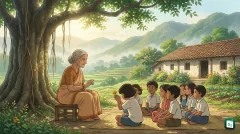
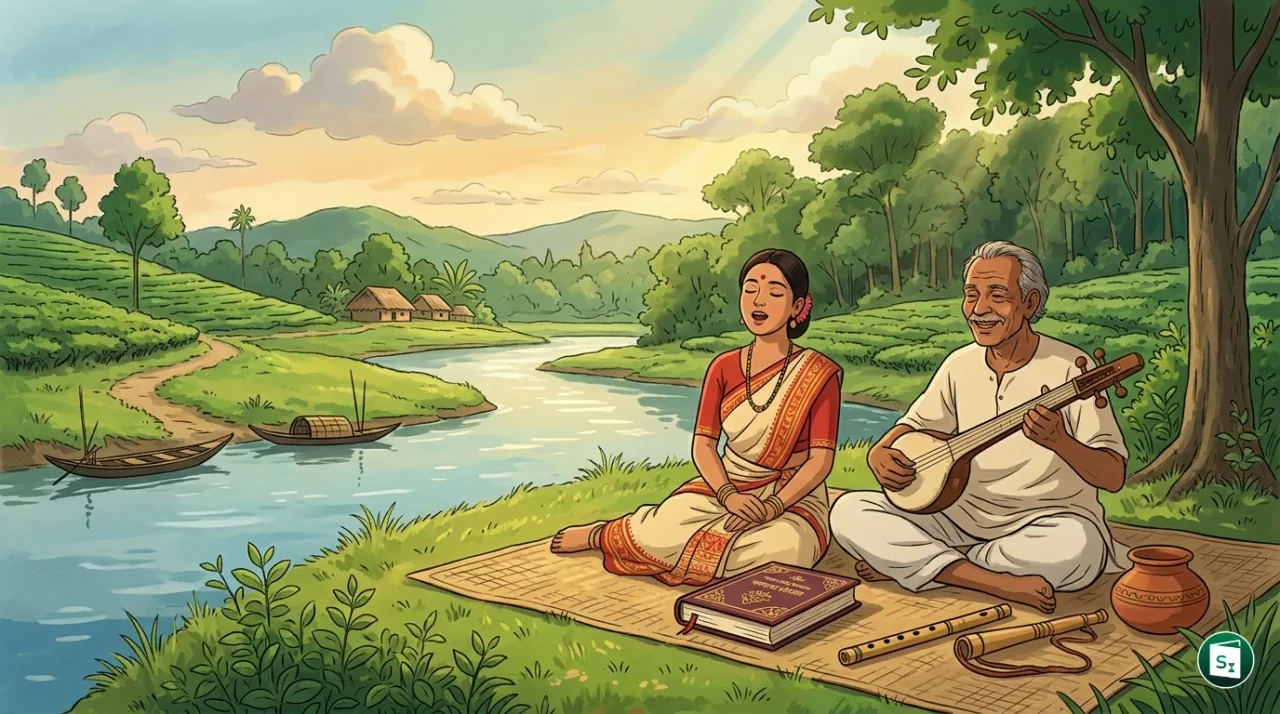
Unlike classical music forms, Bhawaiya emerged from the everyday lives of working people. Its recurring protagonists include mahouts (elephant trainers), mahishals (buffalo herders) and gariyals (cart drivers) itinerant labourers who spent long periods away from home. The lyrics express the pangs of separation and loneliness felt by their womenfolk, with elongated tones accentuating pain, longing and deep emotion. The songs are sung in the Kamrupi or Rajbongshi language and are traditionally accompanied by the dotara, a four-stringed lute that remains the primary instrument of the genre.
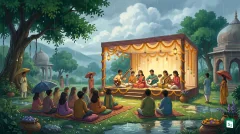
Bhawaiya remained largely undocumented until the early 20th century. It gained wider recognition through the pioneering recordings of Suren Basunia, Abbasuddin Ahmed and Pratima Barua in the mid-20th century. A faster, more rhythmic variant called Chatka also exists within the Bhawaiya idiom, covering lighter themes such as family life, social observations and local humour. Over time, Bhawaiya evolved from its rural, oral roots into a stage-performed art form, especially from the 1950s onward.
The Koch Rajbanshi Community
The Koch Rajbanshi (also called Rajbongshi) community is an indigenous ethnic group primarily settled in the Dooars and Terai lowlands of North Bengal, along with parts of Western Assam, Bihar, the eastern Terai of Nepal, and scattered enclaves in Bangladesh. In North Bengal, they are concentrated in the districts of Cooch Behar, Jalpaiguri and Alipurduar. In Assam, the community is found in Dhubri, Kokrajhar and Goalpara districts.
The community traces its lineage to the historical Koch kingdom within the ancient Kamata realm of northeastern India. Bhawaiya is the most popular folk song genre of the Rajbanshis and is considered the primary melodic pattern of the entire region. The songs reflect every aspect of Rajbanshi life from love and loss to agricultural customs, seasonal festivals and community celebrations. Religious practices, folk traditions and the rhythms of rural existence have all contributed to shaping this musical form.
The community speaks the Kamrupi or Rajbongshi language, which belongs to the Bengali-Assamese subgroup of the Indo-Aryan language family. Despite historical marginalization, the community has preserved its distinct cultural identity, with Bhawaiya serving as a powerful vehicle for oral heritage and collective memory.
About the Book and Its Authors
Published by Katha-O-Kahini, the book “Sanskritir Ratna Bhandar: Bhaowaiyar Itibritto” presents a systematic account of the historical journey of Bhawaiya, from its origins in the rural landscapes of North Bengal to its evolution as a recognised folk tradition. The book examines how folk traditions, religious practices, agricultural customs, seasonal festivals and community life together shaped Bhawaiya as an organic expression of the social and cultural experiences of the people.
The lead author, Dr. Jayanta Kumar Roy, is a Lok Sabha MP from Jalpaiguri, West Bengal, currently serving his second consecutive term (first elected in 2019, re-elected in 2024). He belongs to the Bharatiya Janata Party and represents the Jalpaiguri constituency, which falls within the heartland of the Koch Rajbanshi cultural region. He holds a doctorate and has been an active parliamentarian, raising issues such as the inclusion of the Rajbanshi language in the Eighth Schedule of the Constitution. His co-author Sangita Roy has collaborated in documenting this cultural treasure, bringing the heritage of the Koch Rajbanshi community and the Bhawaiya tradition into mainstream discourse.
Speaking at the release event, the Vice President noted that the book offers a fresh perspective on the origin and development of Bhawaiya. He highlighted the resilience of the tradition, which continues to survive and evolve despite the forces of modernization, urbanization and globalization, because it remains rooted in authentic human experiences and universal emotions.
Cultural Preservation and the Way Forward
In his address, Vice President Radhakrishnan placed the Bhawaiya tradition within the broader context of India’s civilisational heritage. He referred to the Sama Veda, the concept of Nada Brahma (sound as divine) and the traditions of Bhakti and Sufism, describing music as a pathway to spiritual realisation. He noted that India’s ancient cultural traditions continue to provide solutions to contemporary global challenges, citing the growing global acceptance of Yoga and Mission LiFE as examples.
The Vice President called upon the younger generation to actively participate in cultural preservation and urged them to leverage technology to safeguard languages, customs, values and traditional knowledge systems. He stressed that cultural confidence and civilisational awareness must remain integral to India’s journey towards becoming a developed nation by 2047 (Viksit Bharat).
The event was attended by several dignitaries, including Rajya Sabha MP Harsh Vardhan Shringla, former Vice-Chancellor of Cooch Behar Panchanan Barma University Prof. (Dr.) Nikhil Chandra Ray, publisher Debraj Patra, and the authors themselves. The release of this book assumes particular significance as it documents an oral tradition that has survived largely through memory and performance, ensuring that the cultural heritage of the Koch Rajbanshi community and the Bhawaiya tradition is preserved for future generations of scholars, musicians and cultural enthusiasts.
Key Takeaways
- Vice President C. P. Radhakrishnan released the book “Sanskritir Ratna Bhandar: Bhaowaiyar Itibritto” on 25 June 2026 at Uprashtrapati Bhavan, New Delhi.
- The book is authored by Lok Sabha MP Dr. Jayanta Kumar Roy (BJP, Jalpaiguri) and Sangita Roy, and published by Katha-O-Kahini.
- It documents the historical evolution of Bhawaiya, a traditional folk music genre originating in the 16th century under Koch king Biswa Singha.
- Bhawaiya is the primary folk music of the Koch Rajbanshi community, prevalent in North Bengal, Western Assam and parts of Bangladesh.
- The genre is characterised by plaintive lyrics of love and separation, sung in the Kamrupi or Rajbongshi language, and accompanied by the dotara (a four-stringed lute).
- The book highlights the influence of folk traditions, religious practices, agricultural customs and seasonal festivals in shaping Bhawaiya, as noted by the Vice President.