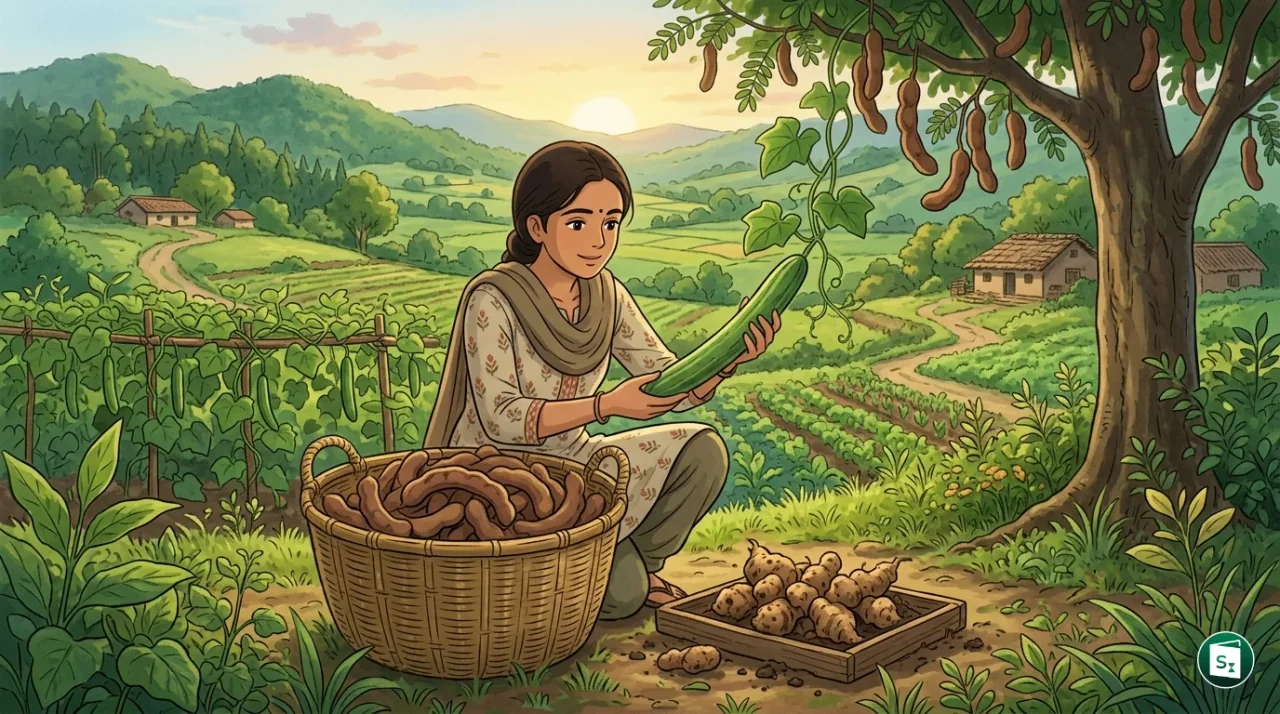
The Geographical Indication Registry in Chennai has granted GI tags to three agricultural products from Madhya Pradesh: Khurasani Imli from Mandu, Garadu tuber from Ratlam, and Balam Kakdi from Sailana. These certifications are part of a larger effort to secure intellectual property protection for 12 distinct regional agricultural items from the state. The recognition protects the unique identity of these products while opening up new economic opportunities for the tribal communities that have preserved them for generations.
What Is a Geographical Indication Tag?
A Geographical Indication (GI) tag is a form of intellectual property right that identifies goods originating from a specific geographical territory, where a given quality, reputation, or characteristic of the goods is essentially attributable to their place of origin. In India, GI registration is governed by the Geographical Indications of Goods (Registration and Protection) Act, 1999, which came into force on 15 September 2003.
The GI Registry, headquartered in Chennai, operates under the Department for Promotion of Industry and Internal Trade (DPIIT), Ministry of Commerce and Industry. The first product in India to receive a GI tag was Darjeeling Tea in 2004-05. A registered GI is valid for 10 years and can be renewed indefinitely. The tag ensures that only authorised users from the designated geographical area can use the product name, preventing imitation and misuse.
Khurasani Imli: The Baobab Fruit of Mandu
Khurasani Imli is the fruit of the African Baobab tree (Adansonia digitata), one of the world’s most remarkable tree species. Despite its name, it is not related to the common tamarind. The fruit is light green in appearance, with a distinctive sweet-sour taste and a cream-of-tartar flavour profile. It is packed with Vitamin C, antioxidants, and essential minerals, and tribal healers have long used it to treat digestive ailments, fever, and fatigue.
Mandu, located in the Dhar district of Madhya Pradesh, hosts India’s largest natural cluster of Baobab trees, with more than 1,000 specimens. These trees are not native to India. They were introduced to central India approximately 600 years ago during the 15th century. Historical accounts suggest that the Sultan of Khurasan gifted Baobab saplings to Sultan Alauddin Khilji, who later passed them to the rulers of the Malwa region. Another theory links their arrival to Arab traders and African soldiers who carried Baobab seeds as a nutritious food source along trade and military routes. The name “Khurasani Imli” reflects both its origin in the Khurasan region and its resemblance to tamarind.
The Baobab tree is often called the “upside-down tree” because its leafless branches resemble roots reaching for the sky. It can live up to 2,000 years, store up to 120,000 litres of water in its massive trunk, and has a trunk circumference that can reach 45 feet. The Bhil tribal community of Mandu has historically preserved these trees and relied on the fruit for sustenance and income. The GI tag will help protect this heritage, enable branding and marketing of value-added products such as Baobab juice, and ensure better prices for tribal collectors.
Garadu: The Winter Tuber of Ratlam
Garadu is a starchy tuber grown in the Bandgarod and Khetalpur regions of Ratlam district in the Malwa region of Madhya Pradesh. It is a beloved winter street food, particularly in Ratlam city, where it is cut into small pieces, deep-fried until crispy, and served with spicy chaat masala, lemon juice, and fresh coriander.
The tuber has been cultivated by local farmers using traditional methods for generations. What makes Garadu distinct is its unique texture and flavour, which are attributed to the specific soil and climatic conditions of the Ratlam region. The GI tag will provide legal protection to this regional delicacy, preventing imitation by other producers and helping establish its identity in national markets.
Balam Kakdi: The Unique Cucumber of Sailana
Balam Kakdi, also known as Balram cucumber, is a special variety of cucumber grown in the Sailana region of Ratlam district. It is widely recognised for its distinctive taste and the striking saffron and green hues of its flesh. The cucumber is commonly enjoyed as a snack or in salads during the summer months.
What sets Balam Kakdi apart is its strong link to the tribal communities of Sailana, who have preserved its seeds and cultivation methods for generations. The seeds are sown during the rainy season, and the fruits ripen towards the end of September and October. In December 2025, the cultivation and production methods of Balam Kakdi had already received a copyright certificate from the Registrar of Copyrights, which was seen as a stepping stone toward obtaining the GI tag. With the GI tag now secured, farmers from the Sailana region can access wider markets and receive fair prices for this unique crop.
Significance of GI Tags for MP’s Regional Products
The grant of GI tags to these three products along with the Indori Malwi potato, which was also certified around the same time, is part of a broader push by the Madhya Pradesh government to secure GI recognition for 18 proposed regional agricultural items, of which 12 have received certification. The state has been actively working with the GI Registry in Chennai, district administrations, Krishi Vigyan Kendras, and Farmer Producer Organisations to document the unique qualities of its regional produce.
For the tribal communities of Mandu, Ratlam, and Sailana who have preserved these crops through generations of traditional knowledge, the GI tag translates into tangible economic benefits. It enables proper branding and marketing, opens access to national and international markets, and prevents the misuse of product names by unauthorised sellers. Dhar Collector Rajeev Ranjan Meena noted that products previously sold informally on roadsides can now be marketed with official markings regarding their nutritional value.
Ratlam district now stands out as having the highest number of GI-tagged products in Madhya Pradesh, with four recognised items: Ratlami Sev, Riyawan Garlic, Garadu tuber, and Balam Kakdi. This reflects the district’s rich agricultural and culinary heritage.
Key Takeaways
- The GI Registry in Chennai granted GI tags to Khurasani Imli (Mandu), Garadu tuber (Ratlam), and Balam Kakdi (Sailana) as part of an initiative covering 12 regional products from Madhya Pradesh.
- Khurasani Imli is the fruit of the African Baobab tree (Adansonia digitata), introduced to India around 600 years ago from the Khurasan region.
- Mandu in Dhar district hosts India’s largest natural cluster of Baobab trees with over 1,000 specimens, some of which can live up to 2,000 years and store 120,000 litres of water.
- Garadu is a starchy tuber from Ratlam district in the Malwa region, popular as a deep-fried winter street food.
- Balam Kakdi is a cucumber variety from Sailana with distinctive saffron and green flesh; its cultivation methods were copyrighted in December 2025 before the GI tag was awarded.
- India’s GI framework is governed by the Geographical Indications of Goods (Registration and Protection) Act, 1999, and the first GI-tagged product was Darjeeling Tea in 2004-05.