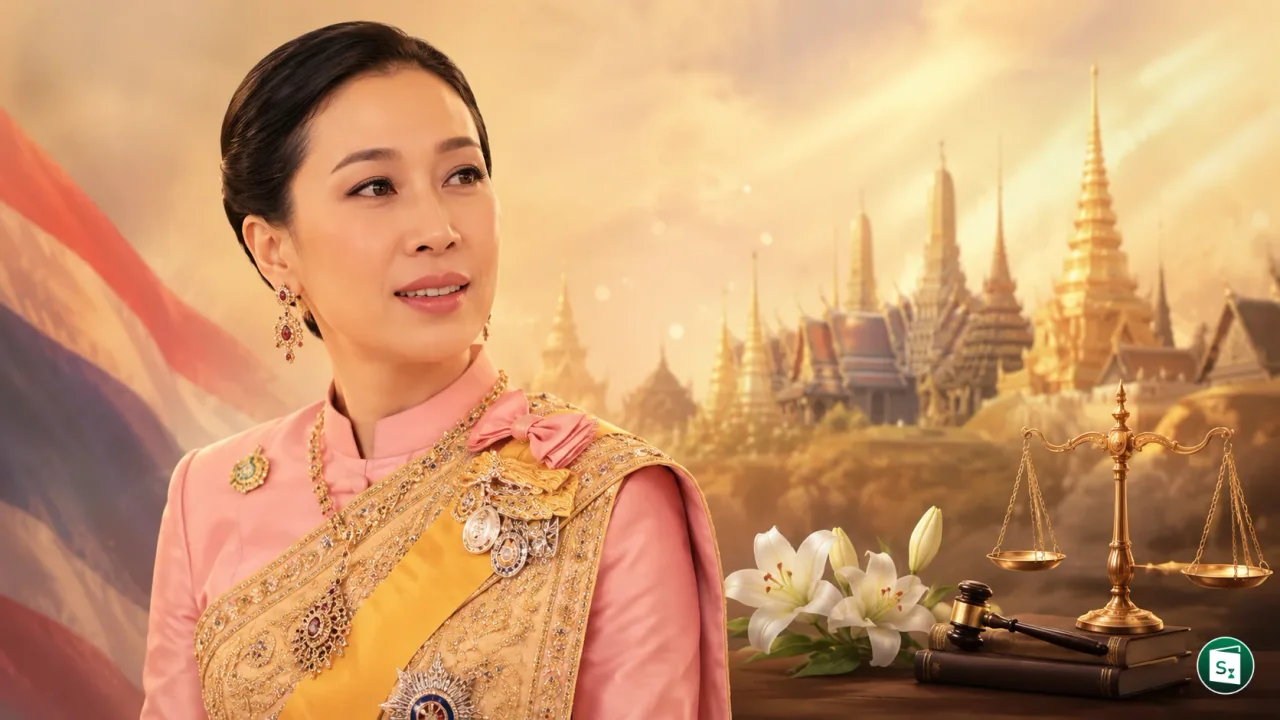
Princess Bajrakitiyabha Mahidol of Thailand, the eldest daughter of King Maha Vajiralongkorn, passed away at the age of 47 after a prolonged period of medical care following a health crisis in 2022. A distinguished legal scholar and diplomat, she was a pioneering force in international criminal justice reform, particularly in championing the rights of female prisoners. Her death marks the end of a remarkable career dedicated to public service, both within the Thai monarchy and on the global stage through the United Nations.
A Life of Academic and Legal Excellence
Princess Bajrakitiyabha, often referred to by the Thai public as Princess Pa, built a reputation that blended royal tradition with modern professional expertise. She earned her undergraduate law degree from Thammasat University in Bangkok before moving to the United States for advanced studies. She subsequently completed both a Master of Laws (LL.M.) and a Doctor of the Science of Law (J.S.D.) from Cornell Law School, making her one of the most academically accomplished members of the royal family.
Following her studies, she chose to serve as a public prosecutor within the Office of the Attorney General in Thailand. Her tenure was characterized by a deep commitment to the rule of law and a focus on improving the efficiency of the judicial system. By working directly in the legal field, she bridged the gap between the monarchy and the daily administrative realities of the state, earning her the informal title of the ‘Princess of Law’ among her peers.
Pioneering Global Reforms: The Bangkok Rules
The most enduring legacy of Princess Bajrakitiyabha on the international stage is her pivotal role in the creation of the Bangkok Rules. Formally known as the United Nations Rules for the Treatment of Women Prisoners and Non-custodial Measures for Women Offenders, these guidelines were adopted by the UN General Assembly in 2010. They represent the first set of international standards specifically designed to address the unique needs and vulnerabilities of female inmates.
Through her advocacy, the Princess highlighted that traditional penal systems were largely designed for men and often failed to provide gender-specific healthcare or support for incarcerated mothers. The Bangkok Rules cover various aspects of prison life, including sanitation, health services, and the protection of children living with their mothers in detention. This initiative not only improved the lives of thousands of women globally but also established Thailand as a leader in international criminal justice reform.
Diplomatic Service and International Advocacy
Beyond her legal contributions, Princess Bajrakitiyabha served as a high-ranking diplomat representing Thailand on multiple global platforms. From 2012 to 2014, she served as the Ambassador of Thailand to Austria, with concurrent accreditation to Slovakia and Slovenia. During this period, she was also the permanent representative of Thailand to the United Nations Office in Vienna, where she chaired the UN Commission on Crime Prevention and Criminal Justice (CCPCJ).
Her consistent advocacy for social justice led to several prestigious appointments within the United Nations system. In 2017, the United Nations Office on Drugs and Crime (UNODC) named her the Goodwill Ambassador for the Rule of Law in Southeast Asia. Additionally, she served as an Honorary Goodwill Ambassador for UN Women, where she focused on initiatives to combat violence against women. In these capacities, she worked to integrate the principles of justice and the rule of law into the broader framework of sustainable development goals.
Humanitarian Legacy and Social Reform
In addition to her official and diplomatic roles, the Princess was a dedicated humanitarian who launched several grassroots initiatives in Thailand. One of her most notable contributions was the founding of the Kamlangjai (Inspire) Project. This initiative provides comprehensive support to incarcerated women, particularly those who are pregnant or have young children. The project offers vocational training, healthcare, and psychological counseling to ensure that former inmates can successfully reintegrate into society and avoid returning to crime.
Her philanthropic work also extended to community development and disaster management. She was known for her hands-on approach, often visiting remote provinces to monitor development projects and provide aid to marginalized populations. By focusing on practical solutions for social issues such as poverty and lack of education, she modernized the traditional charitable role of the Thai monarchy, making it more responsive to the needs of a contemporary society.
Significance Within the Thai Monarchy
As the eldest child of King Maha Vajiralongkorn and his first wife, Princess Soamsawali, Princess Bajrakitiyabha occupied a unique and influential position within the Chakri Dynasty. Although Thailand’s royal succession has historically prioritized male heirs, she was widely regarded as one of the most capable and dedicated members of the family, frequently carrying out official duties on behalf of the King.
Her influence extended into the military and security sectors of the kingdom. In 2021, she was appointed Chief of Staff of the King’s Close Bodyguard Command and attained the rank of General in the Royal Thai Army. By combining her legal expertise with military leadership and diplomatic experience, she emerged as a multifaceted figure who represented a bridge between ancient royal traditions and the requirements of modern governance. Her passing is seen as a significant loss for the Thai nation, where she was respected for her professional competence and her commitment to public welfare.
Key Takeaways
- Princess Bajrakitiyabha Mahidol of Thailand, the eldest child of King Maha Vajiralongkorn, passed away at the age of 47.
- She was a distinguished legal scholar who earned a Doctor of the Science of Law (J.S.D.) from Cornell Law School and served as a public prosecutor in Thailand.
- She was the primary force behind the Bangkok Rules, the first international standards for the treatment of female prisoners, adopted by the United Nations in 2010.
- Her diplomatic service included a tenure as the Ambassador of Thailand to Austria and as the permanent representative to the United Nations Office in Vienna.
- She served as a UNODC Goodwill Ambassador for the Rule of Law in Southeast Asia and an Honorary Goodwill Ambassador for UN Women.
- The Princess founded the Kamlangjai (Inspire) Project, a social reform initiative aimed at supporting incarcerated women and their children.
- She held the rank of General in the Royal Thai Army and served as the Chief of Staff of the King’s Close Bodyguard Command.