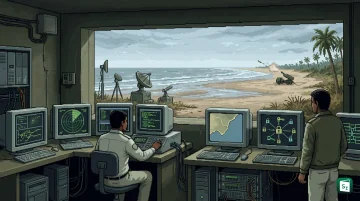
DRDO has successfully configured and tested its Quantum Key Distribution (QKD) platform on the live network of the Proof & Experimental Establishment (PXE) in Chandipur, Odisha.
The QKD platform aims to secure real-time observations and telemetry associated with artillery and armoured weapon trials, strengthening the quantum-secured communication capabilities of India.
Union Minister Amit Shah has chaired the inaugural Bay of Bengal Initiative for Multi-Sectoral Technical and Economic Cooperation (BIMSTEC) Home Ministers’ Meeting (HMM) in New Delhi.
The event concluded with the unanimous adoption of the ‘Delhi Declaration’ by the member states to strengthen regional security and cooperation. During the meeting, five regional security initiatives were approved, including the BIMSTEC Convention against Trafficking in Persons and the BIMSTEC Plan of Action on Drug Control.
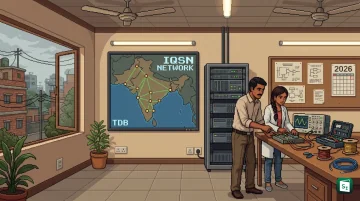
The Technology Development Board (TDB) has signed an agreement with the Bengaluru-based QNu Labs Pvt Ltd to provide financial support of ₹150 crore under the Research Development and Innovation (RDI) Fund.
The project, involving a total cost of ₹300 crore, aims to develop an indigenous technology backbone for the Quantum Secure and Sensing Networks of India (IQSN).
HCLTech has signed a global partnership agreement with Anthropic, an AI company, to expand the deployment of agentic AI across enterprises, with a focus on safety, cybersecurity, and governance.
QNu Labs, in collaboration with the Bhaskaracharya National Institute for Space Applications and Geo-informatics (BISAG-N) and the IIT Gandhinagar, has successfully demonstrated the first free-space Quantum Key Distribution (QKD) link of India. The link is established over a distance of 5.56 km.
The demonstration utilized a Pointing, Acquisition and Tracking (PAT) system to maintain stable communication, achieving a Quantum Bit Error Rate (QBER) of less than 5%. It is to be noted that secure encryption keys were generated at a rate of 230 to 260 bits per second (bps) and were integrated with the Vedic Kavach platform.
The 81st session of the United Nations General Assembly (UNGA 81) was held at the UN Headquarters in New York, USA, presided over by Khalilur Rahman, the Foreign Minister of Bangladesh.
The session was held under the theme “Restoring Trust, Managing Transformation: A United Nations That Delivers for All”, with the Indian delegation led by Union Minister S Jaishankar.
The assembly unanimously adopted its first-ever declaration on rising sea-levels to provide assurances to Small Island Developing States (SIDS) and low-lying coastal countries. During the session, the UN Women launched a new digital, innovation, and AI hub focused on gender equality.
Union Minister S Jaishankar signed the UN Convention against Cybercrime, which serves as the first comprehensive international treaty focused on cybercrime. It is to be noted that India has been officially placed on the “Strategic Partner Stream” in the Pacific Islands Forum (PIF).
Furthermore, India and Liberia jointly launched a new international initiative named “The Group of Friends on Safety & Security of Shipping & Seafarers (GoFonS4)” to focus on the safety and security of commercial shipping and maritime personnel.
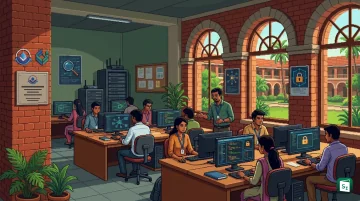
Tata Communications Ltd (TCL) has established a Centre of Excellence (CoE) at the Shanmugha Arts, Science, Technology & Research Academy (SASTRA) Deemed University in Thanjavur, Tamil Nadu.
The facility is dedicated to the domains of cybersecurity and digital forensics to advance research and technical proficiency in these sectors.
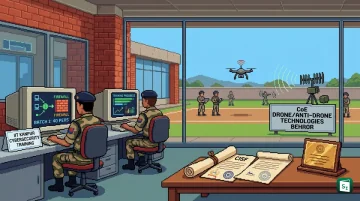
The Central Industrial Security Force (CISF) has signed two MoUs with the IIT Kanpur in Uttar Pradesh. Under the first MoU, the IHUB NTIHAC Foundation (C3iHub) will conduct a 6-week residential Cybersecurity Training Programme for 40 personnel of the CISF per batch under a 3-year non-commercial framework.
The second MoU involves the establishment of a CoE focused on drone and anti-drone technologies at the Multi-Purpose Recruitment and Training Centre (MPRTC) in Behror, Rajasthan. The CoE will operate under a 5-year framework.
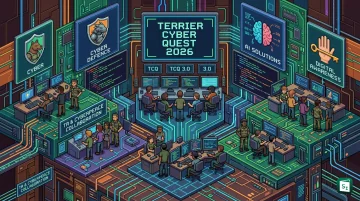
The Territorial Army, in collaboration with CyberPeace, has launched a national-level hackathon named “Terrier Cyber Quest 2026” (TCQ 3.0).
The initiative aims to address defence, cybersecurity, and information-domain challenges by promoting indigenous solutions in Artificial Intelligence (AI), threat mitigation, and digital awareness.
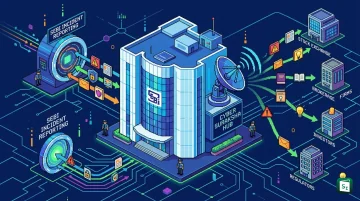
The SEBI has launched two new web portals, “SEBI Incident Reporting” and “Cyber Suraksha”, to strengthen cybersecurity and information sharing in the securities market ecosystem.
The “SEBI Incident Reporting” portal is an updated version of the existing system designed for structured, timely, and actionable reporting of cyber-incidents.
The “Cyber Suraksha” portal will serve as a centralized hub for sharing cybersecurity information, including vulnerability warnings, policy measures, and incident insights.
Union Minister of State Bandi Sanjay Kumar, in a written reply to the Lok Sabha, stated that over 12,000 e-Zero First Information Reports (FIRs) were registered against cyber financial fraud across 18 states and Union Territories (UTs) in 2025.
Delhi recorded the highest number of e-Zero FIRs with 6,115, followed by Chandigarh, Uttarakhand, Goa, and Rajasthan.
Nvidia, in collaboration with Microsoft, SpaceX, Palantir, and other technology companies, has launched an AI safety initiative named the 'Open Secure AI Alliance'.
The primary objective of this alliance is to develop and share open-source AI security tools. This initiative was launched following a recent disclosure by OpenAI that an autonomous agent had compromised the infrastructure of the startup Hugging Face.
pi-labs, an Indian AI and deepfake detection company, has partnered with Google Cloud to deliver secure, scalable, and mission-ready AI solutions in India.
SBI Life Insurance Company Ltd has signed an MoU with the IIT Bombay to establish the 'Bharat AI & Cyber Innovation Hub for Insurance'. This joint research and innovation centre aims to develop indigenous deep-technology defence systems for the insurance sector.
The 16th BRICS (Brazil, Russia, India, China, and South Africa) National Security Advisers' (NSA) meeting was held in New Delhi.
The meeting was chaired by the National Security Advisor (NSA) of India, Ajit Doval. The summit was conducted under the theme 'Non-Traditional Security Challenges Confronting the World Today'.
The Insurance Regulatory and Development Authority of India (IRDAI) has constituted a 7-member Working Group on AI (WG-AI) to guide insurance companies regarding the adoption, governance, and oversight of AI technologies.
The WG-AI is chaired by Prof. Sandeep K Shukla, Director of the International Institute of Information Technology (IIIT) Hyderabad. Deepak Gaikwad, General Manager (GM) and Chief Information Security Officer (CISO) at IRDAI, has been appointed as the member-convener of the group.
The Centre for Development of Telematics (C-DOT) has signed an MoU with the IIT Hyderabad to advance research and innovation in next-generation communication technologies.
Under this collaboration, C-DOT is establishing a Centre of Excellence (CoE) at the campus. This marks the 4th CoE established by C-DOT, following those at IIT Kanpur, IIT Gandhinagar, and IIT Roorkee.
The Indian Cyber Crime Coordination Centre (I4C), under the Ministry of Home Affairs (MHA), has launched two new portals: the Grievance Redressal Mechanism (GRM) and the Money Restoration Module (MRM).
These portals are designed to streamline direct operational coordination among police forces, banking networks, and the National Cyber Crime Reporting Portal (NCRP).
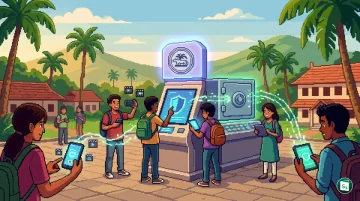
The RBI has launched "RBI Reelathon 2026", a statewide cyber fraud awareness campaign in Kerala.
The initiative is being conducted across 150 colleges in the state to promote financial literacy, cyber hygiene, safe digital banking, smart borrowing, and vigilance against online financial threats through student engagement and a reel-making competition.