India will host the 11th Asian Senior Wushu Championships in 2028, the first time the country has received hosting rights for this continental event. The Wushu Federation of Asia (WFA) approved the decision at its Congress in Aichi-Nagoya, Japan, with around 500 athletes from 42 countries expected to take part. The hosting honour, along with the nomination of an Indian official to the WFA Executive Committee, marks a new stage for the wushu game in India.
What Is the Wushu Game?
The wushu game is the modern competitive form of traditional Chinese martial arts, also known as kung fu. It originated in China and was standardised as a sport after 1949. Today the International Wushu Federation governs wushu worldwide through two formats, taolu routines and sanda combat.
The word wushu comes from two Chinese characters. Wu means martial or military and shu means art or skill. In everyday use, people often use wushu and kung fu to mean the same thing. In strict terms, kung fu refers to the wider traditional practice and culture, while wushu refers to the standardised sport with fixed rules, judges and scoring.
Wushu developed from centuries old fighting styles practised across China. A Chinese wushu team gave a demonstration at the 1936 Berlin Olympic Games. After the formation of the People’s Republic of China in 1949, the government organised these scattered styles into a common syllabus with standard forms, teaching material and competition rules. An international invitational tournament was held in Xian in 1985, and the preparatory work from that event led to the founding of the International Wushu Federation (IWUF) in Beijing on 3 October 1990 during the Asian Games.
Two Formats of the Wushu Sport: Sanda and Taolu
The wushu sport has two separate disciplines. Taolu means routine or form, while sanda means free fighting or combat. An athlete usually trains in one of the two streams, and medals are awarded separately for each stream at major championships.
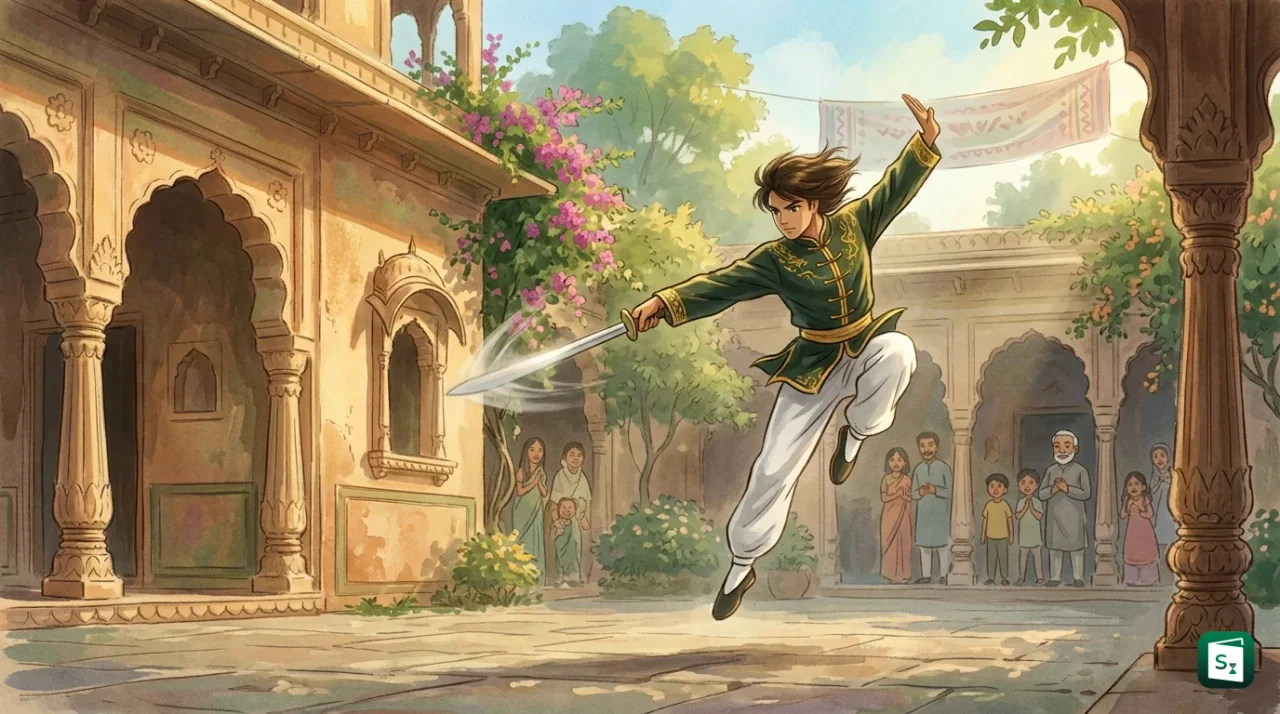
Taolu is a solo performance judged on skill and beauty of movement. The athlete performs a fixed sequence of punches, kicks, stances, jumps, sweeps and weapon moves without an opponent. Common bare hand routines include changquan (long fist), nanquan (southern fist) and taijiquan (tai chi boxing). Weapon routines include jianshu (straight sword), daoshu (broadsword), qiangshu (spear), gunshu (cudgel), nandao and nangun. Each routine for changquan, nanquan, daoshu, gunshu, jianshu and qiangshu must last from 1 minute 20 seconds to 1 minute 35 seconds, while taijiquan and taijijian routines last from 2 minutes 45 seconds to 3 minutes 15 seconds. Scoring is out of 10 points, with marks for quality of movement and overall performance. Higher level events also add marks for degree of difficulty for jumps like the tornado kick.
Sanda is full contact fighting between two athletes on a raised platform called leitai, which measures 8 metres by 8 metres. A sanda bout has three rounds of 2 minutes each with a one minute rest between rounds, and the fighter who wins two rounds wins the bout. Fighters can use punches, kicks and throws. Elbow strikes, knee strikes, headbutts and attacks to the joints are not allowed. Points are earned for clean punches to the head and torso, kicks to the head, torso and thigh, and for throwing the opponent down or pushing the opponent off the platform. Fighters wear red or blue uniforms and protective gear, and they compete in strict weight categories for men and women.
| Feature | Taolu (Routine) | Sanda (Combat) |
|---|---|---|
| Nature | Solo performance without opponent | Full contact fight between two athletes |
| Arena | 14 metre by 8 metre carpet | 8 metre by 8 metre raised leitai platform |
| Duration | 1 minute 20 seconds to 3 minutes 15 seconds based on event | Three rounds of 2 minutes with one minute rest |
| How winner is decided | Highest score out of 10 points from judges | First to win two rounds, or by knockout or points |
| Key skills | Stances, kicks, jumps, weapon control and balance | Punches, kicks, throws and defence |
| Weight categories | No weight division, entry by event | Strict divisions such as 48 kg, 52 kg, 60 kg and 70 kg |
Is Wushu an Olympic Sport?
Wushu is not yet an Olympic sport, though the International Wushu Federation is recognised by the International Olympic Committee. Wushu has appeared as a demonstration event and will feature at the Dakar 2026 Youth Olympic Games. It has been a regular medal sport at the Asian Games since 1990.
The International Olympic Committee (IOC) gave full recognition to the IWUF in 2002. The IWUF runs offices in Beijing, China and Lausanne, Switzerland, and it now has more than 160 member countries and territories across five continents. The federation applied for inclusion in the Olympic programme several times and was shortlisted for the Tokyo 2020 Olympic Games, but it did not make the final list.
Even without Olympic status, the IWUF has built a strong presence in multi sport events. A special Beijing 2008 Wushu Tournament was held alongside the 2008 Olympic Games with the support of the IOC. Wushu was a demonstration sport at the Nanjing 2014 Youth Olympic Games. The IOC has included wushu in the programme of the Dakar 2026 Youth Olympic Games, which will be its first appearance as an official Youth Olympics event. Wushu has been part of every Asian Games since Beijing 1990, and it is also contested at the World Games, the World Combat Games and the Universiade.
India to Host 11th Asian Senior Wushu Championships in 2028
The Wushu Federation of Asia (WFA) ratified the decision to award the 11th Asian Senior Wushu Championships to India at its Congress in Aichi-Nagoya, Japan in September 2026. The Congress met in Nagoya on the sidelines of the 20th Asian Games Aichi-Nagoya 2026, which was held from 19 September to 4 October 2026. Suhel Ahmed represented India at the meeting on behalf of the Wushu Association of India (WAI).
The 2028 event will be the first time India hosts the senior continental championship. Around 500 athletes from 42 countries are expected to take part. Coaches, judges, technical officials and sports administrators from across Asia will also travel to India for the championship. The championship is the top senior level wushu event in Asia and serves as a key ranking and exposure event ahead of the Asian Games and the World Wushu Championships organised by the IWUF.
In another decision at the same Congress, the WFA nominated Bhupender Singh Bajwa of the Wushu Association of India as a member of its Executive Committee. Bajwa is the president of the Wushu Association of India (as of September 2026) and a seasoned sports administrator. His nomination gives India a voice in the continental body that frames competition calendars, technical rules and development plans for wushu in Asia.
| Edition of Asian Senior Wushu Championships | Year | Host |
|---|---|---|
| 8th | 2012 | Ho Chi Minh City, Vietnam |
| 9th | 2016 | Taoyuan, Taiwan |
| 10th | 2024 | Macau, China |
| 11th | 2028 | India (first time) |
Institutions Behind the Sport in India and Asia
The Wushu Association of India guides the sport inside the country. The Wushu Association of India (WAI) is the national federation for wushu. It is recognised by the Ministry of Youth Affairs and Sports and is affiliated to the Indian Olympic Association (IOA). The WAI is also a member of the International Wushu Federation, the Wushu Federation of Asia and the South Asian Wushu Federation. Wushu came to India in 1989 through the efforts of its founding leaders, and the association has since built state units across the country and runs the Senior National Wushu Championship every year.
The Wushu Federation of Asia governs the sport at the continental level. The Wushu Federation of Asia (WFA) organises the Asian Wushu Championships, the Asian Junior Championships and the Asian Cup events, and it frames technical rules for Asia in line with IWUF standards. The WFA works from its secretariat in Macau and holds its Congress every few years to approve hosting rights, elect office bearers and review development plans. The International Wushu Federation (IWUF) is the world governing body and the sole authority recognised by the IOC for wushu in all its forms.
| Body | Full Name and Role | Headquarters and Status |
|---|---|---|
| WAI | Wushu Association of India, national federation for India | India, recognised by Sports Ministry and affiliated to IOA |
| WFA | Wushu Federation of Asia, continental body for Asia | Secretariat in Macau, organises Asian championships |
| IWUF | International Wushu Federation, world governing body | Offices in Beijing and Lausanne, recognised by IOC in 2002 |
Why the 2028 Hosting Matters for India
The 2028 hosting is a sign of the steady rise of Indian wushu. India first took part in Asian Games wushu in Doha 2006 and has since won 10 medals at the Asian Games, with two silver and eight bronze medals (as of September 2026). All these medals have come in sanda. Mayanglambam Bimoljit Singh won India’s first medal, a bronze in men’s 60 kg sanda at Doha 2006. Wangkhem Sandhyarani Devi won India’s first silver in women’s 60 kg at Guangzhou 2010. The best team result came at Jakarta 2018, when India won four bronze medals through Naorem Roshibina Devi, Santosh Kumar, Surya Bhanu Partap Singh and Narender Grewal. Roshibina Devi then improved her bronze to silver in women’s 60 kg sanda at Hangzhou 2022.
A home championship can speed up the next step, which is a continental gold. Home mats remove travel strain and give more Indian athletes direct entry. Indian judges, referees and technical officials will get exposure to IWUF and WFA standards for taolu scoring and sanda officiating. New mats, leitai platforms, video scoring systems and training halls built for the event will remain for national camps, the Khelo India pathway and university events. Greater television and public attention to the wushu game in India can also bring more children to district academies, which is vital because China, Iran, Indonesia and Vietnam remain far ahead in depth and technique.
Key Takeaways
- India will host the 11th Asian Senior Wushu Championships in 2028 for the first time.
- The hosting decision was approved at the Wushu Federation of Asia Congress in Aichi-Nagoya, Japan, with around 500 athletes from 42 countries expected.
- Bhupender Singh Bajwa of the Wushu Association of India was nominated to the WFA Executive Committee.
- The wushu game has two formats, taolu routines judged out of 10 points and sanda combat fought over three rounds of 2 minutes.
- The International Wushu Federation, founded on 3 October 1990 and recognised by the IOC in 2002, governs wushu from Beijing and Lausanne.