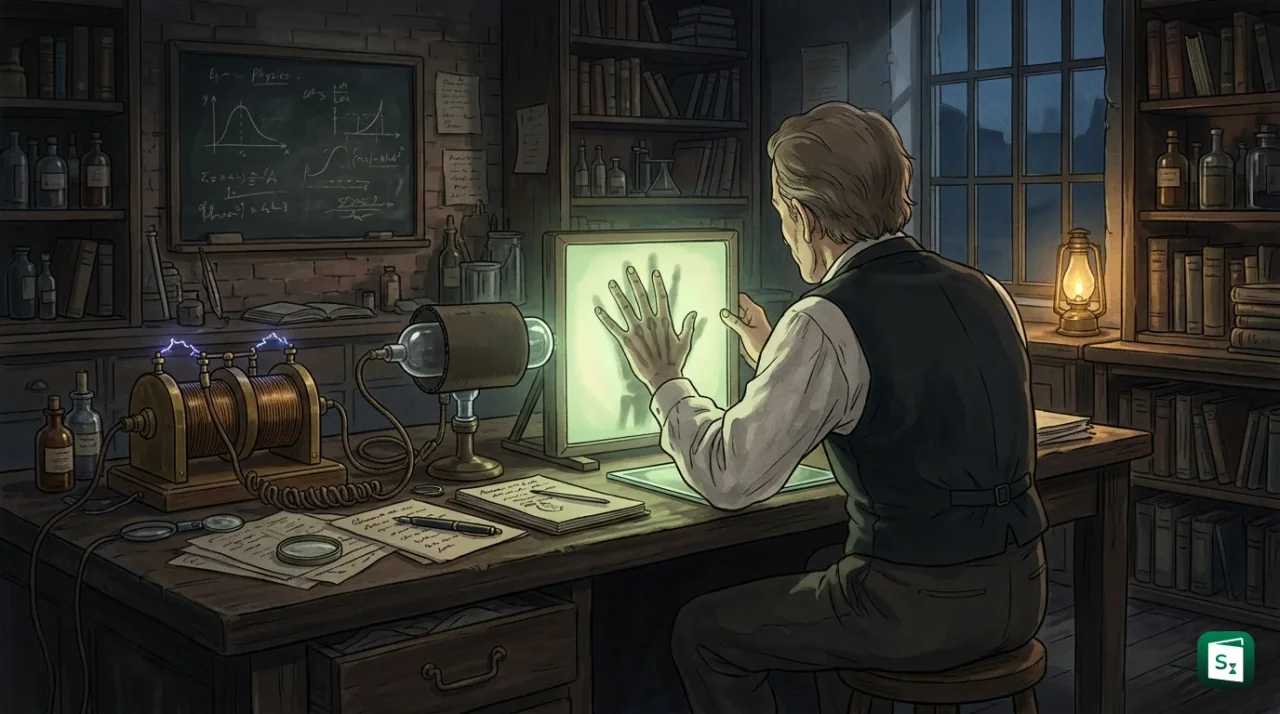
The International Day of Radiology is observed every year on November 8 to mark the anniversary of Wilhelm Conrad Rontgen’s discovery of X-rays in 1895. The day highlights the role of medical imaging in early diagnosis, treatment planning and safe patient care. In 2026, imaging professionals around the world celebrate the 15th edition of the observance with focus on radiology in the patient journey.
What Is Radiology and Why Does It Matter?
Radiology is the branch of medicine that uses imaging technology to see inside the body for diagnosis, treatment and monitoring of disease. A doctor who specialises in reading and interpreting these images is called a radiologist, while the trained professional who operates the equipment and captures the images is called a radiographer or radiological technologist.
Radiology has two broad areas. Diagnostic radiology helps doctors find the cause of symptoms, screen for illness and track how a patient responds to treatment. Interventional radiology uses live imaging to guide small instruments inside the body, which often allows treatment through a tiny cut instead of open surgery.
Common imaging methods differ in how they create pictures and what they show best.
| Imaging Method | How It Works | Common Uses |
|---|---|---|
| X-ray | Uses a small dose of electromagnetic radiation to make quick 2D pictures | Bone fractures, chest infections, dental checks, bone density |
| Computed Tomography (CT) scan | Rotates X-ray beams around the body and uses a computer to build cross section views | Trauma injuries, tumours, blood clots, complex fractures, biopsy guidance |
| Magnetic Resonance Imaging (MRI) scan | Uses strong magnets and radio waves, with no ionising radiation | Brain, spinal cord, joints, ligaments, soft tissue tumours |
| Ultrasound | Uses high frequency sound waves to show moving images in real time | Pregnancy checks, liver, kidney, gallbladder, blood flow, biopsy guidance |
| Mammography | Uses low dose X-rays focused on breast tissue | Early detection of breast cancer |
| Positron Emission Tomography (PET) scan and nuclear medicine | Uses tiny amounts of radioactive material to show body function | Cancer spread, heart function, thyroid and bone disorders |
Imaging supports almost every stage of care. It helps detect disease early, plan surgery with precision, reduce the need for exploratory operations, guide targeted therapy and check recovery. Safe use also matters. Doctors aim to choose the right test for the clinical question, keep radiation dose as low as possible and interpret the image along with the patient’s symptoms and history.
Who Discovered X-Rays and How?
X-rays were discovered by German physicist Wilhelm Conrad Rontgen on 8 November 1895 at the University of Wurzburg. Rontgen was born in 1845 and was studying cathode rays, which are streams of electric current in a highly rarefied gas tube. On that Friday evening he was working alone in a dark room with a Crookes tube covered by black cardboard.
Rontgen noticed that a paper coated with barium platinocyanide kept glowing even though it stood about two metres from the tube. Cathode rays could not travel that far in air, and no visible light could escape the cover. He concluded that a new and unknown kind of ray was coming from the tube. Because its nature was unknown, he called it X-ray, using X for the unknown in mathematics.
Rontgen spent the next weeks testing the rays. He found they passed through cardboard, wood, cloth and flesh, but were blocked by dense materials such as lead and bone. When he placed his wife Anna Bertha’s hand between the tube and a photographic plate, the developed image showed her bones and wedding ring with only a faint outline of soft tissue. That image became the first rontgenogram.
Rontgen published his findings on 28 December 1895 in a ten page paper titled On a New Kind of Rays. He sent copies with nine photographs to physicists across Europe. Newspapers in Vienna, Berlin, London and New York reported the story in January 1896. Within weeks, doctors used the method to locate bullets, detect fractures and study the chest. Rontgen refused to take a patent, saying his discovery belonged to the world. In 1901 he received the first Nobel Prize in Physics for the discovery.
Why Is November 8 Observed as the Day for Radiology?
November 8 is observed because it is the anniversary of Rontgen’s laboratory observation in 1895. Radiological societies chose that date so the celebration would always link modern imaging to its scientific origin. The day reminds the public that a single physics experiment grew into a central pillar of health care.
The observance has a clear purpose. It builds public understanding of what radiologists and radiographers do. It explains how imaging improves safety by allowing earlier detection, more accurate diagnosis and careful follow up. It also draws attention to radiation protection, correct choice of tests and the need for wider access to imaging and trained staff.
The date carries extra meaning for students of science. Rontgen’s work shows how careful observation, repeated testing and open sharing of results can change medicine within months. By the end of 1896, researchers had published more than a thousand papers on X-rays and their uses. That rapid spread remains one of the fastest translations of a physics discovery into routine medical care.
How the International Day of Radiology Started
The International Day of Radiology grew out of a European initiative. The European Society of Radiology (ESR), founded in 2005 and based in Vienna, Austria, held the first and only European Day of Radiology on 10 February 2011 to mark the anniversary of Rontgen’s death. The response was strong, so the ESR joined with two partners in the United States to create a global observance.
The partners were the Radiological Society of North America (RSNA), established in 1915 and based in Oak Brook, Illinois, and the American College of Radiology (ACR). The three bodies confirmed the new day during the annual RSNA meeting in Chicago on 28 November 2011 and moved the date to November 8, the anniversary of the discovery rather than the death anniversary.
The first International Day of Radiology (IDoR) was celebrated on 8 November 2012. About 80 radiology societies took part in the first year. The network has since grown to nearly 200 national, subspecialty and allied societies. The International Society of Radiology (ISR) and regional bodies in Asia, Latin America, Australia and Africa support the day, along with radiographer groups such as the International Society of Radiographers and Radiological Technologists (ISRRT).
For several years the organisers chose a yearly focus to explain one subspecialty to the public. Recent focuses show the shift toward patient centred care.
| Year | Focus Announced for IDoR |
|---|---|
| 2017 | Emergency radiology |
| 2018 | Cardiac imaging |
| 2019 | Sports imaging |
| 2020 | Imaging during the COVID-19 pandemic |
| 2021 | Interventional radiology and active care for the patient |
| 2023 | Celebrating patient safety |
| 2024 | Radiologists and radiographers supporting patients |
| 2025 | Empowering health care through imaging excellence |
| 2026 | Radiology in the patient journey |
The 2026 edition is the 15th IDoR. Its message is that radiology supports every step of care, from first symptoms and diagnosis to treatment choice, monitoring and recovery.
How International Day of Radiology Differs From World Radiography Day
Both observances fall on November 8 and honour the same 1895 discovery, so the two names cause confusion. They have different origins and different emphasis.
World Radiography Day has been promoted since 2007 by the International Society of Radiographers and Radiological Technologists and by national radiographer associations such as the Society of Radiographers in the United Kingdom. It puts the spotlight on radiographers, radiological technologists and radiation therapy professionals. Its campaign for 2026 highlights professionalism in radiography, which covers values, behaviour and standards in daily practice.
The International Day of Radiology was launched later, in 2012, by the ESR, RSNA and ACR. It speaks for the full imaging team, with strong focus on radiologists who interpret images and guide clinical decisions, alongside radiographers and scientists. In practice, hospitals and colleges often mark both names together on November 8 through lectures, poster displays, quizzes, public awareness talks and social media posts with #IDoR2026.
For readers, the simple distinction is useful. World Radiography Day honours the profession that captures the image. International Day of Radiology celebrates the wider medical discipline that uses the image to protect health.
What the 2026 Focus on the Patient Journey Means
The IDoR 2026 message is Radiology in the Patient Journey, often expressed as radiologists and radiographers supporting patients. The organisers state that imaging brings earlier detection, fewer operations and better treatment outcomes. The theme asks imaging experts to explain that value to other health workers and to the public, and to reflect on their own role in active care.
In hospitals, the day is marked by open lectures on safe imaging, exhibitions of historic and modern scans, student competitions and patient awareness programmes. Member societies share posters in many languages and invite departments to post photos of their celebrations. In India, medical colleges and radiographer associations hold similar events, including seminars on artificial intelligence in image reading, dose safety and early cancer detection.
The theme also points to gaps. Access to CT, MRI and trained readers remains uneven across countries and between cities and rural areas. The ISR notes that education, research, innovation and international cooperation are needed so the benefits of imaging reach patients everywhere. That message links the day to wider health goals such as stronger diagnostics, referral systems and digital health records that carry images with the patient.
Key Takeaways
- The International Day of Radiology is observed on November 8 to mark the anniversary of the X-ray discovery in 1895.
- X-rays were discovered by German physicist Wilhelm Conrad Rontgen on 8 November 1895, and he won the first Nobel Prize in Physics in 1901 for the work.
- The first International Day of Radiology was held on 8 November 2012 as a joint initiative of the ESR, RSNA and ACR, following the European Day of Radiology in 2011.
- Radiology covers imaging methods such as X-ray, CT, MRI, ultrasound, mammography and PET, spanning diagnostic imaging and image guided interventional treatment.
- The 2026 observance is the 15th IDoR with focus on radiology in the patient journey, while World Radiography Day, observed on the same date since 2007, honours radiographers and technologists.