The Maharashtra Cabinet has officially approved the Artificial Intelligence (AI) Policy 2026, aiming to transform the state into a premier global destination for advanced technology and innovation. This comprehensive roadmap seeks to attract investments worth ₹10,000 crore and generate approximately 1.5 lakh new jobs by 2031. Through this initiative, Maharashtra becomes the first state in India to integrate a dedicated framework for ethical AI alongside large-scale infrastructure development.
Transforming Maharashtra into a Global AI Hub
The Artificial Intelligence Policy 2026 is designed to position Maharashtra as a leading ecosystem for emerging technologies. By targeting an investment of ₹10,000 crore by 2031, the state government aims to catalyze significant economic growth and modernization across various sectors. The policy expects to create over 1.5 lakh employment opportunities, ranging from high-end research roles to technical support positions in the burgeoning AI industry.
To streamline the implementation of these goals, the state will establish the Maharashtra AI Mission. This dedicated body is modeled after the central government’s IndiaAI Mission, which was launched by the Ministry of Electronics and Information Technology (MeitY) in March 2024. The mission will serve as a nodal agency to coordinate between government departments, academic institutions, and private industry players to ensure the policy’s objectives are met within the specified timelines.
Building a Robust AI Infrastructure
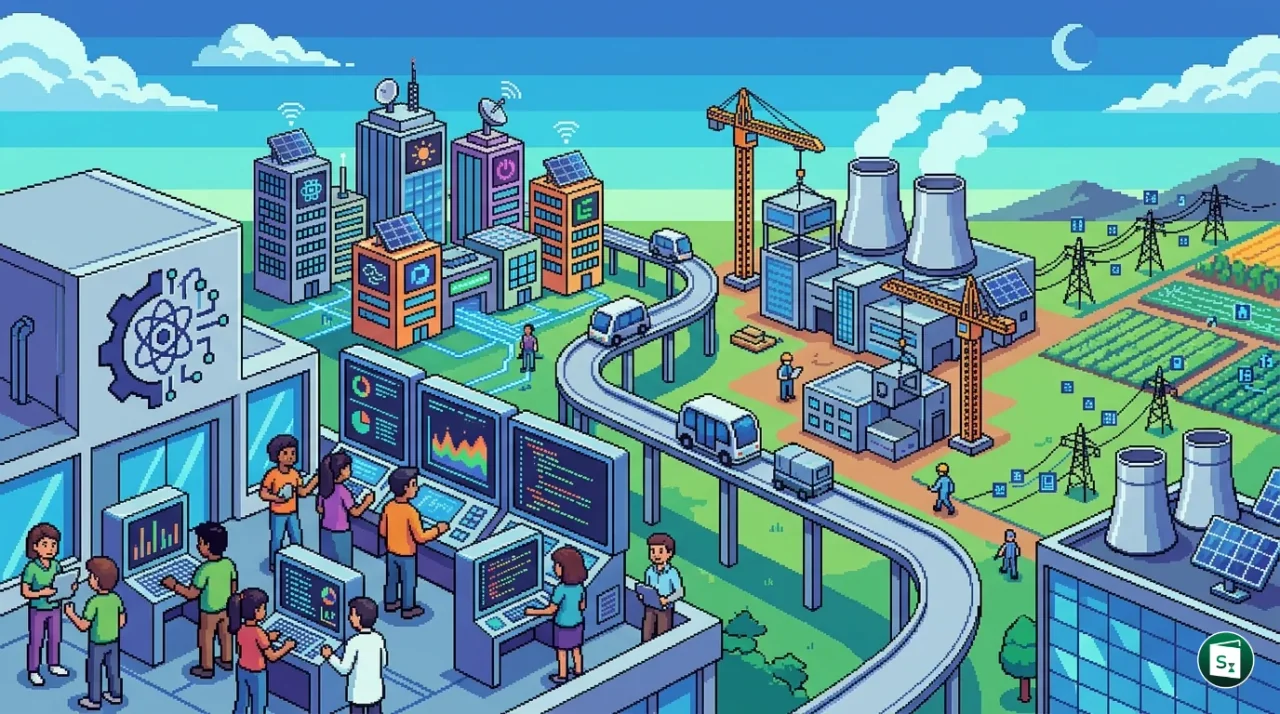
A key pillar of the policy is the development of cutting-edge infrastructure to support AI research and deployment. The state plans to establish five AI Innovation Cities, which will serve as regional hubs for technology development and industry collaboration. These cities will be equipped with modern facilities to attract tech giants and startups alike.
Furthermore, the government will set up six sectoral Centres of Excellence (CoEs) to focus on high-impact areas. These centres will drive innovation in the following sectors:
- Healthcare: Improving diagnostics and patient care through AI-driven tools.
- Agriculture: Enhancing crop yields and precision farming techniques.
- Education: Personalizing learning experiences and administrative efficiency.
- Urban Development: Smart city solutions and traffic management.
- Finance and Revenue: Streamlining public financial systems and tax collection.
- Marathi Language and Culture: Developing Large Language Models (LLMs) and datasets for Marathi and other regional dialects to bridge the digital divide.
To provide the necessary computing power, the policy includes a “compute-as-a-service” model. This involves the deployment of at least 2,000 Graphics Processing Units (GPUs) to create a common computing backbone, ensuring that even smaller startups have access to the resources needed for training complex AI models.
Focus on Skill Development and MSME Integration
To bridge the talent gap, the policy outlines a massive skilling initiative targeting the training of 2 lakh youth and professionals in AI-related skills. A specialized institution, the Maharashtra Centre for Advanced AI Training (MCAT), will be established to oversee these educational programs and ensure they align with the latest industry standards. This initiative aims to build a future-ready workforce capable of supporting the state’s technology goals.
Recognizing the importance of small and medium businesses, the policy provides significant support for Micro, Small, and Medium Enterprises (MSMEs). The government plans to assist 5,000 MSMEs in adopting AI technologies by providing a 20% subsidy on implementation costs. This financial support is intended to lower the entry barriers for smaller firms, allowing them to modernize their operations and remain competitive in a digital-first economy.
Governance and Ethical AI Framework
Maharashtra is set to become the first state in India to implement a comprehensive framework for Ethical AI. This framework will address critical issues such as data privacy, algorithmic bias, and transparency. To ensure compliance and safety, the government will mandate annual AI readiness audits for all state departments. These audits will evaluate how AI tools are being used and ensure they meet the established ethical and security standards.
The policy also addresses the financial needs of the startup ecosystem through a ₹500 crore AI Venture Capital Fund. This fund will be established as a public-private partnership, with both the state government and private investors contributing equal shares. It will specifically target AI-based startups and potential unicorns headquartered in Maharashtra, providing them with the necessary capital to scale their innovations.
Strategic Incentives for Innovation
To attract large-scale investments, the AI Policy 2026 offers a range of fiscal and non-fiscal incentives for businesses setting up AI operations in the state. These include:
- Stamp Duty Exemption: A 100% exemption on stamp duty for land and building purchases related to AI infrastructure.
- Power Tariff Subsidy: A subsidy of ₹2 per unit on electricity bills for up to ten years to reduce operational costs for data centres and innovation hubs.
- Patent Reimbursement: Financial assistance to reimburse the costs of filing domestic and international patents for AI innovations.
- Capital Subsidies: Grants and subsidies for capital expenditure on high-end hardware and computing resources.
These incentives are designed to make Maharashtra the most competitive destination for AI companies in India. By reducing the initial setup and operational costs, the government hopes to foster a vibrant ecosystem that encourages long-term commitment from the global tech industry.
Key Takeaways
- The Maharashtra Cabinet approved the Artificial Intelligence (AI) Policy 2026 on May 5, 2026, to establish the state as a global AI hub.
- The policy targets a total investment of ₹10,000 crore and the creation of 1.5 lakh jobs by the year 2031.
- A ₹500 crore AI Venture Capital Fund will be created through a public-private partnership to support local startups and unicorns.
- The government will establish six sectoral Centres of Excellence and five AI Innovation Cities to drive regional technology growth.
- Under the policy, 2 lakh youth and professionals will receive specialized training through the Maharashtra Centre for Advanced AI Training (MCAT).
- Maharashtra is the first Indian state to introduce a dedicated Ethical AI Framework with mandatory annual audits for government departments.