The Delhi government launched a health package under the Seva Sankalp Abhiyan on 6 October 2026 at Thyagraj Stadium in New Delhi. Chief Minister Rekha Gupta and Lieutenant Governor Taranjit Singh Sandhu doubled the fixed monthly incentive for ASHA workers from ₹3,000 to ₹6,000 and expanded free newborn screening under Mission ANMOL from 56 to 63 disorders. The event, held as ASHA Sammelan 2026 and ASHA Samman Samaroh, also rolled out a nursing home portal and a new organ transplant coordination hub.
What Is Seva Sankalp Abhiyan?
The Seva Sankalp Abhiyan is a month long public service campaign of the Delhi government that ran from 17 September to 17 October 2026. It bundles health, welfare and infrastructure launches into a single outreach drive linked to service and resolution, which is what seva sankalp means in English. The drive began on 17 September to mark the birthday of Prime Minister Narendra Modi and closed with the ASHA Sammelan at Thyagraj Stadium.
The Delhi Health Department anchored the health leg of the campaign. Health Minister Pankaj Kumar Singh presented the package as a shift from announcements to last mile delivery, with frontline workers, newborn screening, private hospital regulation and organ donation covered together. Other departments used the same campaign window for blood donation drives, school songs and project inaugurations worth crores, which explains why the Abhiyan appears in news items beyond health.
| Element of Seva Sankalp Abhiyan | Detail |
|---|---|
| Campaign period | 17 September to 17 October 2026 |
| Launch venue for health package | Thyagraj Stadium, New Delhi |
| Launched by | Chief Minister Rekha Gupta and Lieutenant Governor Taranjit Singh Sandhu |
| Health anchor | Department of Health and Family Welfare, Government of NCT of Delhi |
| Core health launches | ASHA incentive hike, expanded Mission ANMOL, SOTTO hub, nursing home portal |
ASHA Monthly Incentive Raised From ₹3,000 to ₹6,000
The Delhi Cabinet approved the hike on 15 September 2026 at a meeting chaired by the Chief Minister. The fixed monthly payout for every serving Accredited Social Health Activist (ASHA), a community health volunteer who links households to the public health system, rose from ₹3,000 to ₹6,000 per month. That is a 100% hike. The revised amount was formally disbursed at the 6 October Sammelan.
The increase covers about 6,690 ASHA workers in Delhi at the time of the event. Cabinet papers had cited 6,725 workers. The small gap reflects routine changes in enrolment. Each ASHA typically serves around 2,000 people or 400 families. Other payments, including task based incentives under national programmes and travel allowance for special duty outside Delhi, will continue unchanged.
ASHA Network and Incentive Structure Overview
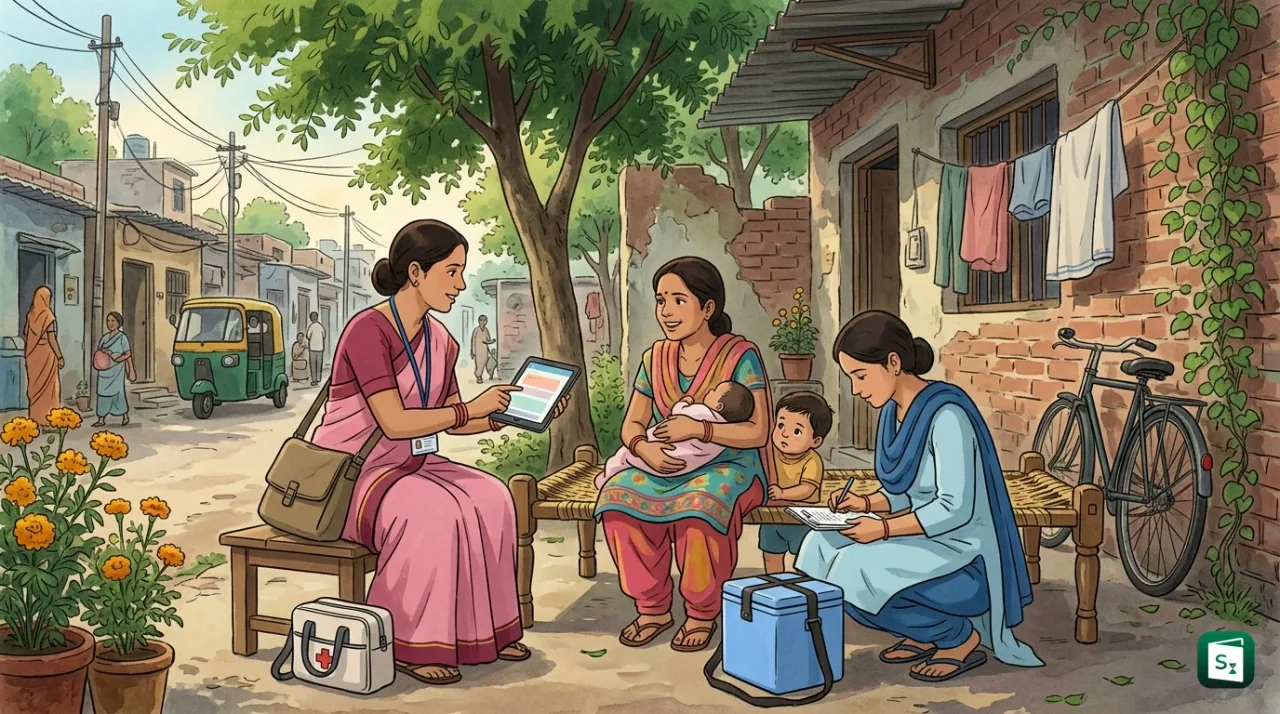
An ASHA worker is a woman selected from her own community and trained to guide mothers and families on pregnancy care, institutional delivery, immunisation, nutrition and sanitation. The role was created under the National Rural Health Mission (NRHM), launched in 2005 and now part of the National Health Mission (NHM). The Union Health Ministry frames health as a state subject, so states pay a top up from their own budget over central programme incentives.
Delhi was among the lowest paying states at ₹3,000. States such as Maharashtra and Sikkim pay around ₹10,000 as fixed honorarium, while Kerala and Puducherry pay around ₹7,000. Delhi ASHAs had demanded a revision for nearly a decade. They kept working through the Covid years without a raise. In October 2023, hundreds had gathered at Jantar Mantar seeking pay closer to the minimum wage and benefits such as maternity leave and pension.
The Delhi government linked the hike to stronger primary care and economic support for women, since almost all ASHAs are women working door to door. Officials said timely and assured monthly pay matters more than occasional task incentives, because it keeps workers motivated for daily follow ups on pregnant women, newborns and immunisation due lists.
Mission ANMOL and ANM Role in Maternal and Child Healthcare
Delhi’s Mission ANMOL stands for Advanced Newborn Monitoring for Optimal Lifecare. It is a free newborn screening programme run by the Department of Health and Family Welfare, Government of NCT of Delhi. It should not be mixed with the national ANM Online tablet app, which carries the same short name ANMOL but tracks pregnant women and children through field workers. Delhi’s version focuses on lab based screening of babies soon after birth, while the national app focuses on digital record keeping by health workers.
Under the Delhi scheme, blood from a heel prick is collected within 24 to 72 hours of birth, ideally before discharge from the hospital. The sample goes to the genetic laboratory at Lok Nayak Jai Prakash (LNJP) Hospital, the only genetic lab run by the Delhi government. The lab tests for serious but treatable genetic, metabolic and congenital conditions. Parents need no separate application. Government and private hospitals arrange the collection. A similar private test can cost up to ₹25,000, so free universal screening cuts family costs sharply.
The 6 October expansion raised the panel from 56 to 63 disorders, adding seven more conditions. The list includes congenital hypothyroidism, sickle cell anaemia, thalassemia, cystic fibrosis, spinal muscular atrophy, hormonal and adrenal disorders and several urine related metabolic disorders. Early detection matters because many of these conditions show no visible symptoms at birth. Treatment started in the first days can prevent disability and improve survival.
Screening Scale and Maternal Health Link
Maternal health refers to the health of women during pregnancy, delivery and the postnatal period, while child healthcare covers newborn and infant survival. Mission ANMOL connects the two. ASHA workers and Auxiliary Nurse Midwives (ANMs), who are village and urban level female health workers trained in midwifery and basic care, register pregnancies, promote institutional delivery and then ensure the newborn is screened and followed up.
An Auxiliary Nurse Midwife typically serves 3,000 to 5,000 people and handles antenatal checkups, immunisation, family planning counselling and data entry on the Reproductive and Child Health (RCH) portal. The national ANMOL app, developed by the Union Ministry of Health and Family Welfare with support from UNICEF and launched nationally in 2016, made that record keeping paperless through tablets that work even offline. Delhi’s newborn screening builds on that field network. The ASHA brings the mother to the facility, the ANM records the birth, and the hospital team draws the sample.
| Mission ANMOL in Delhi | Fact |
|---|---|
| Full form in Delhi | Advanced Newborn Monitoring for Optimal Lifecare |
| Announced in | Delhi Budget 2026-27 on 24 March 2026 with ₹25 crore allocation |
| Rolled out | April 2026, expanded 6 October 2026 from 56 to 63 disorders |
| Screening window | 24 to 72 hours after birth through heel prick blood sample |
| Hospitals covered | Government and private hospitals across Delhi, free of cost |
| Lab | Genetic lab at LNJP Hospital |
| Progress so far | More than 75,000 newborns screened, over 700 children treated |
| Annual target | Raised from 1.5 lakh to 2.5 lakh newborns |
| Staff sanctioned | 148 posts, including 60 staff nurses and 15 optometrists |
Organ Transplant Hub and Nursing Home Portal
The Delhi government also inaugurated the headquarters of the State Organ and Tissue Transplant Organisation (SOTTO) at G B Pant Hospital in New Delhi. A SOTTO is the state level apex body under the National Organ Transplant Programme that manages waiting lists, coordinates retrieval and allocation of organs and tissues, and registers hospitals for transplant work under the Transplantation of Human Organs and Tissues Act, 1994. The online organ donation pledge portal, named Aangdaan, was made operational on 17 September 2026. The physical hub followed on 6 October. The Chief Minister became the first to register on the portal and urged residents to pledge.
The government also launched the Nursing Home Management System portal. Private nursing homes in Delhi can now apply for registration and renewal online. The system aims to cut paperwork, make approvals transparent and strengthen monitoring of private facilities. Officials said simpler compliance will improve accountability without repeated physical visits to government offices.
Why This Package Matters for Delhi Health System
Delhi records around two to three lakh births a year across public and private hospitals. Screening only 1.5 lakh babies left a large gap. The jump to 2.5 lakh moves the city closer to universal coverage. Each positive case caught in the first three days can save years of treatment cost and prevent lifelong impairment. The LNJP lab already receives about 14,000 samples a month, so staffing and lab capacity will decide whether the target holds.
The ASHA hike addresses a different gap. Frontline pay stayed flat for almost ten years while workload grew from immunisation and deliveries to surveys, nutrition days and disease outreach. Assured monthly income stabilises that workforce. Better paid and recognised workers stay longer, keep due lists updated and bring more families into institutional care. That chain directly supports maternal health, since registered pregnancies lead to safer deliveries and healthier newborns.
Together, the four launches cover the full chain of care. Incentives strengthen the first contact at homes, ANMOL catches disorders at birth, the nursing home portal tightens private facility quality, and SOTTO builds trust in organ donation. The test now is steady fund flow, timely incentive disbursal and follow up treatment for children flagged by screening.
Key Takeaways
- The Seva Sankalp Abhiyan health package was launched on 6 October 2026 at Thyagraj Stadium by Chief Minister Rekha Gupta and Lieutenant Governor Taranjit Singh Sandhu.
- Delhi doubled the fixed monthly incentive for ASHA workers from ₹3,000 to ₹6,000, benefiting about 6,690 workers.
- Delhi’s Mission ANMOL (Advanced Newborn Monitoring for Optimal Lifecare) now offers free screening for 63 newborn disorders, up from 56, within 24 to 72 hours of birth.
- Mission ANMOL was announced in the Delhi Budget 2026-27 with ₹25 crore and aims to raise annual screening from 1.5 lakh to 2.5 lakh newborns.
- The SOTTO headquarters at G B Pant Hospital and the Nursing Home Management System portal were launched alongside to strengthen organ coordination and private hospital regulation.