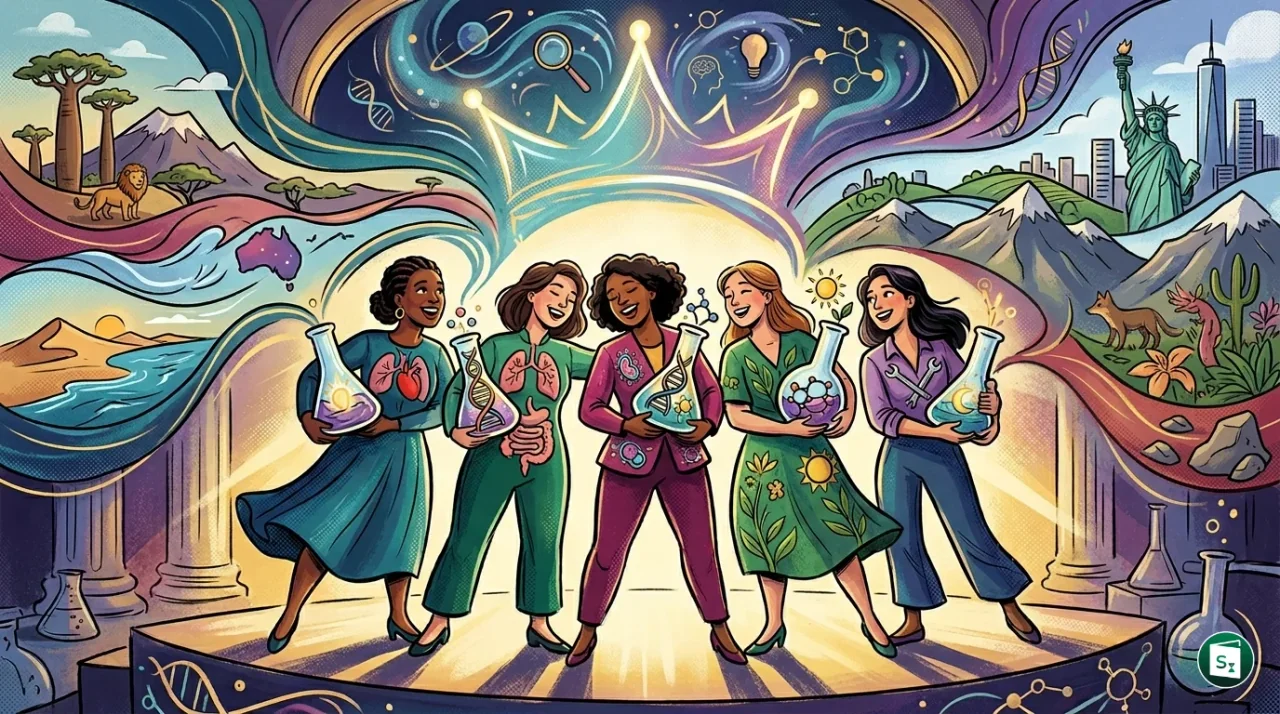
UNESCO and the Fondation L’Oréal have announced the five laureates of the 2026 UNESCO–L’Oréal International Awards for Women in Science, celebrating exceptional contributions to life and environmental sciences. These prestigious awards recognize one outstanding woman scientist from each of the five global regions, each receiving a prize of €100,000 to further their groundbreaking research.
Honoring Excellence: The 2026 UNESCO–L’Oréal Laureates
The UNESCO–L’Oréal For Women in Science International Awards were established in 1998 through a partnership between UNESCO and the Fondation L’Oréal. For the 28th edition in 2026, the awards focus on Life and Environmental Sciences, a discipline that alternates with physical sciences, mathematics, and computer science in odd-numbered years. An independent international jury selected the five laureates from a record pool of more than 500 nominations representing 89 countries. Each laureate represents one of the five major geographic regions of the world, highlighting the global scale of scientific achievement and the importance of gender parity in research.
Regional Breakdown: Pioneering Research Across Five Continents
The 2026 laureates were chosen for their ability to translate fundamental science into practical solutions for global challenges.
Africa and the Arab States: Professor Liesl Zühlke
Professor Liesl Zühlke, based at the University of Cape Town, South Africa, was honoured for her transformative work in paediatric cardiology. Her research on rheumatic heart disease (RHD) has successfully repositioned this condition from a purely clinical issue to a socio-political challenge linked to systemic health inequities. As the first woman in South Africa to become a full professor in paediatric cardiology, her advocacy bridges the gap between scientific research and public policy, aiming to improve heart health for children across the African continent.
Asia and the Pacific: Professor Felice Jacka
Representing the Asia and Pacific region, Professor Felice Jacka from Deakin University, Australia, was recognized for founding the field of nutritional psychiatry. Her pioneering SMILES trial provided the first robust clinical evidence that dietary improvements can significantly reduce symptoms of depression and anxiety. By demonstrating that diet quality is an independent risk factor for mental health disorders, her work has opened new avenues for treating brain-related conditions through metabolic and nutritional interventions.
Europe: Professor Sarah A. Teichmann
Professor Sarah A. Teichmann, from the University of Cambridge, United Kingdom, received the award for her leadership in computational biology and genomics. She is the co-founder of the Human Cell Atlas (HCA), an international consortium mapping every cell type in the human body at a single-cell resolution. This massive open-science project provides a critical reference for understanding health, diagnosing diseases, and accelerating drug discovery across the medical field.
Latin America and the Caribbean: Professor Raquel Chan
Professor Raquel Chan, a researcher at CONICET and the National University of the Littoral in Argentina, was honoured for her breakthroughs in agricultural biotechnology. She discovered the Hahb-4 gene in sunflowers, which enhances plant tolerance to environmental stressors like drought and high salinity. This discovery led to the development of HB4 technology, resulting in more resilient varieties of wheat and soybean that help safeguard global food security in the face of climate change.
North America: Professor Gordana Vunjak-Novakovic
Professor Gordana Vunjak-Novakovic of Columbia University, United States, was recognized for her pioneering work in regenerative medicine and biomedical engineering. Her research on organs-on-a-chip utilizes micro-engineered platforms to simulate human organ functions, allowing for the testing of new drugs without the need for animal or human subjects. She is also a leader in developing biological substitutes to repair or replace damaged human tissues, including bone, heart, and lung tissues.
Transforming Science: The Scope of the 2026 Awards
The 2026 laureates represent a shift towards interdisciplinary science that addresses immediate global crises, from food shortages to mental health epidemics. Each recipient receives a financial grant of €100,000, which is one of the largest awards specifically dedicated to women in science. Historically, the UNESCO–L’Oréal program has recognized 142 international laureates, seven of whom have gone on to win the Nobel Prize. This includes recent Nobel winners such as Katalin Karikó and Anne L’Huillier, proving the program’s role as a reliable indicator of world-class scientific excellence.
A Legacy of Empowering Women in Science
Beyond the international awards, the program supports more than 5,000 women scientists worldwide through national and regional fellowships and grants. Headquartered in Paris, UNESCO (United Nations Educational, Scientific and Cultural Organization) was founded in 1945 with a mandate to promote international collaboration in education, science, and culture. The partnership with the Fondation L’Oréal highlights a shared commitment to breaking the glass ceiling in science, where women currently represent only about one third of researchers globally.
Key Takeaways
- The UNESCO–L’Oréal International Awards for Women in Science 2026 recognized five global laureates for their work in Life and Environmental Sciences.
- Established in 1998, the program is a joint initiative between UNESCO and the Fondation L’Oréal, with headquarters in Paris, France.
- Each of the five laureates receives a financial grant of €100,000 to support their ongoing research and career development.
- Professor Raquel Chan of Argentina became the first scientist in the award’s history to be recognized for achievements in agricultural biotechnology.
- Seven previous laureates of this program have gone on to win the Nobel Prize, including Katalin Karikó and Anne L’Huillier.
- UNESCO was founded in 1945 to foster international cooperation in education, science, and culture, and currently works to address the global gender gap in scientific research.