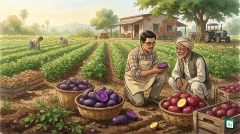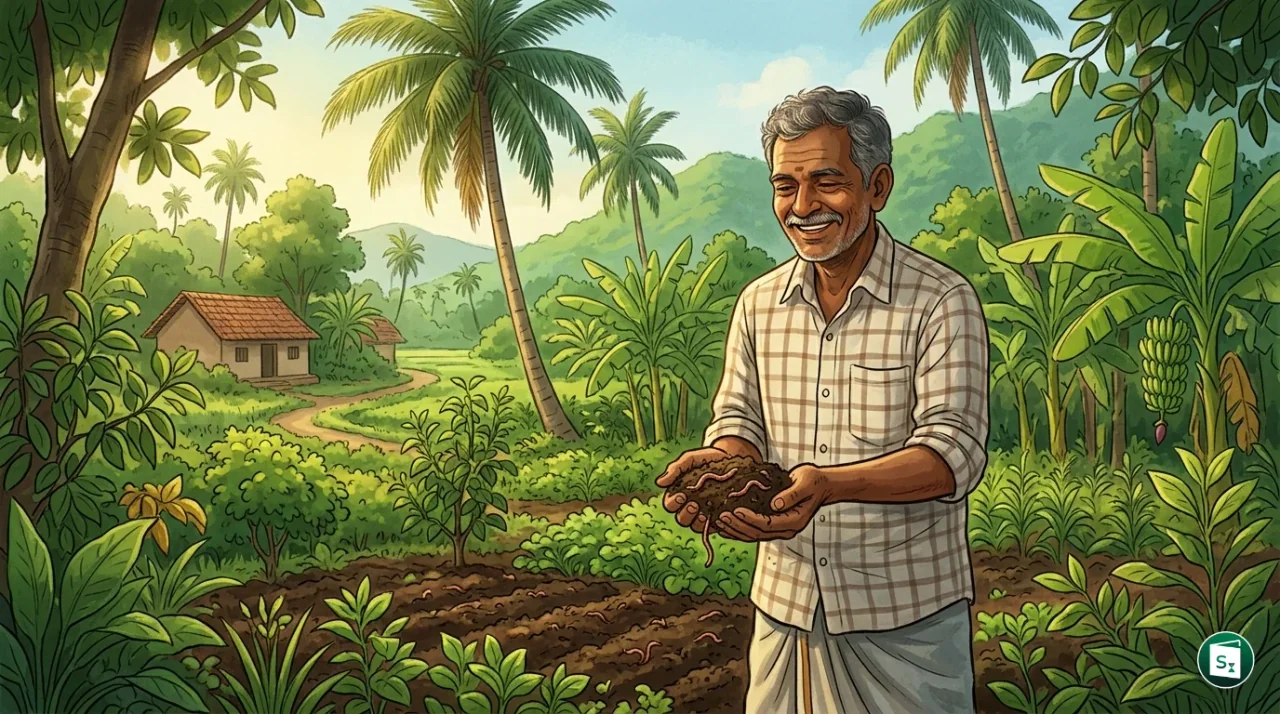
In May 2026, the United Nations Food and Agriculture Organization (FAO) honoured V. T. Valluvan of Vettaikaranpudur in Pollachi, Tamil Nadu with the Soil Farmer Hero Award 2026. He secured third place in the UN FAO Soil Hero Guardian contest for converting his 11-hectare loss-making coconut plantation into a profitable enterprise. Using multi-crop, tree-based agroforestry, he now earns ₹2.5 lakh to ₹3 lakh per acre annually.
What Is the FAO Soil Farmer Hero Award 2026?
The Soil Farmer Hero Award 2026 is a UN Food and Agriculture Organization (FAO) honour under the Global Soil Partnership for farmers improving soil health. In May 2026, V. T. Valluvan secured third place in the Soil Hero Guardian contest for raising carbon levels from 0.5% to 1.56%.
The Multi-Crop, Tree-Based Farming Model
Prior to adopting the multi-crop model, Valluvan followed the conventional practice of monoculture coconut farming. This traditional system proved financially unsustainable. He spent approximately ₹500 annually per tree on maintenance, irrigation, and chemical fertilizers, whereas the market yield returned only ₹300 per tree, resulting in persistent financial losses.
To reverse these losses, he transitioned to a multi-crop, multi-tier agroforestry system. Agroforestry is an agricultural method that integrates trees and shrubs with crops to create a more resilient ecosystem. Under this system, Valluvan expanded his cultivation from three crop varieties to more than 14 different crops. This includes shade-loving pepper and nutmeg planted alongside coconut trees, seven varieties of banana, turmeric, elephant yam, and curry leaves. In addition, he integrated 30 different timber and value-rich tree species into his landholding, creating a self-sustaining microclimate.
Ecological and Economic Impact of the Transformation
The transition to tree-based agriculture brought substantial improvements in soil quality, water conservation, and financial security:
- Restored Soil Quality: The soil organic carbon content of the farm increased from a low baseline of 0.5% in the first year to 1.56% by the seventh year of implementing the new system.
- Enhanced Water Conservation: By adopting intensive mulching (covering the soil with organic matter to retain moisture), rainwater harvesting pits, and drip irrigation, Valluvan reduced the farm’s water consumption to one-tenth of its previous level. This allowed the farm to survive severe regional droughts.
- Cooler Farm Microclimate: Dense tree cover keeps the farm about 3°C cooler than surrounding areas, which helps moisture retention and allows sensitive crops such as coffee to grow alongside tropical crops.
- Diversified Income Streams: The multi-crop arrangement acts as a financial safeguard. If the price of one commodity (such as coconut) drops, other crops (like high-value nutmeg and pepper) compensate, keeping the overall enterprise profitable. His income increased from ₹30,000 per acre to ₹2.5 lakh to ₹3 lakh per acre annually.
Role of the Cauvery Calling Movement
Valluvan’s transition to tree-based agriculture was guided by the Save Soil - Cauvery Calling movement. This environmental initiative of the Isha Foundation, led by Sadhguru Jaggi Vasudev, focuses on revitalizing the Cauvery River basin by encouraging farmers to plant trees on private farmlands. The movement aims to restore organic content in the soil, improve groundwater levels, and enhance the livelihood of farmers in the region.
By adopting the principles advocated by the initiative, Valluvan successfully transformed his land into a showcase project for ecological agriculture. His farm now serves as a training ground and a practical demonstration model for other farmers in Tamil Nadu seeking to transition from chemical-heavy monoculture practices to sustainable agroforestry.
The Food and Agriculture Organization and Soil Conservation
The Food and Agriculture Organization (FAO) of the United Nations is a specialized agency that leads international efforts to defeat hunger and improve nutrition and food security. Established on October 16, 1945, the FAO is headquartered in Rome, Italy, and operates under the current Director-General, Qu Dongyu. The agency actively promotes sustainable soil management through its Global Soil Partnership (GSP), which was established in 2012 to advocate for healthy soils globally.
The Soil Farmer Hero recognition is presented through the FAO award system that honours heroes transforming agrifood systems. By honouring practitioners like Valluvan, the FAO aims to showcase scalable, cost-effective farming models that protect soil while securing farm livelihoods against climate risks.
Comparison of Conventional vs. Regenerative Multi-Crop Farming
To illustrate the structural differences between traditional practices and Valluvan’s award-winning system, the parameters are outlined below:
| Feature | Conventional Monoculture Coconut Farming | Regenerative Multi-Crop Agroforestry |
|---|---|---|
| Crop Diversity | Limited (usually only coconuts) | High (over 14 crop types and 30 tree species) |
| Annual Maintenance Cost | High (approximately ₹500 per tree) | Low (minimized through organic self-regulation) |
| Average Annual Income | Low (around ₹30,000 per acre with frequent losses) | High (₹2.5 lakh to ₹3 lakh per acre) |
| Soil Organic Carbon | Low (stays near 0.5%) | High (increased to 1.56% within seven years) |
| Water Requirement | High (susceptible to crop failure during droughts) | Low (reduced to one-tenth using mulching) |
| Economic Security | Low (exposed to single-crop price volatility) | High (hedged by multiple diverse harvest cycles) |
Key Takeaways
- Tamil Nadu farmer V. T. Valluvan won the Soil Farmer Hero Award 2026 from the United Nations Food and Agriculture Organization (FAO) in May 2026, securing third place in the Soil Hero Guardian contest.
- He transformed his 11-hectare landholding in the Pollachi district into a highly profitable enterprise.
- His farm generates ₹2.5 lakh to ₹3 lakh per acre annually through a multi-crop, tree-based agricultural system.
- The farm’s soil organic carbon increased from 0.5% to 1.56% in seven years under the regenerative agroforestry model.
- By utilizing mulching and rainwater harvesting, the farm’s water consumption was reduced to one-tenth of its previous usage.
- The Food and Agriculture Organization (FAO), founded on October 16, 1945, is headquartered in Rome, Italy, and launched the Global Soil Partnership in 2012.