What Is the Easy Connect Model?
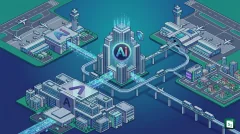
The Easy Connect model is a transformative aviation framework designed to operationalize a structured hub-and-spoke strategy across India. Under this system, smaller regional airports, known as spokes, are linked to major international gateways, or hubs, through a synchronized flight network. The primary innovation of this model is the introduction of origin-based immigration, where travelers from cities like Varanasi can complete all international customs and immigration formalities at their local airport.
Once these formalities are completed at the origin, passengers board a domestic “feeder” flight to a central hub like Delhi or Mumbai. Upon arrival at the hub, they are treated as international-to-international transit passengers, allowing them to bypass domestic-to-international transfer queues and move directly to their global boarding gates. This eliminates the need for repeated security checks and luggage re-collection during transit.
Analogy · The Global Post Office Expand analogy
Think of the Easy Connect model like sending a registered parcel from a small town post office to another country. You complete all the paperwork and sealing at your local counter. The parcel then travels on a local van to a central city hub, where it is simply loaded onto an international aircraft without being opened or re-processed, reaching its global destination faster and more securely.
Air India’s Role in Varanasi’s Integration
As the lead partner for this initiative, Air India has operationalized a dedicated service model to support Varanasi’s new status as a global gateway. The airline introduced a specific daily flight, AI1111, which connects Varanasi directly to the Indira Gandhi International Airport in Delhi. This flight is the first in a new AI11XX series designed specifically for the Easy Connect framework, distinguishing it from standard domestic operations.
The scheduling of these spoke flights is carefully optimized to ensure that passengers from non-metros reach the hub during peak international departure windows. From the Delhi hub, travelers can connect to 17 global destinations within a four-hour window, including London, Paris, Frankfurt, Singapore, and Dubai. This strategy is a core component of Air India’s Vihaan.AI transformation plan, which focuses on capturing a larger share of the international transit market originating from India’s growing Tier-2 and Tier-3 cities.
Strategic Infrastructure: The Varanasi Expansion
The integration of Varanasi into the Easy Connect model is supported by a massive infrastructure upgrade at the Lal Bahadur Shastri International Airport (VNS). A ₹2,870 crore expansion project is currently underway to more than double the airport’s capacity. This modernization is essential to handle the increased passenger volume and the technical requirements of a global aviation spoke.
Key Infrastructure Highlights
| Feature | Details of Upgrade |
|---|---|
| Runway Extension | Increased from 2,750 meters to 4,075 meters |
| Aircraft Capability | Supports Code E aircraft like Boeing 787 and 777 |
| New Terminal Area | 75,000 square meters with modern amenities |
| Passenger Capacity | Scaled up from 3.9 million to 9.9 million annually |
A unique engineering marvel of this project is the construction of a four-lane tunnel for National Highway 31 (NH-31), which passes directly underneath the extended runway. This makes Varanasi the first airport in India to feature a national highway running under an active runway. Additionally, the airport has been equipped with an advanced Category III Instrument Landing System (ILS) to ensure operational reliability during periods of low visibility.
Significance for Global Transit and Regional Growth
The Easy Connect framework is a strategic move to position India as a global aviation powerhouse. Currently, nearly 35% of Indian international passengers transit through foreign hubs like Dubai, Doha, or Singapore. By simplifying the domestic-to-international transit process, the government aims to “reclaim” this traffic, encouraging travelers to use Indian hubs instead. This shift not only boosts the revenue of domestic airlines and airports but also strengthens India’s position in the global aviation market.
For regional economies, the integration of Tier-2 cities like Varanasi into the global map has profound implications. It facilitates easier access for foreign tourists and business travelers to Eastern Uttar Pradesh and parts of Bihar, potentially boosting local trade and tourism. Furthermore, the mandatory integration of DigiYatra for these flights ensures a biometric-enabled, paperless journey, aligning with the broader Digital India and Viksit Bharat 2047 visions.
The Way Forward
The successful integration of Varanasi serves as a pilot for the phased rollout of the Easy Connect model across the country. The Ministry of Civil Aviation plans to extend this framework to other major Tier-2 cities, including Lucknow, Jaipur, Ahmedabad, and Amritsar, in the coming months. As these cities join the hub-and-spoke network, India will move closer to its goal of becoming a primary global transit point, reducing reliance on international airports in neighboring countries and fostering a more balanced growth of aviation infrastructure.
Key Takeaways
- Varanasi is the first Indian city integrated into the Easy Connect model, a new hub-and-spoke aviation framework.
- The model features origin-based immigration, allowing international formalities to be completed at regional airports.
- Air India is the lead partner, operating flight AI1111 from Varanasi to Delhi for seamless global connectivity.
- The Lal Bahadur Shastri International Airport in Varanasi is undergoing a ₹2,870 crore expansion to handle 9.9 million passengers annually.
- Varanasi features India’s first under-runway highway tunnel for National Highway 31.
- The framework aims to reclaim nearly 35% of transit traffic currently flowing through foreign hubs like Dubai and Singapore.