Anupam Misra took charge as the Chairman and Managing Director (CMD) of Hindustan Copper Limited (HCL) on July 1, 2026, succeeding Sanjiv Kumar Singh, who superannuated on June 30. The Ministry of Mines appointed Misra, a veteran public sector executive with over 33 years of experience, to lead the Miniratna Category-1 central public sector enterprise. His appointment comes at a pivotal moment as HCL executes an ambitious Rs 7,189 crore capital expenditure programme under its Vision 2030 corporate plan to triple mining capacity.
Who Is Anupam Misra?
Anupam Misra is a General Management professional with over 33 years of experience in marketing and international trading. Before joining HCL, he served as Director (Marketing) at Fertilisers and Chemicals Travancore Limited (FACT) from July 2020 to June 2026, and also held the additional charge of Chairman and Managing Director of FACT. His career spans extensive hands-on exposure to industrial raw materials including minerals, metals, chemicals, agro-commodities, and engineering goods in a multi-commodity, multi-market B2B environment.
Misra holds a B.Tech (Hons) in Civil Engineering from the Indian Institute of Technology (IIT) Kharagpur and a Post Graduate Diploma in Management (PGDM) from the Indian Institute of Management (IIM) Lucknow. His appointment to HCL was approved by the Ministry of Mines under Order No. Met3-10/3/2025 METAL III, and his tenure runs until his superannuation on February 28, 2030, or until further orders, whichever is earlier.
FACT, where Misra spent his most recent tenure, is a central public sector undertaking headquartered in Kochi, Kerala. Incorporated in 1943, it is the first large-scale fertiliser plant in India and operates under the administrative control of the Ministry of Chemicals and Fertilizers. The company began production in 1947 and has since diversified into petrochemicals, engineering consultancy, and fabrication services.
Hindustan Copper at a Glance
Hindustan Copper Limited was incorporated on November 9, 1967 and is a Miniratna Category-1 central public sector undertaking under the administrative control of the Ministry of Mines. The company is headquartered in Kolkata, West Bengal, and the Government of India holds a 66.14% equity stake.
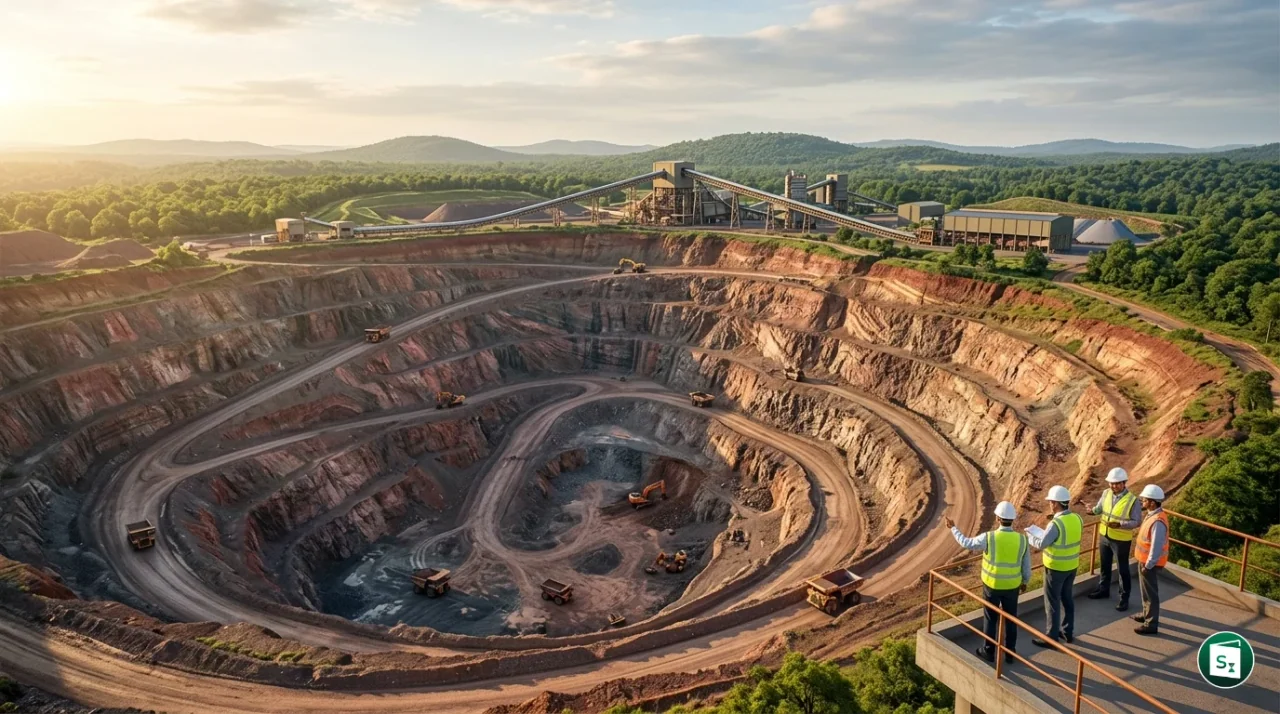
HCL is the only vertically integrated copper producer in India, meaning it manages the entire value chain from mining and beneficiation to smelting, refining, and continuous cast rod manufacturing. The company operates three major mining complexes:
| Mine Complex | Location | Key Details |
|---|---|---|
| Malanjkhand Copper Project (MCP) | Balaghat district, Madhya Pradesh | Largest hard rock open-pit copper mine in India, dedicated to the nation in 1982 |
| Khetri Copper Complex (KCC) | Khetri, Rajasthan | Operations transferred from NMDC in 1967 |
| Indian Copper Complex (ICC) | Ghatsila, Jharkhand | Nationalized from Indian Copper Corporation in 1972 |
In addition to mining, HCL operates smelter and refinery plants at ICC and the Gujarat Copper Project, and a continuous cast wire rod plant at Taloja, Maharashtra. The company also produces by-products including gold, silver, nickel sulphate, selenium, and tellurium.
HCL holds access to approximately 45% of India’s copper ore reserves and resources, estimated at 755.32 million tonnes as of April 2024. The company has a market capitalisation of approximately Rs 22,222 crore and carries a credit rating of ICRA AA+ (Stable) in the long term.
The Critical Role of Copper in India’s Future
Copper has become one of the most strategically important minerals for India. The Ministry of Mines has included copper in its list of 30 critical minerals for the country, recognising its essential role in industrialisation, infrastructure, and the clean energy transition.
The metal is indispensable for several high-growth sectors. An electric vehicle (EV) requires nearly three to four times more copper than a conventional internal combustion engine vehicle, with an estimated 60 to 80 kg of copper per vehicle for wiring harnesses, batteries, and motors. Copper is also a vital component in solar panels, wind turbines, battery storage systems, power grids, and AI infrastructure including data centres.
India’s cumulative copper demand is projected to exceed 20 million tonnes by 2050, up from a current domestic consumption of around 1 million tonnes annually, and the country is forecast to become the world’s second-largest copper-consuming economy by 2050.
However, India faces a significant supply challenge. The closure of the Sterlite Copper plant in Thoothukudi, Tamil Nadu in May 2018, which accounted for about 40% of India’s copper smelting capacity, turned the country from a net exporter of refined copper into a net importer. Today, India’s import dependence for refined copper exceeds 55%, with copper ore and concentrate imports valued at $3.8 billion in FY25. This import vulnerability, set against rising demand from renewable energy, EVs, and digital infrastructure, makes the expansion of domestic copper production a matter of economic and strategic urgency.
Vision 2030: The Task Ahead
Misra takes charge of HCL at a defining moment. The company unveiled its Corporate Plan Vision 2030 in April 2026, a comprehensive roadmap developed with the assistance of Deloitte Touche Tohmatsu India LLP. The plan outlines a phased capital expenditure of Rs 7,188.90 crore over five years, funded through internal accruals, with the following annual breakdown:
| Year | Capex (Rs crore) |
|---|---|
| 2026 | 450.51 |
| 2027 | 1,421.73 |
| 2028 | 1,993.70 |
| 2029 | 2,227.18 |
| 2030 | 1,095.48 |
The centrepiece of the plan is a massive scaling up of mining capacity. Total ore production is targeted to rise from 4.21 million tonnes per annum (MTPA) in 2025-26 to 12.20 MTPA by 2029-30, effectively tripling output. Milling capacity is projected to grow in tandem from 3.81 MTPA to 12.20 MTPA.
The expansion will be driven by investments across all three mining complexes. At Malanjkhand, the company plans to spend around Rs 2,000 crore to reach an output of 5 MTPA. The Khetri Copper Complex will get roughly Rs 1,000 crore to target 2.9 MTPA, while the Indian Copper Complex in Jharkhand, including the Rakha mine operated under a MDO (Mine Developer and Operator) model, will receive about Rs 1,000 crore to target 4.3 MTPA.
On the financial front, HCL projects its Profit After Tax (PAT) to grow from Rs 589 crore in 2026 to Rs 1,568 crore by 2030, with dividends rising correspondingly from Rs 177 crore to Rs 470 crore over the same period.
Beyond mining expansion, the Vision 2030 plan includes diversification into critical minerals and renewable energy, alongside an IT Vision Document 2026-2030 that sets the foundation for digital transformation. Key technology initiatives include deployment of private 5G networks, AI and ML-based analytics, an Integrated Command and Control Centre, hybrid underground communication systems, and ERP modernisation. The company has also launched an indigenously developed License to Operate (LTO) platform built on Oracle EBS for automated compliance and audit trails.
Key Takeaways
- Anupam Misra took charge as CMD of Hindustan Copper Limited on July 1, 2026, succeeding Sanjiv Kumar Singh.
- Misra holds a B.Tech from IIT Kharagpur and a PGDM from IIM Lucknow, and has over 33 years of experience in marketing and international trading.
- Hindustan Copper Limited, incorporated in 1967, is a Miniratna Category-1 CPSE under the Ministry of Mines and the only vertically integrated copper producer in India.
- The company has unveiled its Vision 2030 corporate plan with a Rs 7,188.90 crore capex outlay to triple ore production from 4.21 MTPA to 12.20 MTPA by 2029-30.
- Copper is classified as a critical mineral by the Government of India, and domestic demand is projected to exceed 20 million tonnes by 2050.
- India became a net importer of copper after the Sterlite Copper plant shutdown in 2018, with import dependence now exceeding 55% .