Six youth-led sustainability startups from across India were named winners and runners-up of the 8th Youth Co:Lab National Innovation Challenge 2026 at the Technology Hub (T-Hub) in Hyderabad. The challenge, co-led by the United Nations Development Programme (UNDP) India and the Citi Foundation in partnership with the Atal Innovation Mission (AIM), received over 350 applications from startups across 28 states. The three winning startups received seed grants of Rs 3.5 lakh each, while the three runners-up were awarded Rs 2.2 lakh each.
What Is Youth Co:Lab?
Youth Co:Lab is a regional initiative co-created in 2017 by the United Nations Development Programme (UNDP) and the Citi Foundation to empower young people across the Asia-Pacific region to drive the Sustainable Development Goals (SDGs) through leadership, social innovation, and entrepreneurship. In India, the programme was launched in 2019 in collaboration with the Atal Innovation Mission (AIM), NITI Aayog. Since then, the initiative has conducted eight national, theme-specific innovation challenges, supporting over 280 youth-led ventures across various development priorities.
The programme is built around a multi-stage support structure. Selected startups undergo a National Springboard Programme, a virtual accelerator that provides mentorship, training, and business development support. The top performers then advance to an in-person Regional Immersion Bootcamp, where they receive intensive mentoring, pitch training, and investor connects. Seed grants are awarded to the most promising ventures at the finale.
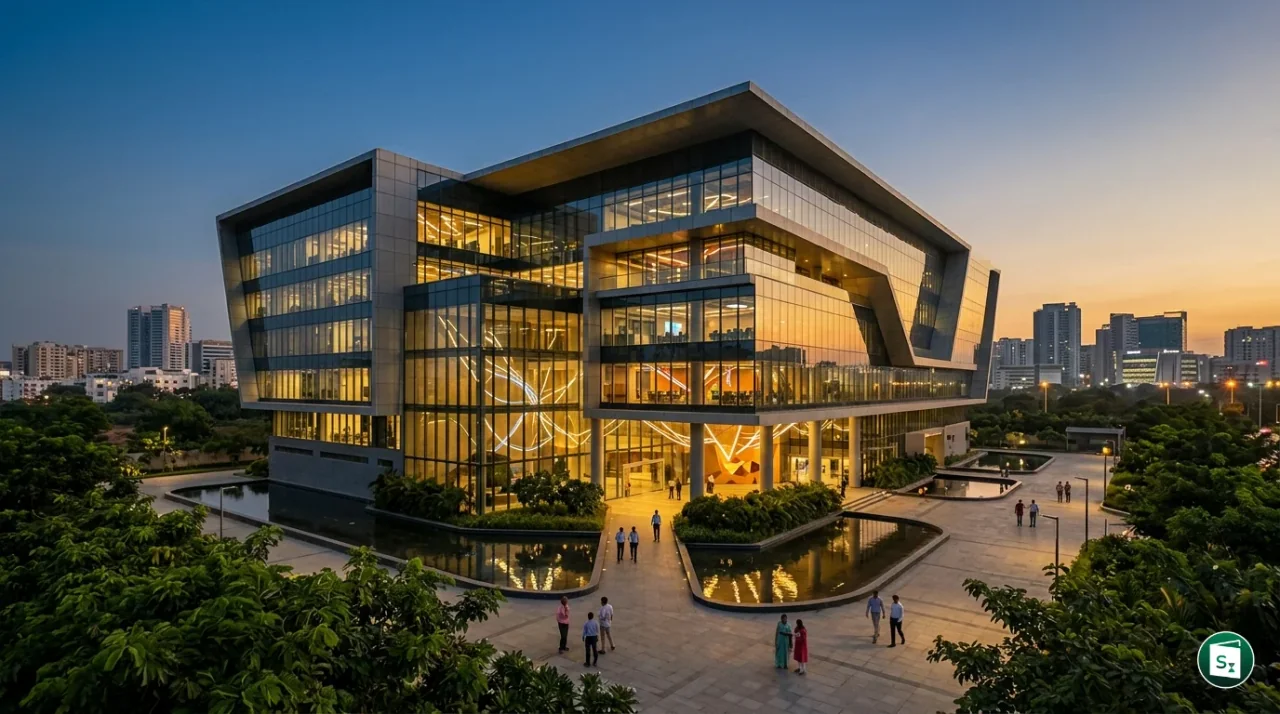
The implementation partner for the 2026 edition was the T-Hub Foundation. T-Hub, based in Hyderabad, is the world’s largest startup campus, spanning 572,000 square feet. It has supported more than 2,300 startups through curated programmes, market access, funding opportunities, and world-class infrastructure. T-Hub also hosts the Atal Incubation Centre (AIC) and the Machine Learning and Artificial Intelligence Technology Hub (MATH).
The 2026 Challenge: Theme and Process
The 8th edition of the Youth Co:Lab National Innovation Challenge was launched on 3 February 2026 during AIM SUMVAAD, the flagship annual conclave of the Atal Innovation Mission. The challenge invited youth-led startups working on solutions aligned with responsible consumption, a theme tied to the Government of India’s Mission LiFE (Lifestyle for Environment).
Applicants were invited across three thematic areas:
| Theme | Focus Areas |
|---|---|
| Sustainable Textiles and Fashion | Low-impact fibres and dyeing, circular garment design, repair and reuse models, ethical supply chains |
| Circular Economy Innovations | Material recovery, upcycling, recycling, waste-to-value solutions, take-back systems |
| Sustainable Food Systems and Water Conservation | Agricultural efficiency, post-harvest management, water-saving technologies, watershed management |
Eligibility was open to youth-led startups with founders aged 15 to 29 years, with an extension to 35 years for women, persons with disabilities, LGBTQIA+ individuals, tribal youth, and religious minorities. The challenge received over 350 applications from startups across 28 states, reflecting the widespread interest in sustainability-focused entrepreneurship.
Following a rigorous multi-stage evaluation, 50 startups were selected for the National Springboard Programme, a three-month virtual accelerator supported by 16 industry mentors and domain specialists. These startups pitched their solutions before a jury during the National Innovation Dialogue held on 4 June 2026. From this round, 20 startups advanced to the Regional Immersion Bootcamp hosted at T-Hub, Hyderabad, from 15 to 19 June 2026.
The five-day bootcamp brought together ecosystem leaders, sustainability experts, investors, and government stakeholders through masterclasses, mentorship sessions, site visits, and peer learning opportunities. The final jury evaluation on 18 June 2026 selected six startups for their scalability and measurable environmental and social impact.
The Winners and Their Innovations
The three winning startups and three runners-up were recognised for their scalable, high-impact solutions across the three thematic areas. Each winning startup received a seed grant of Rs 3.5 lakh along with capacity-building support and access to innovation networks. The runners-up were awarded Rs 2.2 lakh each.
Winners
| Startup | Location | Innovation |
|---|---|---|
| NavaPrayoga Labs LLP (Grassip) | Hyderabad | 100% biodegradable drinking straws made from wild aquatic grass, offering a non-soggy alternative to plastic and paper straws |
| UnBubble | Gurugram, Haryana | Plant-based, home-compostable packaging foam made from agricultural waste (husks, stalks, crop residue) to replace thermocol and bubble wrap |
| Ecorenowa Solutions Pvt Ltd | Bengaluru | Clean-tech system that recovers valuable raw materials from decommissioned solar panels, introducing circularity to the renewable energy sector |
NavaPrayoga Labs LLP developed Grassip, a natural drinking straw manufactured entirely from wild aquatic grass. The straw stays intact in both hot and cold drinks for hours, decomposes naturally in soil within months, and creates an additional income stream for farming communities in Andhra Pradesh.
UnBubble, founded by Akash Singh and operating out of Gurugram, produces protective packaging from agricultural crop residues. The material is plant-based, water-soluble, and home-compostable, and can be dissolved after use to water plants, leaving no waste behind.
Ecorenowa Solutions, founded by Murugesan Arulprasath and Murugesan Shanthi, addresses the growing challenge of solar panel waste. As India expands its solar capacity, decommissioned panels pose a significant environmental hazard. Ecorenowa’s recovery system extracts valuable materials and feeds them back into the manufacturing supply chain.
Runners-Up
| Startup | Location | Innovation |
|---|---|---|
| Eco Cushion | N/A | Recyclable, biodegradable paper-based honeycomb wraps using 3D cushioning technology to replace plastic shipping wraps |
| Vasudeva Innovations | N/A | Microbial technology for treating industrial wastewater and optimising sustainable food supply chains |
| WomenasticCO | N/A | Converts plastic waste into 3D-printing filament, fibre, and recycled products, combining circularity with women’s economic empowerment |
Significance and Impact
The 8th Youth Co:Lab National Innovation Challenge stands out for its emphasis on decentralising access to funding and mentorship beyond traditional startup hubs. Over 40% of the selected ventures were women-led, reflecting a conscious effort to promote inclusive entrepreneurship across gender, geography, and social background.
Prateek Deshmukh, Programme Director at Atal Innovation Mission, highlighted during the awards that India does not have a startup problem but a distribution problem, with capital concentrated in Bangalore and Delhi, mentorship too thin in Tier-3 cities and the North-East, and opportunity too narrow for women and persons with disabilities. Programmes like Youth Co:Lab aim to address these structural imbalances.
India’s demographic profile makes youth-led innovation a strategic priority. Nearly 65% of India’s population is under the age of 35, and the country has one of the world’s largest startup ecosystems. At the same time, the environmental challenges the winning startups address, including textile waste, plastic pollution, and solar panel waste, are growing at scale. India’s textile industry alone generates 7,793 kilotons of waste annually, of which less than 10% is recycled. The country produces approximately 160,000 tonnes of municipal solid waste daily, with only about half undergoing treatment.
The winning solutions directly tackle these problems. Grassip offers a natural alternative to the 500 billion plastic straws used globally each year. UnBubble replaces thermocol, which takes centuries to break down, with a material that dissolves in water. Ecorenowa solves the emerging challenge of solar panel waste, a problem that will intensify as India’s installed solar capacity grows from its current levels to the target of 500 GW of renewable energy by 2030.
The Atal Innovation Mission (AIM), established in 2016 by NITI Aayog, is the Government of India’s flagship initiative to promote a culture of innovation and entrepreneurship across the country. AIM operates through components such as Atal Tinkering Labs (ATLs) for school students, Atal Incubation Centres (AICs) for startups, and Atal Community Innovation Centres (ACICs) for underserved regions. Its partnership with UNDP on Youth Co:Lab aligns with its broader objective of creating an ecosystem where young innovators can convert ideas into impactful ventures.
Key Takeaways
- The 8th Youth Co:Lab National Innovation Challenge 2026 was co-led by UNDP India and the Citi Foundation, in partnership with Atal Innovation Mission (AIM), and implemented by the T-Hub Foundation.
- Over 350 applications were received from youth-led startups across 28 states, with 50 startups selected for the National Springboard Programme and 20 advancing to the Regional Immersion Bootcamp at T-Hub, Hyderabad.
- The three winners, NavaPrayoga Labs LLP (Grassip), UnBubble, and Ecorenowa Solutions Pvt Ltd, received a seed grant of Rs 3.5 lakh each, while three runners-up received Rs 2.2 lakh each.
- Youth Co:Lab was co-created in 2017 by UNDP and Citi Foundation and launched in India in 2019 in collaboration with AIM, NITI Aayog.
- Over 40% of the selected ventures were women-led, reflecting the challenge’s emphasis on inclusive entrepreneurship.
- The challenge focused on three thematic areas: sustainable textiles and fashion, circular economy innovations, and sustainable food systems and water conservation, aligned with the government’s Mission LiFE.