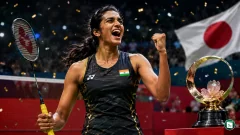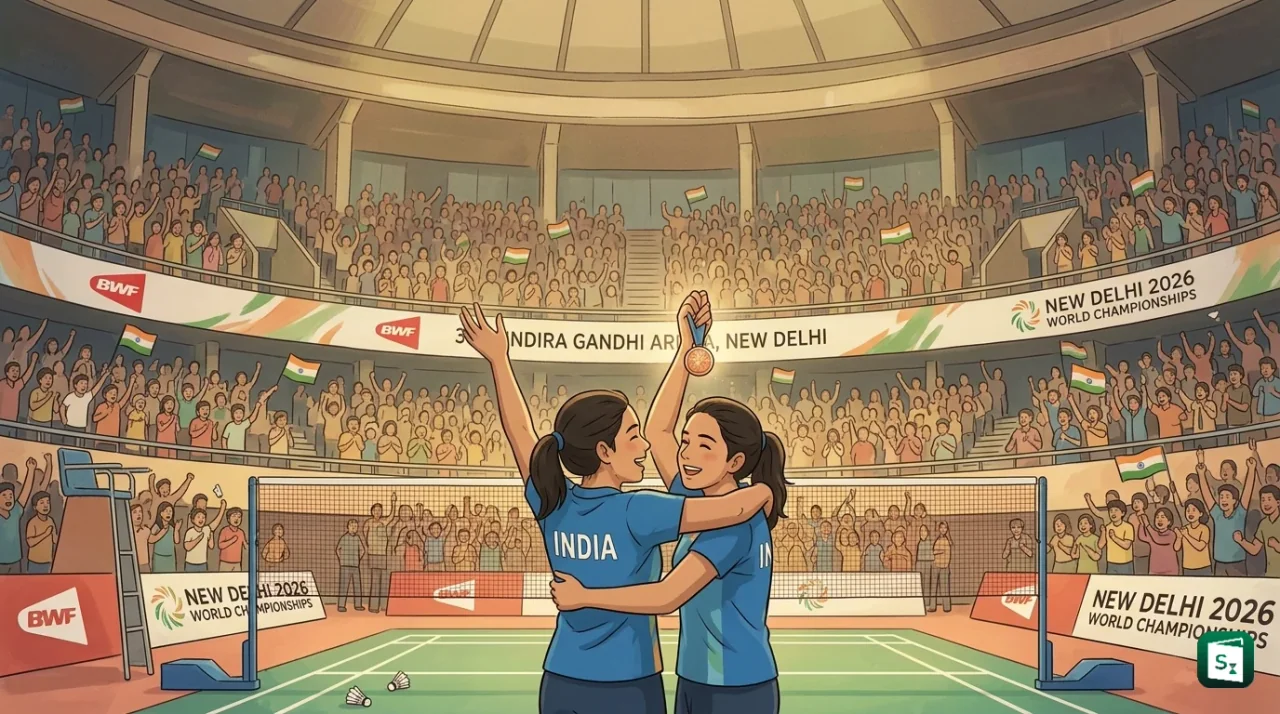
The 30th edition of the BWF World Championships 2026 was held from 17 to 23 August 2026 at the Indira Gandhi Arena in New Delhi, marking the tournament’s return to India after 17 years since Hyderabad 2009. On home soil, Treesa Jolly and Gayatri Gopichand won bronze in women’s doubles, India’s first medal in the discipline since 2011. The championships also created world history as Alex Lanier of France became the first French men’s singles world champion and An Se-young of South Korea secured her second women’s singles world title.
What Is the BWF World Championships?
The Badminton World Federation (BWF) World Championships is the most prestigious individual badminton tournament in the world, held alongside the Olympic Games as the sport’s highest honour. It is organised by the Badminton World Federation, the international governing body for badminton recognised by the International Olympic Committee (IOC). The BWF was founded on 5 July 1934 as the International Badminton Federation (IBF) in London with nine founding members including Canada, Denmark, England, France and the Netherlands. It was renamed BWF on 24 September 2006 and has been headquartered in Kuala Lumpur, Malaysia since 2005.
The first official World Championships was held in Malmo, Sweden in 1977. The event was held once every three years until 1983, then became biennial from 1985, and has been held annually since 2006 except in Olympic years. The winners in each of the five disciplines are crowned World Champions and receive gold medals, while runners up receive silver and losing semi finalists receive bronze medals without a playoff. There is no prize money at the World Championships, but the event offers the maximum BWF World Ranking points, 14,500 points for winners, equal to the Olympic Games.
The tournament is contested across five events: men’s singles, women’s singles, men’s doubles, women’s doubles and mixed doubles. Qualification and seedings are based on the BWF World Ranking, which calculates points from a player or pair’s best results over the preceding 52 weeks. Draw sizes are 64 for singles and 48 for doubles, with a maximum of four entries per member association in each event.
Where Was the 2026 Edition Held and What Was the Format?
The 2026 championships was organised at the Indira Gandhi Indoor Stadium, also known as the Indira Gandhi Arena, located at Indraprastha Estate in New Delhi. The stadium, built by the Government of India in 1982 for the Asian Games, is the largest indoor sports arena in India with a seating capacity of 14,349. It was renovated in 2010 for the Commonwealth Games at a cost of ₹240 crore and spreads over 102 acres. The venue had not hosted the World Championships before. India last hosted the event in 2009 at Hyderabad’s Gachibowli Indoor Stadium, so the 2026 edition marked a return after 17 years. India was awarded the hosting rights as part of a reallocation after the hosting schedule for the Sudirman Cup was adjusted.
The competition was sanctioned by the BWF and organised by the Badminton Association of India (BAI), the national governing body for badminton in India. All matches followed the rally point system of best of three games to 21 points.
The full schedule ran over seven days:
| Date | Round | Start Time (IST) |
|---|---|---|
| 17 August | Round of 64 (singles) and Round of 48 (doubles) | 09:00 |
| 18 August | Remaining Round of 64 and start of Round of 32 | 09:00 |
| 19 August | Round of 32 (all events) | 09:00 |
| 20 August | Round of 16 (all events) | 10:30 |
| 21 August | Quarter finals (all events) | 10:30 |
| 22 August | Semi finals (all events) | 10:30 |
| 23 August | Finals (all events) | 13:00 |
Matches were played across four courts in the early rounds, reducing to two courts for quarter finals and one show court for semi finals and finals. Live telecast in India was on Sports18 with digital streaming on JioHotstar, while global streaming was available on BWF TV on YouTube. Defending champions entering the tournament included Shi Yuqi of China in men’s singles and Akane Yamaguchi of Japan in women’s singles.
Treesa Jolly and Gayatri Gopichand Win Historic Women’s Doubles Bronze
The headline story for India was the breakthrough of Treesa Jolly and Gayatri Gopichand Pullela in women’s doubles. The unseeded pair, ranked 39th at the time and returning after Treesa’s ankle injury that had kept her out since April 2026, produced a remarkable run to win bronze, India’s first World Championships medal in women’s doubles since Jwala Gutta and Ashwini Ponnappa won bronze in London in 2011. It ended a 15 year gap in the discipline and extended India’s streak of winning at least one medal at every World Championships since 2011 to 12 consecutive editions.
Their path included three wins over seeded pairs. They defeated 16th seeds Lauren Lam and Allison Lee of the United States, then seventh seeds Rin Iwanaga and Kie Nakanishi of Japan 21-16, 21-12 in the pre quarterfinals. In the quarterfinal on 22 August, they staged a comeback against fourth seeds Jia Yifan and Zhang Shuxian of China, losing the first game 16-21 before winning 21-15, 21-13 in one hour and nine minutes. This victory assured them of at least a bronze, as both losing semi finalists receive bronze medals at the World Championships.
In the semi final on 23 August at the Indira Gandhi Indoor Stadium, they faced world No. 1 and defending champions Liu Sheng Shu and Tan Ning of China, a pair they had beaten only once in seven prior meetings. The Indians won the first game 21-18 after racing to a 7-2 lead, but the Chinese pair recovered to take the next two games 21-13, 21-8, winning in one hour and 11 minutes. The final score was 21-18, 13-21, 8-21.
The medal carried several milestones. Treesa Jolly, who hails from Kannur, Kerala, became the first Malayali woman to win a medal at the BWF World Championships. The pair had been conferred the Arjuna Award in the same week by the Ministry of Youth Affairs and Sports, making the championships a double celebration. Gayatri Gopichand is the daughter of former All England champion and former national coach Pullela Gopichand, and this was her first World Championships medal that established her own identity beyond that legacy.
Why This Bronze Matters for Indian Badminton
India’s overall tally at the World Championships now stands at 16 medals since the tournament began, with Jolly and Gopichand joining a select list. Before them, only Jwala Gutta and Ashwini Ponnappa had won a women’s doubles medal for India. The 2011 bronze had itself ended a 28 year wait since Prakash Padukone won bronze in men’s singles in Copenhagen in 1983. Since then, P. V. Sindhu has been the most successful Indian with five medals including gold in 2019 at Basel, the only gold for India to date.
The 2026 bronze is significant because it shows depth beyond singles. Indian badminton has been heavily dependent on singles stars such as Sindhu, Saina Nehwal, Kidambi Srikanth, Lakshya Sen, H. S. Prannoy and B. Sai Praneeth, while doubles had only seen sporadic success through Satwiksairaj Rankireddy and Chirag Shetty who won men’s doubles bronze in 2022 and 2025. A women’s doubles medal on home soil, by an unseeded young pair overcoming injury, signals that India can compete with the dominant East Asian pairs from China, Korea and Japan at the highest level.
Alex Lanier Makes History for France in Men’s Singles
In men’s singles, Alex Lanier of France created history by becoming the first French player ever to win the men’s singles title at the BWF World Championships since the tournament began in 1977. The 21 year old from Caen, seeded ninth and ranked world No. 10, defeated Kodai Naraoka of Japan, seeded 10th, in the final on 23 August with a dominant scoreline of 21-11, 21-11 in about 50 minutes.
Lanier had already become the first Frenchman to reach a men’s singles final. His path to the title was commanding. He dropped only two games in the whole tournament, both in three game victories in the knockout rounds. In the semi final he recovered from losing the opening game to beat Victor Lai of Canada 16-21, 21-13, 21-14. In the final, after trailing 7-9 in the opening game, he won 13 of the next 14 points to seize control and then won seven consecutive points from 14-11 in the second game to close out the title.
The win capped a rapid rise for Lanier. He had won the European Junior Championships in 2022, became the first French player to win a BWF World Tour Super 750 title at the Japan Open in 2024 at age 19, and in 2025 became the first Frenchman to win the European Men’s Singles Championship by beating compatriot Toma Junior Popov. His world title also completed a golden double for France in New Delhi. Earlier on the same day, the French mixed doubles pair Thom Gicquel and Delphine Delrue, seeded fifth, became France’s first ever world champions in any discipline by defeating top seeds Feng Yanzhe and Huang Dongping of China 22-20, 19-21, 21-15 in one hour and 18 minutes. Before 2026, no French player had ever reached a World Championships final.
An Se-young Secures Her Second Women’s Singles World Title
In women’s singles, world No. 1 An Se-young of South Korea, aged 24, won her second world title after her first in 2023. The reigning Olympic champion defeated defending champion and world No. 2 Akane Yamaguchi of Japan in the final 21-17, 21-14 in 49 minutes, extending her winning streak against Yamaguchi to six matches in their 35th career meeting. The opening game was tied at 17-17 before An won four straight points to take it 21-17, then pulled away from 11-10 in the second game.
An’s victory completed a rare simultaneous hold of all major women’s singles titles: Olympic Games, World Championships, Asian Games and Asian Championships. Yamaguchi, despite the loss, became the first women’s singles player to win six World Championships medals. An had previously won the world title in 2023 and was the top seed entering the 2026 edition.
In other finals on 23 August, South Korea’s Baek Ha Na and Lee So Hee won women’s doubles by defeating top seeds Liu Sheng Shu and Tan Ning 21-15, 21-15, ending a 31 year wait for Korea in that event. In men’s doubles, China’s Liang Wei Keng and Wang Chang beat Malaysia’s Aaron Chia and Soh Wooi Yik 21-17, 21-16.
| Event | Champion | Runner Up | Score |
|---|---|---|---|
| Men’s Singles | Alex Lanier (France) | Kodai Naraoka (Japan) | 21-11, 21-11 |
| Women’s Singles | An Se-young (South Korea) | Akane Yamaguchi (Japan) | 21-17, 21-14 |
| Men’s Doubles | Liang Wei Keng and Wang Chang (China) | Aaron Chia and Soh Wooi Yik (Malaysia) | 21-17, 21-16 |
| Women’s Doubles | Baek Ha Na and Lee So Hee (South Korea) | Liu Sheng Shu and Tan Ning (China) | 21-15, 21-15 |
| Mixed Doubles | Thom Gicquel and Delphine Delrue (France) | Feng Yanzhe and Huang Dongping (China) | 22-20, 19-21, 21-15 |
What Is the BWF World Ranking and How Does the Championship Fit In?
Understanding the ranking system helps explain why the World Championships matters beyond the medals. The BWF World Ranking determines qualification and seeding for all BWF sanctioned events. Points are awarded based on how far a player advances and the grade of the tournament, calculated from results over the previous 52 weeks. If a player has played 10 or fewer ranking events, all points count. If 11 or more, only the 10 highest scoring events count. The maximum possible points under the current system is around 125,000, with World Championships winners receiving 14,500 points, runners up 12,500 and semi finalists 10,500.
The World Championships is a Grade 1 event under BWF regulations, the same tier as the Olympic Games, making it the most valuable tournament for ranking points alongside the Olympics. Performance in New Delhi therefore directly shapes seedings and qualification for the BWF World Tour, which is divided into Super 1000, Super 750, Super 500, Super 300 and Super 100 levels, and for the season ending BWF World Tour Finals.
Why New Delhi 2026 Matters and What Comes Next
The successful hosting of the 30th World Championships in New Delhi carries importance beyond the results. For India, it restored the country to the centre of world badminton after a 17 year gap and showcased the upgraded Indira Gandhi Arena as a venue capable of hosting global indoor championships. The Badminton Association of India, which works under the aegis of the BWF and is responsible for developing the sport nationally, used the event to underline India’s capacity to host major team events as well. India has already bid for the 2028 Thomas and Uber Cup Finals, the world team championships for men and women, with New Delhi again in contention.
For Indian badminton, the bronze by Treesa and Gayatri keeps alive a medal streak that began in 2011 and now spans every edition held since then. It also balances a campaign where other leading contenders such as P. V. Sindhu, Lakshya Sen and the pair of Satwiksairaj Rankireddy and Chirag Shetty did not reach the podium this time. The emergence of a women’s doubles pair on a home World Championships provides a new pathway for doubles development, a discipline where India has historically been less dominant compared to singles.
For world badminton, the 2026 edition signalled a shift in geography. France’s double gold was the first time the country had won any World Championships title, and only the second time a European nation had won more than one gold in a single edition. Korea’s success with An Se-young and the women’s doubles pair showed the continued strength of East Asia while proving that new European contenders are rising. With the 2027 World Championships host yet to be confirmed and the next Olympic Games approaching, the ranking points and confidence gained in New Delhi will influence seedings and qualification races over the coming year.
Key Takeaways
- The 30th BWF World Championships 2026 was held from 17 to 23 August 2026 at the Indira Gandhi Arena in New Delhi, India’s first hosting since Hyderabad 2009.
- Treesa Jolly and Gayatri Gopichand won bronze in women’s doubles, India’s first medal in the discipline since Jwala Gutta and Ashwini Ponnappa in 2011, ending a 15 year gap.
- Treesa Jolly became the first Malayali woman to win a medal at the BWF World Championships, winning with her partner after returning from an ankle injury.
- Alex Lanier of France, aged 21, became the first French player to win the men’s singles title, beating Kodai Naraoka of Japan 21-11, 21-11 in the final.
- An Se-young of South Korea won her second women’s singles world title by defeating defending champion Akane Yamaguchi 21-17, 21-14.
- The Badminton World Federation (BWF) was founded on 5 July 1934 in London as the International Badminton Federation and has been headquartered in Kuala Lumpur, Malaysia since 2005.