India observed Sadbhavana Divas, also known as Harmony Day, on 20 August 2026 to mark the 82nd birth anniversary of former Prime Minister Rajiv Gandhi. The day has been celebrated every year since 1992, a year after his assassination in 1991. It promotes national integration, communal harmony and goodwill among people of all faiths, languages and cultures.
What Is Sadbhavana Divas and Why Is It Observed on August 20?
The word Sadbhavana means goodwill in English. The observance translates the idea of harmony into a public commitment, to live together peacefully despite differences of caste, religion, region and language.
20 August was chosen because it is the birth anniversary of Rajiv Gandhi, who was born on 20 August 1944 in Bombay, now Mumbai. He was the son of former Prime Minister Indira Gandhi and Feroze Gandhi, and the grandson of Jawaharlal Nehru, India’s first Prime Minister. The day was instituted after his death to honour his consistent emphasis on unity, peace and emotional integration of the nation.
Sadbhavana Divas was first observed in 1992, instituted by the All India Congress Committee in the golden jubilee year of the Quit India Movement of 1942. Since then, it has been marked every year on the same date as a reminder that India’s strength lies in diversity managed through dialogue and constitutional means.
How Is Sadbhavana Divas Observed Across India?
The central ritual of the day is the Sadbhavana Pledge. Citizens, government officials and students pledge to work for the emotional oneness and harmony of all the people of India regardless of caste, region, religion or language, and to resolve all differences through dialogue and constitutional means without resorting to violence.
The pledge text widely administered on the day reads:
“I take this solemn pledge that I will work for the emotional oneness and harmony of all the people of India regardless of caste, region, religion, or language. I further pledge that I shall resolve all differences among us through dialogue and constitutional means without resorting to violence.”
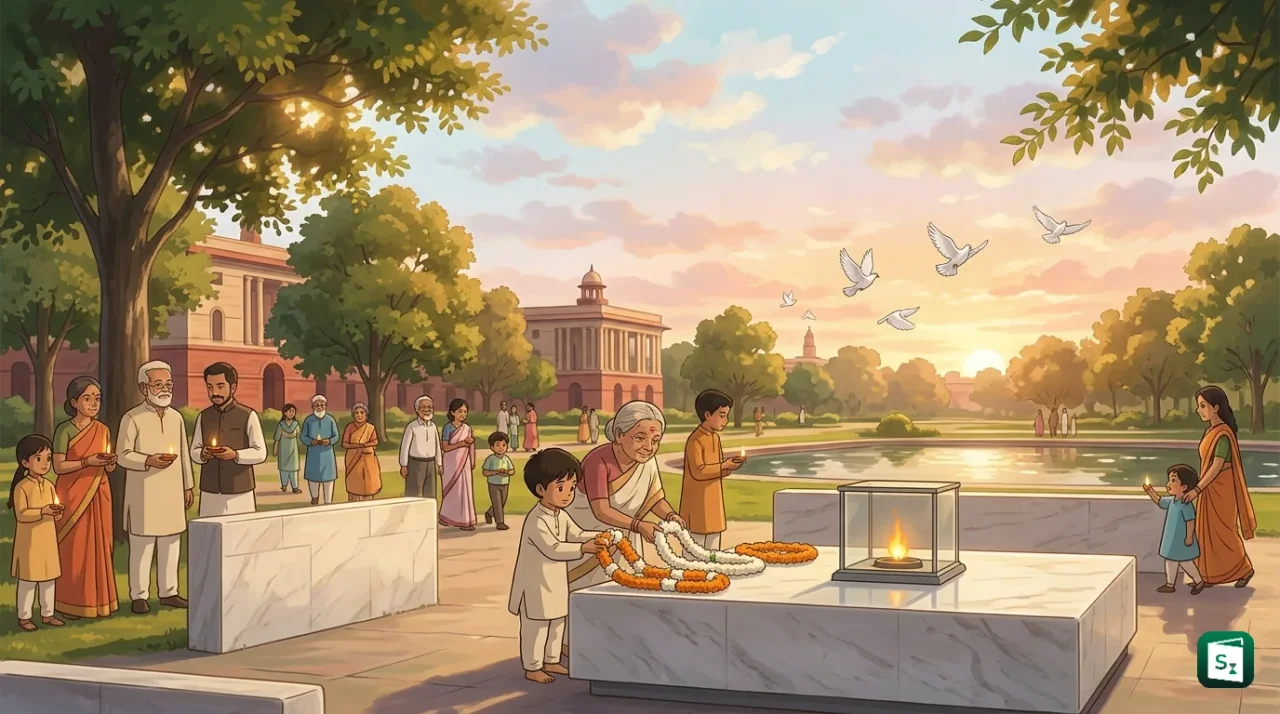
Observances typically include floral tributes at Veer Bhumi in New Delhi, where Rajiv Gandhi was cremated, along with pledge-taking ceremonies in government offices, schools and public institutions, cultural programmes, seminars and discussions on national integration, and awareness campaigns on communal harmony. In many places, the day is also linked to environmental activities such as planting saplings, underlining the broader idea of responsibility towards society and nature.
Who Was Rajiv Gandhi?
Rajiv Gandhi served as the sixth Prime Minister of India from 1984 to 1989. He became Prime Minister at the age of 40 after the assassination of his mother, Indira Gandhi, on 31 October 1984, making him the youngest Prime Minister in India’s history. His tenure is remembered for a distinct push towards modernisation, technology and youth empowerment. He was assassinated on 21 May 1991 at Sriperumbudur in Tamil Nadu by a suicide bomber linked to the Liberation Tigers of Tamil Eelam (LTTE) while campaigning for the Lok Sabha elections. He was posthumously honoured with the Bharat Ratna, India’s highest civilian award, in 1991.
Key initiatives associated with his government include:
| Area | Initiative and Significance |
|---|---|
| Telecommunications | Set up the Centre for Development of Telematics (C-DOT) on 25 August 1984 as an autonomous body to build indigenous digital switching systems. This led to the Rural Automatic Exchange (RAX) and the spread of Public Call Offices (PCOs), and later to the creation of Mahanagar Telephone Nigam Limited (MTNL) in 1986 and Videsh Sanchar Nigam Limited (VSNL) |
| Voting Age | Brought the Constitution (Sixty-First Amendment) Act, 1988, which amended Article 326 to lower the voting age from 21 to 18 years. The law came into force on 28 March 1989 and added about 3.57 crore young voters to the electorate |
| Education | Launched the National Policy on Education, 1986, with programmes such as Operation Blackboard for minimum facilities in primary schools and the National Literacy Mission in 1988 for functional literacy among persons aged 15 to 35. Founded the Jawahar Navodaya Vidyalaya system in 1986 to provide free residential schooling from Class 6 to 12 for talented rural children |
| Panchayati Raj and Urban Local Bodies | Piloted Bills to give constitutional status to Panchayats and Municipalities with one-third reservation for women. These proposals later became the 73rd and 74th Constitution Amendment Acts, 1992, which added Part IX and Part IXA and Articles 243 to 243ZG to the Constitution |
| Science, Technology and Computerisation | Reduced import duties on computers and telecom equipment, encouraged computerisation including computerised railway ticketing, and launched six Technology Missions covering telecommunications, drinking water, literacy, immunisation, oilseeds and dairy. His adviser Sam Pitroda played a key role in the telecom expansion |
| Peace Accords | Pursued accords in Assam (1985), Punjab (1985), Mizoram (1986) and the Darjeeling region to address regional unrest through negotiated settlements |
About the Rajiv Gandhi National Sadbhavana Award
To commemorate Rajiv Gandhi’s contribution to peace and communal harmony, the All India Congress Committee instituted the Rajiv Gandhi National Sadbhavana Award in 1992. The award recognises outstanding contribution towards promotion of communal harmony, national integration and peace, and to the fight against violence and terrorism.
It carries a citation and a cash prize of ₹10 lakh and is traditionally presented on 20 August. The award is given to individuals or institutions with a record of work for goodwill among religious, ethnic and linguistic communities.
Notable recipients illustrate the breadth of the honour:
| Year | Recipient | Field |
|---|---|---|
| 1992 | Mother Teresa | Humanitarian service |
| 1993 | Ustad Bismillah Khan | Shehnai maestro |
| 1994 | Muhammad Yunus | Founder of Grameen Bank, Bangladesh |
| 1995 | Hiteswar Saikia and Subhadra Joshi (jointly) | Public affairs |
| 1996 | Lata Mangeshkar | Music |
| 1998 | Sunil Dutt | Actor, peace activist |
| 2000 | Kapila Vatsyayan | Scholar of arts and culture |
| 2003 | S. N. Subba Rao | Peace activist |
| 2011 | SPIC MACAY | Organisation promoting Indian classical music among youth |
| 2018 | Gopalkrishna Gandhi | Public affairs, communal harmony |
| 2023 | Banasthali Vidyapith, Rajasthan | Residential women’s university founded in 1935 by Pandit Hiralal Shastri, now educating more than 15,000 girl students |
The list shows that the award has gone to saints, artists, scholars, activists, institutions and public figures, underlining that harmony is built across many fields.
Why Sadbhavana Divas Matters Today
India is a country of deep social, religious, linguistic and cultural diversity. Sadbhavana Divas speaks directly to the challenge of turning that diversity into unity.
The day reminds citizens and institutions that differences are best resolved through dialogue and constitutional methods rather than division or violence. It promotes respect for pluralism, rejection of discrimination based on caste, religion or language, and a sense of shared nationhood.
For institutions, the observance reinforces the value of national integration as a daily practice, in classrooms, offices and community programmes, not only as a slogan. For individuals, the pledge serves as a personal commitment to goodwill and peaceful coexistence, a message that retains relevance in any period when social tensions rise.
In the context of Rajiv Gandhi’s broader vision, the day also connects harmony with progress, his government linked unity to modernisation, education and technology as tools to build a forward-looking India ready for the 21st century.
Key Takeaways
- Sadbhavana Divas (Harmony Day) is observed every year on 20 August, the birth anniversary of former Prime Minister Rajiv Gandhi, born on 20 August 1944.
- The day was first observed in 1992, a year after Rajiv Gandhi’s assassination on 21 May 1991 at Sriperumbudur, Tamil Nadu.
- In 2026, the observance marks the 82nd birth anniversary of Rajiv Gandhi, who was India’s sixth and youngest Prime Minister serving from 1984 to 1989.
- Sadbhavana means goodwill, and the day promotes national integration, communal harmony and resolution of differences through dialogue and constitutional means.
- The Rajiv Gandhi National Sadbhavana Award, instituted in 1992 by the All India Congress Committee in the golden jubilee year of the Quit India Movement, carries a citation and ₹10 lakh and is presented on 20 August.
- Key reforms linked to Rajiv Gandhi include the Sixty-First Amendment Act, 1988 lowering the voting age to 18, the National Policy on Education, 1986 and Jawahar Navodaya Vidyalayas, and the creation of C-DOT (25 August 1984) and MTNL (1986).