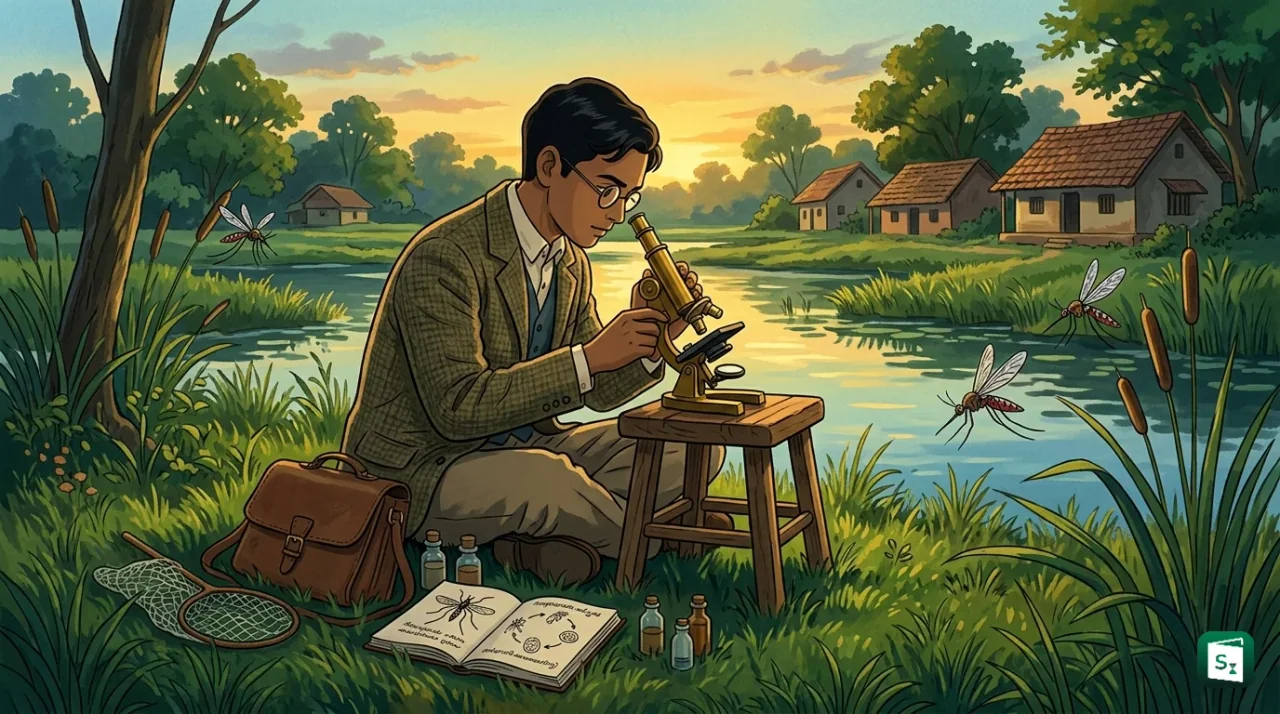
World Mosquito Day is observed every year on August 20 to commemorate the landmark discovery made by Sir Ronald Ross on that date in 1897 in Secunderabad. He proved that female Anopheles mosquitoes transmit the malaria parasite between humans. The day honours that breakthrough and reminds the world that the mosquito remains the deadliest animal for humans through the diseases it spreads.
What Is World Mosquito Day and Why Is It Celebrated on August 20?
World Mosquito Day is an annual observance that marks the exact day in 1897 when Ross identified the malaria parasite inside the stomach wall of an Anopheles mosquito that had fed on an infected patient. Ross himself called August 20 Mosquito Day, and the tradition has continued since. The London School of Hygiene and Tropical Medicine, which traces its origin to the London School of Tropical Medicine founded in 1899, has held commemorative events on this date since the early 1930s, following a tea party honouring Ross on August 20, 1931 held by the Ross Institute and Hospital for Tropical Diseases. Over time the academic commemoration grew into an international awareness day observed by scientists, public health bodies and community groups.
The purpose of the day is twofold. First, it honours a scientific milestone that solved one of the greatest medical mysteries of the 19th century, how malaria moves from one person to another. Second, it raises awareness that mosquito-borne diseases remain a major public health challenge and that prevention, research and funding for vector control must continue.
While World Mosquito Day recalls the Anopheles-malaria link, it also draws attention to the wider family of mosquito-borne illnesses. Mosquitoes today are known to transmit malaria, dengue, chikungunya, Zika, yellow fever, Japanese encephalitis and lymphatic filariasis among others. The World Health Organization (WHO), established in 1948 and headquartered in Geneva, Switzerland, estimates that mosquito-borne diseases account for a significant share of global infectious disease burden, with hundreds of millions of malaria cases still occurring each year.
Who Was Sir Ronald Ross and What Did He Discover in 1897?
Sir Ronald Ross was born on May 13, 1857 in Almora, then in the North-Western Provinces of British India, to a British Army officer. At the age of eight he was sent to England for schooling and later studied medicine at St. Bartholomew’s Hospital in London from 1875. He joined the Indian Medical Service (IMS) in 1881 and served at various stations including Madras, Burma, Baluchistan, the Andaman Islands, Bangalore and Secunderabad over the next 18 years.
His interest in malaria began in 1892. At that time scientists knew that a parasite caused malaria, after Charles Louis Alphonse Laveran, a French physician, had identified the malaria parasite in human blood in 1880. What was not known was how the parasite travelled from one person to another. Ross had doubted Laveran’s findings until Sir Patrick Manson, a Scottish physician often regarded as the father of tropical medicine, demonstrated the parasite to him during Ross’s home leave in London in 1894. Manson had already shown in 1878 that mosquitoes could carry the filarial worm that causes elephantiasis, and he shared his hypothesis that mosquitoes might also carry the malaria parasite. Ross was convinced and decided to test this idea on returning to India.
The Secunderabad Breakthrough
After more than two years of failures, Ross achieved his breakthrough in a small laboratory at the Begumpet Hospital in Secunderabad, now in Telangana. The building today is preserved as the Sir Ronald Ross Institute of Parasitology and houses a small museum with his photographs, diagrams and instruments.
The key experiment unfolded over several days in August 1897. On August 16, 1897, Ross allowed mosquitoes bred from larvae to feed on a malaria patient named Husein Khan. He had classified the local mosquitoes by appearance as he owned no proper entomological guide, calling them grey or barred-back, brindled and dappled-winged. He dissected the insects day by day without success. On August 20, 1897, while dissecting an Anopheles mosquito of the dappled-winged type, designated Mosquito 38 and later identified as Anopheles stephensi, he found pigmented cells with clusters of black granules in the stomach wall that matched Laveran’s description of the malaria parasite. The next day, on August 21, he found even larger forms in another mosquito, confirming that the parasite was growing inside the insect.
This proved that the malaria parasite does not merely pass through the mosquito but develops inside it. Ross published his findings on August 27, 1897 in the Indian Medical Gazette and later that year in the British Medical Journal.
Using a more convenient bird model, he went further. By July 1898, working with the avian malaria parasite Plasmodium relictum (then called Proteosoma) in sparrows and Culex mosquitoes, he showed that parasites migrate to the mosquito’s salivary glands and are injected into a new host during a bite. In the same year, Italian scientist Giovanni Battista Grassi and his colleagues confirmed the complete transmission cycle of human malaria parasites, Plasmodium falciparum, Plasmodium vivax and Plasmodium malariae, in Anopheles mosquitoes.
For this work Ross was awarded the Nobel Prize in Physiology or Medicine in 1902, becoming the first British Nobel laureate. The citation praised his work for showing how malaria enters the organism and laying the foundation for combating the disease. He was later knighted as Knight Commander of the Order of the Bath (KCB) in 1911 and Knight Commander of the Order of St Michael and St George (KCMG) in 1918, and he was elected Fellow of the Royal Society (FRS) in 1901. He died on September 16, 1932 in London.
What Is Malaria and How Do Mosquitoes Transmit It?
Malaria is a life threatening disease caused by parasites of the genus Plasmodium. Five species infect humans, with Plasmodium falciparum responsible for most severe cases and deaths and Plasmodium vivax being the most widespread outside Africa. The word malaria comes from the Italian mala aria, meaning bad air, reflecting the old belief that the disease came from marsh vapours.
Transmission is entirely vector-borne, meaning it needs a carrier. Only the bite of an infected female Anopheles mosquito can spread malaria. Male mosquitoes do not bite and therefore do not transmit disease. The cycle works in simple steps. A mosquito bites a person whose blood contains malaria parasites. Inside the mosquito gut the parasites reproduce and develop, then move to the salivary glands. When that infected mosquito bites another person, it injects parasites along with its saliva into the new host’s bloodstream.
Common symptoms include high fever, chills, headache, muscle pain, nausea and anaemia. Without prompt treatment, falciparum malaria can lead to severe complications including organ failure. Diagnosis relies on blood tests such as microscopy and rapid diagnostic tests, and treatment involves anti-malarial drugs. Prevention focuses on avoiding bites and controlling mosquito populations.
Which Mosquito Transmits Which Disease: Anopheles, Aedes and Culex Compared?
More than 3,500 species of mosquitoes have been identified worldwide, but only a small fraction spread human diseases. Three genera matter most for public health, Anopheles, Aedes and Culex. They differ in appearance, biting time, breeding sites and the pathogens they carry.
| Genus | Key Species | Biting Time | Breeding Habitat | Main Diseases Transmitted |
|---|---|---|---|---|
| Anopheles | Anopheles gambiae, Anopheles stephensi, Anopheles funestus, Anopheles arabiensis | Late evening to night, indoors and outdoors | Clean, stagnant fresh water pools, puddles, open water with little vegetation | Malaria, lymphatic filariasis in some areas |
| Aedes | Aedes aegypti (yellow fever mosquito), Aedes albopictus (tiger mosquito) | Daytime, early morning and late afternoon, often indoors and outdoors | Artificial containers, tyres, buckets, plant pots, just above water line | Dengue, chikungunya, Zika, yellow fever, lymphatic filariasis |
| Culex | Culex pipiens (house mosquito), Culex quinquefasciatus, Culex tritaeniorhynchus | Dusk to dawn, nighttime | Stagnant water rich in organic matter, drains, septic tanks, rice fields, swamps | Japanese encephalitis, West Nile virus, lymphatic filariasis, St. Louis encephalitis, Usutu virus |
A useful way to remember the difference is to link time and disease. Anopheles bites at night and brings malaria. Aedes bites in the day and brings dengue and chikungunya. Culex bites at night and brings encephalitis and filariasis. Female mosquitoes of all three genera need blood to develop their eggs, which is why only females transmit disease.
Why Only the Female Anopheles Causes Malaria
Both male and female mosquitoes feed on nectar, but only the female requires a blood meal to obtain protein for egg development. When she pierces human skin to draw blood, parasites present in an infected person are ingested, and parasites already in her salivary glands are injected into a new person. This biological need makes the female the sole vector.
Significance of World Mosquito Day for Public Health
The discovery changed disease control entirely. Before Ross, malaria was treated mainly after infection, with limited success using quinine. After Ross, public health could target the carrier itself. Measures such as draining stagnant water, environmental sanitation, screening of houses, use of mosquito nets, insecticide spraying and later long lasting insecticidal nets (LLINs) became central to prevention.
The day also serves as an annual check on progress. According to the World Malaria Report 2025, based on 2024 data from 80 endemic countries, there were an estimated 282 million malaria cases and 610,000 deaths worldwide in 2024, a rise of about 9 million cases over 2023. The WHO African Region accounted for about 94 percent of cases. Encouragingly, 47 countries and one territory had been certified malaria free by mid 2025, and more than 3 billion insecticide treated nets have been distributed globally.
India’s Fight Against Mosquito-Borne Diseases and the 2030 Elimination Goal
India holds a special place in this story, as the landmark discovery was made on Indian soil. At independence in 1947, India faced an estimated 7.5 crore malaria cases and 8 lakh deaths annually. By 2023, reported cases had fallen to about 2.27 lakh and deaths to 83, a reduction of more than 97 percent.
The national roadmap is the National Framework for Malaria Elimination in India (2016 to 2030), launched in February 2016, followed by the National Strategic Plan (NSP) for Malaria Elimination 2023 to 2027. The vision is a Malaria Free India, with the goals of zero indigenous cases nationwide by 2027 and WHO certification of malaria elimination by 2030. WHO grants elimination certification only when the chain of local transmission of all human malaria parasites has been interrupted nationwide for at least three consecutive years and a fully functional surveillance and response system is in place.
Recent reports show steady progress. Under NSP 2017 to 2022, India recorded a 79 percent decline in cases and 57 percent decline in deaths in 2022 compared with 2017. The World Malaria Report 2024 noted that India reduced cases by about 69 percent from 6.4 million in 2017 to 2 million in 2023 and exited the WHO High Burden to High Impact (HBHI) group of most affected countries in 2024. In 2024, India accounted for 73.3 percent of the estimated 2.7 million cases in the WHO South-East Asia Region, indicating that challenges remain, particularly with Plasmodium vivax, cross border importation and the spread of the urban vector Anopheles stephensi.
The core strategy rests on Integrated Vector Management, Indoor Residual Spraying (IRS), distribution of Long Lasting Insecticidal Nets (LLINs), testing, treating and tracking of every case, strengthened surveillance through the Annual Blood Examination Rate (ABER) and Annual Parasite Incidence (API) monitoring, and drugs such as artemisinin based combination therapy (ACT). In addition, two malaria vaccines, RTS,S/AS01 and R21, have been recommended by WHO for children in moderate to high transmission settings, and by October 2025, 24 countries had introduced a malaria vaccine into routine immunisation.
Mosquito challenges extend beyond malaria. Dengue and chikungunya, both spread by Aedes mosquitoes, remain seasonal concerns, especially during and after the monsoon. The National Centre for Vector Borne Diseases Control (NCVBDC) in New Delhi, the nodal agency for prevention and control of vector borne diseases in India, coordinates monitoring for malaria, dengue, chikungunya, Japanese encephalitis, lymphatic filariasis and kala azar.
Distinguishing World Mosquito Day from World Malaria Day, observed on April 25 each year, is also useful. World Mosquito Day commemorates the vector discovery and covers all mosquito-borne diseases, while World Malaria Day focuses specifically on the malaria disease burden and elimination campaign.
Key Takeaways
- World Mosquito Day is observed every year on August 20 to commemorate Sir Ronald Ross’s 1897 discovery in Secunderabad that female Anopheles mosquitoes transmit malaria.
- Ronald Ross made the discovery on August 20, 1897 in the Begumpet laboratory in Secunderabad, now the Sir Ronald Ross Institute of Parasitology, by finding the malaria parasite in the stomach wall of an Anopheles stephensi mosquito fed on patient Husein Khan.
- Ross was awarded the Nobel Prize in Physiology or Medicine in 1902 for his work on malaria, becoming the first British Nobel laureate, and he had coined the name Mosquito Day himself.
- Malaria is caused by Plasmodium parasites, most severely by Plasmodium falciparum, and is transmitted only by the bite of an infected female Anopheles mosquito after parasites develop to its salivary glands.
- Anopheles primarily transmits malaria, Aedes aegypti and Aedes albopictus transmit dengue, chikungunya, Zika and yellow fever, and Culex pipiens and Culex quinquefasciatus transmit Japanese encephalitis, West Nile virus and lymphatic filariasis.
- India’s National Framework for Malaria Elimination 2016 to 2030 aims for zero indigenous cases by 2027 and WHO malaria elimination certification by 2030, with progress including exit from the WHO High Burden to High Impact group in 2024.