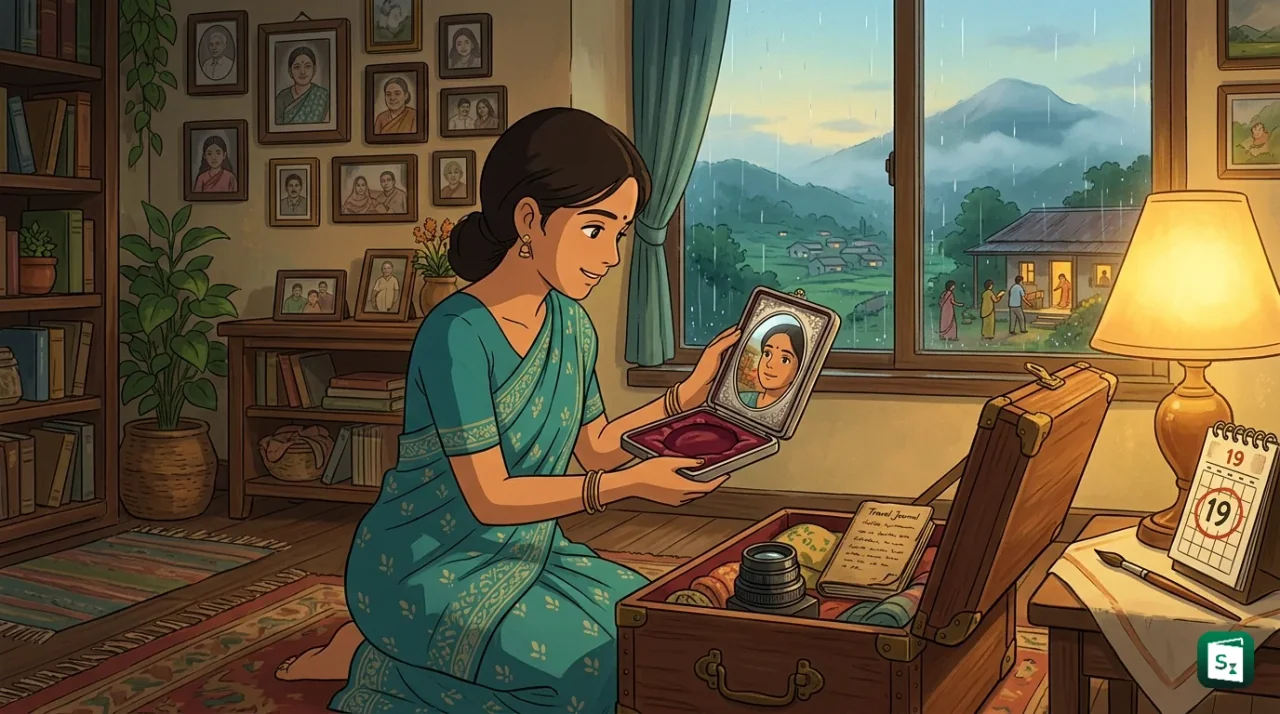
World Photography Day is observed every year on August 19 to honour the art, science and history of photography. For 2026, the global observance carries the optional theme HOME, inviting people to share what home means to them through an image and the story behind it. The date was chosen to commemorate the public announcement of the daguerreotype process on 19 August 1839, the first practical method of making permanent photographs developed by French artist and inventor Louis Daguerre in 1837.
What Is World Photography Day?
World Photography Day is an annual global celebration of photography as an art form, a scientific achievement and a tool for documentation and communication. It is observed on August 19 each year and brings together professional photographers, hobbyists, scientists, journalists and everyday smartphone users to share work, exchange ideas and reflect on how images shape memory, culture and public understanding.
The observance serves several purposes. It recognises photography as a creative medium, highlights its role in preserving history and everyday life, promotes visual literacy and ethical image making, and creates a worldwide participatory moment where millions share images under common hashtags such as #WorldPhotographyDay and #WorldPhotographyDay2026. While the day has no binding official programme, it is marked by exhibitions, photo walks, workshops, competitions, online galleries and social media campaigns organised by photography bodies, museums, galleries, schools and camera communities. A related World Photography Week, typically observed from August 12 to 26, extends the celebration with a longer window for sharing meaningful work.
The idea of a dedicated global day was proposed by Indian photography teacher O.P. Sharma in 1988, who coordinated with photography groups worldwide. The first observance took place in 1991, and the celebration grew steadily within India through in-person events before gaining wider global visibility online from the mid 2000s. Entrepreneur Korske Ara of Australia popularised the online branding as World Photo Day around 2010, and producer John Morzen of North America helped expand its international organisation. In 2026, the observance marks its 35th anniversary since the first celebration in 1991, and organisers continue to position it as the world’s largest celebration of photography.
Why Is World Photography Day Celebrated on August 19?
August 19 was not chosen at random. It marks the day in 1839 when the French government publicly announced the details of the daguerreotype process and presented it as a gift to the world.
The timeline is important for clarity:
| Date | Event |
|---|---|
| 1826 to 1827 | Joseph Nicephore Niepce produces the earliest surviving permanent photograph from a camera obscura, using his heliography process based on bitumen of Judea. The image required about eight hours of exposure. |
| 1829 | Niepce and Louis-Jacques-Mande Daguerre enter into a formal partnership to improve photographic processes and camera design. |
| 5 July 1833 | Niepce dies. His son Isidore Niepce succeeds him in the partnership under its terms. |
| 1835 to 1837 | Daguerre makes decisive advances. He achieves positive images with much shorter exposures and in 1837 fixes a complete daguerreotype process. The first successful still life daguerreotype dates to 1837. |
| 7 January 1839 | At a meeting of the French Academy of Sciences, the invention is announced in general terms without technical details. Selected specimens are shown in Daguerre’s studio and draw wide attention. |
| 19 August 1839 | At a joint session of the French Academy of Sciences and the Academy of Fine Arts at the Institut de France in Paris, astronomer and legislator Francois Arago discloses the complete working details. The French government acquires the rights in exchange for lifetime pensions to Daguerre and Isidore Niepce and declares the process free to the world, with instructions published for public use. |
The French state’s decision to buy the rights and release them freely, rather than keeping the invention under private patent, allowed daguerreotypy to spread rapidly. Studios opened across Europe and North America within months. The single exception was England, Wales and the British colonies, where Daguerre’s agent Miles Berry had filed British patent No. 8194 of 1839 days before the French announcement, so a licence fee remained required there until alternative processes later overtook it.
For that reason, August 19 is remembered not as the date of invention itself but as the date photography became a practical, public medium.
What Was the Daguerreotype and How Did It Work?
The daguerreotype, introduced worldwide in 1839, was the first commercially successful and publicly available photographic process. Each daguerreotype was a unique, one of a kind image formed on a highly polished, silver plated copper plate. It appears as a positive or negative depending on the angle of light and reflection, and it shows extraordinary detail and subtle tonal gradation.
The inventor
Louis-Jacques-Mande Daguerre was born on 18 November 1787 in Cormeilles-en-Parisis, near Paris, France, and died on 10 July 1851 in Bry-sur-Marne. He trained in architecture and theatre design under Pierre Prevost, worked as a scene painter for the Opera, and in July 1822 opened the Diorama in Paris with painter Charles-Marie Bouton. The Diorama was a popular spectacle using large semi transparent paintings, lighting effects and a rotating auditorium to create illusions of time and movement. Daguerre regularly used the camera obscura, a box with a lens that projects an image onto a surface, as a drawing aid, which led him to pursue a chemical means of fixing that fleeting image.
The process in five steps
Daguerre’s method used the light sensitivity of silver halides, with mercury vapour development. The classic workflow involved:
- Plate preparation. A copper sheet plated with silver, usually by Sheffield plating or later by electroplating, was cleaned and polished to a mirror finish with pumice, oil and diluted nitric acid. Any tarnish or contamination would spoil sensitivity.
- Sensitisation. In darkness, the polished plate was exposed to iodine vapour in an iodising box until the silver surface turned yellow with silver iodide. Later improvements added bromine and sometimes chlorine vapours to increase sensitivity greatly and reduce exposure time.
- Exposure. The sensitised plate was placed in a light tight holder and exposed in a large box camera by removing the lens cap. Early exposures lasted 20 to 30 minutes or even longer, later reduced to minutes and then seconds after the introduction of bromine sensitisation in 1840 by John Goddard and the faster Petzval lens, which improved aperture from about f14 to f3.5.
- Development. The plate bearing an invisible latent image was suspended face down over heated mercury at about 60 to 75 degrees Celsius. Mercury vapour formed an amalgam with the exposed silver particles, making the image visible as a milky white deposit.
- Fixing and toning. Unexposed silver iodide was removed by washing in a solution of common salt (sodium chloride), later replaced by sodium thiosulphate (hypo). In 1840, physicist Hippolyte Fizeau introduced gold chloride toning (gilding) which strengthened contrast, added richness and made the fragile surface more durable. The finished plate was rinsed in distilled water, dried and sealed behind glass in a protective case to prevent tarnishing and scratching.
The result could not be reproduced, no negative was involved, each plate was a direct positive. The image was delicate and its surface could be damaged by touch, so airtight framing was essential.
Early milestones
Even before the public announcement, Daguerre captured remarkable images. His View of the Boulevard du Temple, taken in Paris in 1838, contains the earliest verified photograph of a person, a man having his boots polished who remained still long enough during the four to five minute exposure while moving traffic disappeared. A daguerreotype believed to show Constant Huet at the Natural History Museum in 1837 is considered among the oldest surviving portrait photographs. Fewer than 25 authenticated daguerreotypes by Daguerre survive today, after much of his early work and laboratory at the Diorama was destroyed by fire on 8 March 1839.
The process dominated portraiture through the 1840s and early 1850s but was almost entirely superseded by 1856 by cheaper and faster methods such as the ambrotype (collodion process). Interest has revived since the late 20th century among artists exploring historical processes.
World Photography Day 2026 Theme: HOME
The official optional theme for World Photography Day 2026 is HOME. Like each year’s theme, it is intentionally open and interpretive, participants may share any photograph they have taken that represents what home means to them, along with the story behind it.
According to the organising platform worldphotographyday.com, HOME is not limited to a house or physical structure. The invitation extends to personal living spaces and everyday domestic moments, the place where one grew up or now lives, cultural and ancestral roots including heritage and traditions, natural surroundings that feel familiar and comforting, and emotional spaces of belonging, peace and identity.
The emphasis is on feeling and narrative rather than technical perfection. Organisers encourage sharing on any social platform with the tags #WorldPhotographyDay and #WorldPhotographyDay2026, and using #WorldPhotographyWeek during the extended week from August 12 to 26. In India and elsewhere, schools often mark the day with assemblies, chart and poster making, drawing competitions, bulletin board displays, exhibitions and photo contests that align with the theme.
Previous themes
To provide context, recent optional themes have included:
| Year | Theme |
|---|---|
| 2026 | HOME |
| 2025 | My Favourite Photo / An Entire Day (as promoted by different organising platforms) |
| 2024 | An Entire Day |
| 2023 | Landscapes |
| 2022 | Pandemic Lockdown Through the Lens |
| 2020 | Pandemic Through the Lens |
Themes are optional, many participants simply share work that reflects their personal vision, regardless of the annual focus.
Significance of Photography and How the Day Is Observed
Photography matters because it does work that no other medium does as efficiently. It preserves evidence, communicates across languages, supports journalism and science, documents family and community histories, drives social awareness and allows artistic expression. Since the daguerreotype made images reproducible for a broad public, the medium has passed through glass plates, roll film, colour processes and digital sensors to today’s computational photography and smartphone imaging. An estimated 1.5 million Instagram posts using the official hashtag have been set as an outreach goal for the 2026 observance, reflecting how widely the practice has spread.
Typical ways the day is observed include sharing a personally meaningful photograph and its story online, organising or visiting photography exhibitions, especially community and school level shows such as those noted in Hyderabad in past years, joining photo walks, workshops and talks on history, technique and ethics, entering competitions such as the widely followed Sony World Photography Awards, and conducting classroom activities for students including essay writing, speeches, poster design and drawing on topics like what photography means or what home feels like.
Globally, photography also intersects with heritage preservation, wildlife documentation, disaster recording, medical imaging and space observation, fields where the image functions as data as well as art.
History of Photography in Brief: From 1826 to Digital
Understanding World Photography Day benefits from a short timeline of the medium. In 1826 to 1827, Niepce creates the oldest surviving camera photograph, View from the Window at Le Gras, requiring many hours of exposure. Between 1837 and 1839, Daguerre perfects and discloses the daguerreotype, and exposure times fall from hours to minutes. Through the 1840s and 1850s, portrait studios proliferate. By 1844, Paris had 12 studios, by 1850 New York is reported to have had more than 70, while Fizeau’s gold toning strengthens images. In 1851, Frederick Scott Archer introduces the collodion wet plate and later the ambrotype, reducing cost and exposure time. In 1888, George Eastman launches the Kodak box camera with roll film, popularising photography for amateurs. In 1907, the Autochrome process brings practical colour photography. In 1975, Kodak engineer Steven Sasson builds the first digital camera prototype. From the 2000s onwards, digital sensors, mirrorless systems and smartphones place capable cameras in the hands of billions, while computational imaging and artificial intelligence introduce new questions about authenticity and authorship.
The official site has also flagged that the longest surviving photograph will turn 200 in 2027, with a Photography 200 initiative planned to reflect on two centuries of the medium.
Key Takeaways
- World Photography Day is observed on 19 August every year to commemorate the public announcement of the daguerreotype process on 19 August 1839.
- The optional theme for World Photography Day 2026 is HOME, which frames home as emotion, memory and belonging beyond a physical house.
- The daguerreotype, developed by Louis-Jacques-Mande Daguerre in 1837, was the first practical and commercially successful photographic process using a silver plated copper plate sensitised with iodine vapour and developed with mercury vapour.
- French astronomer and legislator Francois Arago announced the process at the Institut de France in Paris, after the French government acquired the rights and declared it a gift to the world free for public use.
- The concept of a global observance was proposed by Indian photography teacher O.P. Sharma in 1988, with the first celebration held in 1991. The year 2026 marks the 35th anniversary of the observance.
- World Photography Week is observed from August 12 to 26, extending the celebration beyond the single day.
- Joseph Nicephore Niepce created the earliest surviving permanent camera photograph in 1826 to 1827 using heliography, a process based on bitumen of Judea that required about eight hours of exposure.