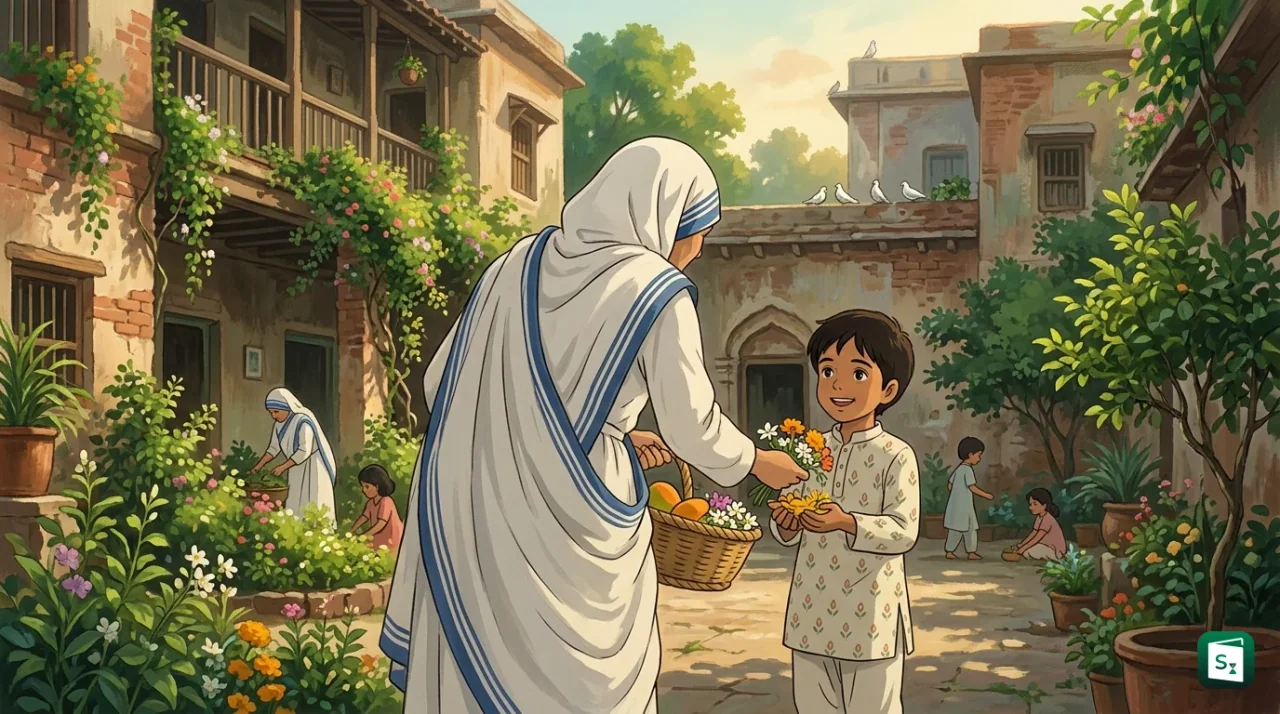
The International Day of Charity is observed across the world every year on 5 September under the aegis of the United Nations (UN). In 2026, the observance fell on Saturday, 5 September, marking the death anniversary of Mother Teresa of Kolkata. The day calls on people, charities and governments to support poor and vulnerable communities through donations, volunteering and community action.
What Is the International Day of Charity?
The International Day of Charity is a United Nations observance held every year on 5 September to promote charity, volunteering and philanthropy. It reminds governments, organisations and citizens that giving time, money and skills can reduce poverty, ease suffering and build stronger, more caring societies.
The United Nations defines the purpose of the day in simple terms. It aims to sensitise and mobilise people, non-governmental organisations (NGOs) and other stakeholders to help others through volunteer and philanthropic activities. Philanthropy means organised giving for public good, while volunteerism means offering time and skill without pay.
The day is also widely called World Charity Day or simply Charity Day. These are short form names used by the public, schools and the media. The official name remains the International Day of Charity. It is an international observance, not a public holiday, so offices and schools remain open.
When Is International Charity Day Celebrated?
International Charity Day is celebrated on 5 September every year in all countries. The date is fixed and does not change. The United Nations system, member countries and civil society groups mark the day annually through education and awareness activities.
The United Nations General Assembly adopted the resolution creating the day on 17 December 2012. The first global observance took place on 5 September 2013. Since then, the day has been marked every year without a break. In 2026, 5 September fell on a Saturday.
| Year | Date | Day of the Week |
|---|---|---|
| 2024 | 5 September 2024 | Thursday |
| 2025 | 5 September 2025 | Friday |
| 2026 | 5 September 2026 | Saturday |
Why Is September 5 Observed as Charity Day?
September 5 is observed as Charity Day because it is the death anniversary of Mother Teresa of Kolkata. She died on 5 September 1997 in Kolkata at age 87. The United Nations chose this date to honour her lifelong service to the poor, sick, orphaned and dying.
Mother Teresa received the Nobel Peace Prize in 1979 for work undertaken in the struggle to overcome poverty and distress, which also constitute a threat to peace. For more than 45 years, she served people who were poor, sick, orphaned and dying, first in Kolkata and later in many other countries. Her white sari with a blue border became a global symbol of compassion and hands on care.
The United Nations resolution states that the day recognises the role of charity in reducing humanitarian crises and human suffering, along with the efforts of charitable organisations and individuals, including the work of Mother Teresa. By linking the day to her death anniversary, the United Nations gave the observance a clear human face and a moral anchor that people across cultures and faiths can understand.
How the Day Was Established by the United Nations
The idea for the day began as a civil society initiative in Hungary in 2011. Social groups in Hungary wanted a common global platform to increase the visibility of charity, organise special events and build public support for giving. The Hungarian Parliament and Government supported the proposal.
On the initiative of Hungary, the United Nations General Assembly adopted Resolution A/RES/67/105 on 17 December 2012. The General Assembly adopts resolutions as formal decisions, and this resolution was adopted by consensus, which means no country voted against it. The proposal was co-sponsored by 44 UN Member States from all five regional groups of the United Nations, including India.
The resolution invites all member states, UN bodies, regional organisations, civil society and NGOs to mark the day in a suitable manner. It specifically asks them to encourage charity through education and public awareness activities. No separate UN fund was created for the day. Participation is voluntary and is driven by governments, schools, charities and citizens.
Mother Teresa and the Missionaries of Charity
Mother Teresa was born as Anjezë Gonxhe Bojaxhiu on 26 August 1910 in Skopje, which was then part of the Ottoman Empire and is now the capital of North Macedonia. She arrived in India in 1929 as a member of the Sisters of Loreto, a Catholic religious order that ran schools. In 1946, on a train journey to Darjeeling, she felt what she later called a call within a call to leave the convent school and serve the poor directly on the streets.
With permission from the Vatican, Mother Teresa founded the Missionaries of Charity in Kolkata on 7 October 1950. A missionary order is a religious community whose members take vows and devote their lives to service. The sisters of the order take vows of chastity, poverty, obedience and free service to the poorest of the poor. The work began in Kolkata and then spread across India and to many other countries in Asia, Africa and Latin America.
In 1952, Mother Teresa opened Nirmal Hriday in Kolkata. Nirmal Hriday means Place of the Pure Heart. It is a home where terminally ill and destitute people receive care and can die with dignity. From 1957, the order also ran mobile clinics for leprosy patients and created a Leprosy Fund to support treatment. Over time, the order set up hospices, orphanages, schools, soup kitchens and homes for the elderly and disabled.
| Honour | Year | Awarded By |
|---|---|---|
| Padma Shri | 1962 | Government of India |
| Nobel Peace Prize | 1979 | Norwegian Nobel Committee |
| Bharat Ratna | 1980 | Government of India |
| Beatification | 2003 | Pope John Paul II |
| Canonisation as Saint Teresa of Calcutta | 4 September 2016 | Pope Francis |
Mother Teresa died in Kolkata on 5 September 1997 at the age of 87. The Government of India accorded her a state funeral in recognition of her service. She was beatified in 2003 and canonised in 2016 after the Catholic Church recognised miracles attributed to her. The year 2026 marks the 29th death anniversary of Mother Teresa. Members of the Missionaries of Charity continue to mark the day with special prayers at the Mother House in Kolkata.
Why Do We Celebrate International Day of Charity?
We celebrate the day to highlight that charity can reduce poverty, support crisis relief and strengthen community bonds. It urges individuals, companies and NGOs to give, volunteer and partner with governments so that help reaches people facing hunger, illness, displacement and exclusion.
The United Nations Charter lists international cooperation in solving economic, social, cultural and humanitarian problems as one of the core purposes of the organisation. After the Second World War, the United Nations built a system to coordinate relief when natural disasters or conflicts went beyond the capacity of any single government. The International Day of Charity extends that spirit to everyday citizens. It presents charity as an expression of global solidarity that brings people together to build fair and resilient societies.
Charity also supplements public services. Voluntary groups often help in health care, education, housing and child protection where state systems are stretched. They support culture, science, sport and the protection of heritage. They defend the rights of marginalised and underprivileged groups and carry the message of humanity in conflict zones. The United Nations notes that charity can also promote dialogue among people of different civilisations, cultures and religions.
The observance is closely linked to the 2030 Agenda for Sustainable Development, which was adopted in 2015. The Agenda calls poverty in all its forms the greatest global challenge. It seeks strengthened global solidarity with focus on the poorest and most vulnerable. It recognises the role of civil society and philanthropic bodies in putting the plan into practice.
| Goal | How Charity Supports It |
|---|---|
| SDG 1: No Poverty | Direct help, food, shelter and livelihood support for poor households |
| SDG 10: Reduced Inequalities | Inclusion of marginalised groups through community led programmes |
| SDG 17: Partnerships for the Goals | Cooperation among governments, NGOs, businesses and volunteers |
How to Celebrate International Day of Charity
People can celebrate the day by donating to a trusted charity, volunteering time or skills, and raising awareness about a cause. Schools, offices and housing societies can hold food drives, blood donation camps, fundraisers, clean up drives and awareness assemblies to support local needs.
The United Nations does not announce a fixed official theme for the day every year. Many organisations therefore choose their own focus based on urgent needs. Common focus areas include poverty relief, access to education, health and nutrition, disaster relief and support for refugees and the elderly. Climate linked relief for flood, drought and heat affected families has also gained attention in recent years.
Donations can take many forms. People give money, food, clothes, books and medicines to verified groups such as local shelters, food banks and health camps. Volunteering is equally valued. Teaching children, serving meals, joining cleanliness drives, offering free professional help and donating blood are practical ways to take part. Even small and regular acts matter more than one large gift.
Schools often mark Charity Day in school through morning assembly talks, poster making, drawing contests, slogan writing and short speeches on giving. Offices mark the day through payroll giving, collection drives and a day of volunteering with a local NGO. Social media posts with posters, quotes and hashtags help spread the message, but the core test of the day remains real help that reaches people in need.
Key Takeaways
- The International Day of Charity is observed every year on 5 September to promote charity, volunteering and philanthropy.
- The day was created through UN General Assembly Resolution A/RES/67/105 adopted on 17 December 2012 and was first observed on 5 September 2013.
- The date marks the death anniversary of Mother Teresa, who died in Kolkata on 5 September 1997 at the age of 87.
- Mother Teresa founded the Missionaries of Charity in Kolkata on 7 October 1950 and received the Nobel Peace Prize in 1979 and the Bharat Ratna in 1980.
- Mother Teresa was canonised as Saint Teresa of Calcutta on 4 September 2016, and 2026 marks her 29th death anniversary.