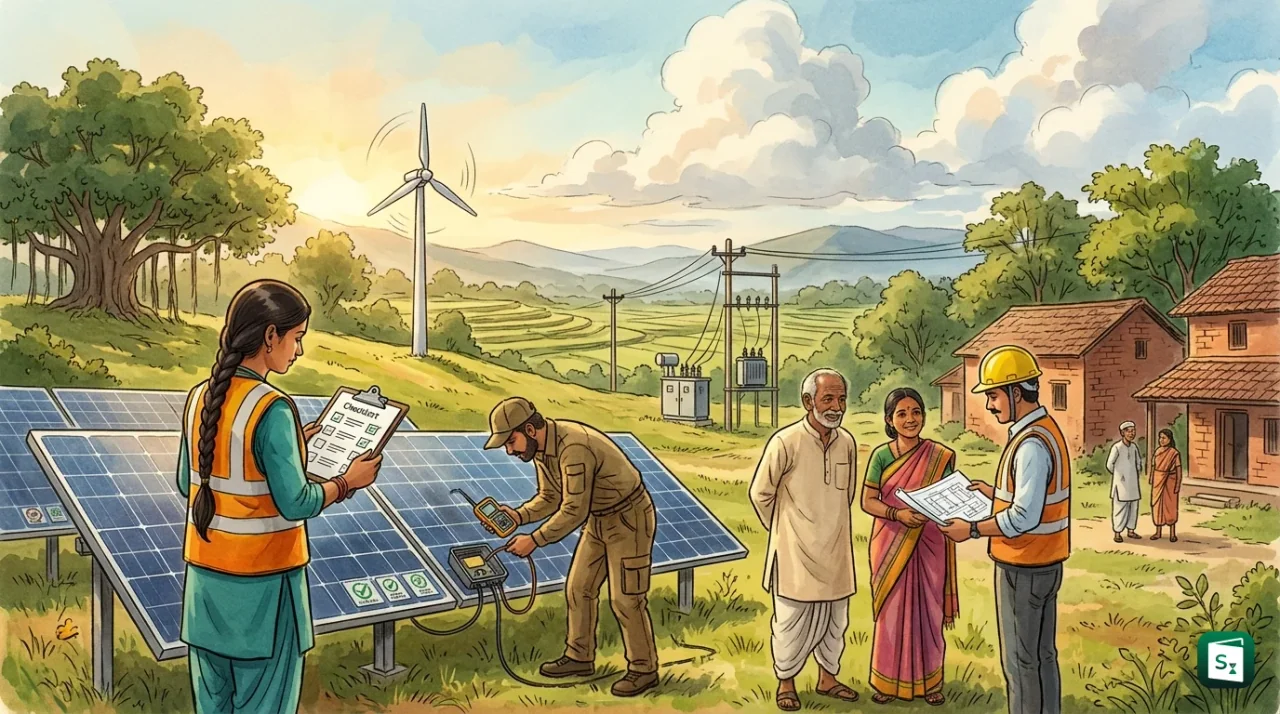
World Standards Day is observed every year on 14 October. The 2026 theme is Shared vision for a better world: Spotlight on SDG 7, Affordable and Clean Energy. The day commemorates the establishment of the International Organization for Standardization (ISO) in 1947 and has been celebrated since 1970.
What Is World Standards Day?
World Standards Day is an annual global observance held on 14 October to honour the work of experts who create voluntary international standards. World Standards Day has been celebrated since 1970 by members of ISO, IEC and ITU to make products safe, compatible and trade friendly.
International standards are agreed technical rules that describe how products, services and systems should work. They cover safety, quality, measurement and compatibility, so a plug made in one country fits a socket in another and data moves smoothly between networks. World Standards Day is celebrated on 14 October every year to pay tribute to the thousands of experts who prepare these voluntary agreements.
The day is jointly led by three global bodies that cooperate through World Standards Cooperation. Each year the three bodies select a fresh theme, often linked to the United Nations Sustainable Development Goals. National standards bodies, including the Bureau of Indian Standards (BIS) in India, mark the day with seminars, quality walks and awareness programmes.
World Standards Day 2026 Theme: Spotlight on SDG 7
World Standards Day 2026 carries the theme Shared vision for a better world: Spotlight on SDG 7, Affordable and Clean Energy. The theme presents clean and reliable energy as more than electricity supply. It keeps communities connected, supports jobs and digital payments, and helps build a sustainable future for people and the planet.
SDG 7 is one of the 17 Sustainable Development Goals adopted by the United Nations in 2015 as part of the 2030 Agenda for Sustainable Development. The full aim of SDG 7 is to ensure access to affordable, reliable, sustainable and modern energy for all by 2030. Its core targets call for universal access to electricity and clean cooking, a large rise in the share of renewable energy, a doubling of the rate of improvement in energy efficiency, and stronger global cooperation on clean energy research and technology.
International standards make SDG 7 practical. Standards for solar panels, wind turbines, batteries, smart grids and energy meters ensure that energy systems are safe, efficient and able to work together across borders. They also help link energy equipment with digital and communication technologies that power metering, payments and remote monitoring. The 2026 campaign therefore highlights how shared technical rules can turn clean energy goals into working systems on the ground.
The 2026 theme continues a multi year campaign built around the idea of a shared vision for a better world, with a new Sustainable Development Goal in focus each year.
| Year | World Standards Day Focus |
|---|---|
| 2024 | Shared vision for a better world: Standards for the changing climate |
| 2025 | Shared vision for a better world: Spotlight on SDG 17, Partnerships for the Goals |
| 2026 | Shared vision for a better world: Spotlight on SDG 7, Affordable and Clean Energy |
How World Standards Day Began
World Standards Day traces back to the founding of ISO in London in the years after the Second World War. In October 1946, delegates from 25 countries met in London to plan a new approach to global coordination on industrial norms. That meeting led to the formal creation of the International Organization for Standardization (ISO) on 23 February 1947.
ISO is an independent, non governmental network of national standards bodies, with its headquarters in Geneva, Switzerland. It began with 67 technical committees, which are groups of experts on specific subjects. The founders wanted a body open to every country, with equal rights and duties in preparing standards. From that small start, ISO has grown into a network of more than 170 national members (as of 2026) from almost every country.
The date 14 October was chosen because it marks the spirit of that 1946 London meeting and the birth of ISO. The first World Standards Day was observed in 1970. Since then, the day has been held each year to recognise standards as tools that support safety, trade and development.
Who Sets Global Standards: ISO, IEC and ITU
World Standards Day is jointly organised by the three leading global standards bodies. The three bodies also work together through an alliance called World Standards Cooperation, formed in 2001.
| Body | Full Form and Base | What It Covers |
|---|---|---|
| ISO | International Organization for Standardization, founded in 1947, based in Geneva | Voluntary standards for most goods, services and management systems, with more than 170 national members |
| IEC | International Electrotechnical Commission, founded in 1906, based in Geneva | Standards for the full energy chain and all electrical, electronic and related technologies, plus conformity testing systems |
| ITU | International Telecommunication Union, founded in 1865, based in Geneva | United Nations specialised agency for telecom and digital technologies, with 193 Member States and more than 1,000 companies and academic bodies, which allocates radio spectrum and satellite orbits and sets telecom norms |
ISO develops market relevant, consensus based standards that support innovation and trade. Well known families include ISO 9001 for quality management, ISO 14001 for environmental management and ISO 45001 for occupational health and safety. IEC prepares standards for power generation, transmission, home appliances and electronics, and runs four global systems to certify that equipment is safe to use. ITU coordinates global telecom networks so phones, satellites and the internet can connect across countries.
Together, the three bodies ensure interoperability, which means products and networks can work with each other. They also build trust by giving buyers, regulators and firms a common measure of safety and quality.
Standards System in India and the Role of BIS
The Bureau of Indian Standards (BIS) is the National Standards Body of India. BIS is a statutory body set up under the BIS Act, 2016 and works under the Ministry of Consumer Affairs, Food and Public Distribution. BIS has its headquarters in New Delhi and five regional offices in Kolkata, Chennai, Mumbai, Chandigarh and Delhi. BIS represents India in ISO and IEC.
BIS develops and publishes Indian Standards and runs conformity checks to confirm that goods meet those norms. Its main work includes standards formulation, product certification with the ISI mark, compulsory registration for electronics, hallmarking of gold and silver jewellery, laboratory testing and consumer awareness. The ISI mark is the certification symbol printed on products that meet an Indian Standard, while BIS is the organisation that grants it. ISO, by contrast, is the global body that issues international standards.
In India, World Standards Day is observed as Manak Mahotsav by BIS offices across states. Programmes include seminars with industry, government officers and consumer groups, exhibitions and quality walks. In 2024, for example, BIS offices in Pune and Chennai held Manak Mahotsav events around the theme of industry, innovation and infrastructure. In 2026, branch offices such as Faridabad and Ahmedabad held quality walks and outreach events to explain the SDG 7 focus on affordable and clean energy.
| Term | What It Means |
|---|---|
| BIS | Bureau of Indian Standards, the national standards body of India |
| ISI mark | Certification mark given by BIS to products that meet Indian Standards |
| ISO standards | International standards issued in Geneva for global use, such as ISO 9001 and ISO 14001 |
Clear national standards help Indian makers improve quality, gain buyer trust and sell in world markets. They also protect consumers from unsafe goods and support national aims such as Make in India and clean energy expansion, where solar equipment, wiring and meters must all meet common safety levels.
Key Takeaways
- World Standards Day is observed on 14 October every year to honour experts who develop international standards.
- The 2026 theme is Shared vision for a better world: Spotlight on SDG 7, Affordable and Clean Energy.
- The day has been celebrated since 1970 to mark the establishment of ISO in 1947 after the 1946 London meeting of 25 countries.
- World Standards Day is jointly led by ISO, IEC (founded 1906) and ITU (founded 1865), all based in Geneva.
- In India, the Bureau of Indian Standards (BIS), set up under the BIS Act, 2016 and based in New Delhi, marks the day as Manak Mahotsav.