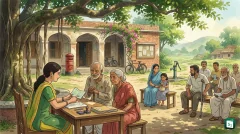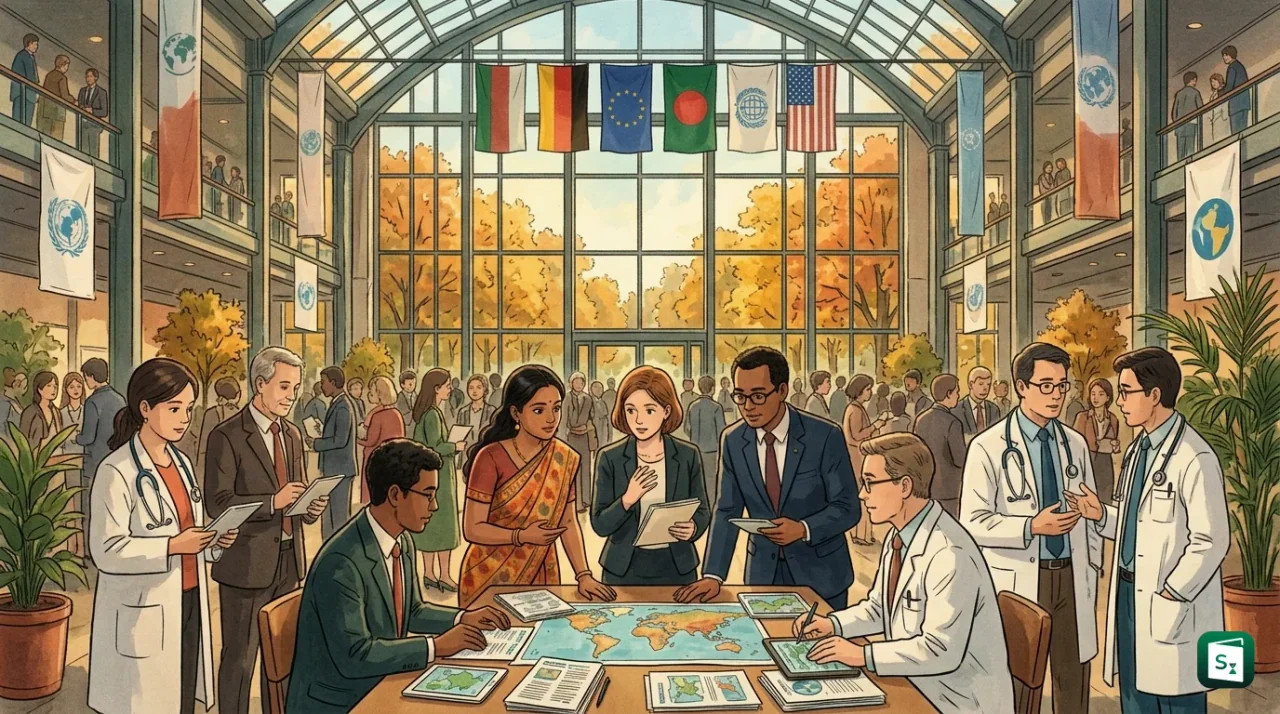
The World Health Summit 2026 was held in Berlin, Germany, from October 11 to 13, 2026, under the theme From Crisis to Resilience: Innovating for Health. The summit was led by WHS President Professor Axel R. Pries and brought together more than 4,000 on-site participants from 130 countries with tens of thousands joining online. The World Health Organization used the platform to launch its Hub 2030 Strategy, while Bangladesh and Germany announced major new pledges for women’s health and maternal care.
What Is the World Health Summit?
The World Health Summit (WHS) is an annual international conference for global health held in Berlin, Germany, every October. It brings together leaders from politics, science, civil society and the private sector to shape joint solutions for major health challenges through evidence based dialogue and partnership building.
The World Health Summit was founded in 2009 to mark the 300th anniversary of the Charité, which is one of Europe’s largest university hospitals and is based in Berlin. Since then the Charité has remained the core academic host, supported by a global WHS Academic Alliance of research institutions and universities. The 2026 edition took place from October 11 to 13, 2026, at the Hotel InterContinental Berlin and online.
WHS 2026 was led by WHS President Professor Axel R. Pries, a physiologist associated with the Charité. The 2026 summit drew more than 4,000 on-site participants from 130 countries, over 400 speakers and more than 50,000 livestream views across 76 sessions, including 20 ministers and state secretaries. The annual Berlin meeting is complemented by a WHS Regional Meeting, which in 2026 was held in Nairobi, Kenya, from April 27 to 29 with focus on African health priorities.
World Health Summit 2026 in Berlin: Theme and Programme
The World Health Summit 2026 Berlin was held under the theme From Crisis to Resilience: Innovating for Health. The theme reflects a shift from short term emergency response to long term system building. The idea is that health systems face overlapping pressures from conflict, economic strain, climate change and social inequality, so recovery alone is not enough.
Professor Pries stressed that innovation must cover the full health pipeline. This includes new medicines and medical technology, better ways to finance health, stronger health workforces, reliable supply chains and closer cooperation between countries. In his words, global health works best as a team effort built on multilateral cooperation.
The main programme in Berlin ran for three days at the Hotel InterContinental Berlin, with parallel online access for global viewers. Registration for both on-site and online participation opened in mid 2026, with separate categories for general participants, speakers and side event organisers. The agenda featured an Opening Night, a Signature Event and five Keynote Sessions. Key sessions launched the findings of the Lancet Commission on 21st Century Global Threats to Health and discussed resilience in health care, ending preventable maternal and child deaths, Ebola and other infectious diseases, antimicrobial resistance and health care in conflict settings such as Ukraine.
Six Central Topics of WHS 2026
The main programme of the World Health Summit 2026 was structured around six central topics. These tracks were chosen based on current challenges and inputs from speakers, participants and the Academic Alliance. Together they linked governance, science, equity and environment into one agenda.
| Central Topic | What It Covers |
|---|---|
| Global Health Architecture | Financing and governance reform across the global health system |
| Pandemic Prevention, Preparedness and Response | Operational plans for health security and rapid outbreak control |
| Health Equity for Women, Children and Youth | Rights, inclusion and access to maternal, child and adolescent care |
| Future-Ready Health Systems | Workforce, digital tools, artificial intelligence and resilient delivery |
| Conflict and Health | Care delivery in war zones and protection of health workers |
| Environmental Drivers of Health | Climate change, pollution and other ecological risks to health |
The architecture track looked at how global health is funded and governed at a time when aid budgets are tight and some donors are pulling back. The pandemic track focused on turning lessons from COVID-19 and Ebola into working systems for surveillance and response. The equity track put women, children and young people at the centre, with attention to maternal deaths, stillbirths and adolescent mental health. The future systems track examined digital health and workforce strength, while the conflict and environment tracks addressed health services in Ukraine and other crisis zones and the growing health toll of climate related events.
WHO Hub 2030 Strategy: Detecting Threats Within 24 Hours
The WHO Hub for Pandemic and Epidemic Intelligence launched its five year Hub 2030 Strategy for 2026 to 2030 on October 12, 2026, during the Berlin summit. The strategy sets one clear goal. By 2030, every country should be able to detect and understand a new health threat within 24 hours of its emergence.
The Hub was set up in September 2021 in Berlin with support from the Government of Germany. It functions as part of the WHO Health Emergencies Programme and was created after COVID-19 exposed gaps in how countries track and share outbreak data. The Hub now works with more than 160 Member States and over 190 partner organisations and networks on surveillance, data sharing and analysis.
WHO Director-General Dr Tedros Adhanom Ghebreyesus (as of October 2026) announced the strategy at the summit opening in the presence of Germany’s Parliamentary State Secretary for Health Georg Kippels. Rapid detection is the core logic. If a new pathogen or cluster is spotted early, countries can contain it before it grows into an epidemic or crosses borders.
The strategy will be delivered through five priority initiatives that strengthen disease surveillance, pathogen identification, data analytics, decision support and country capacity. It also lists four strategic objectives for stronger surveillance systems, faster detection through innovation such as artificial intelligence and wastewater monitoring, better decisions through applied analytics and wider sharing of knowledge. During the summit the Hub extended its bilateral memorandums of understanding with the Robert Koch Institute and the Charité to deepen scientific cooperation in Berlin.
Major Health Funding Announcements at the Summit
The closing session in Berlin listed fresh funding pledges and research launches despite tight global aid budgets. Three health financing announcements stood out for their scale and focus on women and children.
| Announcement | Amount and Channel | Aim |
|---|---|---|
| Women’s Health Initiative in Bangladesh | €250 million from Government of Bangladesh and European Investment Bank (EIB) | Care for 47 million women and girls from 2027 to 2031 |
| German contribution to maternal and child health | €10 million to Global Financing Facility | Access to family planning and maternal, newborn and child health products |
| Uzima Stillbirth Prevention Program | $100 million from Gates Foundation and Wellcome Leap | Halve stillbirth rates within a decade in selected countries |
The Bangladesh programme was unveiled on October 10, 2026, at the Bangladesh Embassy in Berlin on the margins of the summit. It redirects €250 million under an existing EIB sovereign loan into women’s health and resilient services, with a planned run from September 2026 to December 2031. The package includes €150 million for maternal care, early detection of cervical and breast cancer and emergency obstetric and newborn care. It will also upgrade primary care, referral links, district hospitals and critical care units. The United Nations Population Fund (UNFPA), which helped design the programme, is expected to provide technical support and is mobilising at least €25 million in grant funding.
Germany’s €10 million pledge will flow to the Sustainable Commodities Access Program of the Global Financing Facility. The Facility is a country led partnership hosted at the World Bank that funds maternal, newborn and child health. The German funds will improve supply of contraceptives and essential maternal and child health products. The Uzima programme adds a research push, as the Gates Foundation and Wellcome Leap will test scalable models to show that stillbirths can be cut by half in focused settings.
What Is the World Health Organization?
The World Health Organization (WHO) is the specialised health agency of the United Nations (UN). It is responsible for setting global health norms, tracking disease trends, supporting emergency response and helping countries build health systems. The WHO defines health as a state of complete physical, mental and social well-being and not merely the absence of disease.
The WHO was established on April 7, 1948, when its Constitution came into force. That date is observed every year as World Health Day. The organisation is headquartered in Geneva, Switzerland, and works through six regional offices and country offices with 194 Member States. Its governing tools include the International Health Regulations, which are legally binding rules for reporting and managing cross border health risks, and the annual World Health Assembly in Geneva, which is its decision making body.
World Health Summit vs World Health Assembly
Readers often mix the Berlin summit with the Geneva assembly. Both deal with global health, but their roles are different.
| Feature | World Health Summit | World Health Assembly |
|---|---|---|
| Nature | Independent academic convening and partnership platform | Formal governing body of WHO |
| Venue | Berlin, with online access, plus annual regional meeting | Geneva, at WHO headquarters |
| Timing | Every October, WHS 2026 was October 11 to 13 | Every May, the 79th session was due in 2026 |
| Outcome | Voluntary pledges, research launches and networks | Resolutions and binding rules for Member States |
The summit builds political attention and money around agreed priorities, while the Assembly turns priorities into mandates. The Hub 2030 Strategy is a good example. It was showcased in Berlin to attract partners and funds, but its use by countries will be guided by WHO rules and Assembly decisions.
Significance and the Way Forward
The Berlin deliberations matter because global health funding has tightened since the COVID-19 peak, while risks have grown. Trust in science has slipped in many regions, maternal mortality progress has stalled and conflicts continue to damage hospitals and supply routes. In this setting, the summit tried to link innovation with equity, so that new tools reach district hospitals and frontline clinics and not only capital cities.
The way forward rests on three practical tests. The first is speed of detection, which the Hub 2030 Strategy will measure by whether countries can truly confirm threats within 24 hours by 2030. The second is delivery of money, which will show whether the Bangladesh initiative reaches 47 million women and whether German and philanthropic funds improve stocks of contraceptives and newborn care products. The third is continuity, which depends on the Nairobi regional process and the 2027 Berlin edition keeping political focus steady through ministerial follow up and Academic Alliance research.
Key Takeaways
- The World Health Summit 2026 was held in Berlin from October 11 to 13, 2026 under the theme From Crisis to Resilience: Innovating for Health.
- The summit was led by WHS President Professor Axel R. Pries and covered six central topics including pandemic preparedness and health equity.
- The WHO Hub for Pandemic and Epidemic Intelligence, set up in Berlin in September 2021, launched its Hub 2030 Strategy to ensure detection of new threats within 24 hours by 2030.
- Bangladesh and the European Investment Bank announced a €250 million Women’s Health Initiative to reach 47 million women and girls between 2027 and 2031.
- Germany pledged €10 million to the Global Financing Facility for family planning and maternal, newborn and child health products.
- The World Health Organization, founded on April 7, 1948 and headquartered in Geneva, Switzerland, guides countries through the International Health Regulations and the annual World Health Assembly.