Union Minister for Women and Child Development Annapurna Devi launched the 9th Rashtriya Poshan Maah on 9 September 2026 at the Rudraksh International Cooperation and Convention Centre in Varanasi, Uttar Pradesh. The month-long campaign will run from 9 September to 8 October 2026 under the central theme Hamari Anganwadi Hamari Jimmedari. It places the Anganwadi centre at the heart of the fight against malnutrition by linking food, care and early learning.
What Is Poshan Maah and When Is It Celebrated?
Rashtriya Poshan Maah is India’s national nutrition month observed every September since 2018. It is part of Poshan Abhiyaan and works as a Jan Andolan, or peoples movement, to improve feeding, health and care practices for children, pregnant women, lactating mothers and adolescent girls.
The word Poshan means nutrition. Poshan Maah means nutrition month. The Ministry of Women and Child Development organises it every September across all states and union territories. The September window was chosen to create a fixed annual rhythm for nutrition action, just before the winter season when field outreach is easier and community attendance is high.
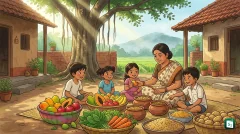
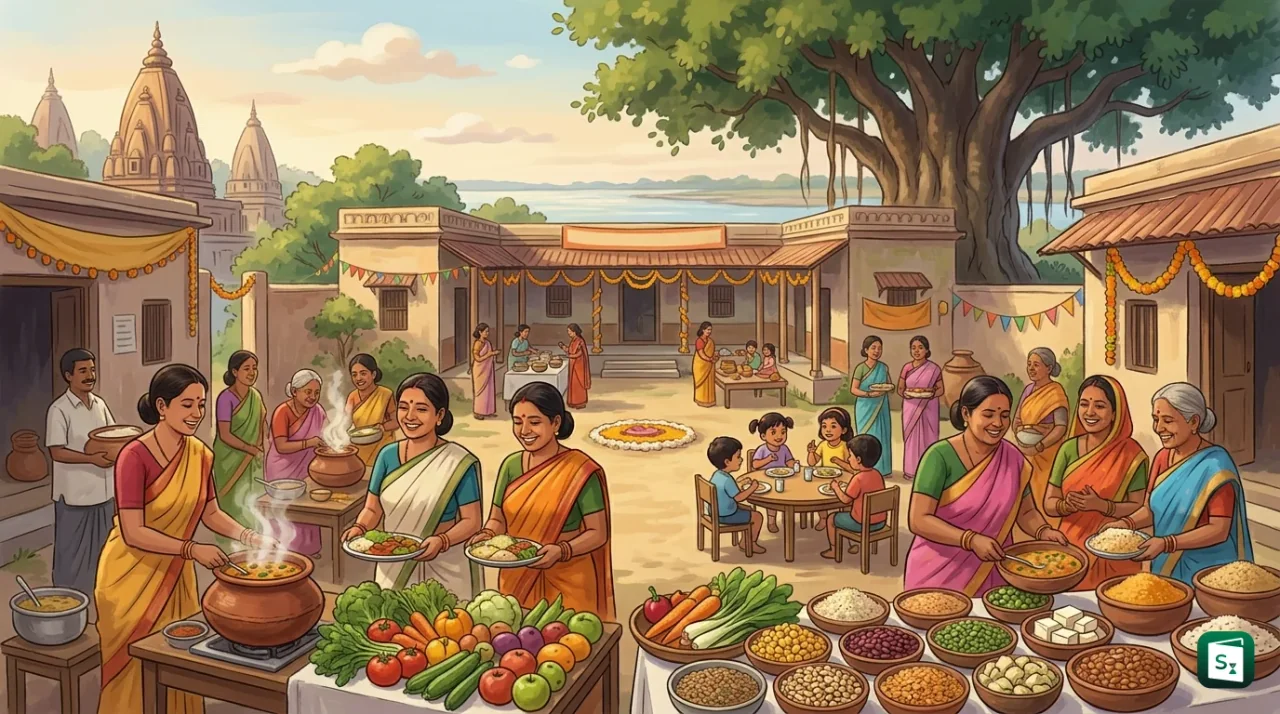
During the month, Anganwadi centres, schools, panchayats and households hold Poshan Melas, recipe demonstrations, growth monitoring drives, quiz competitions, poster and rangoli activities and counselling sessions. Field functionaries record these activities on the Jan Andolan Dashboard and Poshan Tracker portal. The focus is on behaviour change, such as adding diverse foods to the plate, ensuring regular ante-natal checkups, promoting breastfeeding and complementary feeding, and tracking the growth of young children.
9th Edition Launch in Varanasi
The Ministry of Women and Child Development launched the 9th edition on 9 September 2026 at Varanasi in Uttar Pradesh. Union Minister Annapurna Devi led the launch, joined by Uttar Pradesh Chief Minister Yogi Adityanath, Minister of State for Women and Child Development Savitri Thakur, and Uttar Pradesh Cabinet Minister for Women Welfare, Child Development and Nutrition Baby Rani Maurya. Senior officials, development partners, frontline workers and beneficiaries attended the event at the Rudraksh International Cooperation and Convention Centre.
The launch began with a walkthrough of the Poshan Mela and the lighting of the lamp. The Ministry screened beneficiary videos on hot cooked meals, take home ration, home visits and early childhood education, followed by a live interaction between the Union Minister and Anganwadi workers. Films marking ten years of the Pradhan Mantri Matru Vandana Yojana (PMMVY) and the formal launch of Poshan Maah 2026 formed the centrepiece of the programme.
The choice of Varanasi carries administrative and symbolic weight. Uttar Pradesh has India’s largest network of Anganwadi centres and the largest cohort of pregnant women and young children. A launch from this state helps push saturation drives, review of service delivery and community ownership across a very large beneficiary base. The 2026 edition is guided by the vision of a Suposhit Bharat as the foundation of Viksit Bharat by 2047.
Five Themes of Poshan Maah 2026
Poshan Maah 2026 rests on five connected themes. The themes build on the revised Supplementary Nutrition Programme (SNP) Guidelines under Mission Saksham Anganwadi and Poshan 2.0. For the first time, these guidelines clearly define hot cooked meals, mandate SNP menu boards at every centre, and provide for Anganwadi Management Committees (AMCs).
| Theme | What It Covers | Key Field Action |
|---|---|---|
| Dietary diversity and adequate protein | Balanced diets from all food groups using local foods | Live recipe demonstrations and Protein Rich Foods campaign |
| Fresh hot cooked meals at Anganwadi centres | Weekly menu rotation with millets, pulses and seasonal vegetables | Live cooking demonstrations and community tasting with parents and self help groups |
| Community ownership and accountability | Transparent service delivery through local oversight | At least one AMC meeting per centre and display of menu boards |
| Nutrition, early stimulation and education | Health, growth and learning in the first six years | Milestone recording for children aged 0 to 3 and ECCE Day for children aged 3 to 6 |
| Ten years of PMMVY | Support for maternal nutrition and health seeking | 100 percent saturation drive and faster direct benefit transfers |
The first theme focuses on dietary diversity, which means eating foods from different groups such as cereals, pulses, milk, fruits, vegetables and fats in the right mix every day. Anganwadi centres will show families how to prepare low cost recipes from local ingredients. Poshan Melas will explain simple ways to add plant protein from pulses, groundnut, soya and millets and animal protein from milk, egg and fish, wherever culturally accepted.
The second theme pushes fresh hot cooked meals. States have been asked to follow a fixed weekly menu that uses millets at least once a week along with pulses and seasonal vegetables. Parents, panchayats, self help groups and AMCs will join tasting sessions to build trust in meal quality. Menu boards will display the daily menu and entitlements in public view.
The third theme is community ownership. The Ministry issued AMC guidelines on 25 June 2026. These committees bring together parents, panchayat members, mothers groups and Anganwadi staff to review attendance, meal quality and menu adherence. During Poshan Maah, every centre will hold at least one AMC meeting.
The fourth theme links food with early learning. It recognises that what a child eats shapes how the child learns. For children aged 0 to 3 years, Anganwadi workers make home visits using Navchetana, a framework for early stimulation, and a revised home visit scheduler. They counsel families on responsive caregiving and record 34 developmental milestones. Children who need help are referred quickly through Village Health Sanitation and Nutrition Days (VHSNDs) in coordination with the health department and the Rashtriya Bal Swasthya Karyakram (RBSK), which screens children for birth defects, diseases and developmental delays. For children aged 3 to 6 years, centres use Aadharshila, the curriculum for early childhood care and education, with play based activities, ECCE Day celebrations, school exposure visits for children aged 5 to 6 years, and community drives to collect toys and learning material.
What Is Poshan Abhiyaan?
Poshan Abhiyaan is India’s flagship National Nutrition Mission launched by the Prime Minister on 8 March 2018 in Jhunjhunu, Rajasthan. It aims to improve nutrition for children aged 0 to 6 years, adolescent girls, pregnant women and lactating mothers through convergence, technology and community participation.
The full name is the Prime Minister’s Overarching Scheme for Holistic Nourishment (POSHAN) Abhiyaan. The Union Cabinet had approved the National Nutrition Mission in December 2017 with a three year budget of ₹9,046.17 crore starting from 2017 to 2018. The Ministry of Women and Child Development is the nodal ministry. The Abhiyaan covers all 36 states and union territories.
The Abhiyaan set clear annual targets. It aimed to reduce stunting and undernutrition in children aged 0 to 6 years by 2 percent per year, reduce anaemia in young children aged 6 to 59 months and in women and adolescent girls aged 15 to 49 years by 3 percent per year, and reduce low birth weight by 2 percent per year. Low birth weight means a newborn weighing less than 2.5 kilograms, which signals higher health risk.
The Abhiyaan works through four pillars. These are access to quality services in the first 1,000 days from conception to age two, convergence across departments such as health, sanitation and drinking water, use of technology for real time monitoring, and Jan Andolan for behaviour change. A National Council on India’s Nutrition Challenges, chaired by the Vice Chairman of NITI Aayog, reviews convergence across ministries. At the village level, community based events, Poshan Panchayats and Mother’s Groups carry nutrition messages into homes.
What Is Saksham Anganwadi and Poshan 2.0?
Saksham Anganwadi and Poshan 2.0 is an integrated nutrition support programme announced in Budget 2021 to 2022. It merges Poshan Abhiyaan, Anganwadi Services and the Scheme for Adolescent Girls to strengthen food quality, delivery, early learning and infrastructure.
The programme is centrally sponsored and runs in all states and union territories. State governments handle day to day delivery while the central government frames policy and planning. It was approved for the 15th Finance Commission period from 2021 to 2022 to 2025 to 2026. Its verticals include nutrition support through the Supplementary Nutrition Programme, early childhood care and education for children aged 3 to 6 years with early stimulation for children aged 0 to 3 years, upgraded Saksham Anganwadi infrastructure, and Poshan Abhiyaan.
Anganwadi Services form the core delivery arm. Anganwadi Services began under the Integrated Child Development Services (ICDS), launched in 1975. ICDS provides six services in an integrated manner. These are supplementary nutrition, pre-school non-formal education, nutrition and health education, immunisation, health checkup and referral. Health related services are delivered with the National Health Mission (NHM) and public health centres.
Under Poshan 2.0, only fortified rice is supplied to states, millets are served at least once a week in hot cooked meals and take home ration, and food is tested in accredited labs. Extra food support is given to children with severe acute malnutrition (SAM) and moderate acute malnutrition (MAM). SAM means very low weight for height with high risk of illness, while MAM means moderately low weight for height that needs timely feeding support. The programme also promotes Poshan Vatikas, or nutri gardens, at Anganwadi centres to supply fresh fruits, vegetables and herbs, and encourages AYUSH practices for wellness. So far, 1,03,940 Anganwadi centres have been upgraded to Saksham centres, and 2 lakh centres have been approved for upgradation with digital tools, safe water, learning aids and child friendly spaces.
What Is Poshan Tracker and How Does It Monitor Nutrition?
Poshan Tracker is a mobile based governance application launched on 1 March 2021 by the Ministry of Women and Child Development with the National e-Governance Division. It tracks Anganwadi infrastructure, service delivery, beneficiary coverage and child growth in near real time across India.
The Poshan Tracker forms the digital backbone of Poshan Abhiyaan. Anganwadi workers use smartphones with internet support to enter attendance, food distribution, home visits and growth data. The app has replaced most paper registers and is available in 24 languages, including Hindi and English. It digitises records, flags children with stunting, wasting and underweight, and supports heat maps and dashboards for district, state and national officials.
Stunting means low height for age due to long term undernutrition. Wasting means low weight for height due to recent food shortage or illness. Underweight means low weight for age. The Tracker helps identify these conditions early so workers can counsel families and refer children to health centres.
As of May 2026, the Tracker covered all 28 states and 8 union territories, with more than 8.93 crore beneficiaries and nearly 14,03,170 Anganwadi centres. Growth monitoring reached more than 6.3 crore children aged 0 to 5 years, covering nearly 94 percent of registered children. More than 5.5 crore beneficiaries received supplementary nutrition for at least 15 days in the month, and 5.17 crore received it for at least 21 days. Each centre uses growth monitoring devices to record height and weight. A facial recognition system and Aadhaar based checks ensure that take home ration reaches only the registered beneficiary and reduce duplicate entries.
Poshan Maah, Poshan Pakhwada and Related Campaigns
Poshan Maah and Poshan Pakhwada are the two large Jan Andolan windows under Poshan Abhiyaan. Poshan Maah is observed through September as a month-long drive, while Poshan Pakhwada is observed for about 15 days in March or April as a fortnight-long drive.
Poshan Pakhwada focuses on intensive themes such as anaemia awareness, infant and young child feeding and community events in the spring season. Poshan Saptah, or nutrition week, is a shorter local drive that some states hold to sustain momentum. All three feed data into the same Jan Andolan Dashboard and reinforce messages on diet diversity, hygiene, growth monitoring and care.
Two linked programmes strengthen these drives. Anemia Mukt Bharat, launched in 2018 by the Ministry of Health and Family Welfare, uses the 6X6X6 strategy of six interventions for six age groups through six institutional systems. The groups include children aged 6 to 59 months, children aged 5 to 9 years, adolescents aged 10 to 19 years, women in the reproductive age of 15 to 49 years, pregnant women and lactating mothers. The interventions include iron and folic acid tablets, deworming with albendazole, behaviour change campaigns, testing with digital haemoglobin meters, supply of iron fortified foods, and treatment of non nutritional causes such as malaria in endemic pockets. The second link is PM POSHAN, earlier called the Mid-Day Meal Scheme, which provides hot cooked meals to school children and complements Anganwadi feeding for younger children.
Ten Years of PM Matru Vandana Yojana
The 2026 Poshan Maah celebrates ten years of the Pradhan Mantri Matru Vandana Yojana (PMMVY). PMMVY is a maternity benefit programme launched on 1 January 2017 under Section 4 of the National Food Security Act, 2013. It is implemented by the Ministry of Women and Child Development and now forms part of Mission Shakti for women’s empowerment.
PMMVY gives partial wage compensation so a woman can rest before and after delivery and seek regular health care. For the first child, the benefit is ₹5,000 paid in three instalments of ₹1,000 on early registration of pregnancy, ₹2,000 after at least one ante-natal checkup after six months of pregnancy, and ₹2,000 after birth registration and the first cycle of vaccines such as BCG, OPV, DPT and Hepatitis B. With the Janani Suraksha Yojana (JSY) support for institutional delivery, the average support reaches ₹6,000. Under PMMVY 2.0, introduced in April 2022, a benefit of ₹6,000 is also given for the second child if the child is a girl, to support the girl child and improve the sex ratio at birth.
Payments are made by direct benefit transfer to the bank or post office account of the beneficiary. During Poshan Maah 2026, states will run a 100 percent saturation drive to enrol all eligible pregnant and lactating women, clear pending transfers and use a new PMMVY toolkit adapted to local languages. As of mid 2026, enrolment had crossed 4.46 crore women with total transfers of more than ₹20,500 crore, reflecting the scale of the programme over its first decade.
Key Takeaways
- The 9th Rashtriya Poshan Maah was launched on 9 September 2026 in Varanasi and runs till 8 October 2026 on the theme Hamari Anganwadi Hamari Jimmedari.
- Poshan Abhiyaan was launched on 8 March 2018 in Jhunjhunu, Rajasthan, with the Ministry of Women and Child Development as the nodal ministry.
- Saksham Anganwadi and Poshan 2.0, announced in Budget 2021 to 2022, merges Poshan Abhiyaan, Anganwadi Services and the Scheme for Adolescent Girls.
- The Poshan Tracker was rolled out on 1 March 2021 and tracks more than 8.93 crore beneficiaries across nearly 14,03,170 Anganwadi centres.
- Poshan Maah is observed every September, while Poshan Pakhwada is observed for 15 days in March or April.
- The Pradhan Mantri Matru Vandana Yojana, launched on 1 January 2017, gives ₹5,000 for the first child and ₹6,000 for the second girl child under PMMVY 2.0.