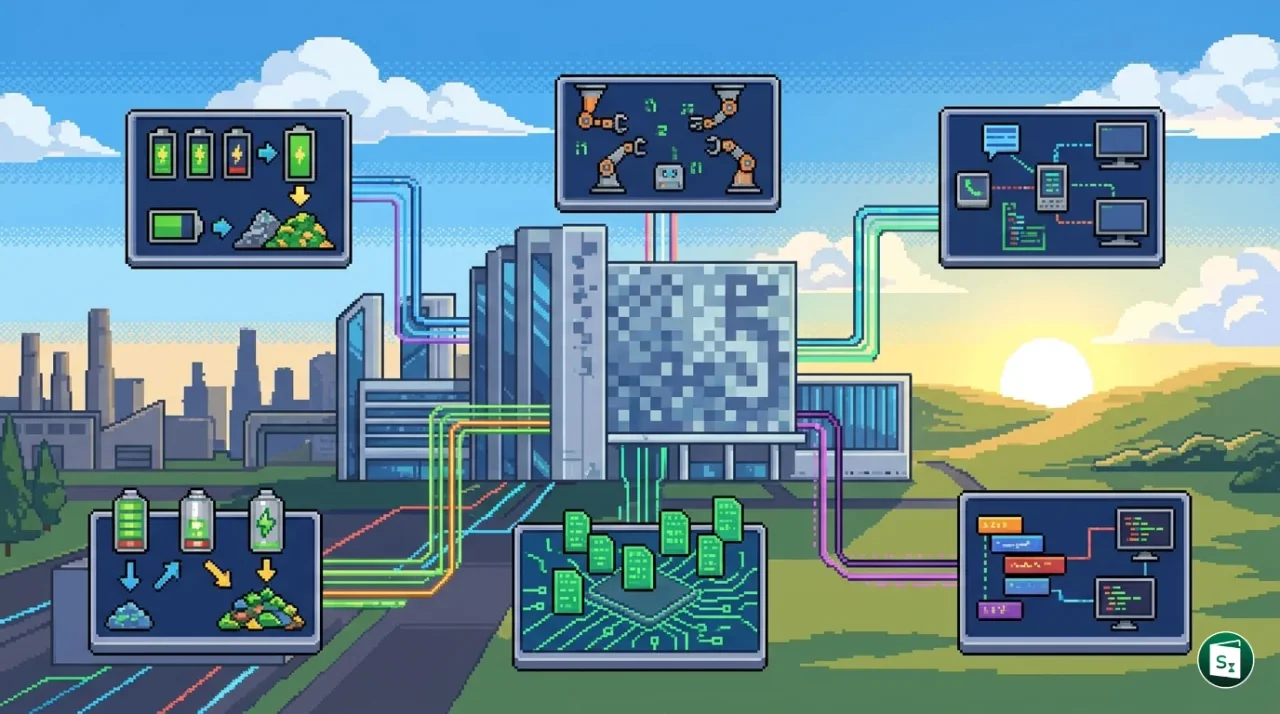
Maruti Suzuki India, the country’s largest passenger car manufacturer, has onboarded five startups as winners of the fifth cohort of its Maruti Suzuki Incubation Program (MSIP) . The selected startups, MiniMines, Easework AI, Sarvam AI, Siftly, and CodeMate AI, will co-create solutions spanning operational efficiency, customer experience, and environmentally responsible recycling of end-of-life electric vehicle (EV) batteries. The program is run in partnership with NSRCEL, the startup incubation hub at the Indian Institute of Management (IIM) Bangalore.
The Five Startups and Their Focus Areas
The five winners bring a mix of deep-tech capabilities in artificial intelligence, workflow automation, and clean technology. Each startup will work on a specific business challenge identified by Maruti Suzuki.
| Startup | Solution Area |
|---|---|
| MiniMines | Environment-friendly recycling of end-of-life lithium-ion batteries and extraction of precious materials |
| Easework AI | End-to-end workflow automation of procurement processes for indirect consumables using agentic AI |
| Sarvam AI | Generative AI agents with multilingual support for improved customer interaction across all touchpoints |
| Siftly | Use of generative AI for enhancing brand visibility in AI-driven search platforms |
| CodeMate AI | AI-powered acceleration of software application development for business processes |
Sarvam AI, founded in August 2023 by Vivek Raghavan and Pratyush Kumar, is one of India’s most prominent generative AI startups. It was selected by the Ministry of Electronics and Information Technology in April 2025 to build India’s first sovereign large language model under the IndiaAI Mission. The company has raised over USD 41 million from investors including Lightspeed Venture Partners, Peak XV Partners, and Khosla Ventures. Its multilingual AI agents will help Maruti Suzuki engage with customers across multiple Indian languages.
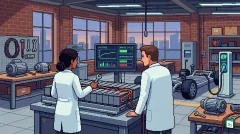
MiniMines, a cleantech startup based in Bengaluru, uses a proprietary Hybrid Hydrometallurgy (HHM) process to recycle end-of-life lithium-ion batteries. The company has received backing from Oil India Limited, ACT, and the United Nations Industrial Development Organisation (UNIDO) . It was recognised among the Top 30 Startups of India by the French Development Agency (AFD) and the Ministry of Urban Development.
Easework AI provides an AI-native automation platform for procurement and supply chain workflows. Its agentic AI system automates sourcing, purchasing, and accounts payable tasks by connecting with ERP systems and external data sources.
Siftly is a Y Combinator-backed startup that helps brands improve their visibility inside AI assistants such as ChatGPT, Gemini, and Perplexity. It offers Generative Engine Optimization (GEO) , which the company describes as the SEO equivalent for the AI era.
CodeMate AI is a full-stack AI coding assistant that helps developers write, debug, review, and ship code faster through autonomous agents and IDE plugins. It has been recognised under the MeitY TIDE 2.0 initiative and was selected among the top 5 AI startups at RAISE 2025 by L&T Finance.
What Is the Maruti Suzuki Incubation Program?
The Maruti Suzuki Incubation Program (MSIP) was launched in August 2020 as a first-of-its-kind initiative by India’s largest carmaker to engage with very early-stage startups working on high-risk disruptive technologies. The program is conducted in partnership with NSRCEL (Nadathur S. Raghavan Centre for Entrepreneurial Learning) , the startup incubation hub at IIM Bangalore.
NSRCEL was founded in 2000 with support from N. S. Raghavan, co-founder of Infosys. It has incubated over 2,800 ventures and created more than 35,000 jobs over its 25-year history. The hub runs multiple programs across mobility, fintech, social entrepreneurship, and women entrepreneurship.
How the Program Works
MSIP follows a structured six-month incubation cycle. Applications are invited from early-stage technology startups working on mobility, green manufacturing, data and AI, clean tech, and vehicle technology. Startups must be incorporated in India, less than 10 years old, and have fewer than 50 team members.
Selected startups go through an incubation phase where they receive mentoring from NSRCEL and domain experts from Maruti Suzuki. They get access to investor networks and participate in workshops. At the end of the cycle, startups pitch their solutions on Demo Day. Winners receive a paid Proof of Concept (PoC) opportunity to deploy their solution within Maruti Suzuki’s business operations. For successful pilots, there is a path to go to market with Maruti Suzuki. Neither NSRCEL nor Maruti Suzuki takes any equity from the participating startups.
Program Impact
Over its seven-year journey, the MSIP, along with Maruti Suzuki’s other innovation programs, has screened approximately 7,400 startups, engaged with over 250 ventures, and onboarded 38 startups as partners delivering value to the business. Alumni of the program have collectively raised over ₹1,000 crore in external funding and created more than 2,600 jobs.
The first cohort of MSIP, announced in February 2022, selected three winners: True Assistive, eShipz, and Hycube Works. Since then, the program has expanded to five winners per cohort, reflecting the growing startup ecosystem in India’s mobility and automotive technology space.
Maruti Suzuki’s Broader Innovation Ecosystem
MSIP is one of several programs under the Maruti Suzuki Innovation umbrella, which the company has built to provide structured support to startups at different stages of maturity.
| Program | Launched | Focus |
|---|---|---|
| Maruti Suzuki Accelerator | January 2019 | Open innovation with growth-stage startups in automobile manufacturing and mobility |
| Maruti Suzuki Incubation Program (MSIP) | August 2020 | Early-stage technology startups working on disruptive mobility technologies |
| Mobility Challenge | June 2021 | Mature-stage startups showcasing cutting-edge solutions in mobility |
| Nurture | 2023 | Pre-incubation program for idea-stage startups |
The Accelerator program, now in its ninth cohort, has supported startups working on areas such as AI-based visual inspection, IoT-enabled safety systems, and electric last-mile logistics. The Nurture program targets founders who have an idea but need support to validate it before building a minimum viable product.
Speaking on the occasion, Hisashi Takeuchi, Managing Director and CEO of Maruti Suzuki India, said the company has been actively working with startups to co-create innovative and practical solutions for real business challenges. The partnership with MiniMines on battery recycling, he noted, addresses a critical sustainability need, while the other four startups will help improve customer engagement and drive efficiency across business operations.
Why EV Battery Recycling Matters
The partnership with MiniMines is strategically significant as Maruti Suzuki prepares for India’s electric vehicle transition. Although the company has been a late mover in the EV space compared to rivals such as Tata Motors, it announced plans in March 2026 to establish a comprehensive circular economy framework for end-of-life vehicles and battery recycling.
India’s EV Battery Challenge
India’s lithium-ion battery demand is projected to reach an estimated 600 GWh by the end of the decade, driven by the government’s target of having 80 million EVs on Indian roads by 2030. Currently, about 80% of lithium-ion cells are imported from China, Japan, and South Korea, creating a strategic dependency. A robust domestic recycling ecosystem is critical to reduce this import reliance and secure supply chains for critical minerals such as lithium, cobalt, nickel, and manganese.
The Battery Waste Management Rules, 2022, introduced by the Ministry of Environment, Forest and Climate Change, mandate Extended Producer Responsibility (EPR) , requiring manufacturers to actively participate in battery collection and recycling. This regulatory framework creates both an obligation and an opportunity for automakers like Maruti Suzuki to build recycling partnerships.
MiniMines’ Proprietary Technology
MiniMines uses a patented Hybrid Hydrometallurgy (HHM) process to extract battery-grade materials from end-of-life lithium-ion batteries. Unlike traditional pyrometallurgical (smelting) methods that consume high energy and produce emissions, hydrometallurgical processes achieve more than 95% material recovery with lower energy consumption. MiniMines’ process produces high-purity lithium carbonate, nickel sulphate, cobalt sulphate, and manganese that can be directly fed back into new battery manufacturing.
The company is setting up a refining complex in Bengaluru with a target capacity of 15,000 tonnes per annum at an investment of approximately ₹350 crore. It has raised funding from Oil India Limited, the United Nations Industrial Development Organisation (UNIDO) , and ACT, along with a ₹4.3 crore grant from various sources for process engineering and plant commissioning.
The Critical Minerals Context
India launched the National Critical Minerals Mission in 2024 to secure supply chains for minerals essential to clean energy technologies. Battery recycling directly supports this mission by creating a secondary source of critical minerals within the country, reducing dependence on imports from nations such as China and the Democratic Republic of Congo which dominate global supply chains for lithium and cobalt respectively.
Key Takeaways
- Maruti Suzuki India onboarded five startups from the fifth cohort of the Maruti Suzuki Incubation Program (MSIP) , run in partnership with IIM Bangalore’s NSRCEL.
- The five startups are MiniMines, Easework AI, Sarvam AI, Siftly, and CodeMate AI, working on EV battery recycling, procurement automation, multilingual AI, brand visibility, and software development acceleration.
- The Maruti Suzuki Incubation Program was launched in August 2020 and has screened approximately 7,400 startups, engaging with over 250 ventures over seven years.
- NSRCEL, the startup incubation hub at IIM Bangalore, was founded in 2000 by N. S. Raghavan, co-founder of Infosys, and has incubated over 2,800 ventures creating more than 35,000 jobs.
- MiniMines uses a proprietary Hybrid Hydrometallurgy (HHM) process to extract battery-grade materials from end-of-life lithium-ion batteries with over 95% material recovery.
- The Battery Waste Management Rules, 2022 mandate Extended Producer Responsibility (EPR) for battery manufacturers, making recycling partnerships a regulatory necessity for automakers.