India hosted two major BRICS meetings back to back in June 2026, bringing together space agency heads in Bengaluru and energy ministers in Gurugram under its chairship of the bloc for the year. The BRICS Heads of Space Agencies (HOSA) meeting on June 23-24 and the 11th BRICS Energy Ministers’ Meeting on June 25-26 together advanced cooperation across space sustainability, satellite data sharing, and clean energy transitions. Both meetings were guided by the overarching theme of India’s chairship, “Building for Resilience, Innovation, Cooperation and Sustainability.”
India’s 2026 BRICS Chairship: Setting the Stage
India assumed the BRICS chairship on January 1, 2026, taking over from Brazil, which hosted the 17th BRICS Summit in 2025. This is India’s fourth time chairing the grouping, after earlier tenures in 2012, 2016, and 2021. The chairship is particularly significant because 2026 marks the 20th anniversary of BRICS since its inception in 2006.
The theme “Building for Resilience, Innovation, Cooperation and Sustainability” was articulated by Prime Minister Narendra Modi at the 2025 Rio Summit. The logo, inspired by a lotus flower with a Namaste gesture at its centre, was unveiled by External Affairs Minister S. Jaishankar on January 13, 2026. The logo’s multicoloured petals represent the diversity of member nations while the Namaste conveys respect and collaboration.
India’s chairship is structured around four broad pillars: strengthening institutional resilience to navigate global uncertainties, deploying new and emerging technologies for future-ready growth, deepening multilateral engagement among members, and accelerating collective climate action and energy transitions. The grouping now has 11 member nations: Brazil, Russia, India, China, South Africa, Egypt, Ethiopia, Iran, the United Arab Emirates, Indonesia, and Saudi Arabia.
BRICS Heads of Space Agencies Meet in Bengaluru
The BRICS Heads of Space Agencies (HOSA) meeting was held on June 23-24, 2026, in Bengaluru, Karnataka. Hosted by the Indian Space Research Organisation (ISRO) and the Department of Space (DoS) with support from the Ministry of External Affairs, the two-day closed-door meeting brought together 26 delegates from 10 countries. The heads and senior representatives of space agencies from Brazil, China, Egypt, Ethiopia, India, Indonesia, Iran, Russia, South Africa, and the United Arab Emirates participated. Saudi Arabia, though a BRICS member, did not send a delegation.
Union Minister of State for Space Dr. Jitendra Singh addressed the valedictory session, while ISRO Chairman Dr. V. Narayanan and IN-SPACe Chairman Dr. Pawan Goenka attended the deliberations. The discussions focused on space sustainability, expansion of the BRICS satellite constellation, and the proposed BRICS Space Council.
India Proposes a BRICS Space Economy
India used the platform to propose the creation of a BRICS Space Economy framework, positioning space not merely as a strategic domain but as a major driver of future economic growth. Addressing the valedictory session, Dr. Jitendra Singh argued that no single country can shape the future of the space sector alone and that BRICS nations collectively possess the scientific expertise, technological capabilities, and industrial strength to emerge as a major force in the rapidly expanding global space economy.
“The future of the space economy will not be shaped by nations working in isolation. It will be shaped by partnerships, shared innovation and collective ambition,” Dr. Singh told the delegates. He noted that challenges such as climate change, natural disasters, food and water security, and sustainable urbanisation increasingly require collective solutions supported by advanced space technologies.
Expanding the Remote Sensing Satellite Constellation
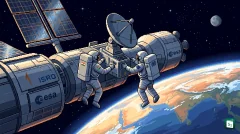
A major agenda item was the proposed expansion of the BRICS Remote Sensing Satellite Constellation (RSSC). The RSSC is a virtual constellation of Earth observation satellites that enables data sharing among member countries. Originally signed in August 2021 by the five founding BRICS space agencies, the constellation initially comprised six satellites: China’s Gaofen-6 and Ziyuan III 02, the Brazil-China joint satellite CBERS-4, Russia’s Kanopus-V type, and India’s Resourcesat-2 and Resourcesat-2A.
The meeting agreed to amend the RSSC agreement to include newer BRICS members, expanding the data-sharing mechanism beyond the five original participants. ISRO Chairman Narayanan confirmed that new members including Egypt, Ethiopia, Iran, and the UAE will now be part of the initiative. The constellation has already demonstrated its utility, with member countries having exchanged remote sensing data covering more than 27 million square kilometres of the Earth’s surface in a single year, supporting applications in disaster management, climate change monitoring, and agriculture.
Towards a BRICS Space Council
Delegates also made progress on the terms of reference for a proposed BRICS Space Council, an institutional mechanism aimed at enhancing long-term space cooperation among member nations. The Council is envisioned as a permanent body that would coordinate joint space missions, set governance standards for data sharing, and facilitate collaborative research in space science and technology.
India’s private space ecosystem was showcased during the meeting, with the Indian National Space Promotion and Authorisation Centre (IN-SPACe) facilitating presentations by Indian space-tech startups. Delegates visited facilities of private space enterprises, gaining first-hand exposure to India’s growing commercial space capabilities. IN-SPACe also unveiled an Indian space industry brochure highlighting the breadth of capabilities across launch services, satellite technologies, geospatial intelligence, and downstream applications.
11th BRICS Energy Ministers’ Meeting Held in Gurugram
The 11th BRICS Energy Ministers’ Meeting was held on June 25-26, 2026, in Gurugram, Haryana, under India’s BRICS Chairship. The meeting brought together Energy Ministers, Vice Ministers, and senior officials from all BRICS member countries. Representatives from the International Solar Alliance (ISA), the Global Biofuels Alliance (GBA), and the New Development Bank (NDB) also participated in the deliberations.
Union Minister of Power and Housing & Urban Affairs Manohar Lal chaired the meeting and underlined India’s commitment to building resilient, future-ready, and people-centric energy systems guided by the principle of “Energy for All.” He emphasised that developing countries require adequate time, resources, and policy space to pursue sustainable development while meeting the legitimate aspirations of their people.
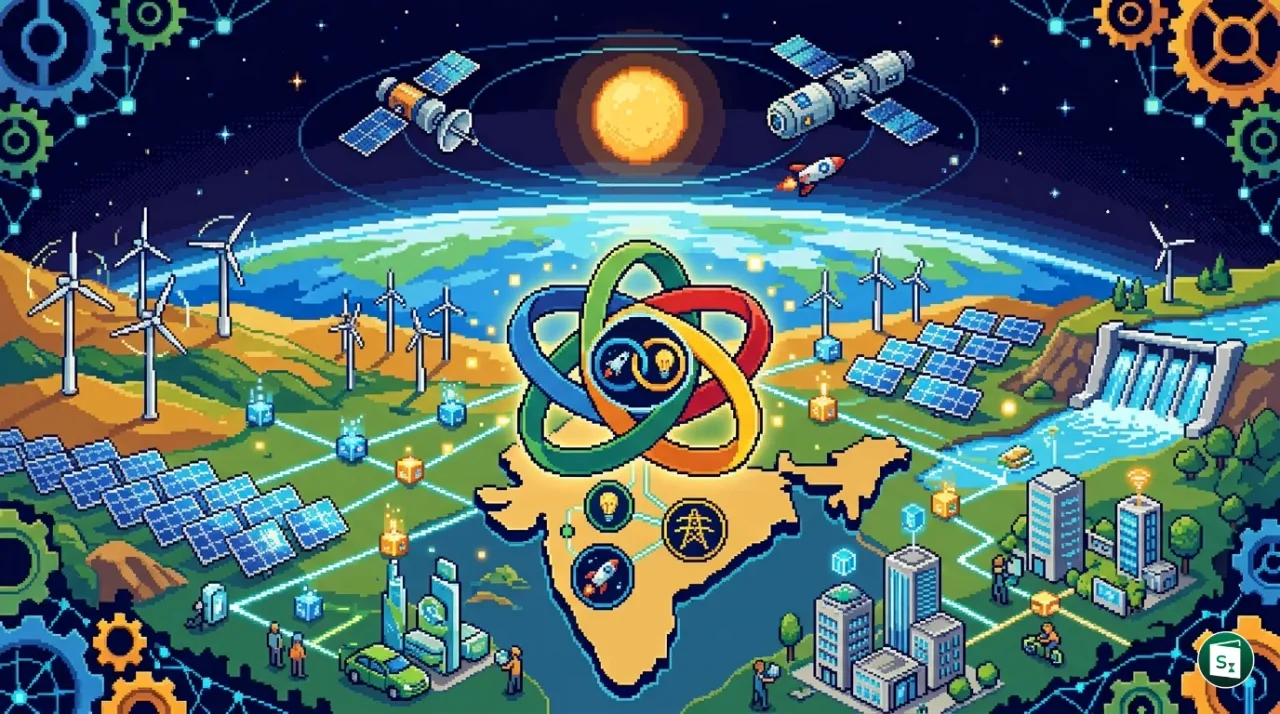
India showcased its energy transformation over the last decade. The country has emerged as the world’s third-largest producer and consumer of electricity, with installed power generation capacity reaching nearly 540 GW. Non-fossil fuel sources now account for more than half of the total installed capacity, a milestone achieved ahead of India’s Nationally Determined Contribution (NDC) target.
‘Energy for All’ as the Guiding Theme
For the Energy Track of its BRICS Chairship, India adopted the Sanskrit theme “Sarvesham Urjam” (Energy for All), reflecting the collective commitment to ensuring universal energy access. The theme aligns with India’s own domestic priorities of providing electricity to every household and expanding clean energy deployment.
India structured the BRICS Energy Agenda around three broad priorities:
- Energy Security and Sustainability covering resilient energy systems, diversified energy sources, critical minerals, supply chain resilience, and grid modernisation
- Energy Access and Equity emphasising universal access to affordable, reliable and sustainable energy, clean cooking solutions, and affordable financing for developing countries
- Technology and Innovation focusing on smart grids, hydrogen value chains, artificial intelligence, energy storage, biofuels, digitalisation, and carbon capture technologies
Launch of Digital Centre of Excellence for Smart Grids
A major outcome of India’s chairship was the launch of the BRICS Digital Centre of Excellence for Smart Grids and Energy Storage under the BRICS Energy Research Cooperation Platform (ERCP). The ERCP was established in 2019 as the institutional framework for joint energy research among BRICS countries. The new Digital Centre of Excellence will function as a voluntary collaborative platform for knowledge sharing, capacity building, exchange of policy and regulatory best practices, and development of pilot initiatives among member countries.
The meeting also adopted the BRICS Guiding Principles on Smart Grids and Energy Storage, recognising the growing importance of modern, resilient, and digitally enabled power systems in supporting reliable and affordable energy access while facilitating the integration of renewable energy. Ministers also took note of progress on the BRICS Joint Report on Hydrogen Value Chains 2026, which provides a foundation for enhanced cooperation on hydrogen technologies and industrial applications.
The meeting concluded with the unanimous adoption of the 11th BRICS Energy Ministers’ Joint Communiqué, which reaffirmed energy security as the cornerstone of BRICS cooperation and stressed the need for diversified, resilient, and transparent energy systems and supply chains. The ministers also supported the convening of the BRICS Youth Energy Summit during India’s chairship and looked forward to continuing cooperation under China’s BRICS Chairship in 2027.
Key Takeaways
- The BRICS Heads of Space Agencies (HOSA) meeting was hosted by ISRO in Bengaluru on June 23-24, 2026, with 26 delegates from 10 countries participating.
- India proposed a BRICS Space Economy framework and pushed for expanding the BRICS Remote Sensing Satellite Constellation (RSSC) , originally signed in August 2021, to include new members.
- Progress was made on the terms of reference for a proposed BRICS Space Council to institutionalise long-term space cooperation among member nations.
- The 11th BRICS Energy Ministers’ Meeting in Gurugram launched the BRICS Digital Centre of Excellence for Smart Grids and Energy Storage under the Energy Research Cooperation Platform (ERCP) , established in 2019.
- India has emerged as the world’s third-largest producer and consumer of electricity, with installed capacity reaching nearly 540 GW and non-fossil sources accounting for more than half of total capacity.
- The Energy Ministers adopted the 11th BRICS Energy Ministers’ Joint Communiqué and the BRICS Guiding Principles on Smart Grids and Energy Storage, while looking forward to China’s BRICS Chairship in 2027.