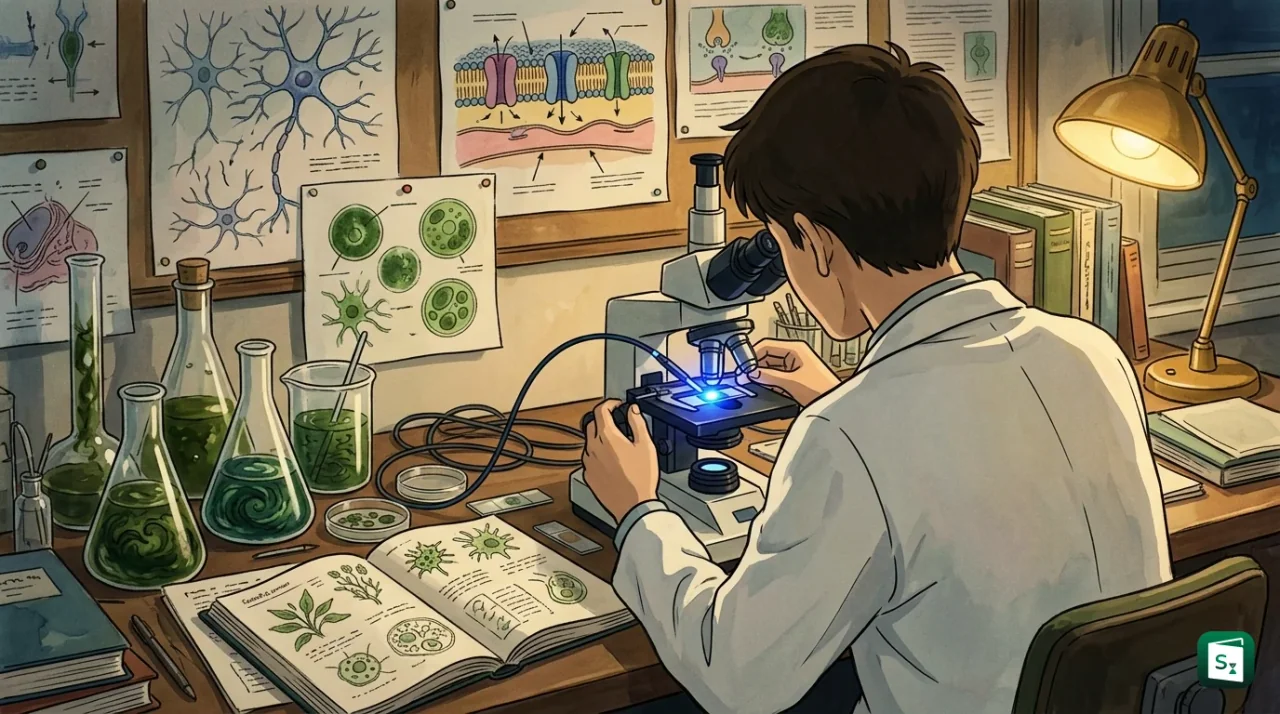
The Nobel Assembly at Karolinska Institutet in Stockholm announced the 2026 Nobel Prize in Physiology or Medicine on 5 October 2026 to Karl Deisseroth, Peter Hegemann and Georg Nagel. The trio was honoured for discovering light-gated ion channels and creating optogenetics, a method that uses light to switch individual brain cells on and off. The tool has changed how scientists study memory, behaviour and brain disease around the world.
Who Won the Nobel Prize in Medicine 2026?
The 2026 Nobel Prize in Physiology or Medicine was awarded jointly to Karl Deisseroth, Peter Hegemann and Georg Nagel for their discoveries concerning light-gated ion channels and optogenetics. The Nobel Assembly at Karolinska Institutet announced the decision on 5 October 2026. Each laureate receives an equal one third share of the prize.
Karl Deisseroth is an American psychiatrist, neuroscientist and bioengineer at Stanford University and the Howard Hughes Medical Institute in the United States. Born in 1971, he earned his PhD in neuroscience in 1998 and his MD in 2000 from Stanford. Peter Hegemann, born in 1954, is Hertie Senior Professor of Neuroscience at Humboldt University of Berlin in Germany. Georg Nagel, born in 1953 in Weingarten, Germany, is Professor of Neurophysiology at the University of Wurzburg in Germany.
| Laureate | Country and Institution | Prize Share | Recognised For |
|---|---|---|---|
| Karl Deisseroth | United States, Stanford University and Howard Hughes Medical Institute | One third | Putting channelrhodopsin gene into rat neurons in 2005 and proving light control in living mice in 2007 |
| Peter Hegemann | Germany, Humboldt University of Berlin | One third | Hypothesising and isolating light-gated ion channels from green alga |
| Georg Nagel | Germany, University of Wurzburg | One third | Proving channelrhodopsin-1 and channelrhodopsin-2 function in frog eggs and human cells in 2002 and 2003 |
What Is Optogenetics and How Does It Work?
Optogenetics is a biological method that makes specific brain cells sensitive to light so researchers can turn them on or off with high precision. Scientists insert the gene for a light sensitive algal protein into chosen neurons. A flash of coloured light then opens the protein channel and triggers or silences an electrical signal.
How Optogenetics Works Through Light-Gated Ion Channels
A light-gated ion channel is a protein in the cell surface that forms a closed gate in the dark and opens when light hits it. The 2026 prize honours channelrhodopsin, the first such channel found in nature. It comes from Chlamydomonas reinhardtii, a single celled green alga that swims toward light using a tiny orange eyespot.
When blue light reaches channelrhodopsin-2, the channel opens within about 0.2 milliseconds. Positively charged ions, mainly sodium, potassium and calcium, flow into the cell. The inflow creates an electrical pulse called an action potential. The pulse travels to connected cells exactly like a natural nerve signal.
To use this in the brain, scientists package the algal gene into a harmless virus carrier and deliver it to a chosen group of neurons in mice or other lab animals. The neurons then produce channelrhodopsin on their surface. A thin optical fibre placed through a small opening in the skull delivers blue light pulses. Researchers can control the timing down to milliseconds and target only cells that carry the gene, even when different cell types are mixed together.
Other proteins in the toolbox work in the opposite way. Halorhodopsin, from the microbe Natronomonas pharaonis, pumps chloride ions inward and silences neurons when exposed to yellow light. Newer red shifted variants such as Chrimson and Chronos respond to red or green light, which passes deeper into tissue with less harm.
Optogenetics vs Chemogenetics and Electrical Stimulation
Older brain methods could not prove which cells cause a behaviour. Electrical stimulation activates all cells near the electrode tip, healthy and diseased alike, with no cell type control. Drug treatments act slowly across the whole brain and cannot match the millisecond speed of nerve signals.
Chemogenetics, often based on engineered receptors called DREADDs, uses a designer drug instead of light to switch engineered cells on or off. It is useful for long lasting control over minutes or hours but it is slow to start and stop. Optogenetics offers millisecond speed and precise start and stop control, which makes it ideal for testing cause and effect in memory, movement and mood circuits. Many labs now combine both tools, along with calcium imaging and fibre photometry, to control cells and watch their activity at the same time.
How the Discovery Unfolded From Alga to Rat Neurons
The path to optogenetics started with a simple question about how a tiny alga finds light. In the early 1990s, Peter Hegemann at the Max Planck Institute for Biochemistry in Martinsried studied Chlamydomonas with fine electrodes. He found that light produced an electrical current in just half a millisecond, more than twenty times faster than human vision, which takes at least 10 milliseconds. He proposed that a single protein both sensed light and acted as an ion channel, an idea that met wide scepticism at the time.
Around 2000, Japanese teams published the genetic code of Chlamydomonas. Hegemann’s group spotted two genes that looked like light sensing proteins. He sent them to Georg Nagel at the Max Planck Institute for Biophysics in Frankfurt. Nagel injected copies of each gene into frog eggs, which mass produced the unknown proteins on their surface. When exposed to light, the proteins opened and let ions flow through. The pair named them channelrhodopsin-1 and channelrhodopsin-2 and reported the results in Science in 2002 and in the Proceedings of the National Academy of Sciences in 2003. They also showed that human kidney cells carrying the gene became light sensitive.
Karl Deisseroth, then a young psychiatrist and neuroscientist at Stanford, saw the clinical need for better brain tools while treating patients with depression and other disorders. Existing drugs often helped little and caused strong side effects. After reading the 2003 paper, he requested the DNA for channelrhodopsin-2 from Nagel. His team placed it into rat neurons grown in dishes. The neurons stayed healthy, produced the protein, and fired nerve signals when hit with blue light. The landmark paper by Boyden, Zhang, Bamberg, Nagel and Deisseroth appeared in Nature Neuroscience in 2005.
The new method was officially named optogenetics in 2006, combining optics and genetics. In 2007, Deisseroth’s group used a thin optical fibre to deliver blue light into the motor cortex of living mice and controlled whisker movement. The same year, the team used the tool to wake sleeping mice by activating newly found wakefulness cells. In 2012, work with Susumu Tonegawa, the 1987 Medicine laureate, showed that reactivating the exact cells active during a fear experience could bring back the fear response, the first direct proof of an engram, or physical memory trace.
| Year | Milestone in Optogenetics Journey |
|---|---|
| Early 1990s | Hegemann measures ultrafast light response in Chlamydomonas and proposes single protein sensor channel |
| 2002 | Hegemann and Nagel report channelrhodopsin-1 as a light-gated proton channel |
| 2003 | Hegemann and Nagel show channelrhodopsin-2 is a light-gated cation channel that works in mammalian cells |
| 2005 | Deisseroth group shows millisecond light control of rat neurons using channelrhodopsin-2 |
| 2006 | Term optogenetics is formally adopted for the light plus genetics method |
| 2007 | Deisseroth group achieves control of movement and sleep wake behaviour in living mice |
Why Optogenetics Transformed Neuroscience
The adult human brain holds about 90 billion nerve cells, with each cell forming thousands of links to distant regions. Cells that control very different jobs often sit mixed together. Twentieth century maps could show which broad area was active during a task but could not prove that a specific cell type caused a feeling or action. The picture stayed blurry.
Optogenetics solved the cause and effect problem. Because only cells carrying the algal gene respond to light, scientists can test one circuit at a time in a living animal. Switching a circuit on and watching behaviour change proves its role. Switching it off and watching the behaviour vanish confirms it.
Using this switch, labs around the world have mapped circuits for pain, thirst, hunger, reward, attention, social behaviour and parenting. One circuit guides mice to gather pups into a nest while a separate circuit controls grooming. Other teams traced cells that set the daily sleep rhythm and cells that raise body temperature during fever. Deisseroth also showed that heart rhythm signals can feed back to the brain and strengthen anxiety, while gut studies found specific cells that explain preference for sugar over sweeteners.
The idea of such a switch was imagined decades earlier by Francis Crick, co discoverer of the DNA double helix and 1962 Medicine laureate. Crick argued that light would be the ideal tool because nerve signals are so fast. His vision sounded far fetched at the time. The 2026 laureates turned it into a routine lab method now used in thousands of laboratories.
Can Optogenetics Be Used in Humans?
Optogenetics is not yet a routine treatment for people, but early clinical trials show real promise, mainly for vision loss. Researchers deliver a light sensitive protein gene to surviving retinal cells with a safe virus carrier. Special light emitting glasses then stimulate those cells to restore partial sight.
The most advanced work targets retinitis pigmentosa, a genetic disease that destroys the rods and cones of the eye and causes blindness. In ongoing trials registered as NCT02556736 and NCT03326336, scientists inserted proteins such as channelrhodopsin-2 and the red shifted ChrimsonR into the retina. One blind participant regained enough vision to locate and grasp objects on a table when wearing light amplifying goggles. The retina is a good first target because it is easy to reach with both gene delivery and light, and it is partly shielded from immune attack.
Other medical uses are still in animal or early research stages. In Parkinson’s disease, scientists are testing opto deep brain stimulation, which would activate only chosen movement circuits instead of all tissue near an electrode, as current electrical deep brain stimulation does. In epilepsy, light silencing of seizure focus cells has stopped seizures in mice. Better cochlear implants are also under study, since light could trigger the auditory nerve with finer detail than electricity.
Three hurdles remain before wider human use. Genes must be delivered safely, often with adeno associated virus carriers, and must keep working for years without harmful immune reactions. Light must reach deep brain areas without heating tissue, which needs improved fibres, red light tools and wireless implants. Long term safety and precise cell targeting must be proven in larger trials.
Nobel Prize in Physiology or Medicine Awarding Authority Prize Money and Ceremony
The Nobel Prize in Physiology or Medicine has been awarded by the Nobel Assembly at Karolinska Institutet since 1901 under the will of Alfred Nobel, the Swedish inventor of dynamite. Karolinska Institutet is a leading medical university based in Stockholm, Sweden. Its Nobel Assembly consists of 50 professors in medical subjects, with a smaller Nobel Committee elected for three year terms to review nominations.
Alfred Nobel set aside his fortune to honour those who confer the greatest benefit to humankind in physics, chemistry, physiology or medicine, literature and peace. The first prizes were given in 1901. A sixth prize, the Sveriges Riksbank Prize in Economic Sciences in Memory of Alfred Nobel, was added in 1969. The year 2026 marks the 125th anniversary of the prize.
Where Is the Nobel Prize Awarded and When Is It Announced?
The Nobel Prize in Physiology or Medicine is announced in Stockholm, Sweden, in the first week of October each year, and it is presented in Stockholm on 10 December, the anniversary of Alfred Nobel’s death. The Medicine, Physics, Chemistry, Literature and Economic Sciences prizes are all given in Stockholm, while the Peace Prize is given in Oslo, Norway.
The 2026 Medicine announcement was made on 5 October 2026. The award ceremony takes place at the Stockholm Concert Hall, where the King of Sweden hands each laureate a medal and diploma. A banquet for about 1,300 guests, including 250 students, follows at Stockholm City Hall. The Nobel Prize is given every year unless the awarding body decides to reserve or withhold it in a particular year, which has happened mainly in wartime or when no worthy work was found.
Nobel Prize Amount and Prize Sharing in 2026
The Nobel Foundation raised the 2026 prize amount to 12 million Swedish kronor (SEK) per full prize, an increase of 1 million SEK over recent years to mark the 125th anniversary. The three Medicine laureates share the amount equally, so each receives 4 million SEK.
| Prize Detail | Figure for 2026 |
|---|---|
| Full Medicine prize | 12 million SEK |
| Share per laureate | 4 million SEK (one third each) |
| Approx value in US dollars | About $1.2 million for full prize |
| Approx value in Indian rupees | About ₹10.5 crore to ₹11 crore for full prize, and about ₹3.5 crore per laureate, depending on exchange rates in October 2026 |
The cash award comes with a gold medal and a personal diploma. Between 1901 and 2025, the Nobel Prizes were awarded 633 times to 1,026 people and organisations. The 2025 Medicine Prize went to Mary Brunkow, Fred Ramsdell and Shimon Sakaguchi for discoveries on peripheral immune tolerance, while the 2023 prize went to Katalin Kariko and Drew Weissman for mRNA vaccine work.
Key Takeaways
- The 2026 Nobel Prize in Physiology or Medicine was awarded on 5 October 2026 to Karl Deisseroth, Peter Hegemann and Georg Nagel for light-gated ion channels and optogenetics.
- Peter Hegemann and Georg Nagel discovered channelrhodopsin-1 and channelrhodopsin-2 in the green alga Chlamydomonas reinhardtii and reported them in 2002 and 2003.
- Karl Deisseroth inserted the channelrhodopsin-2 gene into rat neurons in 2005 and achieved light control in living mice in 2007, with the method named optogenetics in 2006.
- The prize is awarded by the Nobel Assembly at Karolinska Institutet in Stockholm, which has 50 voting professors and has given the Medicine prize since 1901.
- The 2026 prize amount is 12 million SEK shared equally, giving 4 million SEK to each laureate, with presentation on 10 December at the Stockholm Concert Hall.