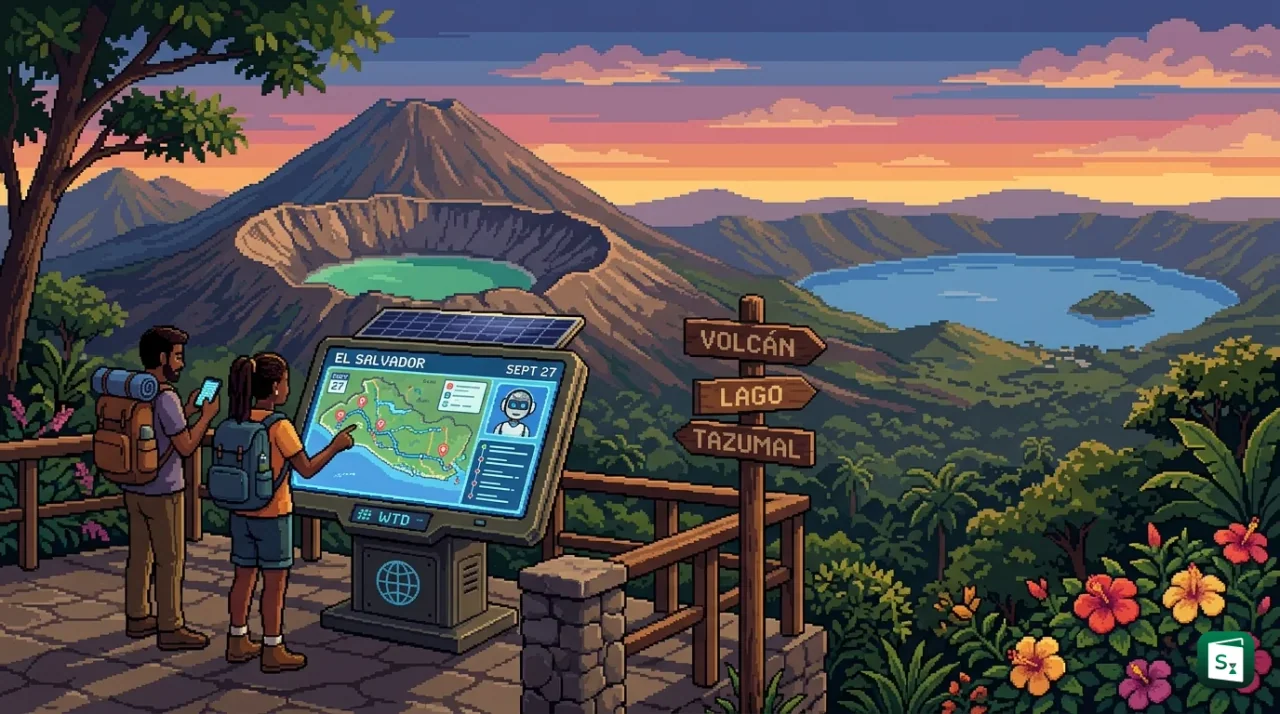
World Tourism Day was observed on 27 September 2026 with official celebrations hosted by El Salvador in San Salvador. UN Tourism set the 2026 theme as “Digital Agenda and Artificial Intelligence to Redesign Tourism” to examine how digital tools and AI are changing travel. The day highlighted the need to make that change open, inclusive and human so that workers, small firms and emerging destinations also gain.
What Is World Tourism Day?
World Tourism Day is a United Nations observance held each year to recognise the role of tourism in social, cultural, political and economic life. UN Tourism, the UN specialised agency for tourism, invites governments, businesses, communities and travellers across the world to take part through events, campaigns and policy discussions. The purpose is to show how travel connects cultures, creates jobs and supports development while drawing attention to the challenges the sector must manage.
The observance is not a public holiday. It works as an annual platform for a chosen theme. Each year UN Tourism selects one central idea, such as peace, sustainability or digital change, and organises the official global celebration with a designated host country. Member states then hold their own national and local programmes around the same theme.
When Is World Tourism Day Celebrated and Why on 27 September?
World Tourism Day is celebrated on 27 September every year. UN Tourism states that the date marks the anniversary of the adoption of its Statutes on 27 September 1970, a step that paved the way for the creation of the organisation five years later. The first celebration was held on 27 September 1980, after the UN Tourism General Assembly decided to institute the day at its third session in Torremolinos, Spain, in September 1979.
The date has a practical link to the travel calendar as well. Late September falls at the point when the peak holiday season in the Northern Hemisphere meets the peak season in the Southern Hemisphere, which makes it a symbolic moment to speak to the global industry as a whole. Since 1997, UN Tourism has named a different host country each year to act as its partner for the official celebration, following a regional rotation agreed in later sessions.
World Tourism Day 2026 Theme, Host Country and Celebrations in El Salvador
World Tourism Day 2026 was held under the theme “Digital Agenda and Artificial Intelligence to Redesign Tourism”. UN Tourism describes Artificial Intelligence, which means computer systems that can learn from data and assist with tasks such as planning, language support and decision making, as the next major shift for travel after earlier waves of online booking and smartphones. The 2026 focus asked how AI can help create smarter, more inclusive and sustainable tourism by improving decisions, building skills and changing how destinations are managed and experienced.
UN Tourism approved the 2026 theme at its Executive Council session and its General Assembly ratified El Salvador as the official host for the Americas cycle. This was the first time El Salvador hosted the global observance. The formal handover took place in Malaysia, which had hosted the 2025 edition. The 2026 programme ran from 25 to 27 September at the Hilton San Salvador Hotel, with visits to the historic centre of San Salvador and Surf City, the Pacific coastal zone known for its surf breaks and international contests.
UN Tourism Secretary-General Shaikha Al Nuwais led the global event along with El Salvador Tourism Minister Morena Ileana Valdez Vigil. Al Nuwais, who took charge as the first woman to head UN Tourism in its 50 year history (as of September 2026), said AI is shaping how people travel, work and connect and stressed that progress must reach everyone. UN Secretary-General Antonio Guterres said in his message for 27 September 2026 that AI is changing how travellers pick destinations, how firms operate and how experiences are designed.
The San Salvador agenda centred on live demonstrations and policy debate. Sessions covered AI powered education and skills, trust and human centred use of technology, personalised promotion and smart itineraries, and support for startups through an Innovation Challenge. UN Tourism said the goal was to prepare a first common position for the sector on how AI visibility, data rules and access to tools should work so that small businesses, tourism workers, local communities and emerging destinations help shape the change.
Recent host countries and themes provide context for the 2026 choice:
| Year | Host Country | Theme |
|---|---|---|
| 2026 | El Salvador | Digital Agenda and Artificial Intelligence to Redesign Tourism |
| 2025 | Malaysia (Melaka) | Tourism and Sustainable Transformation |
| 2024 | Georgia (Tbilisi) | Tourism and Peace |
| 2023 | Saudi Arabia (Riyadh) | Tourism and Green Investments |
| 2022 | Indonesia (Bali) | Rethinking Tourism |
| 2019 | India (New Delhi) | Tourism and Jobs, a better future for all |
The Observing Body: UN Tourism and Its Mandate
UN Tourism is the United Nations specialised agency responsible for tourism. UNWTO is the full form of its earlier name, the United Nations World Tourism Organization. The organisation began work on 1 November 1975 after its Statutes were adopted in Mexico City on 27 September 1970, and its secretariat was set up in Madrid on 1 January 1976. In late 2023 the UN General Assembly recognised it as a UN specialised agency, and in early 2024 it shortened its name and brand from UNWTO to UN Tourism.
UN Tourism is headquartered in Madrid, Spain, at Calle Poeta Joan Maragall 42. Spain, as host, holds a permanent seat on its Executive Council. The organisation has 160 member states along with associate and affiliate members, and it works in six official languages, namely Arabic, Chinese, English, French, Russian and Spanish. It also maintains a Regional Support Office for Asia and the Pacific in Nara, Japan, and a Regional Office for the Middle East in Riyadh, Saudi Arabia.
The mandate of UN Tourism is to promote responsible, sustainable and universally accessible tourism. Its work covers policy guidance, tourism data and research through products such as the World Tourism Barometer, education and skills through the UN Tourism Academy, investment advice, innovation and digital transformation, and ethics and culture. The aim is to raise tourism income, jobs and understanding across countries while limiting harm to nature, heritage and local life.
How Is World Tourism Day Different from National Tourism Day in India?
National Tourism Day in India is celebrated on 25 January each year, while World Tourism Day is celebrated on 27 September. The Ministry of Tourism, the central government body for tourism policy and promotion in India, observes 25 January to underline domestic travel, the philosophy of Atithi Devo Bhava, which means the guest is akin to god, and the link between tourism, jobs and the economy. Programmes are held with states, central ministries and industry bodies under banners such as Incredible India and schemes such as Swadesh Darshan and PRASAD, which support destination and pilgrimage site development.
India also takes part in the global observance on 27 September. India hosted the official World Tourism Day celebration in 2009 in New Delhi on the theme of diversity and again in 2019 in New Delhi on the theme of jobs. In 2017, then President Ram Nath Kovind launched Incredible India 2.0 on World Tourism Day to recast overseas marketing. For the 2026 digital theme, the Ministry noted Indian steps such as wider use of digital platforms, e-Visa facilities and a June 2026 understanding with Google India on digital promotion, data insights and capacity building.
Why Tourism Matters for Economy and Society
Tourism has a wide value chain that touches transport, hotels, food, crafts, guides, culture and nature services. Income from visitors adds to foreign exchange, supports small firms in towns and villages and creates work across skill levels. In India, tourism and hospitality are counted among the key drivers within services and contribute around five to six percent to national output, while providing jobs to a large share of workers.
The 2026 digital focus links directly to these stakes. UN Tourism notes that travellers now use search, maps and AI chat tools to decide where to stay, what to see and where to go. Clear digital presence, reliable data and staff with digital skills can help small properties and lesser known places get discovered. Without that access, AI answers can push visitors toward the same few hotspots and platforms, which raises pressure on popular sites and leaves worthy destinations behind. Investment in connectivity, training and fair rules is therefore presented as part of sustainable growth, not only as a technology upgrade.
Key Takeaways
- World Tourism Day is observed on 27 September every year since 1980.
- The 2026 theme was “Digital Agenda and Artificial Intelligence to Redesign Tourism”.
- El Salvador hosted the official 2026 global celebration from 25 to 27 September in San Salvador.
- UN Tourism, earlier called UNWTO, is headquartered in Madrid, Spain and was established in 1975.
- National Tourism Day in India is observed on 25 January by the Ministry of Tourism.
- India hosted World Tourism Day in 2019 in New Delhi on the theme “Tourism and Jobs”.