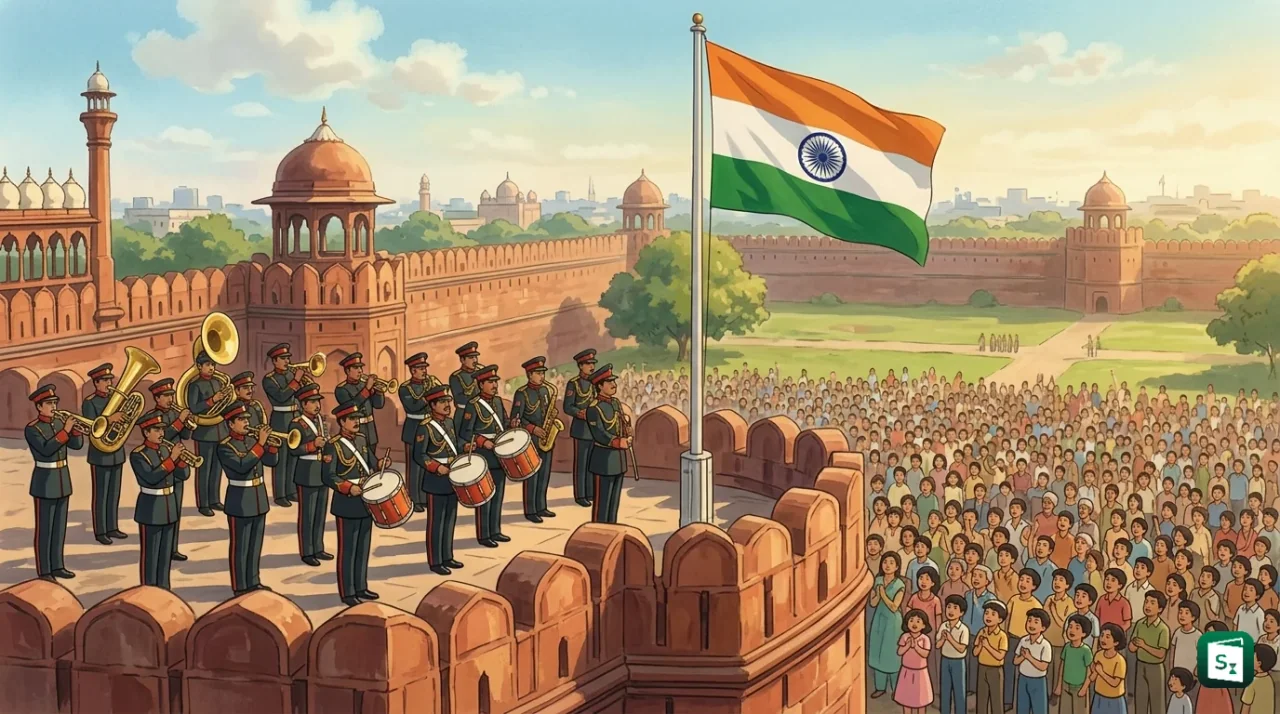
Prime Minister Narendra Modi addressed the nation from the Red Fort on 15 August 2026 on the occasion of India’s 80th Independence Day, delivering his 13th consecutive Independence Day speech. The address combined a tribute to 150 years of Vande Mataram with a future roadmap centred on Yuva Shakti and Viksit Bharat@2047. From this historic rampart, he unveiled Shakti Ki Saptadhara, a seven stream strategy to drive India’s next phase of growth.
The 80th Independence Day at the Red Fort
India celebrated its 80th Independence Day on 15 August 2026 at the historic Red Fort in New Delhi. The Red Fort, built in the 17th century by Mughal emperor Shah Jahan, has been the venue for the Prime Minister’s Independence Day address every year since 1947, when Jawaharlal Nehru unfurled the national flag for the first time. Prime Minister Modi’s speech in 2026 was his 13th in a row since 2014, making it the second longest streak after Jawaharlal Nehru’s 17 consecutive addresses from 1947 to 1963. In 2025, Modi had surpassed Indira Gandhi’s record of 12 consecutive addresses.
The Indian Army served as the coordinating service for the 2026 celebrations. The Prime Minister was received at the Red Fort by the Defence Minister, the Minister of State for Defence and the Defence Secretary, and then presented a Guard of Honour. The Guard comprised 25 personnel each from the Indian Army, the Indian Air Force and the Delhi Police, with participation also noted from the Indian Navy in the wider ceremonial Guard. Captain Sonia Singh Chauhan of the Indian Army assisted the Prime Minister in hoisting the National Flag on the ramparts.
The hoisting was synchronised with a 21 gun salute by the 1721 Field Battery (Ceremonial) using indigenous 105 mm Light Field Guns. The salute was commanded by Major Pawan Singh Shekhawat. After the hoisting, the National Flag Guard presented the Rashtriya Salute, followed by the National Anthem. In a first for the Red Fort Independence Day ceremony, the Army band performed Vande Mataram, which was sung by all present. Two Mi-17 helicopters of the Indian Air Force showered flower petals over the venue, one carrying the National Flag and the other a flag depicting Vande Mataram.
The ceremony hosted about 5,000 special guests drawn from different walks of life, including women entrepreneurs, farmers, artisans, sanitation workers, street vendors, youth innovators, scientists, start up founders and beneficiaries of government schemes. More than 1,500 participants in traditional attire from States and Union Territories also witnessed the event. Around 2,500 NCC cadets and My Bharat volunteers seated on Gyanpath opposite the ramparts formed the words Vande Mataram in Hindi, while view cutters displaying Viksit Bharat@2047 lined the path. The seating enclosures were named after major lakes of India, including Chilika, Dal, Loktak, Pangong Tso, Pushkar, Vembanad and Wular, continuing the practice of thematic naming.
Two Themes That Defined the Celebration
The government announced two central themes for the 80th Independence Day: 150 years of Vande Mataram and Yuva Shakti, Leading the Journey to Viksit Bharat@2047. The pairing linked India’s cultural heritage with its youth led vision for the centenary of independence in 2047.
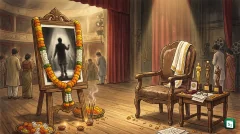
150 Years of Vande Mataram
Vande Mataram, meaning Mother, I Bow to Thee, is India’s National Song. It was composed by Bankim Chandra Chattopadhyay (1838 to 1894), a leading Bengali writer who is regarded as the father of the modern Bengali novel. The song was first published on 7 November 1875 in the literary journal Bangadarshan, which Bankim Chandra founded and edited in 1872. It was later included in his novel Anandamath, published in 1882, where it is sung by sanyasi revolutionaries fighting colonial rule.
The song is written in a mix of Sanskrit and Bengali. Its first two stanzas describe the natural beauty and bounty of the motherland, while later stanzas invoke the mother as Durga and Kali. It was set to music by Jadunath Bhattacharya and first sung by Rabindranath Tagore at the 1896 session of the Indian National Congress in Calcutta. During the Swadeshi and anti partition movement of 1905, Vande Mataram became a mass slogan and political cry against British rule. In 1907, Bhikaji Cama unfurled a flag with the words Vande Mataram in Stuttgart, Germany.
On 24 January 1950, the Constituent Assembly of India adopted Jana Gana Mana, composed by Rabindranath Tagore, as the National Anthem. At the same time, President Rajendra Prasad announced that Vande Mataram would be honoured equally with Jana Gana Mana and given equal status. Today only the first two stanzas are adopted as the National Song. The year 2025 to 2026 marks 150 years since its first publication, and the Centre has organised year long commemorations, including cultural programmes, exhibitions, short films and global events by Indian missions abroad.
At the Red Fort in 2026, the song was rendered live for the first time as part of the official Independence Day programme. The mass singing by NCC cadets and My Bharat volunteers underlined its continuing role as a symbol of unity, sacrifice and devotion to the motherland.
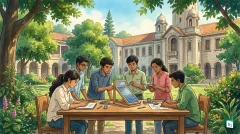
Yuva Shakti Leading the Journey to Viksit Bharat@2047
Yuva Shakti means youth power. India is one of the world’s youngest nations, with more than 65 percent of its population below the age of 35 years and a median age of about 28 years. The theme highlights this demographic strength as the engine for building a Viksit Bharat, or Developed India, by 2047, the 100th year of independence.
Viksit Bharat@2047 is the government’s long term vision to transform India into a developed nation by 2047. The vision covers economic growth, social progress, environmental sustainability and good governance, with emphasis on technology, manufacturing, agriculture, infrastructure, energy and human development. The planning for the 2026 celebration began in mid June 2026, and the Yuva Shakti theme was chosen to showcase the contributions of young achievers.
As part of this focus, 19 medal winning students from the 2026 International Olympiads in Physics, Chemistry, Biology and Mathematics were invited as special guests. Displays at the venue highlighted progress in space, nuclear technology, start ups and innovation, signalling the role of youth in these sectors. About 600 winners of pre Independence Day quizzes and competitions organised by the Ministry of Defence, MyGov, Delhi government departments and Delhi Police also attended the ceremony. Military bands performed at 343 locations across the country between 8 and 15 August, involving the Army, Navy, Air Force, Coast Guard, NCC and Central Armed Police Forces.
What Is Shakti Ki Saptadhara
From the ramparts of the Red Fort, Prime Minister Modi announced Shakti Ki Saptadhara, or the Seven Streams of Power. The phrase draws on the idea of Sapt Sindhu, the seven rivers of ancient Indian tradition, and frames seven strengths that will carry India forward. The Prime Minister described these streams as the forces that will make India Aatmanirbhar, or self reliant, and developed.
| Stream | Focus Area | Core Goal |
|---|---|---|
| 1. Manufacturing Shakti | Design to production | Become a reliable hub in the global supply chain with focus on cost, quality and scale |
| 2. Agriculture and Food Processing Shakti | Farm to export | Turn millets, spices, fruits and traditional foods into global brands using Free Trade Agreements (FTAs) |
| 3. Technology and Innovation Shakti | Digital and frontier tech | Lead in AI, quantum, 6G, robotics, space and data centres, and expand UPI and Digital Public Infrastructure (DPI) |
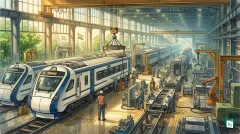
| 4. Gati Shakti | Connectivity and logistics | Build high speed rail, modern highways, inland waterways, airports, multi modal logistics hubs and port led development |
| 5. Raksha Shakti | Defence self reliance | Develop drones, hypersonic tech, next generation defence systems and become a global supplier, with stronger cyber security |
| 6. Green and Blue Economy Shakti | Clean energy and oceans | Lead in green hydrogen, renewable energy, energy storage, green manufacturing, while tapping fisheries, coastal tourism and ocean technology |
| 7. Soft Power Shakti | Culture and creativity | Project Yoga, handicrafts, films, animation, gaming and digital content to the world |
In manufacturing, the Prime Minister stressed meeting global standards and producing both components and complete products, leveraging reforms and the Reform Express. In agriculture, he said world markets are now opening for Indian farmers through FTAs, and the goal is to move from the farm to the export market.
In technology, he cited the success of UPI, which handles billions of transactions each month, and called for Made in India 6G to reach every corner. He also highlighted robotics, Artificial Intelligence, quantum technology and space as the defining sectors of the era, noting that the bioeconomy grew from about ₹60,000 crore before 2014 to about ₹20 lakh crore recently, and electric vehicle sales rose from about 1.5 lakh in 2009 to 10 to 25 lakh in 2025 to 26.
Gati Shakti, or the power of speed and connectivity, builds on the PM Gati Shakti National Master Plan launched in 2021 to integrate planning across ministries for infrastructure. Raksha Shakti underlined that self reliance in defence is now a necessity, with emphasis on indigenous production after lessons from recent global conflicts. The green and blue economy stream linked green mobility and green manufacturing to global solutions for warming, while the Blue Economy points to India’s 7,500 kilometre coastline and its Exclusive Economic Zone.
Soft power referred to India’s cultural and creative influence. Yoga, formally recognised by the United Nations with International Day of Yoga on 21 June since 2015, along with films, handicrafts and digital content, were presented as assets to attract the world and create jobs at home.
Major Announcements on Youth, Women and Energy
Alongside the seven stream framework, the Prime Minister made several specific announcements for youth, women and long term energy security.
AI Skilling for One Crore Youth
The Prime Minister announced that the government will train one crore young Indians in Artificial Intelligence (AI) skills over the next one year. AI refers to computer systems that can learn, analyse data and make decisions with minimal human input, and it is now central to sectors from healthcare and agriculture to finance and defence.
The target was presented as a step to prepare youth to lead in the global AI economy. The Prime Minister said this skilling push will focus on practical capabilities needed for emerging jobs in AI, data centres and related digital services. It builds on earlier digital skilling efforts and aligns with the IndiaAI Mission, approved in 2024 with an outlay of about ₹10,300 crore, and the broader push for Digital Public Infrastructure.
Target of Six Crore Lakhpati Didis
The Prime Minister set a new target of six crore Lakhpati Didis. A Lakhpati Didi is a woman member of a Self Help Group (SHG) under the Deendayal Antyodaya Yojana National Rural Livelihoods Mission (DAY NRLM) who earns a sustainable annual household income of at least ₹1 lakh. The term does not mean a direct cash transfer of ₹1 lakh, but a certification of income earned through livelihood activities such as dairy, tailoring, food processing, handicrafts or services.
The initiative was first announced on 15 August 2023 with an original target of two crore women, which was later revised to three crore in the Union Budget 2024 to 25. The government announced that the three crore target has already been surpassed ahead of the March 2027 deadline, with about 1.48 crore certified by mid 2025 and the full three crore reached in early 2026 according to official updates.
The scheme is implemented by the Ministry of Rural Development through State Rural Livelihoods Missions. As of mid 2024, more than 10 crore women had been mobilised into about 90.86 lakh SHGs. Support includes skill training, credit linkage through the SHG Bank Linkage Programme pioneered by NABARD in 1992, market access and mentorship. The Prime Minister noted that the next three crore Lakhpati Didis will bring a major transformation to the rural economy and highlighted examples of women now working in areas ranging from fighter aircraft and civil aviation to semiconductors and STEM education.
The Union Budget 2026 to 27 introduced an upgrade often called Lakhpati Didi 2.0, with provision for an interest free enterprise loan of up to ₹5 lakh for certified Lakhpati Didis scaling to the Self Help Entrepreneur (SHE) tier, delivered through the LokOS app with a tenure of five to seven years.
100 GW Nuclear Power by 2047
The Prime Minister set a target of 100 Giga Watt (GW) of nuclear power capacity by 2047, the centenary of independence, with five new nuclear reactors to start or become operational within the current decade, in the next six to seven years. Nuclear power is electricity generated by splitting atoms in a reactor. It provides stable, low carbon baseload power, meaning it can run continuously, unlike solar and wind which depend on weather.
India currently operates 25 nuclear reactors across seven locations with a total installed capacity of about 8,880 Mega Watt (MW) or 8.78 GW, contributing about three percent of electricity generation. Another eight reactors with about 6,600 MW are under construction, and a further 10 reactors with about 7,000 MW are in pre project stages. Capacity is projected to reach about 22 GW by 2031 to 32.
The 100 GW roadmap follows the government’s Nuclear Energy Mission and is supported by the Sustainable Harnessing and Advancement of Nuclear Energy for Transforming India (SHANTI) Act, which seeks to amend the Atomic Energy Act, 1962 and the Civil Liability for Nuclear Damage Act, 2010 to allow wider participation by private players, state entities and joint ventures. Technology plans include indigenous 700 MW Pressurised Heavy Water Reactors (PHWRs), Light Water Reactors, and small modular options such as Bharat Small Reactors of 200 MW and Bharat Small Modular Reactors of 55 MW being developed with the private sector. The Prototype Fast Breeder Reactor (PFBR) of 500 MW at Kalpakkam in Tamil Nadu, which achieved first criticality on 6 April 2026, is a key milestone in India’s three stage nuclear programme that aims to use limited uranium and abundant thorium reserves. The expansion is linked to India’s net zero by 2070 commitment and rising power demand from semiconductors, AI and data centres.
Honouring Bravery: Gallantry and Service Medals
On the eve of Independence Day, the President of India, Droupadi Murmu, who is the Supreme Commander of the Armed Forces, approved awards for personnel across the defence, police, fire, home guard, civil defence and correctional services.
A total of 1,057 personnel from the Police, Fire, Home Guard and Civil Defence and Correctional Services were awarded Gallantry and Service Medals. This included 301 Medals for Gallantry (GM), 92 President’s Medals for Distinguished Service (PSM) and 664 Medals for Meritorious Service (MSM). The Medal for Gallantry is given for a conspicuous act of bravery in saving life and property, or in preventing crime or arresting criminals, with due regard to risk. The President’s Medal for Distinguished Service recognises a specially distinguished record, while the Medal for Meritorious Service honours valuable service marked by resource and devotion to duty.
Of the 301 Gallantry medals, 197 were for personnel in Left Wing Extremism affected areas, 51 in Jammu and Kashmir, 12 in the North East and 41 in other regions. Of the Gallantry medals, 272 went to police personnel and 29 to fire service personnel. Three awardees were honoured posthumously, including constables from Chhattisgarh and an inspector from Uttar Pradesh. Among the 92 President’s Medals for Distinguished Service, 83 were for police, four for fire, three for civil defence and home guard and two for correctional services.
Separately, President Murmu approved 78 Gallantry Awards for personnel of the Armed Forces and Central Armed Police Forces (CAPFs), including 13 posthumous honours, along with 89 Mention in Despatches. The 78 awards comprised 9 Kirti Chakras including 7 posthumous, 1 Bar to Shaurya Chakra, 19 Shaurya Chakras including 1 posthumous, 5 Bars to Sena Medal (Gallantry), 36 Sena Medals (Gallantry) including 5 posthumous, 3 Nao Sena Medals (Gallantry) and 5 Vayu Sena Medals (Gallantry).
The Kirti Chakra is India’s second highest peacetime gallantry award, after the Ashok Chakra, while the Shaurya Chakra is the third highest peacetime award. The Sena Medal, Nao Sena Medal and Vayu Sena Medal are gallantry awards for the Army, Navy and Air Force respectively. Awardees included personnel from Para (Special Forces), Assam Rifles, Rashtriya Rifles, Dogra and Grenadiers, as well as officers of the Navy and Air Force and personnel under the Ministry of Home Affairs. A Mention in Despatches recognises distinguished service noted in official military reports, even when a separate medal is not awarded.
These honours are conferred twice a year, on the eve of Republic Day on 26 January and Independence Day on 15 August, to recognise actions in counter terrorism operations, border security and other high risk duties.
Why This Independence Day Matters
The 80th Independence Day address framed the next two decades up to 2047 as the decisive period for India’s rise as a developed nation. By pairing the memory of Vande Mataram with the energy of Yuva Shakti, the speech linked cultural identity with economic ambition.
Shakti Ki Saptadhara presents a single, integrated framework that connects manufacturing competitiveness, farm incomes, digital technology, physical connectivity, defence capability, clean energy and cultural influence. If implemented together, these seven streams address both domestic needs, such as jobs, farm exports and energy security, and external positioning, such as supply chain resilience and global leadership in green and digital technologies. The specific targets for AI skilling, Lakhpati Didis and nuclear capacity provide measurable milestones that will be tracked closely in the years ahead.
Key Takeaways
- Prime Minister Narendra Modi delivered his 13th consecutive Independence Day address from the Red Fort on 15 August 2026 on India’s 80th Independence Day, the second highest after Jawaharlal Nehru’s 17.
- The 2026 celebration had two themes, 150 years of Vande Mataram and Yuva Shakti Leading the Journey to Viksit Bharat@2047, with the first ever live performance of Vande Mataram at the Red Fort by the Army band.
- Shakti Ki Saptadhara is a seven stream strategy covering manufacturing, agriculture and food processing, technology and innovation, Gati Shakti infrastructure, Raksha Shakti defence, green and blue economy and soft power.
- The Prime Minister announced AI skilling for one crore youth in one year, a new target of six crore Lakhpati Didis under DAY NRLM, and 100 GW of nuclear power capacity by 2047 with five new reactors in this decade.
- Vande Mataram, composed by Bankim Chandra Chattopadhyay and first published on 7 November 1875 in Bangadarshan and later in Anandamath (1882), was adopted as the National Song on 24 January 1950 with equal status to Jana Gana Mana.
- A total of 1,057 personnel received Gallantry and Service Medals, including 301 Medals for Gallantry and 92 President’s Medals for Distinguished Service, while President Droupadi Murmu approved 78 Gallantry Awards for Armed Forces and CAPFs with 13 posthumous honours.