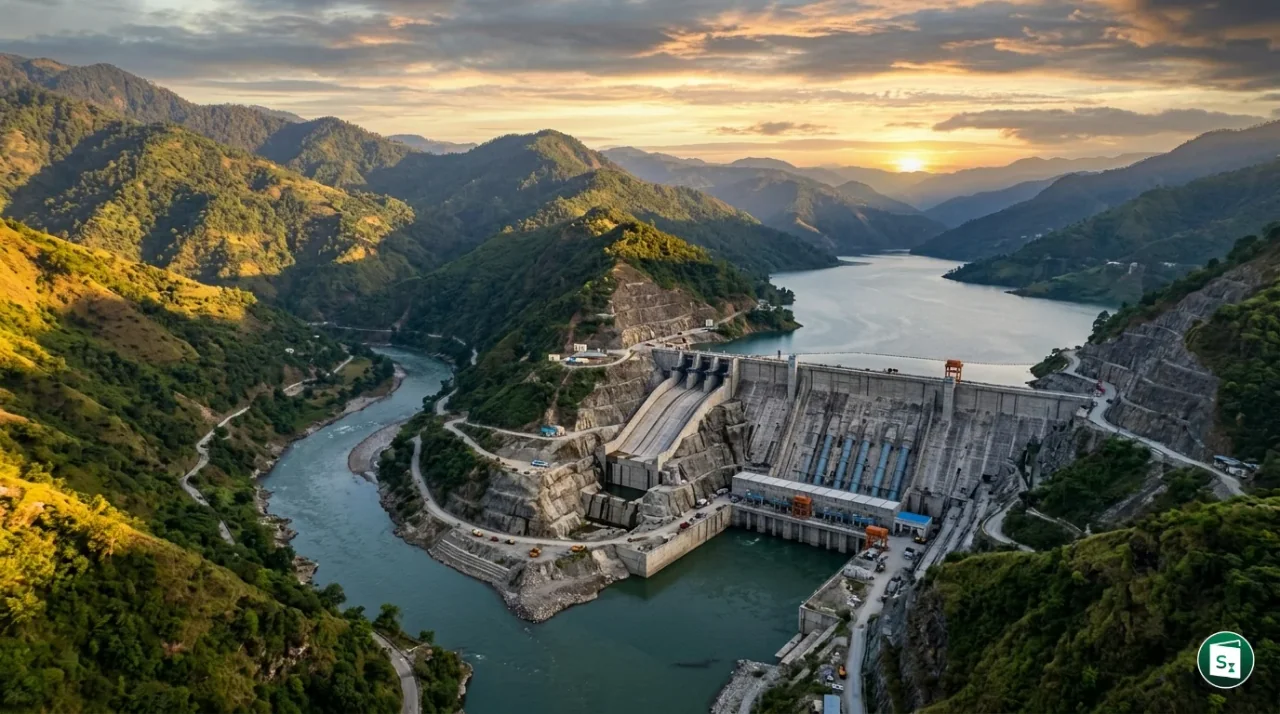
Six northern states have signed a Memorandum of Understanding for the Kishau Multipurpose Dam Project, ending a decades-old deadlock over one of India’s most delayed inter-state water infrastructure schemes. Union Home Minister Amit Shah chaired the meeting in New Delhi where Himachal Pradesh, Uttarakhand, Delhi, Uttar Pradesh, Haryana, and Rajasthan reached a consensus on the funding and water-sharing arrangement. The project, estimated to cost ₹15,000 crore, involves a 236-metre high concrete gravity dam on the Tons River and is expected to generate 660 MW of hydropower while providing drinking water and irrigation benefits to the six signatory states.
Background: The Long Road to Kishau
The Kishau Dam was first conceived in 1963 but remained stuck for over five decades, primarily due to protracted disagreements among the basin states over water-sharing, cost allocation, and the distribution of power benefits. The project received a boost in 2013 when the central government committed to bearing 90% of the cost, and the Ministry of Environment and Forests granted environmental clearance in 2018. In 2017, the governments of Uttarakhand and Himachal Pradesh incorporated the Kishau Corporation Limited (KCL) as a Special Purpose Vehicle under the Companies Act, 2013 to execute the project. Despite these steps, the lack of a formal inter-state agreement on water allocation and cost recovery kept the project in limbo until the latest breakthrough.
The project is part of a broader strategy to build three storage dams on the Yamuna and its tributaries. These three projects (Lakhwar on the Yamuna in Uttarakhand, Kishau on the Tons, and Renukaji on the Giri River in Himachal Pradesh) were designated as National Projects in 2008, which entitled them to 90% central assistance for the irrigation and drinking water components. While agreements for Lakhwar (2018) and Renukaji (2019) were signed earlier, Kishau remained the missing piece.
Key Features of the Kishau Multipurpose Dam
The Kishau Dam is proposed at Samberkhera, about 45 km upstream of Dakpathar in Uttarakhand, on the Tons River where it forms the natural boundary between Dehradun district (Uttarakhand) and Sirmour district (Himachal Pradesh). Here are its key specifications:
| Feature | Detail |
|---|---|
| Dam Type | Roller Compacted Concrete (RCC) gravity dam |
| Height | 236 metres (from river bed level) |
| Installed Capacity | 660 MW (4 x 165 MW Francis turbines) |
| Annual Power Generation | 1,379 million units (in a 90% dependable year) |
| Live Storage | 1,324 million cubic metres |
| Submergence Area | 2,950 hectares (1,498 ha in HP, 1,452 ha in UK) |
| Villages Affected | 8 in Himachal Pradesh, 9 in Uttarakhand |
| Population Affected | Approximately 5,500 people |
The dam will have a dam toe power house on the left bank of the Tons River. Beyond its own generation, the assured storage will enhance the power output of downstream projects by an estimated 472 million units annually, which will be shared equally between Himachal Pradesh and Uttarakhand.
The Tons River
The Tons is the largest Himalayan tributary of the Yamuna and carries more water than the Yamuna itself at their confluence. It originates from the Bandarpunch massif (6,315 metres) in Uttarakhand and flows about 150 km through Uttarkashi, Dehradun, and Sirmour before meeting the Yamuna near Kalsi in Dehradun district. Key tributaries include the Pabar, Sainj, Nira, Har ki Dun Gad, and Ruinsara Gad. The river’s steep gradient and glacially fed discharge make it ideal for hydropower development, but the same rugged terrain and seismic sensitivity have historically raised concerns about dam safety and environmental impact.
Funding and Water-Sharing Formula
The financial structure agreed upon in the MoU breaks down as follows:
Water component: The central government will provide 90% as Central Assistance, and the remaining 10% will be shared by the six participating states in an agreed proportion.
Power component: The power generation costs will be borne by Himachal Pradesh and Uttarakhand, the two states that will directly benefit from the electricity produced.
The Water-Power Swap
A unique feature of the agreement is the water-power swap arrangement. Himachal Pradesh, which is entitled to a share of the stored water, has agreed to allocate its entire water share to Delhi and Rajasthan. In return, Delhi and Rajasthan will contribute to the cost of Himachal Pradesh’s share of the power component. This arrangement effectively uses water as a traded commodity to resolve what had been a long-standing financial impasse.
| Component | Funding Pattern |
|---|---|
| Water component | 90% Centre (grant), 10% by six states (shared proportionally) |
| Power component | Borne by Himachal Pradesh and Uttarakhand |
| Water allocation (HP’s share) | Transferred to Delhi and Rajasthan |
| HP’s power cost | Partially covered by Delhi and Rajasthan in return |
The MoU will now be placed before the Union Cabinet for final approval before construction can formally begin.
Significance Beyond the Dam
Yamuna Rejuvenation
The most widely publicised goal of the project is the rejuvenation of the Yamuna River. The Yamuna, especially the 22 km stretch through Delhi, is one of the most polluted rivers in the country. Over 70% of the pollution in this stretch comes from untreated sewage and industrial effluents. The Kishau Dam will create a live storage of 1,324 million cubic metres, allowing for a regulated release of water downstream throughout the year, including during the dry summer months when the river’s natural flow drops sharply. This increased environmental flow is expected to dilute pollution and restore some ecological health to the river.
Drinking Water, Irrigation and Power
The assured storage will provide drinking water to Delhi, which faces acute water shortages every summer, and to the water-scarce state of Rajasthan. On the irrigation front, the project is expected to benefit about 97,000 hectares of agricultural land across the basin states. In terms of power, the 660 MW installed capacity will contribute to the renewable energy grid, with the generated electricity shared equally between Himachal Pradesh and Uttarakhand. The downstream enhancement of 472 million units per year will further improve the viability of existing hydro projects on the Yamuna.
| Benefit | Expected Impact |
|---|---|
| Drinking water supply | Regulated year-round supply to Delhi, Rajasthan, and other basin states |
| Irrigation | Approximately 97,000 hectares of farmland |
| Power generation | 660 MW installed capacity (1,379 MU/year) |
| Downstream enhancement | Additional 472 MU/year from downstream projects |
| Flood control | Regulated releases reduce flood risk in the Yamuna floodplains |
A Milestone in Cooperative Federalism
The Kishau agreement is also significant as a demonstration of cooperative federalism in action. Inter-state water disputes are among the most contentious issues in Indian politics, often requiring Supreme Court intervention or tribunal adjudication. The fact that six states with competing interests reached a consensus through dialogue, under the Centre’s mediation, is noteworthy. The Ministry of Home Affairs described this as an example of the principle of “Solutions Through Dialogue” being translated into action.
However, the project is not without its challenges. Nearly 5,500 people across 17 villages face displacement, and environmental groups have raised concerns about the impact on the biodiversity of the Tons Valley, which is home to species such as the snow leopard, Himalayan musk deer, and golden mahseer. The rehabilitation of affected families and the mitigation of ecological damage will be critical to the project’s long-term legitimacy.
The Three Dams Strategy for the Yamuna
The Kishau Dam is the last of three storages planned for the Upper Yamuna Basin. Together, they represent a coordinated strategy to address the basin’s water challenges:
| Project | River | State | Capacity | Status |
|---|---|---|---|---|
| Lakhwar | Yamuna | Uttarakhand | 300 MW + 40,000 ha irrigation | Agreement signed 2018 |
| Kishau | Tons | Uttarakhand/HP border | 660 MW + 97,000 ha irrigation | MoU signed June 2026 |
| Renukaji | Giri | Himachal Pradesh | 40 MW + drinking water supply | Agreement signed 2019 |
Once all three are completed, they are expected to together add over 435 million litres per day to Delhi’s water supply and significantly improve the environmental flow in the Yamuna year-round. The 1994 water-sharing agreement among the basin states may also need revision to accommodate the increased storage and allocation possibilities created by these dams.
Key Takeaways
- Six states signed an MoU for the Kishau Multipurpose Dam Project on 23 June 2026 in a meeting chaired by Union Home Minister Amit Shah.
- The project involves a 236-metre high RCC gravity dam on the Tons River, the largest Himalayan tributary of the Yamuna, located on the Uttarakhand-Himachal Pradesh border.
- The dam will have an installed capacity of 660 MW and a live storage of 1,324 million cubic metres, with the power shared equally between Himachal Pradesh and Uttarakhand.
- The estimated cost is ₹15,000 crore, with the Centre providing 90% of the water component cost as Central Assistance and the six states sharing the remaining 10%.
- In a unique water-power swap, Himachal Pradesh’s water share will go to Delhi and Rajasthan in return for their contribution to Himachal’s power component cost.
- The Kishau project is one of three National Projects in the Upper Yamuna Basin, along with Lakhwar (on the Yamuna) and Renukaji (on the Giri River).